
Translated material
Mikhail Fedotov: "We can repeat"
The Chairman of the HRC - On the Rules of responsibility for participation in rallies
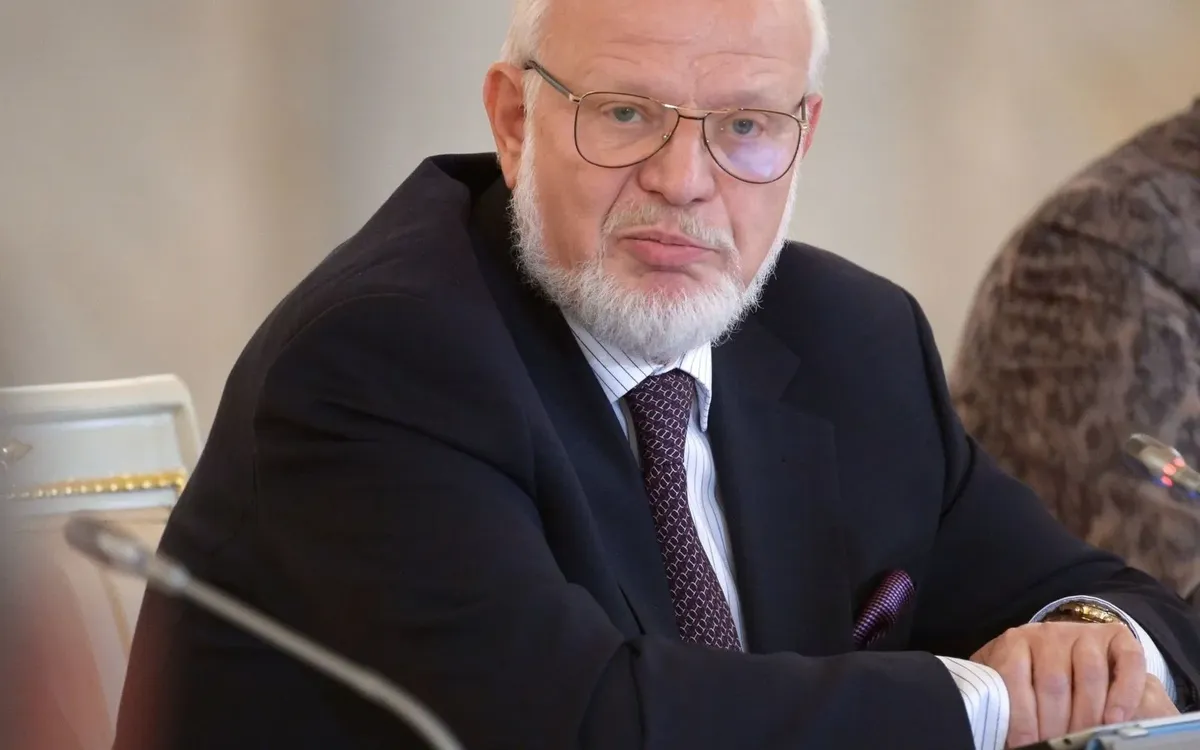
The HRC (the Council for Human Rights under the President of the Russian Federation) proposes to return to long -formulated proposals on changing liability rules for participating in mass shares. For example, to attach a video to the case
During the visit to the police and special receptionists, where there were detained in connection with mass events on March 26 in Moscow, the chairman of the HRC Mikhail Fedotov noticed the journalists who accompanied him: “It is necessary to change the norms regarding the consideration of cases of such administrative offenses: the main evidence should be videos.” "New Gazeta" asked Professor Fedotov to tell more about this and other initiatives of the HRC related to mass events.
- First of all, the proposal to use the videos, resolving issues of holding accountable for violations of the rules of mass events - the initiative is not my personal, but the council. Such a proposal was made on February 1, 2011 at an exit meeting of the HRC in Yekaterinburg, in which Dmitry Medvedev also participated - the President of the Russian Federation at that time. Then Lyudmila Mikhailovna Alekseeva and Mara Fedorovna Polyakova said that the policemen (they were renamed the police a month later), who sometimes, in cases of mass detentions, draw up protocols not on the spot, but on the basis of reports of their colleagues, they can confuse something, and, in general, these actions are on the verge of knowingly false testimonies (Article 307 of the Criminal Code of the Russian Federation). Those who were detained - brought the detainees, left them on duty in the police department and left to do their work further, and the compilers of reports, who then go to the courts dozens, find themselves in a very ambiguous position.
President Medvedev agreed that “for permits is a crime in any case” that it is necessary to use audio and video recordings wider and added literally the following (with the protocol of the HRC meeting on February 1, 2011 you can get acquainted on the Council website) : “I do not mean testimony, because they may, let’s say, are special for both audio and video facilities, so that judicial practice, so that judicial practice. It was oriented to attach such evidence to the case. ”
When the member of our Council Andrei Babushkin on May 26 - 28 this year went around the Moscow police departments, where the detainees were delivered, we were faced with the fact that the reports were drawn up as if under a carbon copy: “I took part ...”, “chanted thematic slogans,“ went to the roadway ”,“ interfered with the movement of transport and the passage of pedestrians ”. Involuntarily, doubts arose: do these reports reflect what really happened? In all departments, I asked the police the question: do they use their own or “given” videos? They all answered that no one from the police provided them with such records, and they have no practice of using other people's records.
Meanwhile, over the 6 years, since the HRC first posed this issue, the equipment of the police with means of video recording, I think, has improved significantly, and those recordings that participants in the events and their witnesses can present have become much better, and of course, there are more. Why not use them?
- And what, in fact, prevents the use of videos?
- Nothing interferes, this is not prohibited by law. But there is no such practice, but there is no practice because it is defective (as the Council indicated 6 years ago) Article 26.2 of the Code of Administrative Offenses (the Code of Administrative Offenses), revealing the concept of evidence. According to the Code of Administrative Offenses, the actual data on the basis of which the judge or other body makes a decision, (quote) “set by the protocol on an administrative offense, other protocols ... explanations of the person in respect of whom the administrative offense, testimony of the victim, witnesses, expert conclusions, other documents, as well as indications of special technical means, and material means, and material means, and material means. evidence. "
Video recording cannot be recognized as “material evidence”, since the Code considers such an “instruments of an administrative offense, including the instruments of committing or objects of an administrative offense, which retained its traces.” You can’t recognize the video with the indications of special technical means, since this code understands the measuring equipment by such. In other words, there is no direct ban, but there is an obvious gap.
Of course, the law does not prohibit applying for the introduction of a video to the case of an administrative case. But in practice, judges will rather accept such evidence from the police than from the side of protection. If they introduce the video recording presented by the case to the case file, they usually write that it “contains information about the detention and transformation of the offender to the police vehicles, but does not contain information that refutes the event or the composition of an administrative offense.” This practice, as is believed in the council, and must be changed by clarification of Art. 26.2 Code of Administrative Offenses regarding the evidence of video recordings, as well as through the corresponding clarifications of the Supreme Court of the Russian Federation.
It is significant that the legislator, as applied to violations of the SDA, has already introduced a norm to the Code of Administrative Offenses that recognizes the video not just by evidence, but by the superpission that cancel the presumption of innocence. Note to Art. 1.5 of the Code of Administrative Offenses established the removal of innocence from the presumption for owners of vehicles: when fixing the violation of traffic rules with technical means that “have the functions of photo and filming, video recording,” the owner of the car must prove innocence. This note effectively acts, since the police and the budget are beneficial. And why cannot the possibility of using videos to refute evidence of the prosecution be provided to citizens? What are we afraid of? Justice and legality?
- Not according to the law, but already according to the prevailing practice, the same “seizure” acts in cases of violations in mass events. It is not the police that citizen N was in the very place and there was something violated there, but a citizen ... forced to prove (and most often without much success) that he did not do anything illegal or alibi at all.
- We at the Human Rights Council see in such practice a serious threat to the rights and legitimate interests of citizens. This is facilitated by the legal uncertainty of many norms that have been introduced in recent years by amendments to the Code of Administrative Offenses, with an eye on mass (and not even so massive) public actions. For example, Art. 20.2.2 of the Code of Administrative Offenses, which appeared in 2012, interprets about the “organization of a public event and (or) movement of citizens in public places ... if (they) ... entailed a violation of public order or sanitary norms and rules, violation of the functioning and preservation of life support or causing harm to green plantations, or created interference with a movement of movement pedestrians or vehicles or the access of citizens to residential premises or objects of transport or social infrastructure. ” In general, we guess what the legislator wanted to say, but he embodied his will in such a wording, under which the line at the bus stop and the exit of the audience from the cinema, from the stadium, etc. fall. The Constitutional Court has repeatedly indicated rightly that such legal uncertainty is the path to arbitrariness.
The Human Rights Council informed President Vladimir Putin about this and much more in June 2012, when the Duma hastily adopted amendments to the federal law “On meetings, rallies, demonstrations, processions and pickets” and the Code of Administrative Offenses, the Federation Council approved them, but the law was still waiting for the presidential signature. An expert opinion prepared with the participation of members of the Council and attracted scientists was not secret, and therefore immediately appeared on the official website of the HRC. Having carefully analyzed the content of the amendments and the procedure for their “drive” through parliament, experts concluded: “The main vice of the law is that it, in fact, involves the criminalization of the use of basic constitutional law - to gather peacefully; The punishment of a criminal nature is provided for the commission of acts that do not receive proper specification in the norms of the law ... ”The document states that the law does not comply with the Constitution of the Russian Federation, contradicts the fundamental principles of the Administrative Code of the Russian Federation, the Criminal Code of the Russian Federation, labor and civil codes, as well as international obligations of our country.
In addition to fundamental objections, we introduced the president and specific, sometimes even technical proposals, such as the need to apply large digital designations on the equipment of riot police, which would allow them to identify for possible disputes about responsibility.
- It was June 2012. Well? ..
- Unfortunately, at that time many of our proposals could not be implemented. But times are changing, and now, in my opinion, in my opinion, in the opinion of most members of the HRC, it is more important to rally a society before the threat of other challenges, and not distract law enforcement agencies to persecute all who, including by accident or frivolity, have been in places "not a public event of a massive stay and (or) movement of citizens."
Members of the Council, including Grandmother, on March 26 - 28, traveled in Moscow all the so -called “monkeys”, spoke with the detainees, and the police, and with members of the capital's PMC, and saw a lot with their own eyes. We sent the necessary requests to the competent authorities and are now waiting for an answer to them. The permanent commission of the HRC on Civil Freedom and Civil Activity under the chairmanship of Nikolai Svanidze summarizes and clarifies the information, and I hope that in the next 2-3 months the President’s position will be presented. There will be not only and not so much the results of the analysis we conducted as a proposal. I think that some of those proposals that were formulated back in 2012, we will return, although, of course, we will formulate new ones.