
Translated material
Memory. Sergey Magnitsky
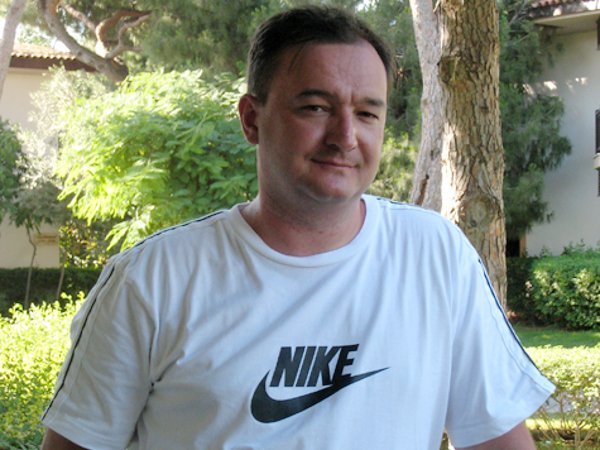
On April 8, 1972, Sergey Magnitsky was born, the auditor of the Hermitage Foundation, who died in the Sailor Silence pre -trial detention center.
Personal business
Sergey Leonidovich Magnitsky (1972-2009) was born in Odessa in the family of Leonid Maksimovich and Natalia Nikolaevna Magnitsky. He had Russian citizenship, lived in Moscow.
In 1993 he graduated from REA. G.V. Plekhanov, specializing in finance and credit. In 1995, he began working as an auditor at the consulting company Firestone Duncan, later became the managing partner of the company and the head of its tax consultation unit.
One of Firestone Duncan's clients was the Russian branch of the Hermitage Capital Management investment fund founded by William Brower, which was the largest in Russia in the early 2000s ..
In 2007, the Russian branches of Hermitage and the Firestone Duncan serving it began on suspicion of creating a tax evasion scheme using a network of subsidiaries. According to investigators, subsidiaries of the Fund illegally acquired shares of strategic Russian enterprises, including Gazprom and Rosneft. During the searches in three Russian organizations of the Brauder Foundation, documents, computer data and seals were seized, after which the fund sold all its Russian assets. Despite the numerous complaints and petitions filed to the investigating authorities, demanding the return of the seized documents, they were not returned. Hermitage representatives said that the Ministry of Internal Affairs carried out a raider seizure of its three subsidiaries, taking advantage of the seals and documents seized during the search. After that, Sergey Magnitsky began an independent investigation to protect the interests of the fund, during which he found out that the seized documents and seals were used to re -register a number of Hermitage firms for new owners and the subsequent illegal refund of taxes in the amount of 5.4 billion rubles as “excessively paid”.
Based on the facts revealed by Sergei on December 3 and 10, 2007, the HSBC Bank and the Hermitage Foundation filed several complaints in three main law enforcement agencies in Russia: the Department of Own Security of the Ministry of Internal Affairs, the Investigative Committee and the Prosecutor General of the Russian Federation, in which they outlined the circumstances of the completed fraud, indicating the names and surnames of the specific employees of the Central Internal Affairs Directorate. However, according to Vedomosti , “instead of immediately starting an investigation of the crime committed against the fund, law enforcement agencies referred to complaints about the Council of Internal Affairs, exposed to these complaints. In revenge, the police officers initiated the illegal opening of criminal cases against Hermitage Capital employees. ”
In October 2008, Magnitsky testified that law enforcement officers illegally seized movable property of Hermitage, but, despite this, to Braudor and the manager of the Russian department of the fund Ivan Cherkasov were charged in absentia of tax evasion and they were put on the international wanted list.
Sergei Magnitsky himself was arrested in the Hermitage case on November 27, 2008. He was accused of promoting the fund of taxes on an especially large scale and in the fact that in 1999-2000 the auditor participated in the creation of a scheme for the illegal purchase of Gazprom shares. It was detained and initially placed in the pre -trial detention center number 5; In April 2009, he was transferred to the Sailor's Sailor SIZO.
In early July 2009, Magnitsky diagnosed pancreatitis and found stones in the gall bladder. The doctors of the pre -trial detention center recommended him a planned surgery a month later, but exactly a week before this period, on July 25, he was suddenly transferred to the Butyrsky detention center, in which there was no hospital.
On November 13, 2009, the Tver court of Moscow refused Magnitsky to replace the preventive measure, leaving him in jail. At the same time, his complaints about poor health were not taken into account. On November 16, in the morning, Magnitsky's condition worsened and he needed hospitalization. At the end of the day, he was taken to the hospital at the Sailor Sailor SIZO. There he was diagnosed with Pancreatitis, but Magnitsky was never performed an urgent operation and already at 21:50 doctors testified to death from pancreatic rupture as a result of pancrehenecrosis. Then, however, the investigation said that Magnitsky died of a heart attack.
The charge of the death of Magnitsky was brought by his attending physician Larisa Litvinova and her immediate boss Dmitry Kratov. Subsequently, Kratov was justified, and the case against Litvinova was terminated due to the expiration of the statute of limitations.
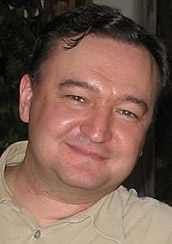 Sergey Magnitsky
What is famous
The death in the Russian prison of Sergei Magnitsky became for many a symbol of police arbitrariness and corruption reigning in Russia. His death served as the impetus for the next exacerbation of relations between Russia and Western countries.
Already at the end of December 2009, the Public Commission on the Control of the Rights of Prisoners published a report with the conclusion that the “creation of inhuman, humiliating human dignity, comparable, essentially, with torture, the conditions of detention”.
In 2011, the Human Rights Council under the President of Russia announced the results of an independent investigation into death of Sergei Magnitsky. The Council decided that the arrest and detention of Sergei Magnitsky were illegal, and "the accusation against Magnitsky was fabricated by the employees of the Ministry of Internal Affairs and the FSB of the Russian Federation."
The investigation showed that Sergei Magnitsky was denied justice, the same persons who accused the tax refund were engaged in the investigation of his case; He was denied the necessary medical care in conclusion. Based on the results of the investigation, it turned out that on the last day of his life, Sergei Magnitsky was beaten by guards with the help of rubber batons, and the emergency brigade caused for more than an hour was not allowed into his camera until he died.
The “Sergei Magnitsky case” caused the widest public outcry.
In April 2010, a member of the US Senate Benjamin Cardin asked Secretary of State Hillary Clinton to close the visa corridor in the United States for 60 Russian officials (the so -called “Carlin list”) involved in Sergey Magnitogsky embezzlement and his death. In September 2010, the US Congress voted for the initiative of Cardin.
In December 2010, the European Parliament adopted a resolution calling for prohibiting the entry into the EU countries to Russian officials related to the case of Sergei Magnitsky.
In July 2011, the US State Department introduced visa restrictions on several dozen Russian officials related to the “Sergei Magnitsky case”.
In November 2011, the Hermitage Capital investment fund published a 100-page report “Torture and Marnish Magnitsky. Concealment of truth by state bodies. " The report based on official documents and judicial materials contains certificates of refusals from all state departments in the complaints of Sergey Magnitsky throughout the year of its detention and the role of these departments in the deprivation of his freedom, health and life. The report was sent to the Human Rights Council under the President of the Russian Federation, as well as the parliaments of the USA, Canada and the EU countries.
In March 2012, after emotional debate, deputies of the House of Communities of the UK parliament unanimously adopted a resolution on visa sanctions and the arrest of the assets of officials involved in the case of Sergei Magnitsky, as well as other violations of human rights.
The resolution recognized it necessary to establish visa sanctions and arrest assets of four categories of persons:
1) persons involved in the arrest and death of Sergey Magnitsky,
2) persons covering them from responsibility,
3) persons participating in the magnetic scheme of theft revealed by Sergey,
4) persons responsible for the violation of human rights in Russia and other countries in all other cases related to violation of the 1966 International Civil and Political Rights Convention.
“This law is not against Russia, on the contrary, it is a pro-Russian law that is designed to protect those who, as Sergey Magnitsky, are not afraid to fight corruption in Russia,” Dominic Raab said during these debate.
In December 2012, the so -called “Magnitsky Law” was adopted in the United States, imposing personal sanctions against persons responsible for violation of human rights and the principle of the rule of law in Russia. Initially, the law introduced visa restrictions and blocking financial assets in US banks for people involved in the murder of Sergei Magnitsky. At the same time, at the request of the White House, the American bill was prepared not in the form of a list of the list, but in the form of a mechanism with which the US government could make and remove people from the “black list”
In April 2013, the US Department of Finance published the first personal composition of the Magnitsky List, which included 18 people. In the future, he was replenished several times, so that the final list includes 34 people - persons who were directly related either to the investigation in the case against Sergey Magnitsky, or to the posthumous trial of him, the doctors of the pre -trial detention center, which contained magnet, as well as the defendants of his own investigation against the Ministry of Internal Affairs.
According to the law, persons included in the “Magnitsky List” are losing their rights to receive visas in the United States, and their American assets are subject to freezing.
What you need to know about
The so -called “law of Dima Yakovlev” is associated with the “Magnitsky Law”, which prohibits the Americans to adopt Russian orphans.
After the adoption of the United States, the “Magnitsky Law”, Russian deputies in December 2012 decided to adopt a response law involving the introduction of sanctions against the Americans guilty of violations of the rights and freedoms of Russian citizens. The speaker Sergey Naryshkin, who was supported by the leaders of all four fractions of the State Duma, was the initiator.
Initially, the Federal Law of December 28, 2012 No. 272-ФЗ “On measures of influence on persons involved in violations of the fundamental rights and freedoms of a person, rights and freedoms of citizens of the Russian Federation” prohibited entry into Russia and suggested the arrest of assets of the US citizens involved in violation of human rights or crimes against Russian citizens.
However, by the second reading, the deputies Ekaterina Lakhova (United Russia) and Elena Afanasyeva (LDPR) proposed to introduce a clause on the adoption of Russian orphans by citizens of the United States and other countries against citizens of Russia on the motive of their involvement in violations of human rights in the Russian Federation.
On December 19, the State Duma adopted the bill in the second reading, including the proposed amendments prohibiting the adoption by the Americans of Russian orphans, as well as prohibiting the activities of NPOs funded from the United States in Russia and pose a threat to Russian interests.
Among the opponents of the law, he received the unofficial nickname "Law of the Serclangers." On the day of the adoption of this law, the hashtag #the lawsuits entered the world trends of the social network Twitter.
Later, however, the Prime Minister of the Russian Federation Dmitry Medvedev stated in an interview with CNN that this law was “adopted on an emotional wave related to the corresponding decisions of the American Congress, but it was not legally or actually connected with the“ Magnitsky law ”.”
Direct speech:
“The story of Sergei Magnitsky is the story of outstanding courage, patriotism and heroism, which should serve as an example for all of us. Sergey was only 37 years old. He died with a painful death, subjected to inhuman treatment and torture. Something similar, probably, could have happened in the Middle Ages, but to imagine that this happened today is simply impossible, ” - an article“ Memory of Sergey Magnitsky ”, Vedomosti, No. 2515 of 25. 12.2009.
“Having revealed large -scale corruption, Sergei Magnitsky did not leave the country, but remained to achieve the rule of law in his country. His brave act cost his life. Today, the name of Sergey Magnitsky is included in a number of great people who have fought for the law, democracy and freedom of speech in their homeland, continuing the tradition of Solzhenitsyn and Sakharov, and today Anna Politkovskaya , ” - the deputy of the House of Communities of the UK parliament, Dominic Raab.
7 facts about Sergey Magnitsky
- In response to the request of Jamison Fayerstone, the senior partner of Firestone Duncan, to leave Russia at least temporarily, Sergey Magnitsky answered him: “Jamson, you are watching too many feature films, not 1937 today.”
- According to the Ministry of Internal Affairs, Magnitsky was placed in a pre -trial detention center, as shortly before the arrest submitted documents for a visa to the British Embassy and investigators feared that he could go abroad. However, in Magnitsky, there was an official letter from the embassy that he was not issued to him.
- Magnitsky and his lawyers sent more than 450 complaints, in which, among other things, poor conditions of detention were recorded and that the lawyer did not transmit the medicines that his mother brought him.
- During the location in investigative insulators, Sergei Magnitsky lost about 18 kg in weight.
- In 2010, the International Non -governmental Corruption Organization Transparency International has postponed Sergei Magnitsky award “For Honor and Dignity”.
- According to the New York Times, the “Magnitsky list”, compiled by the US State Department, has a classified part, which introduced high -ranking Russian officials, the names of which the State Department did not betray publicity. The existence of such a classified list is confirmed by the then US Ambassador to the Russian Federation, Michael McFol.
- Sergey Magnitsky had a wife and two sons.
Materials about Sergey Magnitsky
Sergey Magnitsky: 100 pages of murder.
Sergei Magnitsky died because he believed in justice. "Vedomosti" No. 2515 dated December 25, 2009
Conclusions of the expert group of the Presidential Council for Human Rights based on the results of the investigation of the circumstances of the death of Sergei Magnitsky
The death of the hostage. William Brauder about his activities in Russia and the case of Sergey Magnitsky
Defending Sergey Magnitsky. An interview with Jamison Fayerstone about what Magnitsky actually did for Hermitage Capital.
Article about Sergey Magnitsky in Wikipedia