
Translated material
All the same tea
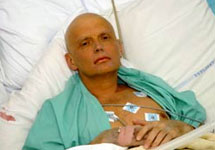
British investigators in the case of the murder of a former FSB officer Alexander Litvinenko tried to poison during their visit to Moscow. It is reported by The Times, who announced the exit on Monday on the Channel 4 Channel 4 dedicated to the investigation of the Scotland-Jard of the film "Hunting KGB killers".
In the film, the investigation, which managed the investigation, told Brian Tarley how the Russian authorities prevented the work of investigators in Moscow. According to the policeman, "the Russians outwitted him," saying that the main suspects, Dmitry Kovtun and Andrei Lugovoi, are in the hospital due to the consequences of radiation.
British investigators were given only 13 minutes to chat with Kovtun. At the same time, the suspect was completely bandaged, which made his intodendation impossible. In addition, detectives were forbidden to record this conversation.
The conversation with Lugov was more successful. However, according to Tarley, he "looked like a cucumber", despite the statement of the Russian side. Lugovoi was dressed in ordinary clothes and clearly just arrived in the hospital.
In the General Prosecutor's Office, the representatives of Scotland Yard issued a "whole pack" of the deciphers of their conversations with the suspects. However, it turned out already in London that there was no conversation with Lugov in the package. The head of the detective police department Clive Timmsons is sure that the record was intentionally withdrawn.
Investigators also say that they themselves were poisoned when they drank tea in the General Prosecutor's Office. According to them, after that they began to problems with the stomach.
Litvinenko, who left for the UK in 2000 and received a British passport in October 2006, died on November 23, 2006 in a hospital in the University College of London. After his death, the specialists of the British health protection agency said that they discovered a significant amount of radioactive element of the Polonium-210 in the deceased body.
On January 21, 2016, in London, Judge Sir Robert Owen announced his decision following the results of public hearings in the case of the death of Litvinenko, which were held from January to July 2015. Owen came to the conclusion that Litvinenko was killed in London Lugovo and Kovtun. At the same time, according to the judge, the operation to kill Litvinenko was most likely approved by Vladimir Putin and the then head of the special services Nikolai Patrushev.
In May 2016, Matthew Pancher, one of the experts who discovered polonium in Litvinenko, committed suicide . Pancher was a specialist in the field of radiation research and the consequences of irradiation and worked in the British Atomic Energy Research Establingment (AERE). Recently, he has conducted research on the program for measuring the content of polonium among former employees of the USSR nuclear enterprises under a contract with the federal government of the United States.
According to relatives and colleagues Panche, the last six months of life he has been extremely depressed. Returning at the end of last year from Russia, the scientist convinced himself that he had made a catastrophic mistake in the study. At the same time, the head of the Aere department believes that Panche's doubts were "irrational." Another colleague called the problem that arose in the study as "insignificant."