
Translated material
Perm IK-10 for the third time withdrew the idea of the transfer of Stomakhin to prison
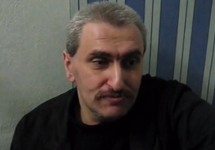
The administration of the IK-10 strict regime at the Vsesvyatskaya station within the city of the Chusova Perm Territory for the third time withdrew the idea of the transfer of publicist Boris Stomakhin to prison. This was announced at her FB page by the Moscow Polyactivist Vera Lavreshina with reference to the Yekaterinburg colleague Gleb Elev, who acts as a public defender of the Politzeck.
Lawyer Roman Kachanov at the hearings held on Monday in the Chusovsky City Court again pointed out a number of mistakes and inconsistencies in the presentation. After that, the FSINITS, as in the previous two times, on their own initiative withdrew the document.
Lavrashina also informed the "faces" with reference to Kachanov that Stomakhina was once again sent under a far -fetched pretext to a schizo. The penalty expires around April 20. This is the third sending of Politzeck in a schizo since the beginning of this year. In January, he was given 5 days of the insulator on charges of using jargonisms, and in early March - 15 days, and they did not even explain the reason for the recovery.
During his stay in IK -10 in August - December 2014, and then - since August 2015, Stomakhin was repeatedly subjected to unreasonable penalties. He was placed many times in a schizo, then transferred to Bezun (a detachment of strict conditions for serving a sentence), later to the PCT (chamber -type premises), and finally in the EPT (a single room of the chamber type). At the same time, after sending to the EPTC, Politzeku continued to set deadlines to the schizo.
In the case of Stomakhin, sending from EPT to a schizo - a measure to a certain extent formal, since in fact the political prisoner is left in the same single chamber where it was placed even after transferring to the PKT. Nevertheless, when a decision on placement in the schizoma is made, the conditions for the content of Stomakhin in this chamber are tightened. In addition, the constant appointment of the penalties just gives the FSINCS the grounds to declare the political prisoner a malicious violator of the regime and, in accordance with part 7 of Article 74 of the PEC (types of correctional institutions), will apply for the tightening of the sentence - sending to prison.
The first such presentation became known at the end of September 2016. The document was signed by the then acting head of IK-10, Major of the Internal Service Yuri Gubal. The trial took place on October 27 . Kachanov pointed to Judge Olga Gorshkova to contradictions and ambiguity in the documents, as well as to procedural errors and petitioned for the return of materials to IK-10. After that, the representative of the colony of the city of Loads revoked the document.
The repeated performance was submitted at the end of November by the head of the IK-10, Colonel Ilya Aslamov. However, on January 13, 2017, indoors also withdrew this paper when Kachanov drew the attention of Judge Tatyana Kataeva that the new idea was also submitted in violation of the procedure.
The third performance of the FSINITS sent to court on March 6 .
According to paragraph "in" Part 4 of Article 78 of the PEC (change in the type of correctional institution), convicts who are accused of malicious violation of the regime can be transferred from the colony to prison for no more than three years. The seven-year term for the conclusion of Stomakhin expires on November 19, 2019. Thus, the Politzek’s defense previously concluded, the IK-10 administration intends to send him to prison until the very end of his term.
In total, in Russia there are only about a dozen prisons (on prison jargon - covers), including one for patients with tuberculosis. The administration of the Perm IK-10 violates the rights of prisoners, but torture as such in this colony does not apply. Meanwhile, all prisons, according to human rights activists, are torture.
On April 7, Stomakhin gave Edelev a comment regarding mass protest promotions that took place throughout Russia on March 26. Having approved the very fact of demonstrations, the publicist, however, noted that the corruption of the highest officials of the state, which became the reason for the performances, was a secondary problem, and the main question was about systemic changes in the country - not posed by protesters. In this regard, Politzek expressed doubt about the effectiveness of the began protests.