
Translated material
The Briton discovered in the Soviet tank T-54 gold ingots worth $ 2.5 million
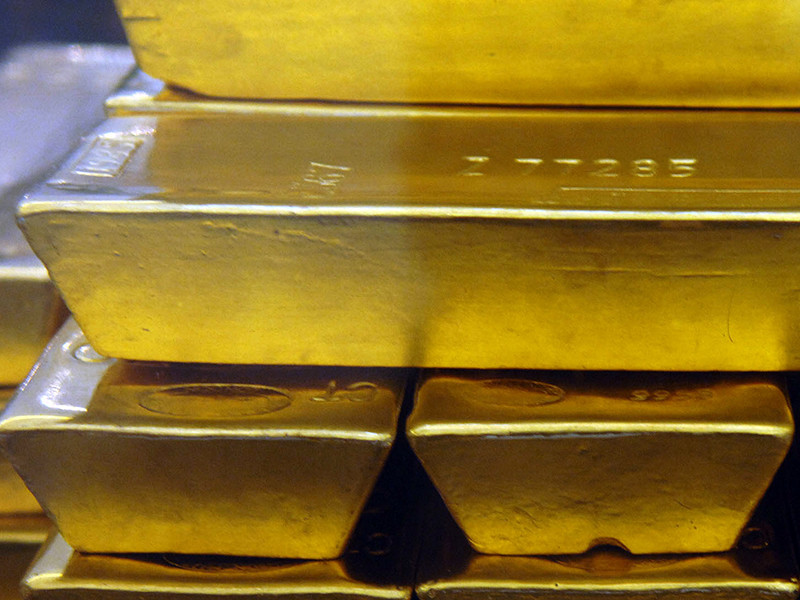
The British collector Nick Foreign Ministry found in the Soviet T-54 tank five gold ingots worth two million pounds ($ 2.5 million), reports The Sun.
The 55-year-old Foreign Ministry purchased a tank at the EBAY online auction for 37 thousand dollars. The ingots were discovered by a collector in the fuel tank when he examined the tank with the mechanic Todd Chamberlain.
The men called the police, because they did not know what to do with the find. The police seized gold, issuing a receipt. “Even if I don’t get gold back, I will have a wonderful tank left,” the Briton said about this.
As it turned out, the bought T-54 belonged to the armed forces of Iraq and took part in the war in the Persian Gulf of 1990-1991. The tank was captured by the troops of the international coalition and delivered to the UK.
According to the collector, the Iraqi military hid the gold stolen in Kuwait into the fuel compartment for fuel, reports Tht Daily Mail . Perhaps the British side will make a request to Kuwait to find out the origin of the gold, which could be taken out after Iraq's invasion to Kuwait in August 1990.
Nick Mead, Left Was Shocked to Discover a Gold Bullion Worth £ 2million in the Fuel Tank of a Tank He Was Restoring Pic.twitter.com/ecgczgoqlqlQls
- Prudencio Sosa Jr. (@Israelifreedom) April 9, 2017
According to TASS, from 1959 to 1968 the USSR placed Baghdad about 300 Medium T-54 tanks. These machines participated in the Arab-Israeli war of 1973, in the Iran-Iraq war of 1980-1988, as well as in the Gulf War.
In the collection of a farmer from the English county of Northgemptonshire, at least 150 units of equipment. Everyone can ride in the fields on the combat equipment of Nick Foreign Ministry for money.
The war in the Persian Gulf continued from August 2, 1990 to February 28, 1991 between the multinational forces led by the United States and Iraq for the liberation and restoration of Kuwait's independence. The coalition was attended by almost all former allies of the USSR in the social camp, and the Soviet Union itself, which was first supported by the United States.
On July 18, 1990, Saddam Hussein accused Kuwait of the last ten years the country has illegally mining Iraqi oil from the border field. As compensation, Kuwait had to write off Iraqi debts of $ 14 billion and pay another 2.5 billion dollars. Emir Kuwait refused to comply with the requirements.
As a result, at night on August 2, four regular divisions of the Iraqi army invaded Kuwait. In just one day, the Iraqi military took control of El-Kuwait. Then the UN Security Council adopted a resolution in which he condemned the invasion and demanded from Iraq to immediately withdraw his troops from Kuwait. The Iraqi leadership refused to obey the resolution.
The media wrote about the numerous facts of looting by Iraqi soldiers in occupied Kuwait, including banking storage of Kuwait and the gold reserve of the country.
In November 1990, the UN Security Council adopted another resolution in which Iraq was allocated a month to stop the occupation of Kuwait. On January 17, 1991, the troops of multinational forces began a military operation to liberate Kuwait. First, massive air strikes were carried out, then a ground operation was completed, which ended with the release of Kuwait. The country suffered large economic losses as a result of the war - the total damage amounted to $ 30-50 billion.