
Translated material
Orthodox no longer poor
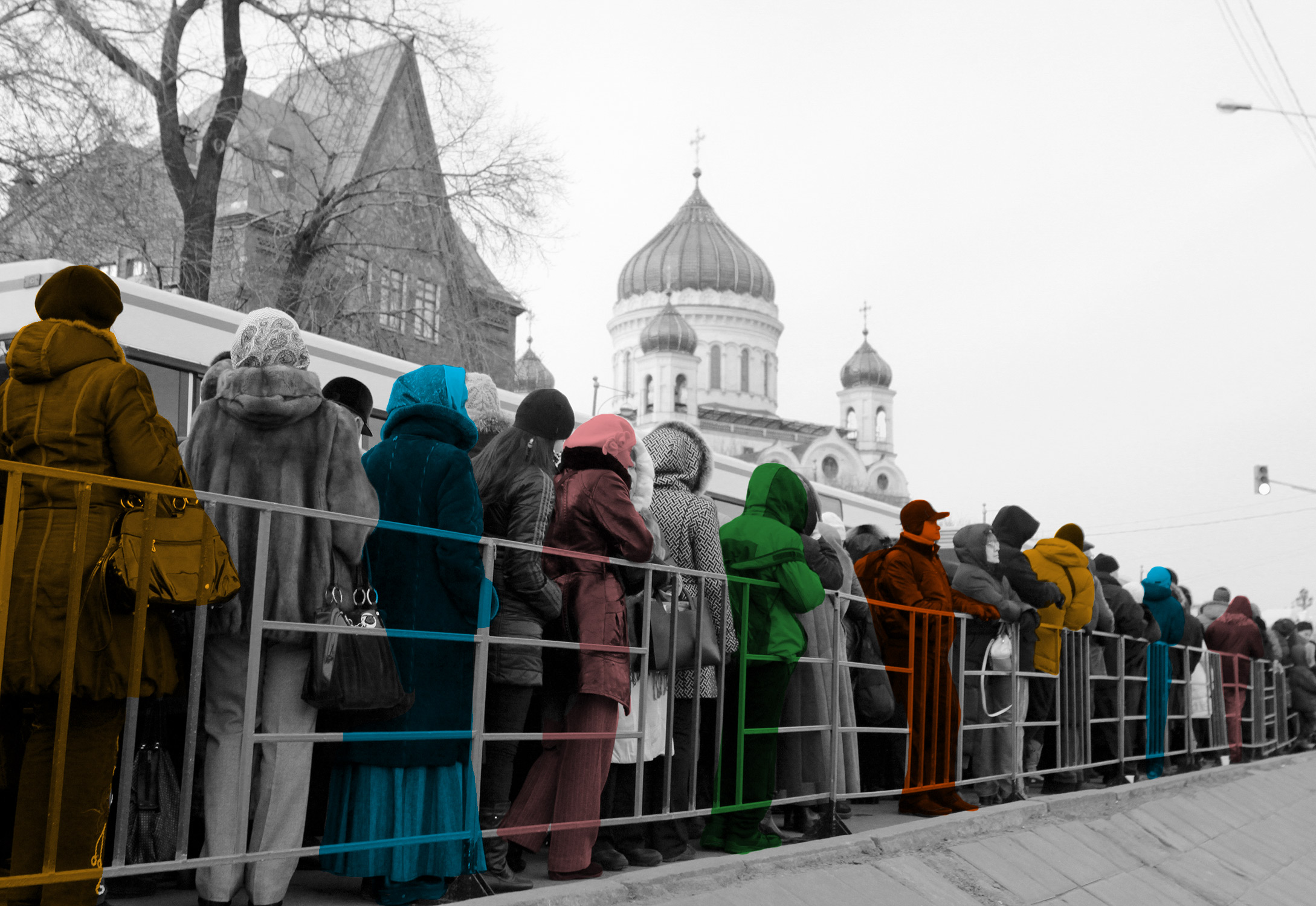
In Russia, up to 2% of the population are Orthodox, even up to 8% go to church from case to case. Who are these people?
Over the past one and a half years, the composition of parishioners of the Russian Orthodox Church (Russian Orthodox Church) has changed. A generation of Orthodox "grandmothers" leaves the stage. In the province, this leads to the desolation of parishes, and in large and medium cities the place of "grandmothers" is occupied by the middle class. Strong ideologized communities, led by priests-charismatic priests, are set up church fashion: the image of a modern “church” promoted in church media is not a humble marginal, hiding guilt under inconspicuous clothing, but an educated, a successful person of middle-aged, who should have enough money for a good car and three or four children.
Orthodox unknown
No large-scale research of parishioners of the Russian Orthodox Church was not conducted. If in the case of the number of Orthodox this can still be overcome by referring to the statistics of the Ministry of Internal Affairs, then, making a portrait of the Orthodox, there is no need to talk about accurate numbers. Attempts are known to conduct research in one or more parishes (one of them was undertaken by the Sociological Service "Wednesday"), but there is little sense in them. It is impossible to correlate these examinations with the realities of the whole church-where there are city parishes, there are rural ones, there are in the center of the metropolis, and there are parishes located on the working outskirts, where they are flowing from distant places for the sake of a particular priest, and there are those where these priests are changing annually-and some kind of “woman Varia” refuel all affairs.
In the absence of quantitative data, I rely on two sources. Firstly, for 20 years I have been interviewing Russian priests and church servants (mainly non-burial) about the number and social categories of their parishioners. Secondly, I collect their evidence of this, made in an interview with the regional press and on social networks.
Change of generations of parishioners
Back in the early 2000s, the vast majority of parishioners of the Russian Orthodox Church were Orthodox "grandmothers". Usually they had a peasant or "settlement" origin. Those who lived in cities were once labor migrants. “Grandmothers” regarded the Church as a kind of club for people of their age and supported in it rather strict rules that not only younger parishioners, but also priests tried to subordinate.
Read also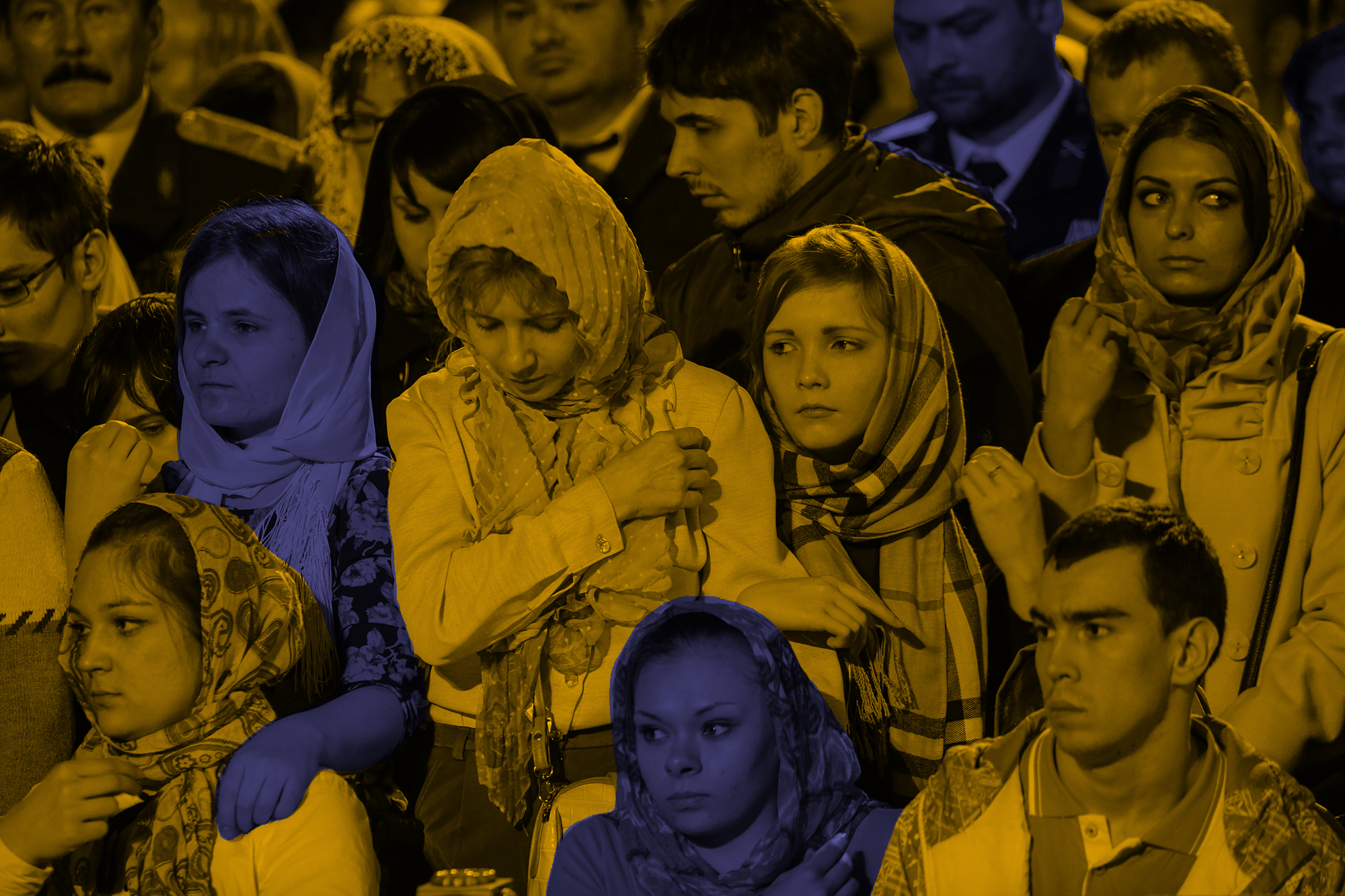 30% of the Orthodox believe that there are no God up to 85% of the inhabitants of Russia call themselves Orthodox. At the same time, about a third of them admit that they do not believe in God, and those who believe almost do not go to church. So how many Orthodox are there really in Russia?
Antonina Petrovna Schukina (born in 1926) from the parish of the Church of Ilya the Prophet in the Lesnoy (Pushkin district of the Moscow region) recalls on the parish site: “Born in a religious family. In our village there were two beauties-church. I remember that most of the inhabitants were believers. In the 30s, one church was blown up, and the skeleton of the second church was still standing ... In the village of Lesnoy, I ended up in 1954. There was no temple in it. I went to the temple secretly to Moscow ... "
However, then, literally for several years, the situation has changed. If earlier, in return for the natural reasons, new ones came to the “grandmothers” - those who in childhood received the habit of going to church, then the connection of times broke. In the Soviet province, especially in the villages, it was customary to go to church until about the second half of the 1950s-subsequent generations after the Khrushchev anti-religious campaign were no longer of such skill and interest.
The current generation of Orthodox “grandmothers” was 35-45 years old when the USSR collapsed. Many of them, according to my observations, have secondary, secondary technical or higher education. Almost all of them managed to visit the Komsomol members, many - members of the CPSU, most of them grew up in cities - and the first “spiritual experience” did not receive in the church, but in a pioneer organization, district libraries and school discos.
The current generation of Orthodox “grandmothers” was 35-45 years old when the USSR collapsed. Almost all of them managed to visit the Komsomol members, many were members of the CPSUWhen in 2009 the new bishop offended the wife of one of the rural parish priests in the Ivanovo diocese, he wrote an open letter in which, in particular, he listed her such virtues: “The woman served the state for almost twenty years with gratitude, diplomas and medal, receiving the title of police captain. 16 years almost for free, without weekends and vacations, she “served” in the church, losing it, dilapidated, and equipping her along with parishioners, doing the most dirty work and living with children in unbearable conditions ... Lyubov Mikhailovna, the former best head of the inspection for minors of the USSR, a little woman, in whose house several dozen dozens of different cities were cured from drug addiction. Countries, a little woman, on whose shoulders there was a huge part of the economic, educational and pilgrimage affairs of the temple, a deeply Orthodox person. ”
This is a fairly accurate portrait of not so much priests as many modern middle -aged parishioners, including former teachers, cultural workers, engineers and technology.
The disappearance of "grandmothers" led to a decrease in the attendance of temples in the 2000s. At the end of 2003, Patriarch Alexy was forced to admit this, who in his speech at the diocesan meeting of Moscow said: “The ranks of the parishioners of our temples, which have passed persecution and deprivation during the most difficult tests, are increasingly increasing. They go to eternity. But their places are not always filled with young generation, as a result, temples are empty. And they are empty not only because the number of temples in Moscow is increasing. This is a natural process, it will continue. ”
There is no one to replace grandmothers in the province of grandmothers
The “natural process” continues in villages and small cities, where the ROC parishes from the mid-2000s have been in a deep crisis. If earlier, in a typical “living” and large Russian settlement with a population of one and a half to two thousand people, 30 people came to the temple for Sunday, now these are five or seven people (I have received such numbers during field research in the Novgorod (2004) and Orlov (2012) regions).
For example, in 2013, Father Sergius from the city of Slavyansk-on-Kuban of the Krasnodar Territory complained in his blog in the “Live magazine”: “Yesterday I held an event on the basis of the Khutorsky DC, the name“ Conversation with the priest ”, which was supposed to communicate and answers to people's questions. The event was announced in a month, and announcements in all mass places were stuck. And you know how many people came from the six thousandth population of the Plot settlement (Baranikovsky farm, where I serve, its center has about two and a half thousand inhabitants)? ABOUT! This is not the letter “o”, but the figure ... And this happens not only with me (I serve here a year and a half), but with all the previous priests ... For a year and a half of my service, only 39 people were baptized here (I conduct a metric). They bury almost every day (after all, mostly the population is 45 ++), but the funeral service pass on average two to three times a month ... Those surviving grandmothers go to the temple, who opened this parish in the 95th. On Sunday at the liturgy, 8-12 people gather, and they are a choir. New arrivals are four people. ”
The departure of "Grandmothers" led to the crisis of rural parishes. The priests and so lived well, but then there was simply no one to support themThis situation led to a crisis from the point of view of the Orthodox infrastructure - and the ROC has about three quarters of rural parishes. Rural priests and so well lived, but then there was simply no one to support them. And even more important - there was no one to pay for the communal expenses of temples - light, heat and current repairs. All this quickly led to reformatting of priestly activity. The priests began to live and officially serve at temples in district centers or “roadside” churches located on large highways, and take the rural churches under their protection, where they come to serve (and church treas) once a month, or even two. So economical. But this tactic does not lead to the restoration of communities.
In cities, the middle class came to temples
In cities, the situation was different. As the number of “grandmothers” falls and the growth of patriotism heated by television, the middle class began to come to temples. This process recorded the examination of Bashirova and Partners in 2007. In particular, it followed that 54% of the parishioners under 50 years old, their educational level coincides with the Central Russian -Russian to tenths of interest: 68% - the average and average special; 19.5% - the highest and incomplete higher, and “materially, the Orthodox parishioners are somewhat less provided than the average Russian”; The ratio of men and women is one to two.
As far as one can judge from my observations, conversations with the clergy, the basis of the visual temples of the middle class (both parishioners and bite) are representatives of the field of trade and finance (in other words, owners of small stores, managers and accountants), officials, state employees (teachers, doctors, law enforcement officers), representatives of organized crime, householders from households. wealthy families, IT specialists. In large cities, a layer of university intelligentsia is noticeable, especially the humanities. City parishioners are more often women than men. The low interest in visiting temples is manifested by people with a natural science education, lawyers and male representatives of working specialties.
In cities, the change of "grandmothers" to the middle class led to liberalization - sitting places appeared in the temples, women were allowed to come in trousersThe change of "grandmothers" to the middle class and the fall in the attendance of temples contributed to the "humanization" of the harsh style of intra -church relations. If earlier all parishioners were supposed to stand during the service, then from the beginning of the 2000s, benches and chairs appeared in the “advanced” churches, and in the 2010s “fashion” for sitting places for “weak” categories of parishioners became widespread. The strict requirements for the appearance of women were softened - liberal parishes began to allow women in trousers to temples, and in other temples for those who came in “not form” they started conditioned skirts and light scarves.
Parishioners with ideas
In large and middle cities, there are priests for representatives of the middle class “with ideas” who collect parishioners around themselves with certain ideological preferences. This trend arose back in the 1960s, when the Soviet educated youth, which was disappointed in communist ideology, faith in general and the parish life in particular began to be considered a decent ideological replacement. The stream of such people in the Church significantly intensified in the 1980s, when various categories of “informals” were included in the church walls, which experienced disappointment not only in school truths, but also in youth alternatives. Since that time, in some parishes of the Russian Orthodox Church there are many former hippies, rockers, anarchists and former fans of esoteric teachings. After 1991 and especially after October 1993, former active members of the CPSU and various “national-patriotic” organizations threw into the church. They searched in her spiritual peace and shelter from the world, where the "democrats" carried out reforms.
Read also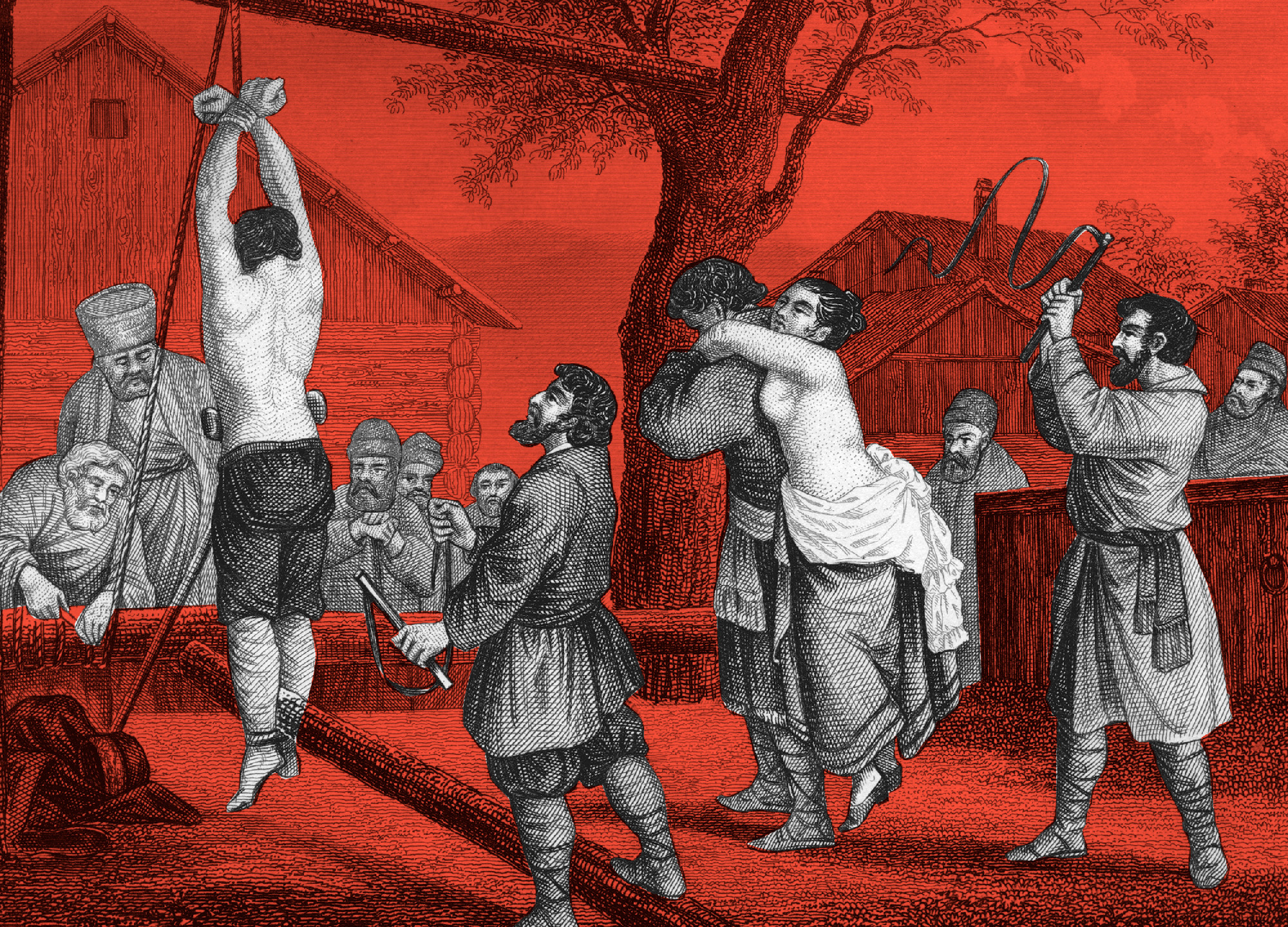 As we managed to cancel slavery in Russia, it is customary to suspect reforms suspicious - how worse it is. But there were times in our history when the authorities not only understood the need for reforms, but even carried out them
Each similar group was looking for its priests, who would understand her interests, would speak her language with her and contribute to the formation of a circle of “their own”. Regardless of the beliefs, such ideologized priests sought to create a closed quasi -family circle from parishioners. Ideologized parishioners were usually relatively young, had or were going to have children, and therefore they were popular with the ideas of Sunday schools, joint trips to monasteries, nature and summer camps. Non -family young people who were interested in Orthodoxy came to such communities. Often their visits to the temple ended with another parish wedding.
All this allowed such parishes to increase the number. As a result, a lot of different ideologically oriented, but real, many members of the Church of the Church of parishes were formed in Russia. The largest communities reach two to three thousand participants, dozens, if not hundreds of such parishes have the number of one and a half thousand people.
In the “Environment” arranged in 2013, a survey of exemplary Orthodox parishes “more than half” of the surveyed priests called specific communities, almost all of which are known as ideologized communities with conservative and fundamentalist views; 76% of them were in Moscow. In general, however, there are few such parishes in the Russian Orthodox Church-about 3-4%.
The “ideological” communities in 1990-2000 gradually took over the formation of ideas about what it is “churching”. Previously, the “churching” were dissolved in the total mass of “simple” believers and controlled by the unspoken spiritual leaders - “elders”. The latter formed the specific language and manners of the behavior of the “churching”, followed their appearance and the state of the psyche - always in a state of guilt, in anticipation of “miracles” and “salvation”, which is sensitively listening to dreams and signs.
The “ideological” communities took up the creation of a new format of “churching”, using partly the achievements of their predecessors, but much more taking from modern Western Christianity. The new model of church charity, now adopted as a church standard, is the community of Archdia Arkady Shatov (now - Bishop Panteleimon). The new model of church-Vegetal higher education is the community of Archpriest Vladimir Vorobyov (rector of the Orthodox Holy Tikhonovsky University). The Russian tracing paper of the American "pro -litest" movement against abortion and in support of the family is the community of Archpriest Dimitry Smirnov. Russification and adaptation of the language of worship - the community of the father of George Kochetkov. The “human” attitude towards parishioners and the peace -loving as a whole Orthodoxy of the European model - the community of Archpriest Alexander Borisov. The first full -fledged Orthodox media holding is the parish that was formed around the rector of the Sretensky Monastery Archimandrite Tikhon (Shevkunova).
The “ideological” communities approved a new image of a church -to -man and rich man. A typical example is Anna KuznetsovaSuch communities in the 2000s approved a new type of “Church”. This is not a marginal in a candle paraffin of dark and nondescript clothing, but an educated and successful middle-aged person who should have enough money for a good car and three or four children. He must understand modern music, eat right and good and regularly abroad. It was precisely such Orthodox in the person of successful businessmen, artists and journalists who looked from the first pages of the Orthodox gloss. As an example, it is enough to look at Anna Kuznetsova, the current Commissioner for the Rights of the Child.
Moreover, most of the "church" still remain marginal. A parishioner who replaced a black handkerchief and an old coat to a dull lilac blouse bought in a church shop and a gas scarf of the color of the sea wave, drawing information from the “Orthodox TV channel”, listening to “Orthodox bards” or even “Orthodox rappers” in his free time, visiting “Orthodox artists” and rewriting with popular “Orthodox bloggers” - remains within the framework of their subculture.
Parishioners without undertaking
For most parishioners, ideological motifs are not the main thing. The temple for believers is primarily a place where they can get out of an ordinary living space and stay where everything is “different”. In the social and economic dimension, the temple for them is the service provided by the church. And “ordinary” parishioners want to be qualified consumers and be able to choose - they value a convenient location, convenient schedule, beauty, coherence of service and church singing.
A young parishioner, “a former Muscovite, now living in a cottage village five kilometers” from the Church of Ilya of the Prophet in Lesnoy, eloquently explains why their family in 2010 changed their usual visits to the Trinity-Sergius Lavra to this instant temple: “Autumn was approaching, and the question of how to make further trips with an infant, to make further trips, I got up with an edge ... So we decided in early November to try to go to the temple in Lesnaya ... The first feeling from the service that we came to was some kind of warm and home. The choir sings not majestically and tensively, demonstrating the voice data of the singers, but calmly and in spiritual very touching. The Lord has become completely close. Small children quietly scurry under their feet, and no one “shies” on them, no one misses or yawns. Пусть молитвенников и не так много, но чувствуется, что «захожан» нет. Все собрались на общую молитву. Всех объединяет Любовь ко Господу. Всех объединяет Христос. Мне как-то быстро предложили сесть, и я смогла на руках с грудным ребенком спокойно помолиться. Дать укромно грудь, когда младенец закряхтел. Первое причастие в этом храме, а окружающие нас поздравляют, как родных и давно знакомых прихожан. Все это, конечно, тронуло до глубины души».