
Translated material
Memory as a job
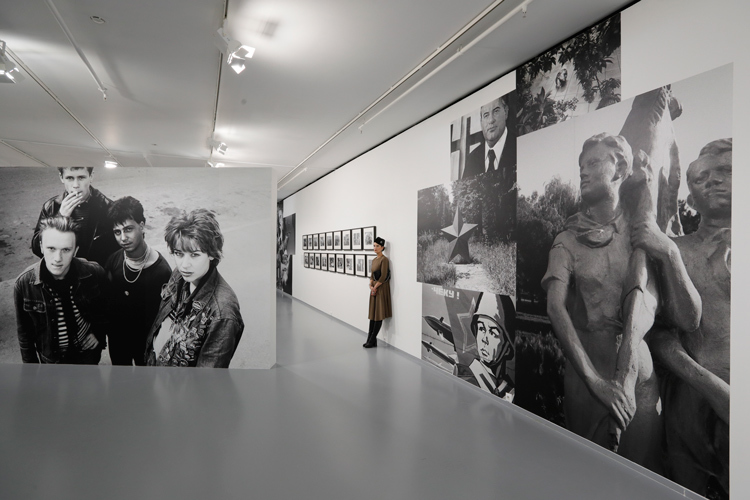
The 1980s and the beginning of the 1990s are increasingly becoming the topic of exhibitions, but critics rarely attract attention. Much less often than a thaw . Why did we forget perestroika?
Perestroika, thaw, failed putsch. Photographic (and not only) exhibitions of recent times again and again turn to the nodal points of the latest Russian history. As if the magic of the number 17 paradoxically leads to the search for a live alternative, which will not seem neither distant, nor ridiculous, nor empty and finally allow you to go beyond the battle of fans of the revolution without the beginning and enders of the principle "no matter what happens."
From the expositions about those periods in which Russia tried to turn to democracy peacefully, the least attention is attracted by exhibitions about the 1980s. Meanwhile, the anniversary, tenth, festival “Fashion and Style in Photography” (he alternates by even years with photobiennale) is dedicated to this particular time in Moscow. “Style” is understood expandfully - as visual and household signs of the era, material traces, according to which you can restore thoughts, moods and atmosphere itself, quickly lost in the layers of subsequent decades.
The wind of time
Behind the streamlined phrase “Wind of time”, which has become a slogan photo poster, a clear thematic focus is hidden. The curators are interested in the 1980s, and not all decades, but the very release of stagnation and the birth of new heroes, mainly in the artistic environment. They want to determine the very beginning of changes, that is, the very moment when the sensation of the airless space suddenly was replaced by the appearance of new “rebels against time”. And also how much the processes that took place in the Soviet Union can be placed in a global context. The organizers explain their enthusiasm for the era by the fact that it seems already far enough to look from the research distance, and close enough to recall that drive. In addition, many of the heroes of perestroika are still among us. Everything is true with research-students are now writing about the 1980s: for example, I recently reviewed a diploma of the "phenomenon of perestroika chernukha." But with the drive is more complicated.
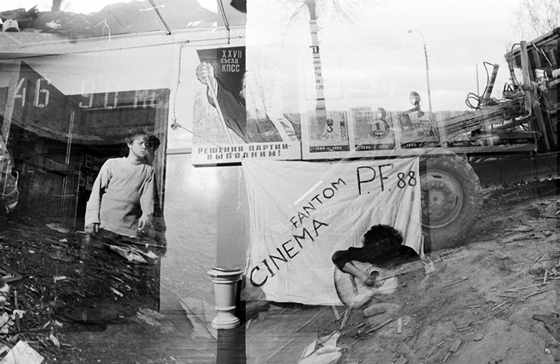 © Mamm Mitya Leikin. Ghost of Cinema 1988
The main exhibitions dedicated to 1980 are held on two sites: in the Zurab gallery on Tver Boulevard and mainly the multimedia art museum on Ostozhenka. The part, however, has already ended, the other only opens. This prodigal in different sites and in time contributes to the fragmentation of the Message of the festival. I suspect that most of the audience will not understand at all that the 1980s is his topic. In general, the mamm, sometimes, reproaches the randomness of the meanings and the erased of the political message: even revolutionary propagandists like Rodchenko, whose large retrospective ended on the eve of “fashion and style”, sometimes turn out to be aesthetically smooth “poets of the era”. However, it was this museum that boldly leads to the area of visible cultural and social trends of our time, which have not yet been spoke or even carefully silent. The implicit, not fully decorated trends of the collective unconscious are, possibly not completely decorated in the word, but they are visibly represented for further reflection. And now: while everyone was carried away by a thaw, and the Tretyakovka is only going to make exhibitions about stagnation and perestroika in the distant perspective, Mamm has already devoted a whole festival to them.
Paradoxically, but the most subtle topic turned out to be disclosed not on Ostozhenka, but in Zurab. Perhaps the point is in the small space of this exhibition site, which does not allow our attention to dissipate, or in the contribution of the curator Nina Levitina with her soft and attentive look at the photograph. In the main building of the museum, working with exhibition design and a more throwing, experimental and consonant with the spirit of our time, but some old -fashioned expositions on Tversky suddenly turn out to be more accurately corresponding to the material itself. Three personnel are shown here - Mitya Leikin , Igor Vereshchagin and Sergey Kuksin .
While everyone was carried away by a thaw, and the Tretyakovka is only going to make exhibitions about stagnation and perestroika in the distant perspective, Mamm has already devoted a whole festival to them.
Dmitry Skornyakov (aka Mitya Leikin) is the most famous author of those who represent Yoshkar-Ola at the festival, but “without Chilikov”, that is, less well-known; Mamm generally now shows attention to unstoped photographic schools-last year Novokuznetsk was shown in the photobiennal, and also the 1980s. The name of the exhibition is borrowed from the song of Grebenshchikov, ideally corresponding to what is happening in the frame and the most captured era with its mixture of optimism and cynicism, sincerity and sura: “Sitting on a beautiful hill, / I often see dreams, and this is what it seems to me: that is not in money, and not in the number of women, / and not in the old folklore, and not in the New Wave, - / but We go blind in strange places, / And all that we have is joy and fear, / Fear that we are worse than we can, / and the joy that everything is in reliable hands. ” Single personnel (like “Ikar’s fall in Russia”) and photographs from different series (“Monuments of the Fatherland”, “7 characters in search of the author”, “Yin/Yan/Tao”) are fascinating-widest black and white fantasies of the very end of the 1980s-early 1990s. Despite their obvious design, they, like the BG song, accurately reflect reality at the junction of the document and emotions.
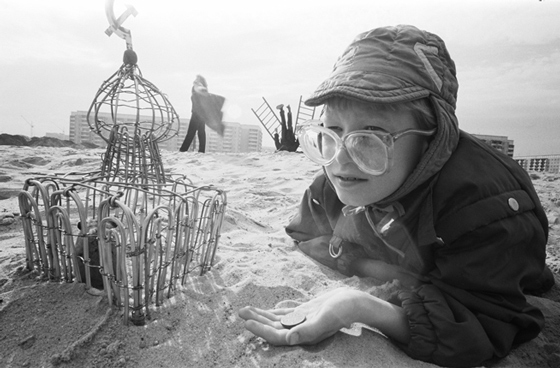 © Mamm Mitya Leikin. The fall of Icarus in Russia, 1989
The fragments of Soviet mythology are layered on the sprouts of the new, simultaneously cheerful and frightening. Such is the “ship”, whose name, of course, recalls the Renaissance “Ship of Fools” and “Praise of Stupidity”. His heroes are balanced at the height of an abandoned industrial building in a flimsy structure with the inscription "Aurora" and portraits of Lenin and Brezhnev, and a young Yeltsin with a clenched fist against the background of the Russian flag and the inscription "We believe!" These are the heroes of the revolution, tied with clusters of cartridges against the backdrop of a scarlet bunch: the name “to Russian citizens” came from August 1991. Such is the “yura”, parodying Brezhnev, with overhead eyebrows and orders cut out of paper on a T -shirt worn over the sweater, sitting at the table against the backdrop of wrapped walls, and in front of it is a bottle with the inscription “The economy should be economical” - a slogan that immediately causes belching, as from reading the then “Soviet Russia”. These are the Laokon, on which the worker breaks the skeins of some hoses, the “worker and peasant” against the backdrop of the walls glued with newspapers (not central) and the “girl of freedom”-a man in a blanket, imitating the famous statue and hinting at the enthusiasm of “all American” as the only light in the window.
A photograph of Leikin shows how the fragmentation of a collective unconscious with ruptures in uncomfortable places gives rise to monsters of reality. The fantasms of the past do not just crawl out of the depths of memory, so that they will again hide in its bowels again: they are embodied in real figures of bandits on Mercedes and oligarchs in raspberry jackets with reduced social responsibility. However, these images are not unambiguously terrible or sarcastic. In addition to the stalk, there is some kind of sincere joy, optimism, creative freedom, faith in their strength and good chaos, by which those who lived then, and especially were young, also remember the era. And this complexity of conflicting meanings, which has to be held in the head, without falling into one of the black and white poles, breaks through the audience with irritation or jokes in the book of reviews about “Leikina-Barmalekin”.
The “donated and stolen” by Igor Vereshchagin and the “portrait outside of time” Sergei Kuksin not only frames this exposition chronologically, but also very accurately show the content of the eras before and after, closing in a single impulse. The exhibition of Vereshchagin is amazing with a strange chronological failure just at the site of the affective explosion of the positive and negative emotions of the line of the 1980s-1990s. We see one and a half walls of black and white pictures of the very end of the 1970s-early 1980s; Only one is knocked out by the number of "1972". These personnel are very interesting to an accurate hit in the mood of the late stagnation, but it seems that the author did not quite decide on the opinion of him.
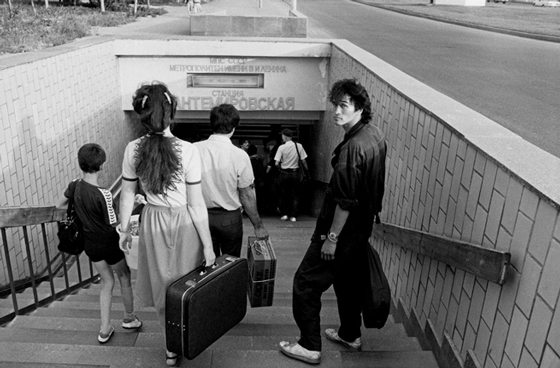 © Mamm Igor Mukhin. Victor Tsoi. Moscow. 1986
A picture with the rickety letters on the wall of the hangar with a bravura Soviet slogan, with shaky buildings in the foreground, or garages, or toilets, against the backdrop of free and puddles is called “communism” and causes a forgotten word “mismanagement” in memory. But next to him we see a frame that could touched a member of the CPSU Central Committee - a trio of guitarists by the river and a blurred forest with a heading BAM Time. The boy, standing on the shore and holding Murzik ("sea cat" under the arm), is easy to imagine in some newspaper "Week". On the frame nearby, two hard workers laid out bread and boiled eggs on a wooden bench, one in their hands a bottle of vodka and an enamel mug, and a football gate and five -story buildings are visible from behind. Unlike the straightforward, evaluative “communism”, the picture is simply called “Metallurg” stadium, Bratsk ”and will not be imbued with sarcasm, but with light humor, melancholy and a paradoxical kindness to a person of labor, which could also be found in newspapers and films of the era. And then it follows the emptiness of 20 years with the years - and the following pictures were taken after 2000: “Moscow Sukacheva” (2014), kissing the Police Milctions (“Love”, 2016), “Pavel Pepperstein and the cat Balashov” (2001) and a separate hall, where beautiful portraits of domestic and world cultural and artistic bohemia are represented on the black walls. As if a huge piece was cut out of the old film and simply glued the joint with more new frames in the joint.
This gaping in the place of the Gorbachev and Yeltsin eras is only emphasized by the modern frames of the photographer of the Rossiy newspaper and one of the authors of the book “Vladimir Putin. The best photos »Sergey Kuksin. Obviously, the name of the exhibition “Portrait outside of time” should emphasize the depth of psychologism and the skill of black and white photography, lulling its apparent apolitics. But in fact, they visualize the emptiness that replaced the conflict and the difficulties of previous eras. The exposition in which the general light is on, the audience likes; As one of them writes, all the characters are “caught great”.
On the walls, the aged, but still resisting heroes of perestroika are side by side with current politicians-well, almost like in the noev ark or utopia of Soviet science fiction writers about a bright communist future. Vyacheslav Volodin is mounted in one “square” of four frames with Mikhail Efremov and Evgeny Primakov, and both of the last are located lower, but everyone laughs. There is a slight raid of criticism and even in some way a small opposition. Nikita Mikhalkov proudly goes up the stairs to nowhere, and on the side shots of Dmitry Medvedev and Vladimir Putin are darkened and partially closed, we see literally one eye - Medvedevsky is gloomy, and the Putinsky will drill the viewer. But, despite all the jokes, hints and techniques of “revealing the psychological image”, this exhibition demonstrates a strange smoothness of emotions, conflict and emptiness of meaning at the level of personnel selection. Because the message in the spirit of “we are all people, all of us people” it seems to be some kind, well, insufficient against the backdrop of the current rallies, Crimea, Donbass and the general splash of aggression on television and on the Internet. It will not be able to reconcile people with such strong essential contradictions.
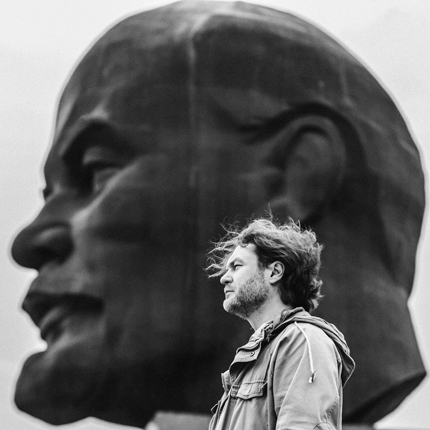 © Mamm Sergey Kuksin. Miridonov
Two strategies
The personnel of Leikin and Kuksin, hanging in the same space in the Zurab, show two opposite strategies for interaction with complex emotions caused by political and cultural conflicts that occur around. And it is not only that one of them is an independent author, and the second works in a government publication. In fact, most people, even the most opposition to the current government, hastened to forget the positive charge of the era that began in 1985, or frozen the traumatic memories, settled in memory in an undigested, chaotic form, or allowing themselves to lull themselves with “stability”. Too strongly, that drive was connected with the shadow sides of that time - with the Pelevin Sur, longing for an alarm, the horror of poverty, disappointment in the reforms, the intransigence of the parties and the depth of problems and critical errors.
This pseudoneity now pops up in numerous research series and curatorial projects “Young photography”, as if closing themselves from the injury of the past and modernity with an iron sheet of indifference. Sometimes it turns out to be consonant with artistic and chin projects, designed to express joy and delight, but usually showing only the lack of feelings and manipulation of a sterilized public space. In this space, different historical eras turn into fruit jelly or the kingdom of crooked mirrors. Only in the last couple of years at a number of exhibitions, attempts began to make our feelings to revive. But, unlike a thaw more remote in time, about which you can already compose a beautiful fairy tale, the affective charge of these exhibitions immediately resurrects old conflicts. Sometimes it is easier to pull away, merge with a bureaucratic emptiness and feel nothing.
Most people, even the most opposition to the current government, hastened to forget the positive charge of the era, which began in 1985, or frozen the traumatic memories that settled in memory in an undigested, chaotic form, or allowing themselves to lull themselves with a “stability”.
This fault, as it seems, went through one of the main exhibitions “Fashion and Style-2017”- “Alternative Culture of the 80s” by Igor Mukhin. And the disputes around this exposition, and its sudden closure here is very indicative. In general, Mukhin is one of the most interesting figures of modern Russian photography, with a clear vector of his own path, and he is not afraid to fall into the twists of the very “wind of time”. According to his series, gathered together by the author himself or the curators consonant to him (they recall exhibitions in the XL gallery), you can not only study the history of photographs of the 1980-2000s, but also analyze modernity, the layer by the layer by removing its myths and mourning something lost-as in the famous metaphor about working with an emotional wound, similar to a peel. The dilapidated Soviet monuments in “fragments” and “monuments”, departure to the separation of counter-culture, faith in perestroika time people, disappointment in the mishmash of protest actions of the 2000s, the search for new supports in private life and in new political movements-all this passes before our eyes in its frames of various years. The fueling of the nerve and the degree of intimacy, from which sometimes uncomfortable, emphasizes the fact that Mukhin is not just an observer, but one of the heroes of what is happening.
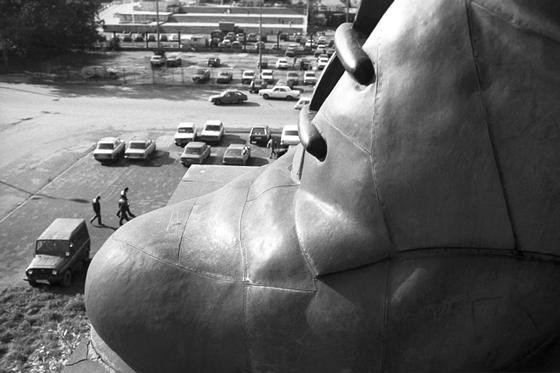 © Mamm Igor Mukhin. From the project "Soviet Monuments". 1988-2000
It is not surprising that the Mukhin series formed the basis of the disclosure of the concept of the festival. But it seems strange that the author himself, apparently, was not invited to work on the idea of the exposition. The basis of the exhibition was the portraits of iconic counter-culture characters of the second half of the 1980s from the book “I saw rock and roll”, work from the then “monuments”, as well as simple street survey and household scenes from the life of unknown characters. It was the compliance of the cracks of monuments of the monuments of the pioneers that are covered by the patches of the monuments with the artistic underground germinating through the ruins, according to the curators (the main Anna Zaitseva), should have created a counterpoint and reveal the main theme of the festival, show not dry chronology, but energy and movement. However, the exhibition did not begin to work as an integral structure: the material turned out to be separately, and the concept separately.
Portraits of not only young Tsoi and Grebenshchikov, but also the musicians of the group “Front”, “Research Institute of Cosmetics” and many other long -forgotten names and names aroused particular interest. And the most exciting was to carefully consider the details of Mukhin's pictures. All these portraits of Lenin on the walls, “Week” panties, iron buckets and shells in the kitchen, oval mirrors, the slogan “Name of Komsomol”, the “Bread” sign and the label “Bottle of 0.33 - 10 kopecks” instantly resurrected not only the domestic, but also the emotional sensations of the era. I personally sunk into my soul an iron taxophone, according to which many calls were made at that time, including conversations on August 19, 1991 - there was no phone in new buildings. The expressions of the faces of the Mukhinsky young characters who suddenly appeared around Gorbachev’s reports at the CPSU congresses about acceleration and new thinking cause a feeling of amazement. As if someone spied on you then: it turns out that a strange mixture of anxiety, shame from what was happening and enthusiasm felt many other people in the 1980s. This exact cast of the subtlest mood of the era did not turn into a posthumous mask, but, on the contrary, resurrected it to life with all its roughnesses.
И, однако, насколько живым казался каждый отдельный снимок, настолько же оставила равнодушной развеска. В композиции выставочного пространства было много пустоты и странной, доходящей до бесчувствия бескачественности, которая заставляла думать то ли о том, что куратор не жил в то время, то ли о том, что наша собственная эпоха боится тогдашних эмоций. Если в случае находящейся рядом выставки Сергея Браткова «Империя снов» дизайн экспозиции сработал на автора, то в случае мухинской «Альтернативной культуры» это совсем не так. Братков осознанно жонглировал эпохами и событиями 1980-х — 2000-х, делая свои парящие в воздухе фотокартинки высказыванием о «быстром стирании ужасов сновидений, связанных с пережитой травмой». Его знаменитые пододеяльники из фототкани, когда-то бывшие высказыванием о субъективности и материальности, осознанно превратились в виртуальные повторы самих себя. В случае снимков Мухина осколки выстраданных им проектов показались смешанными достаточно произвольно — в духе привнесенной извне и не соответствующей автору «хипстерской» эстетизации социальных смыслов, уводимых с глубины на поверхность. Обнаженность чувств оказалась под контролем и так и осталась не до конца выраженной.
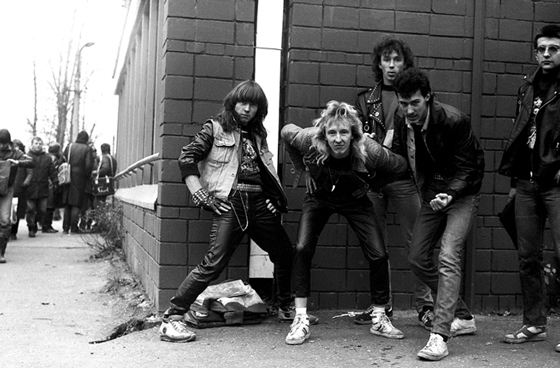 © МАММ Игорь Мухин. Паук, Воробей и Ко. Moscow. 1985
Интересным в этом контексте также показалось и размывание четкого временного и пространственного локуса 1980-х в СССР. С одной стороны, другие фестивальные выставки вроде проекта Филиппа Шанселя о парижских андеграундных рокабилли-группировках того же времени, картинок Тома Вуда о жизни английской провинции в 1980-х или «Белого ангела» Нильса Акерманна — серии о современной жизни молодежи пострадавшего в Чернобыльской аварии города Славутича придали концепции масштабность географии и хронологии. Перестройка оказалась интересной в Европе и Америке, где шли параллельные явления: большое политическое движение шестидесятых практически сошло на нет, а вчерашние бунтари превратились в клерков и отцов семейств. Однако, с другой стороны, восьмидесятые оказались разбавленными на «Моде и стиле» слишком разнородным материалом других эпох. Персоналки и ретроспективы Мишеля Сима , Филиппа Халсмана , Жанлу Сьеффа, Элизабетты Каталано , показ архивов студии «Чинечитта» и Третьяковки в той или иной степени затрагивают тему контркультуры и арт-бунта. И, однако, символичным кажется, что экспозиция Мухина закрылась на полторы недели раньше, чем значилось в расписании, — чтобы уступить место ретроспективе к столетию Халдея . Как будто давно уже не такое опасное для современности прошлое вытолкнуло из культурного пространства что-то более недавнее, забытое чувствами и пытавшееся вырваться на поверхность.
И все же нынешнее обращение МАММа к застою и перестройке по своему эмоциональному заряду значительно отличалось от предыдущих проектов на похожие темы. Например, от экспозиции «Борис Ельцин и его время» или фотовыставки «Михаил Горбачев. Perestroika » в Манеже 2011 года. На тех выставках настроение было в основном или отстраненным, или потерянно-ностальгическим, а оптимизм казался утерянным безвозвратно: у кого-то они вызывали злость, а кому-то хотелось плакать от осознания упущенных возможностей. В 2017-м помимо печали, раздражения или молчаливо-травмированного молчания подключилось и воспоминание о надежде и энергии. Они чувствуются теперь не в виде мимолетной тени памяти, а как сила настоящего. Это время снова вызывает интерес.
Конфликтность как благо
По-новому перестройка оказалась представленной не только на выставках МАММа. Другой интересный пример — постоянная экспозиция и временные проекты Ельцин-центра, открывшегося в ноябре 2015 года в Екатеринбурге. Этот музей также активно использует фотографию не только как архивный документ или факт из учебника по искусству, но и в ее живой, эмоциональной, активно задействующей память составляющей.
Центр создавался интернациональной командой, которая опиралась на самые модные тенденции в мире музейного дизайна, включая мультимедийность, интерактивность и прямое обращение к эмоциям зрителя, ставшее популярным в эру «аффективного поворота». Само здание-недострой архитектора Сергея Алейникова превратил в музей Борис Бернаскони, а над основной экспозицией работали совместно команда историков под началом академика Юрия Пивоварова, кинорежиссер Павел Лунгин и агентство Ральфа Аппельбаума. Приглашение последнего к оформлению пространства означало, что в музее будет сделан особый упор на исторической памяти, а также на чувствах аудитории. Ведь самый известный проект команды — Музей Холокоста в Вашингтоне (1993), названный критиками «поворотной точкой в музейном деле». Также известны Канадский музей прав человека, Музей Первой мировой войны в Канзасе, обновленный Национальный музей Шотландии, музейный центр вашингтонского Капитолия и Еврейский музей и центр толерантности в Москве.
Находясь в Ельцин-центре, испытываешь сильное изумление — оказывается, огромный пласт переживаний рубежа 1980-х — 1990-х оказался попросту забытым, затертым и запертым в сознании в последние годы. Но позитивный заряд этого времени, его способность порождать объединяющие идеи вовсе не затихли, не измельчали и тем более не умерли. Оживление молчавшей памяти, собственно, и является основой концепции центра, на которую работают все его экспонаты — от богатого архивного материала, представленного в увлекающей зрителя интерактивной форме, до инсталляций, представляющих московский троллейбус со стеклами-фотографиями или магазин с пустыми полками (как модно сейчас в международном музейном мире, все это можно пощупать, посмотреть и послушать). Память при этом понимается и как глубоко личное дело каждого конкретного человека, и как история, к которой музей демонстрирует сложное и продуманное отношение.
Огромный пласт переживаний рубежа 1980-х — 1990-х оказался попросту забытым, затертым и запертым в сознании в последние годы.
Фотография встроена в пространство обоих этажей, задействован ее эмоциональный потенциал — при просмотре экспозиции вспоминаются все работы на эту тему, от бартовских «пунктумов» до недавних исследований Джеймса Элкинса и Маргарет Олин. Первый этаж — обзорный. Он простраивает общий вектор развития России от Новгородского вече до 2000-х годов с упором на век двадцатый. Архивные кадры здесь противопоставлены плакатам разных эпох начиная с николаевского времени — в пику официозу и пропаганде, снимки представляют камерную историю человеческих судеб и отношений. Повествование о семье Ельцина, отец которого был репрессирован в 1930-х, вплетается снимками и предметами быта в общее прошлое — рассказ про его родных оказывается одной из миллионов других семейных историй.
Второй этаж устроен иначе. Он использует раскритикованную концепцию «семи дней» — имеются в виду дни творения демократической России. При этом первые залы, посвященные горбачевским 1980-м и самым первым годам правления Ельцина с их бурлением точек зрения, острыми публикациями в выходивших миллионными тиражами «Огоньке», «Московских новостях» и «Новом мире», выступлениями «неформалов» (еще одно забытое слово!), «Покаянием» и «Маленькой Верой», оказываются намного интереснее, чем все, что начинается после 1993 года. Парадоксально, но музей, созданный для реабилитации памяти первого президента России, во многом улучшает образ его предшественника, с которым в свое время шла непримиримая борьба. Фотография и здесь включена в экспозицию самыми разными способами — от простого напоминания о том, как выглядели челноки, до сложных интерактивных инсталляций, в которых снимки коллажируются, вырезаются, помещаются в лайтбоксы и проецируются на экраны. Так, несколько портретов Ельцина последовательно проецируются на его вырезанную из картона фигуру на трибуне, с которой он выступал на октябрьском пленуме ЦК 1997 года, — вместе со звуком это создает эффект присутствия в каком-то раннем люмьеровском или майбриджевском смысле. А каждый из отретушированных донельзя портретов членов ЦК можно перевернуть и прочитать цитаты: например, Егор Лигачев говорит о «чистейшей клевете», а вот мудрый Назарбаев просто молчит.
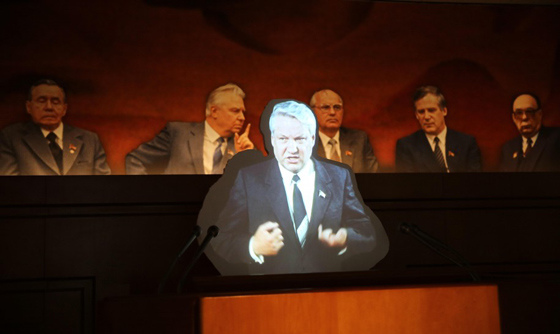 © Президентский центр Б.Н. Ельцина Мультимедийная экспозиция «Выступление Б. Ельцина на октябрьском Пленуме ЦК КПСС 1987 г.»
Ельцин-центр пробуждает давно забытое ощущение живой энергии, которое было столь привлекательно в ту эпоху и которое практически полностью ушло из российской политики 2000-х. Его экспозиция, однако, вызывает не только одни радостные и позитивные мысли. Здесь же всплывает в памяти и ощущение сюра, хаоса и страха перед голодом, разгулом бандитизма и полной неопределенностью рубежа 1980-х — 1990-х. Огромной силы отчаяние, которое чувствуешь, снова погружаясь в историю «первого демократически избранного парламента» в 1991-м, ни дня не проработавшего без конфликтов, перерастает в печаль о том, что наше общество настолько разнообразно, но у многих людей нет привычки договариваться без подтасовки в духе «146 процентов». Однако это же воспоминание о происходившем мгновенно опровергает миф о точке невозврата, пройденной в 1993 или 1996 году. Тезис «ну и пусть бы победили коммунисты, зато на демократических выборах» меркнет, потому что вспоминаешь, как близко мы тогда стояли к времени, когда за КПСС голосовало 99 процентов населения, и насколько разнообразнее, чем сейчас, были представлены оппоненты «в телевизоре».
Часть из этих сложных ощущений встроена в саму музейную ткань, не избегающую негативных эпизодов: разделы про «обвинения в популизме», расстрел парламента и варварскую «шоковую терапию» напоминают, что Ельцин мало стремился скрывать ошибки и затирать неудобные моменты своей политики. Однако другие моменты его правления вроде «операции “Преемник”» и власти олигархата так и остаются вытесненными в тень и практически не осмысленными: на их месте тот же провал, что в других случаях находится на месте самой ельцинской эпохи. Они назойливо напоминают о себе тут и там в музее — то суровым видом охраны, то хаотичностью и мельтешением отдельных кусков экспозиции, то стоимостью каталога в 5000 рублей. Вообще чем ближе к 2000-м, тем менее интересной и энергетически заряженной становится экспозиция, а Путин в этой конфигурации истории практически отсутствует — все заканчивается триумфом демократии. Это отсутствие, с одной стороны, позволяет вернуть себе тогдашнее ощущение оптимизма, как будто непоправимых ошибок еще не совершено, но с другой — поражает своим зиянием.
И все же в сухом остатке от Ельцин-центра остается позитивное впечатление. Мозаика прошлого, в которую встроена фотография, складывается в вектор нового пути. Солидарность и единство проявляют себя и в возникающем ощущении нефрагментированной истории, на которую наконец предложен альтернативный объединяющий взгляд. Она представлена как борьба тоталитарных и демократических тенденций, выбор, совершаемый каждым властителем («заставить людей следовать своей воле или дать волю им»), и поиск равновесия между сильной властью и сильным обществом. При этом совсем новой кажется мысль о том, что российское прошлое можно ассоциировать не только с великими переломами, мобилизацией и насилием, прославляя или критикуя их, но и с вектором демократии и народовластием — с Новгородским вече, дважды изгонявшим Александра Невского за диктаторские замашки со словами «путь чист», с победой в Великой Отечественной, ставшей возможной благодаря силе обычных людей и вопреки репрессиям. Это ощущение цельности истории подчеркивается горизонтальными связями, пронизывающими пространство страны. Недаром в Ельцин-центре показывали приехавшую из МАММа выставку о Новокузнецкой школе, а фотоэкспозиция о путче 1991 года, в отличие от подобных московских историй, представляла не только столичные снимки с танками и Белым домом, но и то, что происходило в других городах, включая совсем небольшие. Если одним из минусов перестройки была ее замкнутость в крупных культурных центрах и среде интеллигенции, то новый взгляд расширяет границы солидарности до всей России.
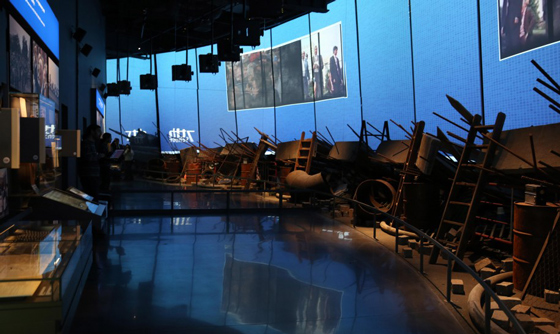 © Президентский центр Б.Н. Ельцина Зал музея Бориса Ельцина «День второй. Августовский путч
Размораживая чувства
Два возможных отношения к «демократической альтернативе» борются сейчас не только в экспозициях про перестройку, но и на уже упомянутых московских выставках о хрущевском времени. Один, мифологизирующе-ностальгический, путь контакта с прошлым изолирует, опустошает и лишает его конфликтности, а также четкой привязки ко времени: эту оттепель можно вписать в любой политический режим как красивую и несбыточную сказку о всеобщем братстве. Другой же, скрупулезно восстанавливая небольшие детали, показывает связь с современностью, не размывая исторического контекста и политических идей в ее основе: такая оттепель, чего доброго, может возродиться и победить.
Огромная выставка в Третьяковской галерее красива и наполнена интересными объектами, включая неизвестную архивную фотографию. Однако ее концепция довольно поверхностна, а 1960-е предстают милым и бесконфликтным временем. Оптимизм здесь вроде бы тоже имеется, но это какой-то не тот оптимизм: у него как будто был удален второй полюс — страха, публичных проработок и бульдозеров. Это своего рода безвкусная конфетка в привлекательной обертке: тот, кто жил в это время, его не особенно узнает, а тот, кто родился позже, не сможет глубоко прочувствовать ни атмосферу, ни контакт эпох. Конфликтность, удаленная из пространства выставки, вылилась в публичный спор между Маратом Гельманом и куратором экспозиции в Третьяковке Кириллом Светляковым. А вот вроде бы более камерная выставка в Музее Москвы и показала конфликты эпохи, и создала ощущение связи времен — эту оттепель получилось почувствовать буквально всем телом. Узнаваемые настроения, музыка, книги и предметы быта, которые помнишь по квартирам бабушек с дедушками и родителей, не просто цепляли личные слои памяти, включая звуки, запахи и кинестетику. Они имели и отчетливую политическую составляющую: основы последовательного антисталинизма и приверженности идеям открытого мира героев перестройки были заложены именно в эту эпоху — точно так же, как многие до сих пор живут на том перестроечном заряде.
1980-е и начало 1990-х, а также их идеологи не вызывают у большинства живших тогда людей теплых чувств. Мы поспешили забыть об этом времени, эмоционально стерев его с карты памяти. В чем-то это было результатом политических манипуляций, однако во многом отстраненность с сильным привкусом негатива — результат работы травмы. Слишком много разочарований, тревоги и знания о дальнейшей судьбе оптимизма 1980-х наслоилось на тогдашние надежды, похоронив их под своими обломками. Однако в выставках последнего времени перестройка стала не только предметом вежливого исследовательского интереса, но и источником мощного заряда энергии. Они возвращают нас всеми чувствами в то время и показывают, что травма, возможно, в какой-то степени пережита.
За новыми экспозициями, как видится, стоит не только актуальная политическая повестка, грамотная манипуляция вечным интеллигентским ожиданием все никак не приходящей «новой весны» или верная примета грядущего закручивания гаек, но и совершающаяся у нас на глазах работа памяти. Внимательное вглядывание в тот материал требует усилий, но позволяет восстановить контакт с надеждами прошлого, увидеть связи и, возможно, избавиться наконец от вечного движения по кругу. И эта сложная работа, которой занимается множество авторов и кураторов, внушает сдержанный оптимизм — куда больший, чем переменчивые идеологические моды.