
Translated material
What did the pitch-91 look from space?
Tomorrow in the new space of the Nations Theater in Moscow, the SpaceWeek Space Film Festival will open. In addition to the all kinds of sai-fui (from European fiction of the 10th-20s to the remasted Czechoslovak “Ikara-1” (1963)-in a sense, it became a prototype of the “cosmic odyssey” Kubrick) on Spaceweek will show a really incredible document- the film of Andrei about the flight of Sergei Krikalev, who went to the cosmos from the USSR Gorbachev, and Yeltsin returned to Russia.
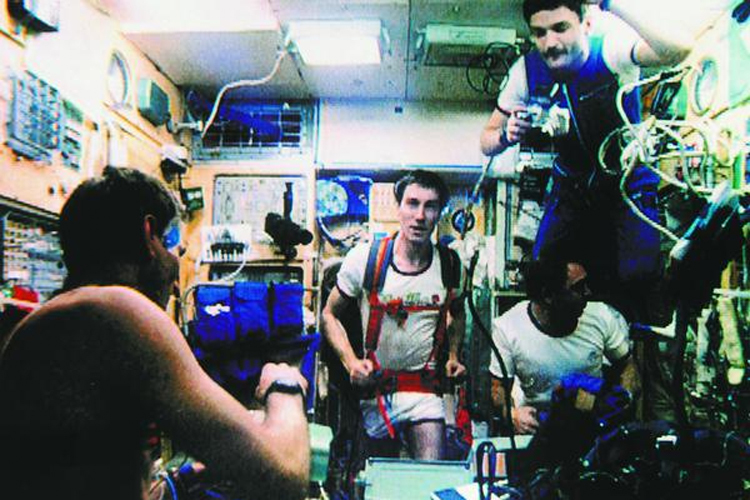
Cosmos is not a place for jokes. Only a feat, only courage. In any case, Russian filmmakers think. The incredible dock by Andrei, the coats completely disperses this prejudice, simultaneously dealing with other stamps. So, in the spring of 1991, the incorporation issued the TM-12 Union to the Soviet crew (the flight was international-the British-cosmonaut Helen Sharman flew with the Russians), Anatoly of Artebarsky and Sergey Krikalev, and asked for the release of space life and routine. In parallel on the ship (and then, obviously, at the Mir station) a real movie camera was installed: the crew was to conduct the first space shootings for 35 mm, Vadim Yusov led them from the ground (this unique material also entered the Yusov film, and the sudden fragment of Solyarisa, with a dissonating fragment, stained in the kitchen chronicles of the ISS closer to the kitchen chronicles of the ISS closer finale).
Everyone had to return home by September (the son of Artebarsky complains that he did not go out with his father for fishing this summer), but in July Krikalev decided to leave at the station (a popular legend, which even leaked into English -language texts about the film, claims that the astronaut was simply forgotten in the bustle of political perturbations; this is not so). As a result, he returned to Earth in March 1992. All this time the astronaut has been conducting a video documentation of his Odyssey; From it, as well as from the materials taken on the land of Artebarsky, and “divorced from the present” are mounted. They last exactly 96 minutes - exactly as much as the ISS is required to pass the earth's orbit.
 © Real Fiction Filmverleih
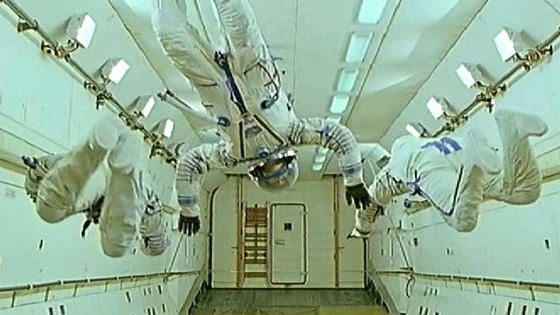
What was included in these 96 minutes? Not as much as we would like - and at the same time enough to shake all your ideas about space. Firstly, it is close, very close, although the path to orbit takes long hours. But the view of the earth, shot by the film camera, is terribly similar to the view from the window of the plane, only instead of the streets there are great rivers, and instead of fields and cops - sugar and gobi, Siberia and all of Europe. Secondly, in space at the same time scary and boring. The ISS "Mir" is more like a gypsy wagon than to those tinning banks that are shown in the cinema; Wrapped up for thermal insulation by some high-tech-trap, it looks ridiculous, fragile and vulnerable. In addition to the “important scientific experiments”, about which the Wrokever of Artebarsky reports on a ridiculous official voice (listening to his naive, restrained, but full of transparent hints, the story of flight is a separate pleasure), the astronauts are engaged in hell than. They ride at the station on the pipe. For entertainment, a dried fuel tourniquet (forget all the miserable fakes for the flame in zero gravity that you showed in "gravity"). Painting and ballroom dresses are taken to orbit. Arrange discos. Talking with friends on Earth through homemade walkie -talkies. Krikalev and Artebarsky also managed to participate in the defense of the White House, broadcasting Yeltsin's appeal through the orbital radio station. In general, an unscheduled package gave the film a completely new dimension - while barricades and tanks are burning below, the country who sent them into space and new intrigues begin to weave (sudden sending to the station of an unprepared Kazakhstan cosmonaut Aubakirov - the result of such political games), three people locked in the ISS Rutino go out of the rutino, eat Burda from packages, they eat Burda from packages, they are bourd pedal the simulators. What did they talk about these days, listening to reports from Moscow? The film is silent about this. It is possible that there were really no debate in orbit. It is possible that the experiments were really more interesting than empty chatter (the most spectacular and surrealist - an attempt to inflate a sphere of metallic color in space - it ends in failure). In any case, when a crowd of Russian journalists with huge microphones attacks the landing finally in the snow steppe Krikalev, he tiredly replies that, looking from heaven, he is much more impressed with the change of seasons than political regimes. Looking back at the beginning of the film, you understand that this calm detachment from everything except work and fishing was always in heroes; Perhaps without it they don’t take it to the astronauts.