
Translated material
The FSIN intends to prohibit Navalny through the court to commit administrative offenses
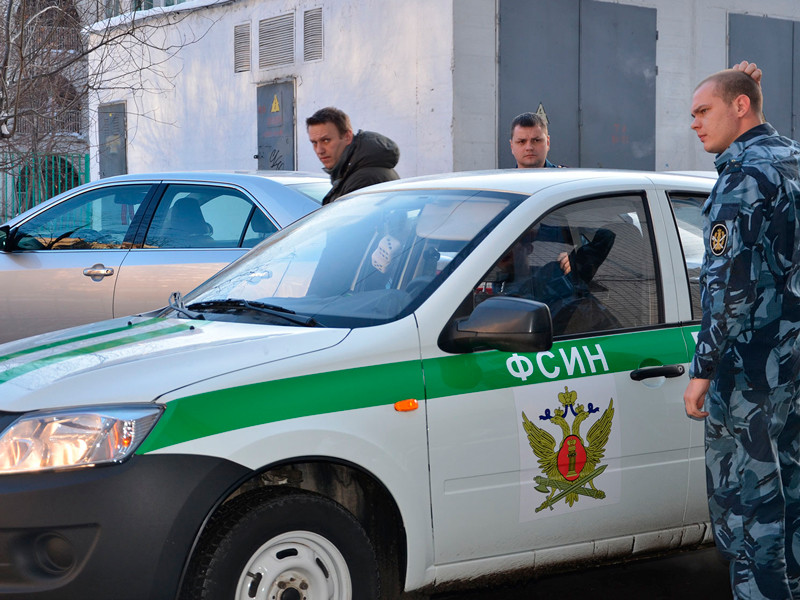
The Federal Penitentiary Service (FSIN) of Russia sent a submission to the court with a request to assign to the opposition Alexei Navalny, who was released on the eve of 15 days after administrative arrest, the obligation not to commit new administrative offenses.
"In accordance with Part 7 of Article 73 of the Criminal Code of the Russian Federation and part 2 of article 190 of the Criminal Executive Code of the Russian Federation (" liability of conditionally convicted "), the UFSIN of the Federal Penitentiary Service of the Federal Penitentiary Service in Moscow is obliged to apply to the court with the submission of an additional obligation, namely not to commit administrative offenses," the press service of the department (quote for TASS) explained.
The corresponding submission will be sent to the court on April 11. At the same time, the FSIN noted that the basis for the appeal was the next administrative arrest of Navalny for 15 days for disobedience to law enforcement officers during an unauthorized protest in the center of Moscow.
Navalny was arrested by the Tver court on March 27 for 15 days on charges of hooliganism during an inconsistent campaign in Moscow, the application of violence against representatives of the authorities and an encroachment on the life of a law enforcement officer (part 2, Article 213, Article 317, part 2 of article 318 of the Criminal Code of the Russian Federation) and resettled 20 thousand rubles for organizing a shares.
The Investigative Committee seized the Kindle e -book, Nokia, chargers for them, as well as a passport and laces from the oppositionist. Then 20 FBK employees were arrested .
Rallies against corruption took place in Moscow and other cities of the Russian Federation on March 26. The reason for the speeches was the film-investigation of the Corruption Fund "He is not Dimon" about the "Secret Empire" by Prime Minister Dmitry Medvedev-elite real estate, land plots and yachts.
Medvedev himself first commented on the FBK film only a month later. He called the FBK investigation "nonsense", "some pieces of paper" and "compote", behind which a attempt to pull people out into the street is hidden, to achieve political and "skins" goals.
In December 2014, Navalny was sentenced to 3.5 years conditionally with a test period of five years in the “case” of Yves Rocher. Later he was conditionally convicted of Kirovles’s case, but this sentence has not yet entered into legal force.