
Translated material
They dragged the belt of friendship
Russia invests in geopolitical projects from the last forces
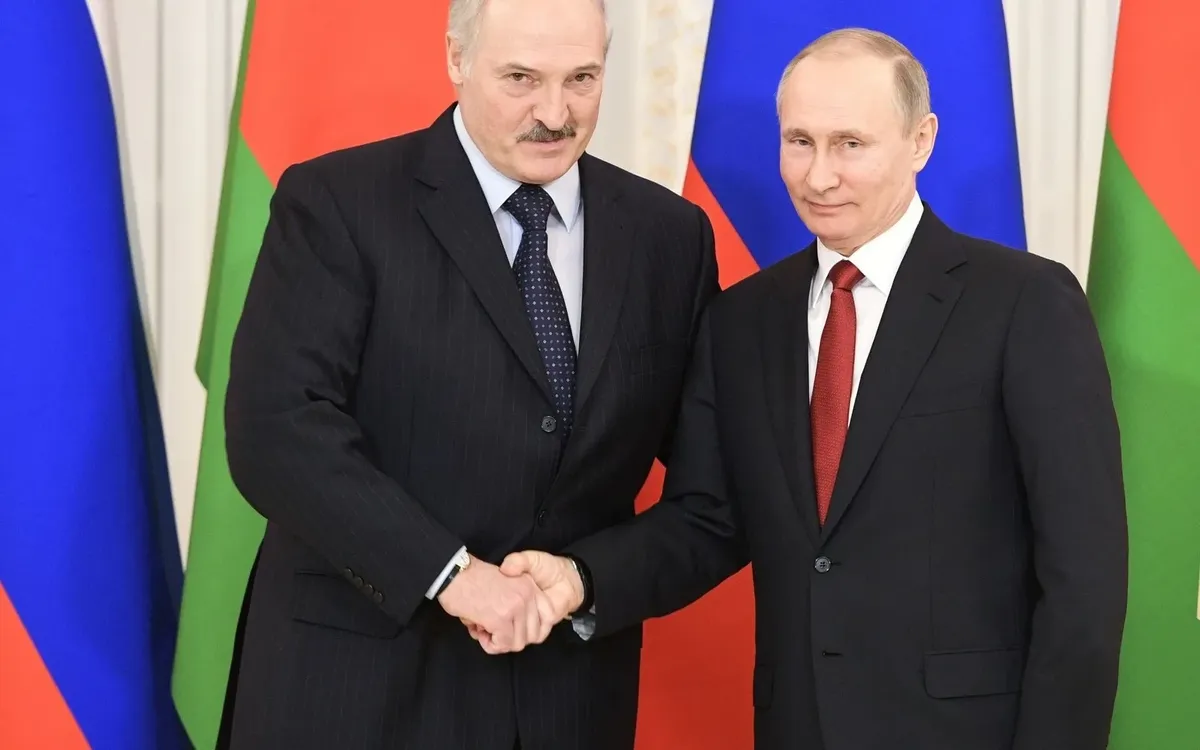
The Geopolitical Union of Russia and Belarus, suspended during the search for fair price for Russian gas, is again strong and non -destroyed. All controversial issues were resolved, the leaders of the two countries said after negotiations in St. Petersburg on April 3. Shortly before that, Lukashenko called Putin "his own brother" and expressed his readiness to "stand up and shoot back to his back." The demonstration of fraternal support fell on a difficult period for both presidents: anti -corruption rallies in Russia took place in parallel with mass protests against tuneus tax in Belarus.
Despite the assurances in friendship, they did not sign any official documents, and oral statements about the complete settlement of the gas conflict were made earlier. But if the reconciliation of the powers will still take place, then the Kremlin will pay for it. The account presented by the Minsk account looks impressive: a new loan of $ 1 billion in size, which reduces the coefficient to the gas price formula for 2018-2019, withdrawing an obligation to supply 1 million tons of oil products per year to Russia and the right to collect duties from a re -export of oil products, the restructuring of Belarusian debt to the Russian Federation and the creation of a single energy resource market after 2018 years.
The situation with the Belarusian duty looks especially intriguing. In addition to intergovernmental loans, more than $ 5 billion, Belarus has debt to Gazprom’s daughter, which Deputy Prime Minister Arkady Dvorkovich estimated at $ 726 million. The country lived in a “double accounting situation” all last year: Russia sold gas to the neighbor for $ 136 per thousand cubic meters. m, and Belarus was calculated at a tariff of $ 70-80 per thousand cubic meters. M. Lukashenko, referring to the intergovernmental agreement of 2011, claimed that he had found a “fair price” for gas, and no one was going to pay extra to Gazprom.
After negotiations with Putin, the situation did not particularly clear up: officials of both countries are moving away from a direct answer to the question of recognizing the debt. According to Lukashenko, by the end of the year, gas will be delivered at the Gazprom price - $ 130 per thousand cubic meters. m. But this is the result of a compromise extremely beneficial for Minsk. Deputy Prime Minister of Belarus Vladimir Semashko appreciated the country's wins from the completion of the gas conflict with Russia in $ 2.1 billion over the next three years. Normid-free oil supplies, last year cut by Russia by a quarter due to non-payment, will soon reach the previous level. And by 2025, according to the calculations of the Belarusian leadership, the price of Russian gas in the country should not be higher than in Russia itself.
In February, when Lukashenko once again spoke with fierce criticism of Russian politics, they turned to numbers as a counterargument in the Kremlin. It turned out that in 2011-2015, $ 22.3 billion was spent on different directions of support for the Union State from the Russian bust. The earlier estimates of the IMF say that over the decade from 2005 to 2015, direct and indirect support for the Belarusian economy, from subsidies for energy carriers to loans through the Eurasian Stabilization and Development Fund, amounted to $ 106 billion. In different years, Russian money formed 11-27% of Belarusian GDP and was responsible for 50-60% of direct foreign investment in the country.
Belarus is far from the only country that receives dividends from Moscow for political loyalty. In 2015, Stratfot considered that Russia spends $ 5 billion a year on the support of unrecognized states in the territory of the former USSR (except for Abkhazia and South Ossetia, the list included Crimea and Donbass). Here you can add a write -off of $ 140 billion debts to different states (some of them, however, of Soviet origin). If you collect all similar cases together, then in total we will receive several hundred billion dollars. This is investment in “geopolitical greatness”, usually with negative profitability for the country.
In the new budget realities of Russia, it will be necessary to reduce the expenses of friendship with fraternal countries, which is happening in recent years. The pension accumulations of Russians can be directed to the support of the State Bank or repay the debts of the Ministry of Defense, but it is too risky to subsidize the consumption by neighbors of Russian energy. For the remaining "allies" this fact causes severe irritation, which pours into small political blackmail. It is clearly visible that such a relationship is at a dead end, but not a single side can break off a vicious circle.