
Translated material
"It is clear that there will be skyscrapers"
The Council has given a positive review of the demolition bill "Khrushchev"
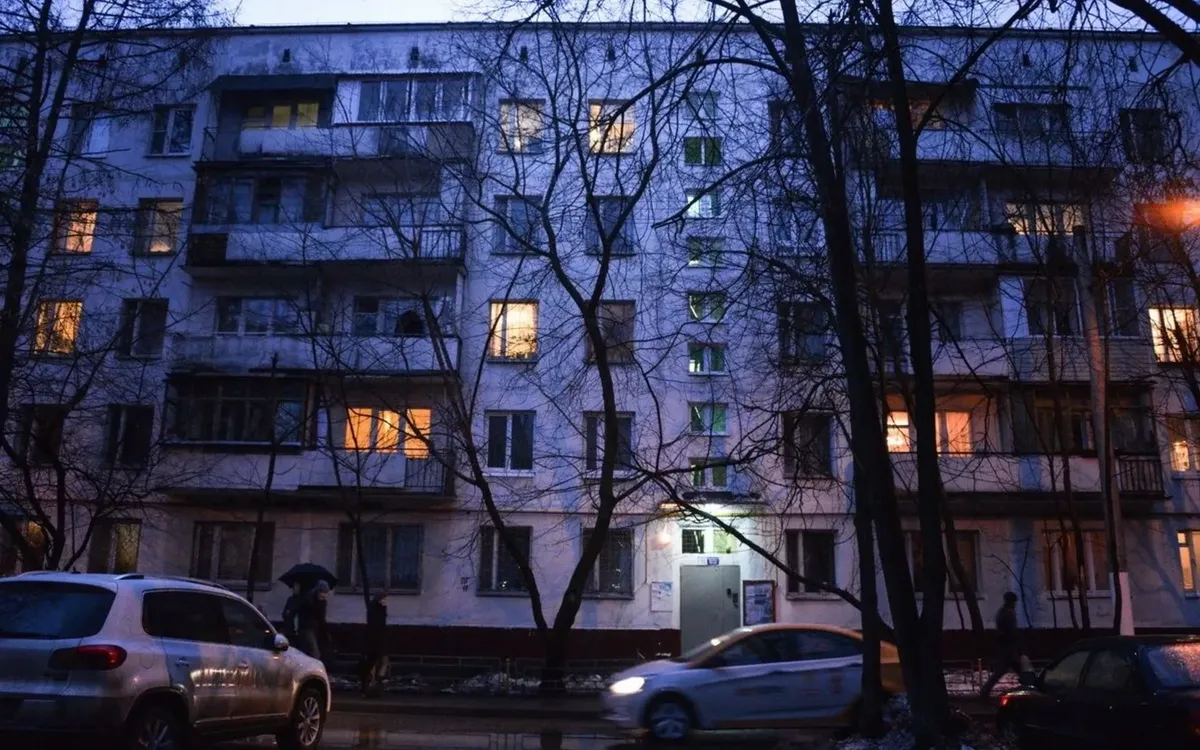
The upper house of the Russian parliament gave a positive review of the bill on the demolition of five -story buildings in Moscow. Senator from the Sverdlovsk region Arkady Chernetsky proposed to spread it throughout the country.
On Wednesday, at an expanded meeting of the Federation Council Committee on a federal structure, regional policy, local self -government and affairs of the North, senators made very few comments into the project. Arkady Chernetsky, a senator from the Sverdlovsk region, believes that the proposals of the Moscow City Hall, which have already caused a lot of disputes in Moscow, must be distributed throughout the country. “We believe that such changes need to be made not only in a special law on Moscow, but to the country's housing and urban planning code, so that other regions can at least partially use them. No need to create an irresistible barrier between the legislation of Moscow and other subjects of the Federation, ”the senator is sure.
In addition, Chernetsky noted that the construction of new housing for residents of demolished houses implies an even larger amount of commercial housing in the same houses, which means a huge increase in the population of Moscow and, most likely, new transport and other problems. “This is a provocation on a sharp increase in the number in Moscow with all the ensuing consequences,” Chernetsky said.
Sergei Lukin (Voronezh region) drew attention to the special conditions of the work fund for promoting the renovation of the housing stock - it will be created specifically for the Khrushchevs program, and he will be at the same time as the customer and executor of the program, but all provisions of the law “On participation in shared construction” are not extended. The fund will not obey the general rules on the size of the authorized capital of the developer, liability insurance, contributions to the compensation fund and the rules for working with banks.
"We will not get a new wave of deceived equity holders?" - asked Lukin.
Zinaida Dragunkin, a representative of Moscow and a former deputy of the Moscow City Duma, was supposed to reassure the alarms of colleagues - first of all, she emphasized that the work on the bills “only began” and “we are at the beginning of the path”, recognizing that the document is still “raw”. “Yes, there were traffic jams, they are, but there are much less of them,” Dragunkin answered the question of overpopulation. “Of course, five -story buildings will not be built, it is clear that there will be skyscrapers, but social infrastructure will be provided.” The senator called to believe in the Moscow mayor: "I heard such a sharp judgment: here, they will build something banal again ... But what is the banal out of the age of five, what did Sobyanin do?"
Before the Council of People's Commissars voted for a positive feedback on the bill, the chairman of the federal system, Dmitry Azarov, carefully drew attention to what it would be worth prescribing in the law of the mechanisms of consultations with the residents themselves. “I have no doubt that Sergei Semenovich will withstand this word, but suddenly he will go up to increase?” - Azarov turned to Dragunkina. Recall that during various speeches, the Moscow authorities and personally Sergey Sobyanin promise that the list of demolished houses will be determined strictly in accordance with the will of residents, and for the final version they will be able to vote on the website “Active Citizen”. But the text of the bill itself (now preparing for the first reading) does not specify the producers in order to find out if people want to settle - but prescribes that if the house has got into the program, then they will evict residents, within two months, by agreement or by court decision. According to Dragunkina, a lot of work with residents has already been carried out, and "80% of the wishes that sound from people are quite acceptable."
Recall that the amendments to a number of federal laws that will allow the Moscow authorities to demolish all the “Khrushchevs” in the city, deputies Nikolai Gonchar, Irina Belykh, Gennady Onishchenko, Elena Panina, Anton Zeliverstov, Anatoly Vyperty, Dmitry Morozov, Nikolai Antoshkin, Vladimir Krupyvnikov, Mikhail Degtyarev, Anatoly Paninko. Peter Tolstoy, Lyudmila Dukhanin, Ivan Teterin, Dmitry Sablin and Senators Zinaida Dragunkin and Vladimir Dolgikh. According to the program of the Moscow authorities, about eight thousand houses should be demolished, in which more than one and a half million people live. In 2017, 64 houses should be demolished - the city hall has already published a list.