
Translated material
Lag, only a lag

The text continues the joint project of Colta.ru with the official website of Sweden in Russia Sweden.ru - “For example, Sweden” .
In the last couple of years, we can talk about one interesting signs: if the world of Lifestail-journalism begins to actively seal, then, then, the next trend of Scandinavian origin has appeared. Last year, the focus of attention was the idea of comfort in a dedication-Hugge. In short, Hyugge is when the window is stormy, and you put on woolen socks, put Vinille of Miles Davis, wrapped himself in a soft blanket, hugged the cat and look at the fire in the fireplace, dripping the mulled wine in the way. However, this year, Hugge, it seems, will have to be stepped back - according to fashion bloggers, he was replaced by a more pragmatic and rational Swedish “lag”.
One of the first about the arrival of the new trend was announced, as expected, Vogue magazine. In a small January article, it is proposed to forget about Hyugg-it is still an ordinary sense of comfort with the assistance of simple household solutions-and go to the Swedish ethics of moderation, which is indicated in essence of the term “lag”. Lag is not a lot and not a little, it is exactly just right. Two beer instead of three, two chairs in the room instead of one, the fat content of milk is 1.5 percent, a non -coding appearance and minimalism in the design, which is just famous for Sweden. In general, the lag is served as a practical life philosophy-eco-fraudli Aristotelian golden mean for conscious citizens of the 21st century. Lagom är bäst - no extreme and excessiveness, the best lag.
The most famous Swedish corporation IKEA did not ignore the fashion of the lag, whose furniture itself in a sense personifies the philosophy of Lagoma in a sense. IKEA launched the Live Lagom project: the company conducts workshops, publishes special brochures and helps with the choice of correct products for a reasonable life. As a result, everything is processed into a cycle of stories from customers and IKEA workers about how they change their life for the better with the help of small deeds in the spirit of the lagoma ethics. Project participants, “Lagomers”, advise to ventilate clothes more often instead of constantly washing it and spending excess energy; Liagomer Lydia tells how, with the help of a special timer from IKEA , water and time in the shower can save, and Lagomer Luke - how LED lamps and blinds allowed him to cut the monthly budget for electricity for 30 kroons. Thus, the Protestant ethics of self -restraint is served as an actual trend, around which a whole community of like -minded people is built - under the patronage of IKEA , naturally.
 © IKEA UK / YouTube Front from the cartoon "Live Lagom. The Marvellous Middle Final "
However, as in the case of Hugge, there were skeptics. So, in The Guardian an article was published, revealing the less positive aspects of Lagoma, namely some shade of conformism. According to the author, the lag can consist not only in reducing water costs, but also in the negative perception of everyone who is trying to behave extravagant and simply stand out from the crowd. And besides, not all Swedes are happy to follow this life philosophy: sharp statements and frank narcissism of the football player Zlatan Ibrahimovich is a clear example.
* * *
But in general, the doubtfulness of the fashion on the lag in fact lies in a slightly different plane, and in order to understand this, you need to pay attention to the deeper interpretation of this term and to the features of the Swedish social structure. The birth of the tradition of Lagoma is usually not even attributed to Protestantism, but to the times of the Vikings: passing the bowl with a drink in a circle, it was necessary to swallow exactly as much as not to offend others and in order to get enough and enjoy. Thus, from everyday practice there was a certain attitude to life and the world, which allowed to avoid excesses and spread to all practical areas of activity. In a sense, this is a regulatory installation, thanks to which a fragile balance between individualism and collectivism is created. This is not pure water conformism, and not a simple individual selection of lifstail, as it is served on the pages of Vogue . According to Esther a master from the Copenhagen Business School, in ordinary life the lag is a paradoxical desire to be excellent, others, not particularly standing out. This is ethics at the same time both care of itself and social responsibility.
A wide interpretation of Lagoma as a kind of way to balancing between individual and collective acquires even greater meaning if we pay attention to the two other terms important for the Swedish self -awareness: Ensamhet and Enighet . Ensamhet , like a similar German word einsamkeit , means loneliness, but at the same time does not have openly negative connotations. Rather, on the contrary: Ensamhet emphasizes individuality, internal harmony and independence, but at the same time is not opposed to collectivity. This is freedom, which ends where the freedom of another begins, provides for mutual respect and solidarity. Enighet , in turn, means consensus, achieved by dialogue and attention to various opinions. We can say that in this case the lag is part of the whole ethical system. Something like this: the combination of Ensamhet , the separation from another, and Enighet , the willingness to hear another, gives as a result a balanced design: a lag.
* * *
It can be said without exaggeration that this principle is the foundation of the model of society that was created in Sweden and which is often advertised by English -speaking media, comparing the Swedish and, for example, American social policy.
The Swedish social state, created after the coming to power in 1932 of the Social Democrats, is known as Folkhemet , or the "People’s House". The concept of the “people's house” contains respect for the political and economic rights of the individual, but at the same time emphasizes the importance of solidarity and the collective political subject - the people itself, Folk . It is not difficult to see a kind of lag in this.
Again, the development of Swedish social democracy is largely the result of a consensus between the working class and capital with the immediate role of the Government of Social Democrats, who became as much as possible to balance class interests and avoid frank distortions in one or the other. While the Soviet Union experimented with a strict planned economy, in Sweden the Confederation of Trade Unions LO (Landsorganisationen I Sverige) , that is, workers, and the confederation of employers SAF (Svenska Arbeitsgivareföreningen) , that is, the capitalists created their forms Planning, which was the result of numerous compromises and fidelity to the common cause of stable economic and social development. Representatives of both organizations were part of government agencies and relevant committees responsible for developing social policy. If at the household level the lag is moderate consumption and responsibility to its neighbor, then in the field of politics this approach made it possible to create what is often called “capitalism with a human face”: that is, with free and affordable social services and a fairly low level of social inequality. And although the road to the state of universal well -being was not covered with roses, and in the last three decades under the influence of globalization, Swedish social democracy has given a lot of cracks, the overall level of well -being and social security in the country remains noticeably higher than in the same turbulent American society.
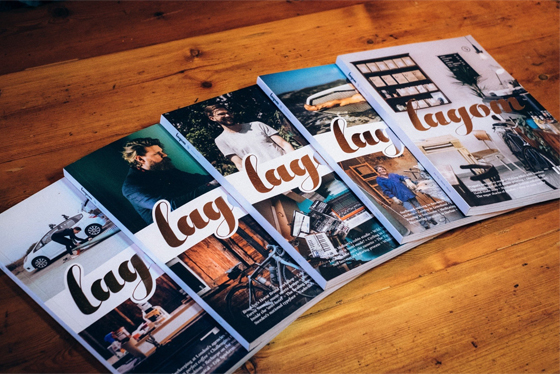 © Lagom / Facebook
The personification of this course was the economic model of Rena-Maidner, which from the beginning of the 50s to the crisis of the first half of the 70s was the foundation of the Swedish economic policy, and some of its provisions are still relevant. It was called upon by active state regulation to ensure low inflation, full employment, high level of economic growth and equality of income. This equality was achieved due to the smart system of collecting indirect taxes and regulating the working market. For example, according to the principle of “equal fees for equal labor”, the salaries of men and women of the same professions were equalized back in 1951 . And although, according to official figures, women still receive on average 13.2 percent less than men, this is mainly due to differences in professions and sectors.
If we recognize the success of the Swedish model, you should not be surprised that the principle of Lagoma is actively used in business: balanced management in Swedish gradually penetrates the silicone valley, where one of its flagships is the NEO Technology startup. In this company (by the way, Swedish), it was rightly reasoning that the usual monthly performance indicators are a ready -made path to stress and, as a result, of low productivity. Instead, the leadership, along with employees, is working on the annual plan, which is then implemented in a calm rhythm - without any reports. The employees themselves have more freedom of action, they are allowed to leave early, and, of course, no one encroaches on Fika -a holy for Swedish workers to leave the whole crowd to drink coffee two to three times a day. It is difficult to imagine such a frivolous situation in a traditional American company with a tough hierarchy and eternal "burnout" of employees.
The role of Lagoma as a practical principle can also be traced on the example of the foreign policy of Sweden, primarily integration in the EU. Unlike neighboring Norway, Sweden still joined the EU, but always took a careful and balanced position. So, at the 2003 referendum, 55 percent of the Swedes said “no” eurozone and remained with their native crowns. In some ways, we are dealing with foreign policy camps: integration should be exactly as much as it is necessary to protect the Swedish population from external upheavals (the country did better than many with the 2008 global crisis) and to promote the interests of Swedish capital. Some commentators call such a position “Euroauts” and “selective supranationalism”: Sweden is a full member of the EU, but insists on its isolation within the European family.
* * *
Such a small socio-political excursion shows that a lag is not just a habit of turning off the water while brushing your teeth, as the IKEA project and Vogue magazine assure; This is a fairly cunning calibration of interests within the community, reflected in a certain social organization. Without public and economic institutions aimed at achieving equality and economic and political democracy, the lag turns into a normal fashionable pole, which, with the onset of 2018, will replace some other trend, for example, GEZELIGHEID -a Dutch term for a sense of community and comfort in the presence of friends and relatives.
Naturally, there is nothing wrong with the fact of rational consumption - the fight against environmental pollution and the depletion of natural resources can and should start with yourself (the popular principle of Reduce, Reuse and Recycle is formulated). Another thing is that the fashion on the lag is now served as a matter of individual preferences, which contradicts the collectivist measurement of this ethics and its built -in into egalitarian social institutions.
When the next Scandinavian tradition is presented as a fresh trend, then the utilitarian pursuit of individual happiness familiar to the English countries often hides. The texts and video in the spirit of “why the Scandinavians live more happily” turned into a separate media genre, but it is clear that in the system of market fundamentalism and radical individualism no woolen socks and the rejection of the third beer index of happiness - neither yours nor in general will increase. However, it is really necessary to save water-but not only in 2017 and not only in the name of Lagoma.