
Translated material
Igor Klyamkin: "On Neo -Somo -Persistence"
Igor Klyamkin 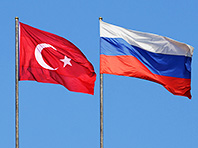
"Turkey is coming off Russia in constitutional creativity. Constitutional sultanism, for which the majority of the population voted there, is surpassing the Russian constitutional autocracy in the concentration of authority," writes the vice -president of the Liberal Mission Foundation on his Facebook page.
"He is from now on the executive branch (combines the positions of the head of state and the head of government) and the legislative (are entitled to issue decrees that have the status of the law and cancel the vote of parliamentarians at least three fifths), and the judicial (appoints all judges).
There is an occasion to recall what I already wrote about at one time.
Once (at the end of the XV-XVI centuries) the Ottoman and Moscow states were already moving in the same direction. Moscow, after liberation from the Horde, began to closely look at Turkish political experience. Because the Ottomans defeated the Unique Muscovite of the Byzantium and created the strongest military power at that time.
And having looked closely, they borrowed a lot. Then, starting with Peter I, Russia began to look closely at Europe, which went out in the gap and adjust its statehood under the challenges coming from there, and by the beginning of the twentieth century it advanced far along the way, while the Ottoman Empire got into tradition and its former power was in the past. And then the First World War showed that not only the Turkish, but also the Russian state systems are not viable, the answers to which were two fundamentally new political models - Ataturka and the Bolsheviks. Both were configured to master the idea of democracy, but in Turkey democracy was understood in European, and its protection in a cultural country was entrusted with the Europeanized army, while in Russia, which became the Soviet Union, democracy was planted as an alternative European and became the facade of the totalitarian party dictatorship.
Recent decades have shown that these both models are strategically unstable. First, the Soviet collapsed, and in its place after short-term experimentation with European political forms, a political centaur was formed, in which the original Ottoman-Moscow state system was articulated with imitation constitutional democratic institutions and procedures.
And today we can observe the institutional end of the Turkish trend from modernity to tradition, which has been observed in recent decades. And the difference between this constitutional and election sultanism and the Russian constitutional and election autocracy perhaps that in the Turkish case the presidential sovereign is legalized more definitely and consistently.
The two Eurasian countries, at first institutionally equipped in a similar way, after long and different wandering in search of an adequate state arrangement, came to approximately the same thing. But for some reason I’m not sure that for both this is a synthesizing of the XV-XVI centuries with the centenary of the XXI there is the end of a long historical path, that they finally reached their political lands of the promised. ”