
Translated material
Star dust on boots
The new space epic "Time of the First" and seven more space films that are better to watch instead
For humanity, the starry sky above the head has always been an advanced matter. The topic for idealists and dreamers. The intangible and infinite cosmic space occupied the minds of non-trivial and in a good unhealthy-primarily philosophical. So it happened in ancient times: the movement of the planets always had an intangible lining: they prayed to heavenly bodies, the radiance of unattainable stars had a high mission - to indicate the path and dictate the calendar. The look directed up, issued a creature in man, although held by gravity on Earth, but still managed to break away from animal roots.
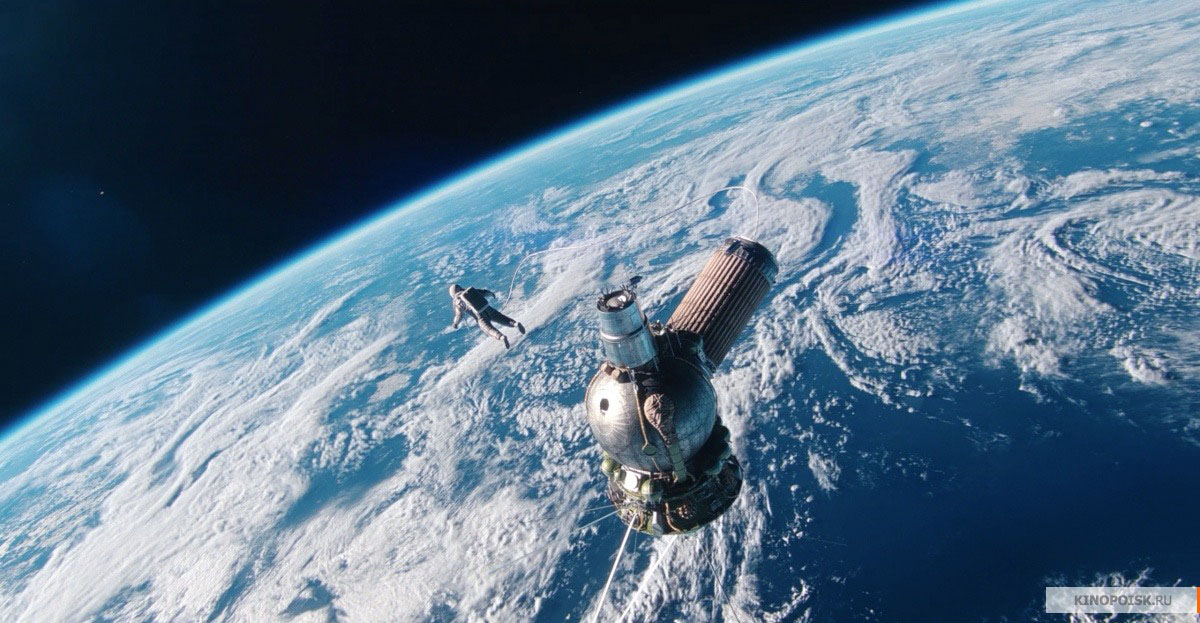
The “Time of the First”, the film by Bazelevs, addressing the Soviet tradition of the feat, also seems to have wanted to talk about the high, daring to go beyond the circle of familiar ideas.
The sky above the head
It’s not without reason that flashbacks with the main character overturned into magical childhood were introduced into the film. Cosmonaut Alexei Leonov performed by Evgeny Mironov - a child’s man, a dreamer, an artist driven into a spacesuit. Almost like that, he recalls the bucolic of the pouring meadow, strewn with stars, fireflies, and pursuit of one of them: then, in childhood, he stumbled and flew into soft grass. This was the first big flight in which the boy managed to discern the sky above his head. The viewer, too, would have to recall his dream of space - the one that is almost no in the film. The time of dreams about the starry sky has passed, and the dream evaporated like a gas from lemonade. Under the pressure of production history and surrounded by a dead Soviet paraphernalia from stars and dreams of them, only dust on boots remains. “Time of the first” is not about dreamers and disruptions, but about tired people, clamped in a terrible vice of circumstances and obligations. It, in fact, begins with a typically socialist production meeting on how to go into outer space two years earlier than the promised, so that, God forbid, the Americans did not overtake.
“Time of the First” is a long film with a difficult production story. The producer Timur Bekmambetov, who had grown from the plan of the actor and producer Mironov, grown out of the plan and producer, executed by a professional sharashka, savvy in the physical laws of the cinema of people, whose names were crowded in long titers and messages of newspapers dedicated to various production stages. Five surnames in the list of authors of the script, two directors (Yuri Bykov began the film, and Dmitry Kiselev picked up the project), dozens of employees who worked on effects, costumes and props. Many, a lot of work. The film Bekmambetov -Mironov also has an American competitor, well, just like a queen with Brezhnev, this is the film “Gravity”. But he went to his space for too long to
Seriously chasing him. The domestic rivals are much more dangerous-the space heavyweight of the STV-7 STV-7 company is also about Soviet space, also with a history of catastrophe-but in the end it was possible to drag it from the day of astronautics and transferred to the fall. Only will this help the film about Leonov and Belyaev?
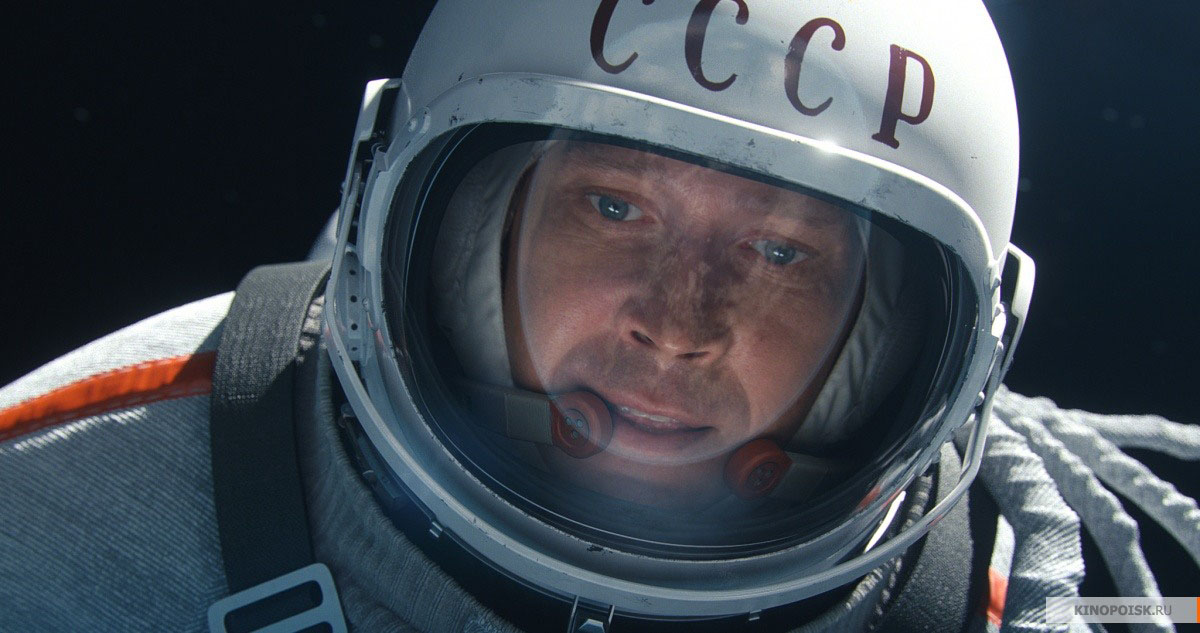
The real story of the first sortie into outer space promised the viewer a thriller rich in extreme events, and turned on a flabby socialist epos on the screen
Sociological experiment
What is the "time of the first" in addition to production details? The real story of the first sortie into open space promised the viewer a thriller rich in extreme events, and he turned on the screen on the screen by a flabby, almost three -hour socialist epic, hopelessly outdated and heavy in his scenario mechanics. “We are such a people - fly in shackles, and take them off, lose balance and break to hell!” - says the indispensable, brought to the complete exhaustion Sergey Korolev. Thanks to the brilliant game, the role of the designer Vladimir Ilyin in this phrase is heard not an example of state rhetoric of the current moment, but rather a scream of the soul, hardly belonging to the authors of the film, which are driven into a cinematic projectile with ballast of dramatic and visual cliches. How else? Suddenly they will lose their balance.
Something is wrong in this film, devoid of the courage and recklessness of the real conquerors of the cosmos. It does not have proper boldness, the stock of sacred madness, which helps to rise above the ground pilots and poets. The dusty sticks to the legs yesterday, constraining movements. Brezhnev, the 1965 model (seems to be not so old and even not yet Secretary General), is already poisoned by the memory of the audience about the future stagnation. Korolev’s dousing Korolev seems to know about his imminent death. And the Soviet system at all their levels - from the automation of space modules and the Air Force generals to frozen taiga fir trees - threatens cosmonauts in inevitable death.
As a result, a mercilessly wide rental of “Time of the First” - in the name of the results of which they slowed down even the wine of a diesel engine with his next (eighth!) “Furist” - seems to be a sociological experiment. The viewer is ready in Russia and continue to seriously plunge into the utopia of the bright past (Soviet or Old Russian) or is there already enough?
In anticipation of the answer to this question, it is best to study the topic by turning to another seven other space films from America and Russia.
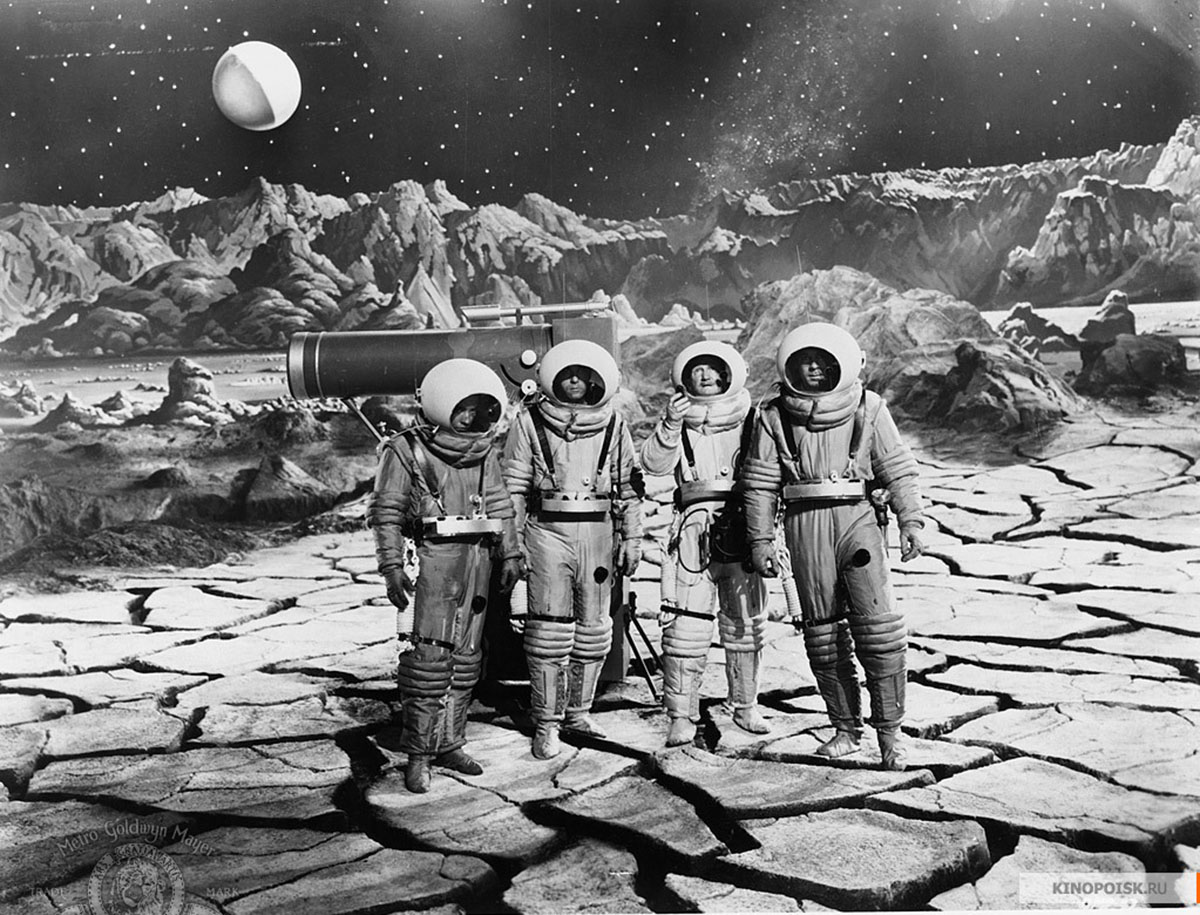
"The destination is the moon"
Director Irving Pichel, 1950
The film, shot twenty years before the person’s landing on the moon, today is primarily amazing at the scrupulousness of the scientific approach to the events depicted (fantastic at that time) events. Especially for the picture (completely in the spirit of the Soviet Scientific and popular cinema), an animated video was made in which Lemaker Woody explained to the audience the basics of space physics and specific details of a possible cosmic expedition to the moon. Here, overloads are shown during take -off, and weightlessness, and movement in the airless space with reactive power - a gun or jet of an oxygen cylinder. The lunar backgrounds were drawn by astronomer Chesi Booonsstell. Despite the fact that today the film may seem naive and morally obsolete, in the 1950s it was thanks to him that the American audience found out what space race will be.
"Planet of storms"
Director Pavel Klishantsev, 1961
In the film “Time of the First”, Pavel Klisantseva, the famous phenomenon film, published in the year of the flight of Yuri Gagarin, is watching Leonid Brezhnev, sitting alone at the giant cinema. Throughout his life, a documentary of Kloshantsev for world cinema was no less than those who he shot his scientific and popular films about space for world cinema. Technologies and innovations, invented and mastered by Kloshantsev to simulate space on the screen, were diligently studied and used even in high -tech Hollywood, and the “planet of storms”, purchased for rental in the United States, became the basis for the films of Roger Korman.
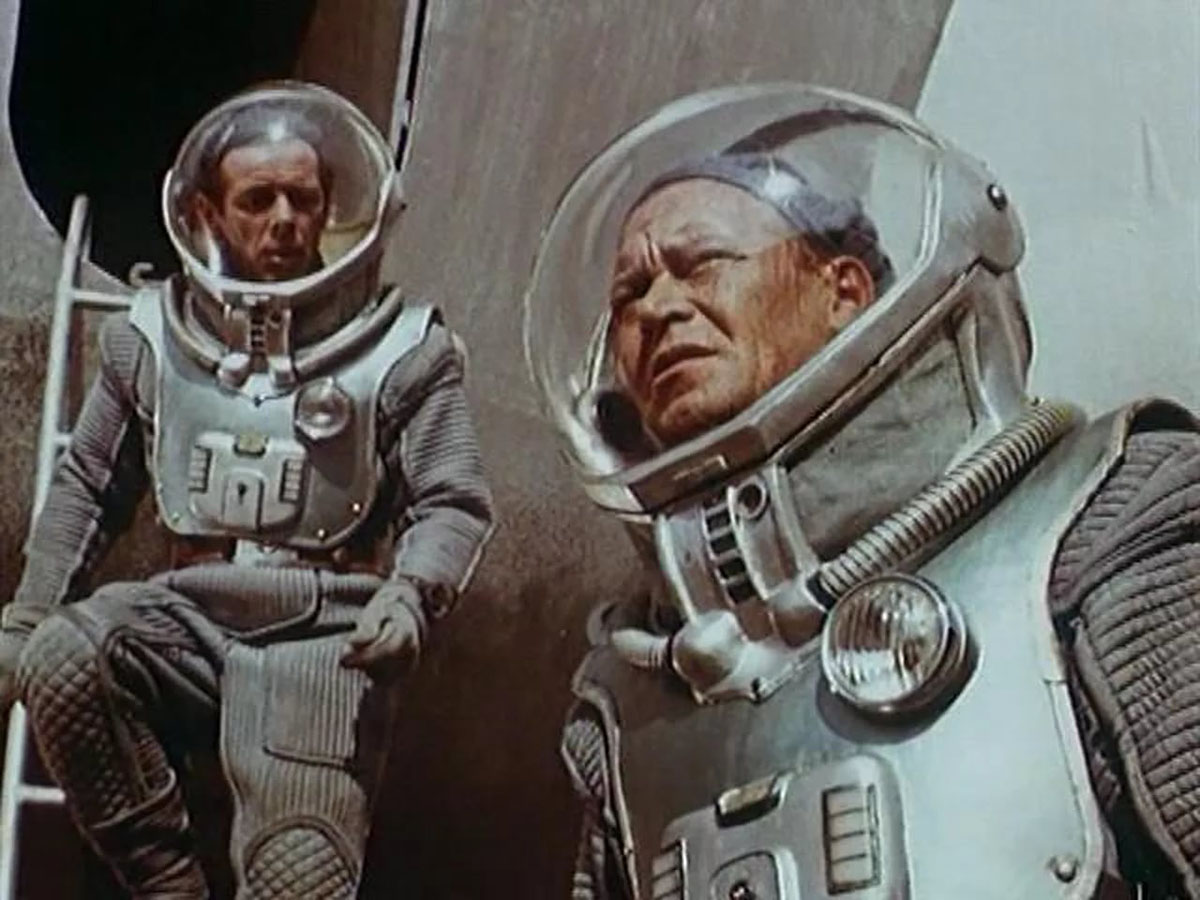
"Dark Star"
Director John Carpenter, 1974
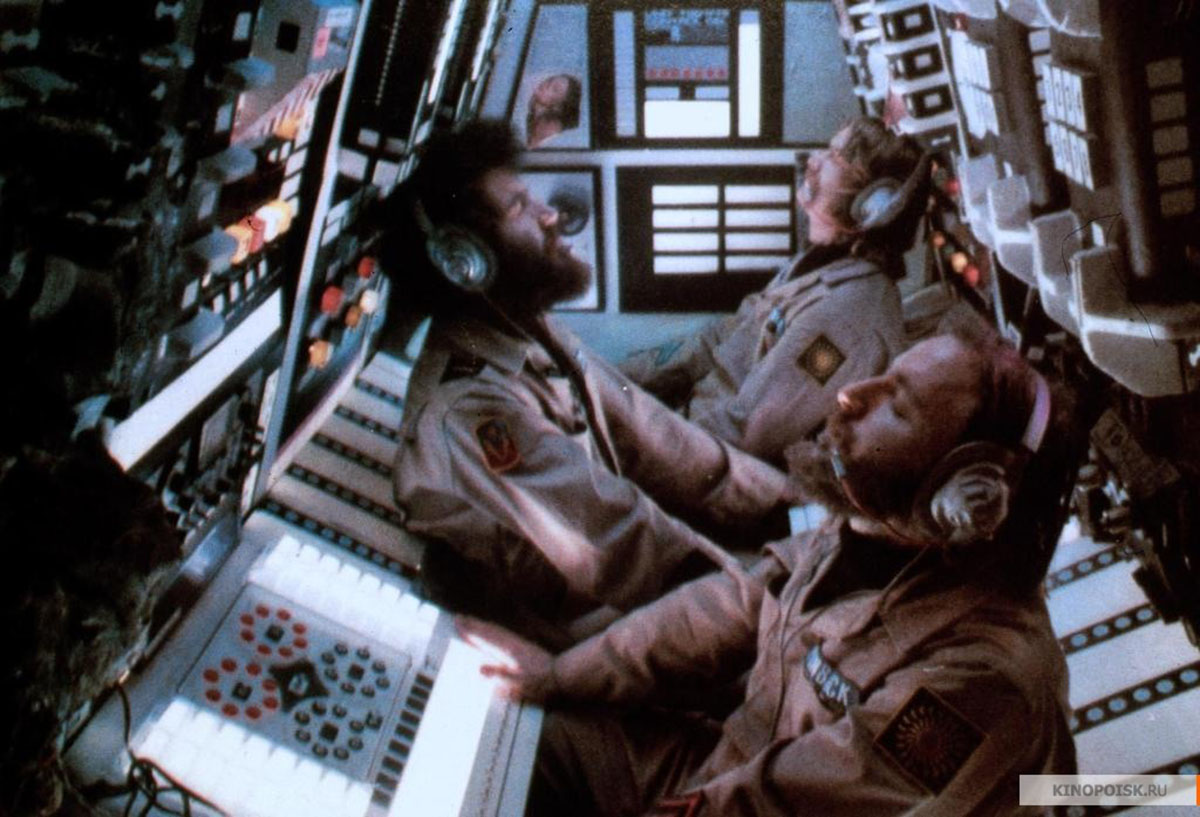
John Carpenter and Dan O'Bannon were shot his student debut after Stanley Kubrick showed a brilliant soulless cosmos in his “Cosmic Odyssey”, and a tiny film is ironic over the deadly seriousness of the blockbuster as he can, but his heroes are not joking. It is cold, dark and lonely in this space. Dan O'Bannon will soon come up with a plot for a “stranger”. There he will drag the main alarms of the Dark Star: claustrophobia and fear of artificial intelligence. Gradually, the cosmos from the last line and the object of romantic dreams turns into a place where no one will hear your scream.
"Return"
Director Vladimir Tarasov, 1980
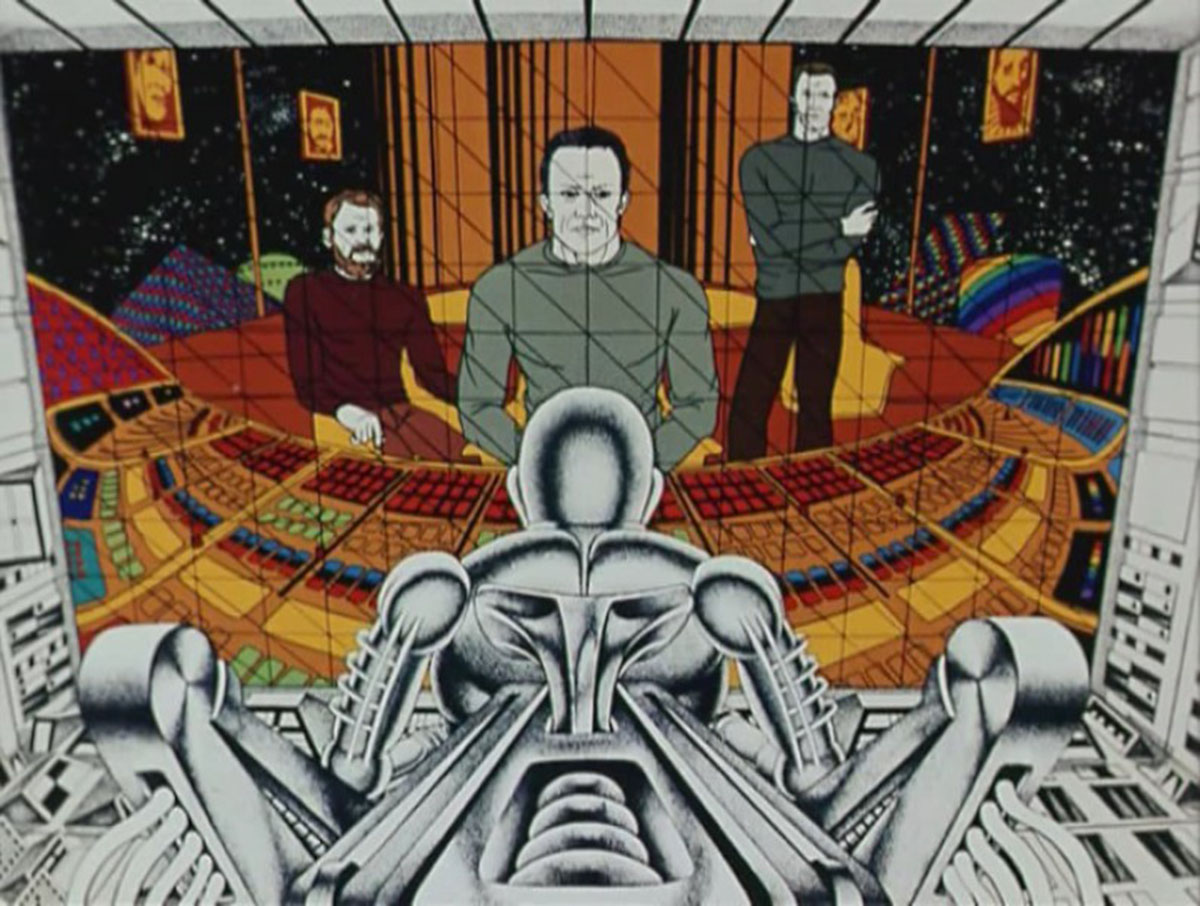
In the USSR, where every schoolboy dreamed of being an astronaut, made incredible animated films about space and his conquerors (the recent “we cannot live without space” Konstantin Bronzit continues this wonderful tradition), but even against their background “return” stands out as an ambitious attempt to combine elements of various artistic universe in the general art field. Here, the “Solaris” of Tarkovsky is met by Kubrick and partly “stranger”, and the dream of distant stars is testing a shallow thought that it is still more important to find his place on Earth than to look into the dark depths of the universe. According to the plot of the film, the sounds of a native village froze in the near -Earth orbit of the astronaut - the gravity of memory is stronger than the earth. Flashbacks from the “Time of the First” seem to be in the animated fantasies of rural life. Most likely, it is no coincidence that the Cosmonaut Alexei Leonov was the consmant of the “return”.
"American astronaut"
Director of Corey Mcabi, 2001
A funny cinematic case of a literally interpreted metaphor: the cosmic distance in science fiction was so often compared with the frontier of the Wild West (remember at least the screensaver to the “star path”) that someone had to build up this space with salons and the ranch. Another thing is that the independent filmmaker Mcabi did not stop there: his black and white cosmic western rapidly develops into a musical, overpowering the silence of the interstellar vacuum. In general, this is the most humane and inhabited of all available in the presence of options for screen space. The author will continue to study it in the next film - Stingrei Sam.

The space distance in science fiction was so often compared with the frontier of the Wild West that someone was supposed to build her salons and the ranch
"The first on the moon"
Director Alexei Fedorchenko, 2005
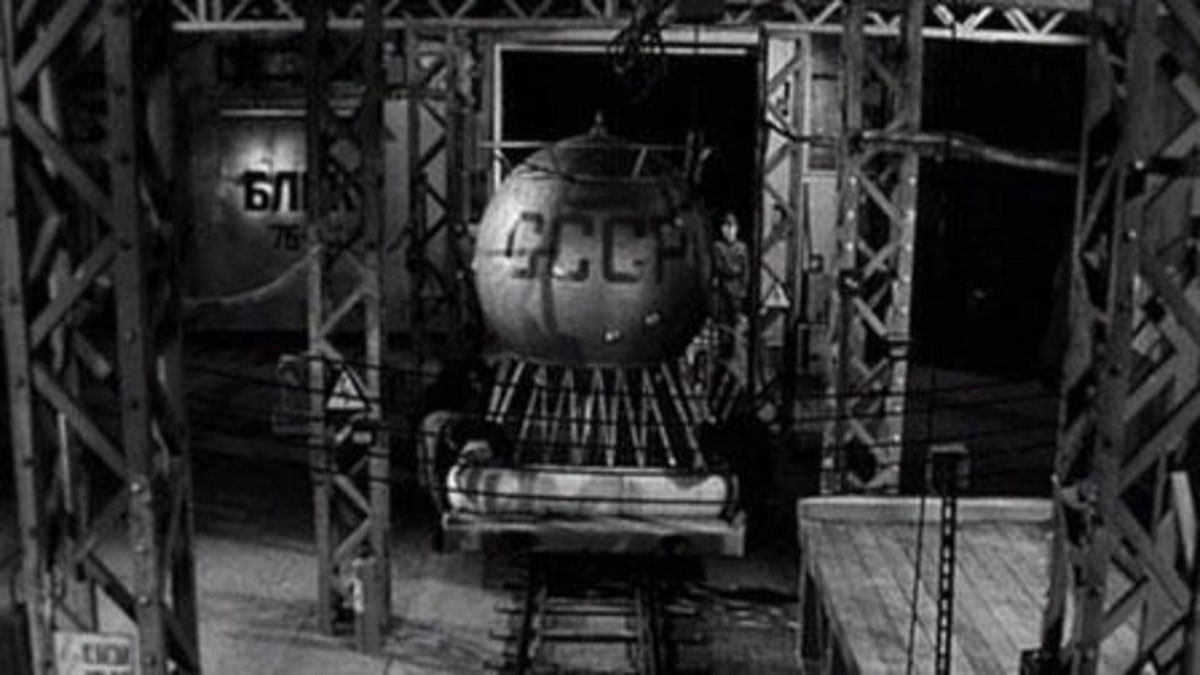
The mystification born of the archives of the Sverdlovsk film studio and the phenomenal cinematic instinct at that moment is still debutant Alexei Fedorchenko, to call the best domestic film about the space, despite the fact that the feats described in the “first on the moon”-the flight of the first Soviet cosmonauts to the far in the distant 1930s-was invented from beginning to end. The grotesque often much better reveals social and historical mechanisms than any truth. So the fictional “the first on the moon” is an ideal document testifying to the Soviet space project.
"Paper Soldier"
Director Alexei German-Ml., 2008
One of the thinnest reflexions on the topic of modern nostalgia for the heroic past (at the most romantic moment of Soviet history). The plot of the “Paper Soldier” unfolds on Baikonur, from where the first rocket with a person on board is about to take off, but the center of attention is shifted from the astronauts to the dreamer with a rank lower-one of the doctors helping to prepare pilots for the start. The USSR in the frame is an unsettled Kazakh void and puddles, in the middle of which people are trampled and suffered, seriously obsessed with the scientific knowledge of the world. The inaccurate space of the future cosmodrome is no less space than the place in which the rocket soars. Who were the first conquerors of space actually? Perhaps Herman approached the answer to this question closer than others. Ordinary people, “pretty and meaningless”, the same as us.
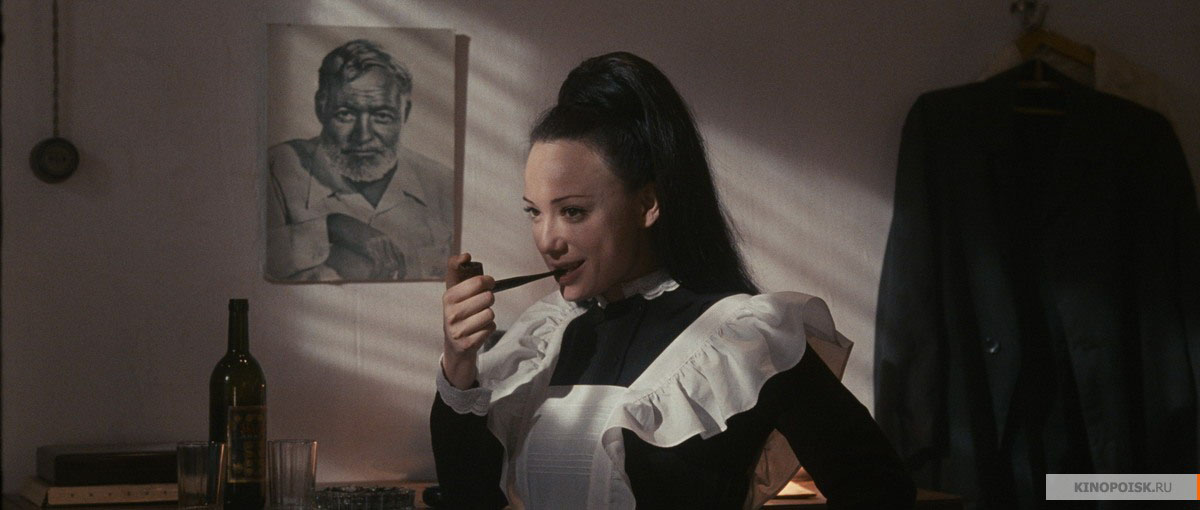
Photo: kinopoisk.ru