
Translated material
Madness test
After each power action, Moscow grinned into the face of its Western “partners” (one of Vladimir Putin's favorite words): Well, let's, try to do something with us, a nuclear power. Let us recall how Putin stated: at the time of the accession of Crimea, he was ready to declare increased combat readiness of the strategic recreation rocket forces (Strategic Missile Forces). With any hint of the possibility of military confrontation, Western leaders immediately showed slack and retreated. But the new Washington administration decided to take a chance - and check the Kremlin for slack.
Disappointing reality
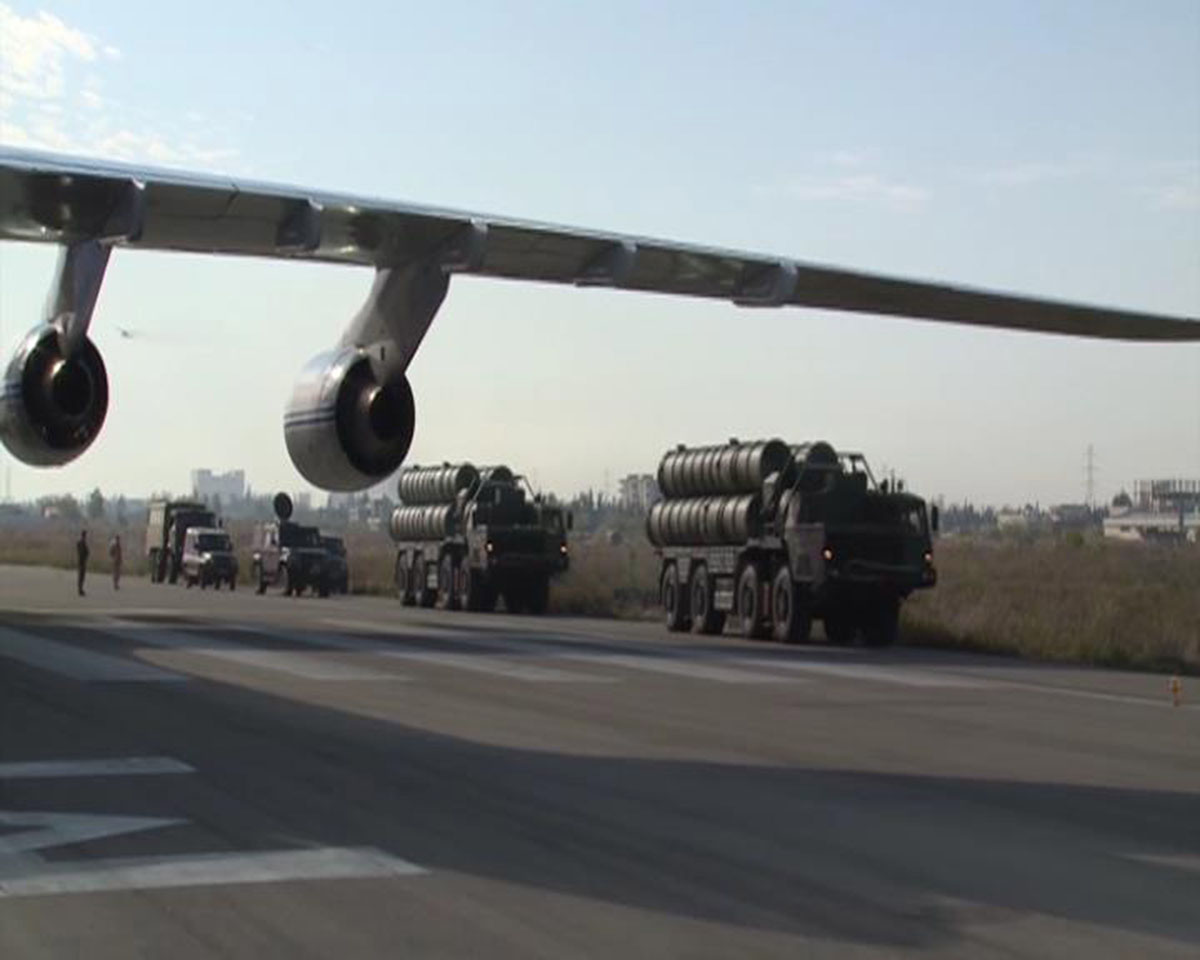
Moscow with considerable pompous in Syria was placed in Syria the air defense vehicles-the divisions of anti-aircraft missiles (air defense systems) S-400 and S-300. Russian representatives quite frankly explained that this is being done not only to protect their own bases - our air defense systems had to guarantee the protection of Assad’s troops from air attack from the United States and their allies. “Let me remind the American“ strategists ”that the air cover of the Russian military bases in Khmeimim and Tartus is carried out by the S-400 and S-300 anti-aircraft missile systems, the radius of which can be a surprise for any unidentified flying objects,” General Igor Konashenkov, the head of the Ministry of Defense Piara, was cursed. The combat calculations of Russian air defense systems, they say, “it is unlikely that the time to clarify the“ direct line ”of the exact program of the flight of missiles and the belonging of their carriers,” he frightened. In the words, the enemy and vulnerable invisible aircraft will not help, according to him: all the illusions of amateurs on this subject "may encounter disappointing reality."
When trying to reflect a volley of 59 “tomahawks”, according to General Maltsev, it would be necessary to shoot 118 missiles. As a result, in the case of the second American attack, there would be nothing to defend Russian bases in Syria
And this very “disappointing reality” has come. Not for the Americans. The Pentagon with neglect refuted as a serious discussion of a hastily invented version of the Russian military department that half of Tomagavkov did not reach the Syrian air base Shayrat. And although American experts are still arguing about whether the victorious relations correspond to the fact that as a result of the attack on April 7, 20% of all Assad combat -ready aircraft were destroyed, it is clear: all winged missiles, with the exception of one, reached the goal. Therefore, Russian air defense systems missed Tomagavka.
And here it was already the turn of our full -time experts who accepted to explain that, it turns out, our unsurpassed air defense systems can intercept American cruise missiles (four decades age), only when they are at a distance of 25 km from launchers. But what about then with concentric circles with a radius of 250, or even 400 km, which, after placing our air defense systems in Syria, the same experts regularly painted on the maps, denoting an inevitable defeat of enemy air funds?
We note right away: a range of 400 km seems doubtful due to, to put it mildly, contradictory data regarding the far missile of the S-400 complex. Separate foreign skeptics claim that such a rocket has not yet been adopted at all. Well, okay, a range of 200 km is also not bad. But for this, the goal should fly at an altitude of 6-8 km. And “tomahawks” - it is necessary, what kind of surprise - fly at an altitude of 50-60 m from the surface. And at the same time, here it is, overseas insidiousness, are masked due to the terrain.
“... by and large, the possibility of shelling of cruise missiles is extremely limited in range,” emphasizes Igor Maltsev, a former chief of staff of the air defense forces. According to him, immediately after detecting a winged rocket, it is necessary to open fire with a burst of at least two anti -aircraft guided missiles (SAMs). Otherwise, the winged rocket in a matter of seconds will simply come out of the relatively small in size of the defeat zone. The meeting of the ZUR with Tomagavk in this case will occur at a range of 12-14 km. According to General Maltsev, anti -aircraft missile divisions and batteries deployed in Khmeimim and Tartus could not even theoretically “get” American cruise missiles. Which, we note, does not coincide with the threatening speeches of General Konashenkov.
Other experts note that the decision not to use our air defense systems could be caused by elementary calculation. In Syria, now, according to official statements, several divisions and batteries of Russian air defense systems have been deployed. That is, the number of missiles most likely does not exceed several tens. Therefore, when trying to reflect a volley of 59 “tomahawks”, according to General Maltsev, it would be necessary to shoot 118 missiles. As a result, in the case of the second American attack, there would be nothing to defend Russian bases in Syria.
However, no matter what calculations or circumstances were refusing to intercept American missiles, this does not change the circumstances that Moscow has not fulfilled its threats (in relation to Assad’s opponents) or its promises (in relation to Assad itself).
Stuffy bubbles
Until recently, the ability to create useless zones anywhere in the globe, where it is possible to deploy air defense systems, was considered by Western countries as the most important strategic factor. Suddenly, the ability to prohibit access to a particular region has a whole paragraph in the final communique of the last NATO summit in Warsaw. After all, it turned out that the “bubble” of air defense and coastal defense means, created, for example, in the Baltic Sea, would not allow NATO to transfer strategic reserves at the time of the crisis. Syrian history demonstrated: in order to cope with this threat, the NATOs do not need to invent anything new - there may be enough “tomahawks”.
This story is able to cause special damage to Russia's relations with its few clients. More recently, specific modes like Iranian were ready for anything to get Russian S-300 air defense systems. It was in the possession of weapons that can withstand the US aerospace offensive, they saw a guarantee of security (or impunity). Recently, the theory has recently received a theory in the Russian expert community: Russia can make great money on “sovereignty” technologies, selling the heaven to the “aggression” of the Western states. However, after the blow of the Tomagavs, those who had previously believed in the bright export future of the products of the domestic military-industrial complex somehow quickly fell silent.
And yet, if Moscow consciously decided not to enter into military confrontation with the United States and not try to intercept the Tomagavka, this is very good news. This means that the owner of the Kremlin only portrayed recklessness, but in fact he perfectly understands all the possible risks of the military clash of two main nuclear powers. In a word, Putin is not going to die for Assad. It is very significant that, having exchanged extremely harsh statements on the eve of the arrival of Rex Tillerson's Secretary of State, then, during negotiations, the parties frankly tried to lower the degree of conflict. Without an agreement on any significant issue, Tillerson and Lavrov carefully searched for, or rather, specially constructed positive signals, such as creating a group of special representatives of the two countries, the task of which includes the revision of difficulties and contradictions accumulated in recent years.
But, on the other hand, everything that was called the international authority of Russia grew out of fear of its unpredictability. As soon as the world community realizes that the owner of the Kremlin is quite adequate and is ready to risk only to a certain limit, Moscow will present a long account for its exploits of recent years.
Korean gambit
It seems that Donald Trump is about to arrange an audit of the North Korean dictator Kim Jong-un. All the last years, the DPRK with varying success has been engaged in nuclear blackmailing of the world community, demanding constant feeding in exchange for foggy promises not to produce new nuclear tests and launches of ballistic missiles. In infinity, negotiations with Pyongyang were underway, which had no chance to end with a success: Kim Jong -un concentrated all the resources of a poor country to improve nuclear and missile technologies, conduct tests and ignored all the appeals addressed to him. Even China, once the main sponsor of the DPRK, expressed irritation, but no one knew what to do.
And so the White House made it clear that he was not going to wait until Pyongyang gets a rocket capable of flying to Washington: Trump ordered a shock ship group led by Karl Vincon aircraft carrier with hundreds of combat aircraft on board to go to the shores of the Korean peninsula. In a telephone conversation with the chairman of China Xi Jinping Trump, he asked to convey Kim Jong -un that in addition to the aircraft carriers, the United States still has atomic submarines. In a word, Trump is ready to wait only to the nearest North Korean nuclear test - at the time of the delivery of this article, reports of US readiness have already begun to deliver a preemptive blow to the DPRK.
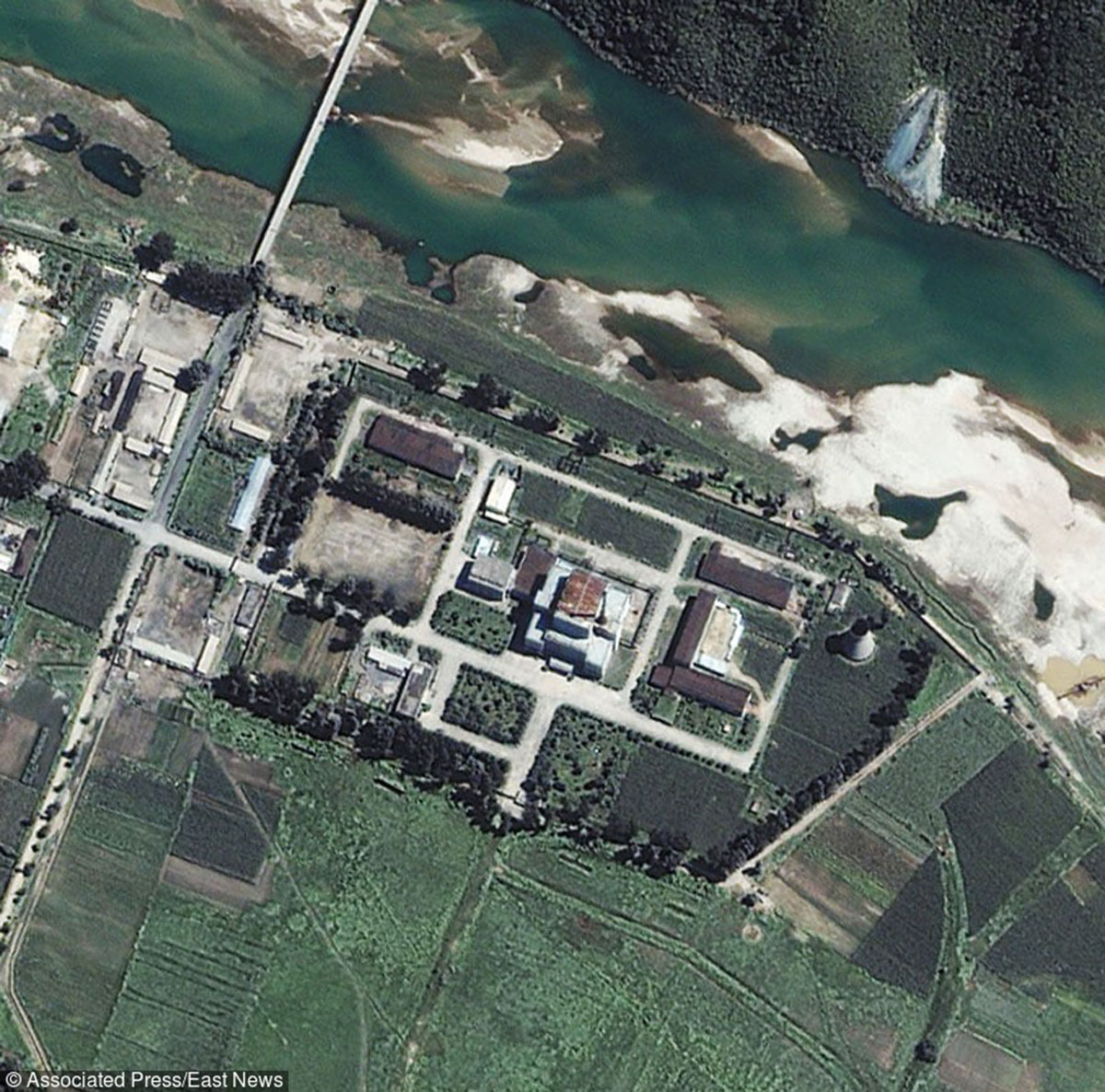
The blow to the “tomahaws” on Shayrat was inflicted to prevent new chemical attacks. In the case of an attack on Yonben, the Nuclear Center of the DPRK, Kim Jong -un will lose strategic potential for a long time. However, everything is not so simple. Near North Korea is South. Its capital Seoul is within the reach of not only missiles, but even the receiver of the DPRK army. The military operation on the peninsula threatens to turn into a general disaster if Kim Jong -un is a real crazy, and does not play crazy. But this can be checked only in one way - by applying a blow to it and putting it on the end of life, if not millions, then hundreds of thousands. That is, if Donald Trump himself, a impulsive and risky person, will safely pass an exam for madness.
Photo: The Press Service and Information Department of the Ministry of Defense of the Russian Federation/TASS