
Translated material
1917 - century later
Alexander Genis: On the air - a new release of our cultural and historical cycle:
1917 - century later:
Paradoxes and parallels
Faulkner said: "The past is never dead. It has not even passed."
Having taken the famous aphorism into the epigraphs of the cycle, we plunge in the eternally living time of the past, which has reached us in the form of historical events, artistic movements, musical directions, fateful books and an important part of each transmission, which, perhaps, are best able to convey the spirit of time.
Looking into the past, we are not looking for escapism, allowing us to relax in the long -past, but lessons that allow you to better understand the present and look into the future.
The traditional questions that these transfers ask the past sound like this:
What happened?
What happened?
What could be?
(Music)
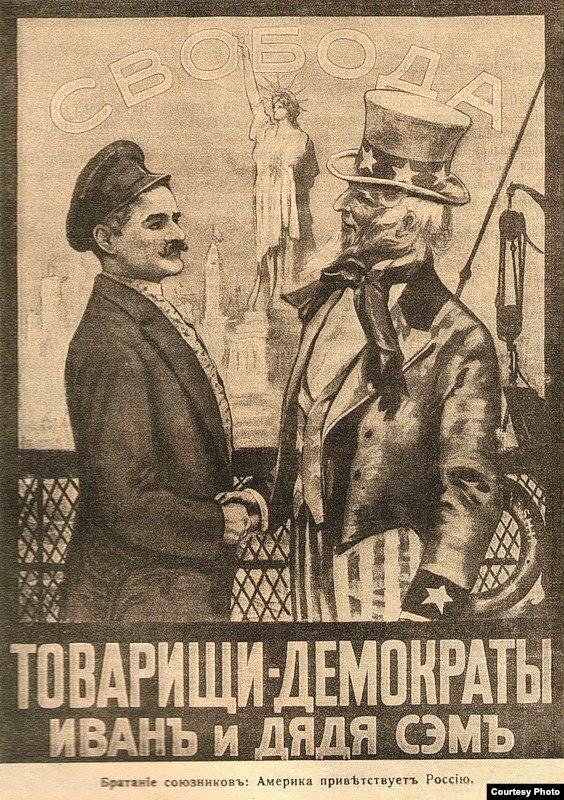
Alexander Genis: A hundred years ago in April 1917, a fateful event took place, which changed the history of mankind, the history of America, the history of Europe, the history of Russia. And this event is not the October Revolution, but the entry of America into the First World War.
On April 6, Congress decided to declare the war of Germany. This is a date, which in history textbooks is considered fundamental to the fate of the United States of America. You need to understand what America was before the First World War. These are still the outskirts of Europe, it was not literally a real, large, adult power. The Americans were still treated as provincials. It was as a result of the First World War that America became a superpower and entered the world arena. She was not even ready for war. America had the smallest army of 13 warring countries. Her fleet was quite significant, but he was busy in Mexico - then they were afraid of Mexican riots.
America was very reluctant to enter this war. Wilson, who in 1916 became the president of America, won precisely because he promised to keep America from participating in the war. Nevertheless, the war was inevitable.
It was brought to her by the crazy decision of Germany to wage an unlimited underwater war. The first factor is an underwater war that was supposed to freeze in hunger and violate trade routes between America and England. And the second is the telegram of Zimmerman , about which we spoke in our recent program, which was supposed to provoke the Mexico war against America.
The Americans perceived SS with terrible irritation attempt to intervene in their internal affairs. Which is extremely reminiscent of the current situation when the Putin regime intervened in the election of the American president is what Congress is doing now, investigating these events.
These factors led to Wilson was forced to declare war. Germany believed that America was not a dangerous enemy, the German submarines would be able to prevent America to land in Europe. Then they miscalculated. Thanks to the convoys, due to the fact that mobilization was extremely successful, the Americans were able to land and by the spring the first Americans fought in Europe. This is not to say that the Americans were ready for war, but they were ideologically ready for her, and this is very important.
What did America fight for? It was difficult to overeat. It is clear why France fought - it defended itself from aggression of Germany. Why should America fight? She had no territorial claims to Europe. It was a war of idealism. As Wilson said: the task of America to make the world safe for democracy. And for this, the Americans went to Europe.
Solomon Volkov: History actually does not present us any lessons, we are a little pulling the story in order to find in it some current motives, conclusions, and lessons. In this case, with America, you rightly indicated that Wilson, when he was elected, he, I think, sincerely did not want to get America into this war. But the circumstances turned out so that he did this, and this changed the fate of America for a hundred years in general. I can’t say that this change definitely benefited the country. We said that in the history of culture, the pendulum is all the time between romanticism and classicism, as well as in the history of America the same pendulum is swinging between expansionism and isolationism, these sentiments replace each other. Each time, one side wins, suppose expansionism defeats isolationism or, on the contrary, isolationism wins the expansionism, the loser perceives this as a catastrophe. The subsequent development of events also often develops so that one and the other side can find in a past confirmation of the correctness of their position.
Alexander Genis: I do not agree with you. The passion of America, its historical purpose is isolationism. Indeed, for this, America arose to escape from the European fate. While the First World War was going on, a lot of recent emigrants lived in America. 12 million people emigrated to the USA at the beginning of the century, mainly from Europe. And they, living in America, were happy that they avoided wild massacre in Europe. They did not want to fight, because America was a refuge, new light, America gave a chance to sit out from this crazy European massacre, from endless European history, which is all on the blood. The Americans wanted to live their own lives. Isolationism is the eternal dream of America.
The expansionism, as you say, is the very temptation of idealism that pushes it the other way. And it’s clear why. Every time America tries to be isolationist, it only becomes worse. Historians say that if America from the very beginning and in the First and Second World War were more determined, there would be no one or the second war, because America was too large a trump card on one side so that the other decided to war.
Today we are just experiencing about the same problems that were a hundred years ago: what is the fate of America - isolationism or globalism?
Solomon Volkov: Here I do not see the contradiction, in my opinion, we are talking about the same thing.
Alexander Genis: Yes, but I claim that isolationism is much closer to the American spirit than expansionism.
Solomon Volkov: Nevertheless, America, starting in 1917, has been interfering with determination in one international conflict after another. And again, already before our eyes, during our stay here, we were convinced that the next exit of the active America to the international arena led to far from ambiguous results, as we see on the example of the Iraqi war, which was started as a response to terrorist acts on September 11.
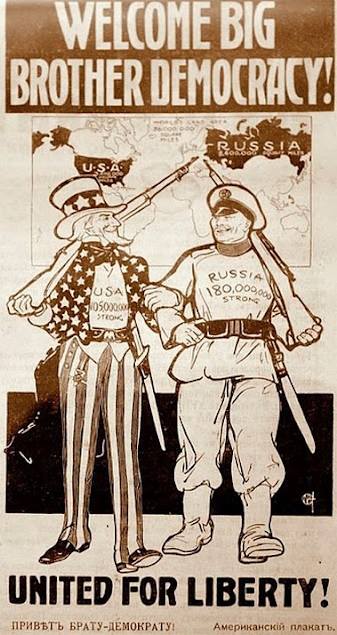
Alexander Genis: Yes, this, of course, is an eternal problem. But I insist on isolationism as an American dream, because it is very difficult for the president to always convince his fellow citizens. Wilson is an example. Incredible efforts were then made to convince the Americans to go to war. At that time, there was such a practice: one million speakers, very famous people, performed before each movie science or a musical concert with a four -minute speech, they were called “four -minute”, where they explained why the Americans needed to fight.
I watched the curious film "Sergeant York" - this is a picture of the American hero played by young Harry Cooper. The film is built on a documentary basis. This is a young farmer from Tennessee, which seems to be called to serve in the army. It turns out that he is a sniper, and a sniper of a completely deadly force. But he does not want to fight, he shows the officer the Bible: it is written right there - do not kill. And the American officer says: I will show you another book that explains why you should kill. He shows the American constitution and says: here it is written that we must free the world and make it safe for democracy. It all ends well, York performs a feat and receives a congress medal. In the battle, he killed 25 Germans and captured everyone else.
One way or another, mobilization was a difficult task that the Russian revolution helped to solve. The February Revolution was very on Wilson's hand. It is one thing to be an ally of the autocracy, the extremely conservative, reactionary absolutist monarchy, and it is another matter to be an ally of democracy. And Wilson beat this revolution. He is saying that now young Russian democracy and experienced American democracy will fight against “beasts-beas”, as they said then.
Solomon Volkov: It was then that, as it turned out later, the very complex control of Russia and America began. Because Russia first appeared in the eyes of the Americans as a positive country after the February Revolution. Before the revolution, I read about such a ridiculous character, a man named George Kenan-this is not our George Kenan, this is an American preacher who for some reason has focused on Russia and traveled with lectures in America, talking about how he allegedly saw in some Siberian prison of political prisoners of anti-monarchists who were demonstrated there, holding American ones there, holding the American flags. It was a pure fiction, but he used it in order to prove that we had to fight the autocracy in Russia.
Alexander Genis: The Americans really treated Russia with great suspicion and supported all revolutionary activities. Mark Twain, for example, spoke about this more than once. There were a lot of emigrants in the USA who talked about pogroms who talked about police persecution. In short, as now, Russia was a pole of evil.
Solomon Volkov: But in 1917, after the February Revolution, which actually occurred in March, Russia became an ally, a real ally of America. And then this pendulum again swayed when the Bolsheviks came to power. At that moment, when America diverged with Russia, Russia was accused even more than the authoritarianity of the rule, it was accused of godlessness. The main argument was that the Bolsheviks were terrible atheists. And this topic was executed both in Congress and in American society. Then the theme of the athery continued and its climax was achieved in Reagan's famous statement that the Soviet Union is the Evil Empire.
Alexander Genis: I would not say that Reagan called Russia - the Empire of Evil, because she does not believe in God.
Solomon Volkov: For him it was a very important point.
Alexander Genis: Undoubtedly, since America is a religious country - was and is. But Reagan called it the “Empire of Evil” not because the Russians do not believe in God, but because the Russians capture and captivate other nations, primarily the countries of Eastern Europe.
Solomon Volkov: True, but the strongest religious aspect has always been present in this. The modern narrative about Russia is conducted by efforts, paradoxically, liberals, that is, people who have traditionally in the 1920-30s in the past, and even during the Second World War, the then Soviet Union was actively supported. Political and ideological maps in American reality sometimes develop in an extremely bizarre way.
Alexander Genis: One way or another, American soldiers were in Europe.
Solomon Volkov: Two million of them.
Alexander Genis: And only four million people participated in the First World War and 117,465 people died. This, by the way, is characteristic of America, there are no unknown soldiers, every fallen is calculated.
What made the most strong impression on the warring parties? Not even the landing of American troops, but how they looked. They were called Boys. “Dough” is the dough, and sometimes the donates were also called - such dumplings, which then, and now, were very popular. No one really knows where this nickname came from, but it is believed that the American draftees were so lush, white, dense, as if they had eaten these dumplings and they themselves looked like pyshki. While the warring countries were exhausted, the Germans, and the French, and the Russians, and the British were exhausted by the war, and the Americans were fresh force. By this time, Germany had already come from the absence of everything, the deficit was complete, hunger reigned in the country. And when the German soldiers captured some trench, where the Americans were, they found chocolate in the satchels, meat canned meat, they even saw magazines with comics, which were also in their trenches. Then they realized who they deal with. This crushed the military spirit of the German army and determined the victory of the allies in this war.
To remind you of this era, we will now show one American propaganda song, which accompanied the call to participate in the war. This is an old record, an old song that talks about the enthusiasm that the state, government, the White House tried to excite in the American people.
(Music)
Alexander Genis: Now let's return to culture and Russia.
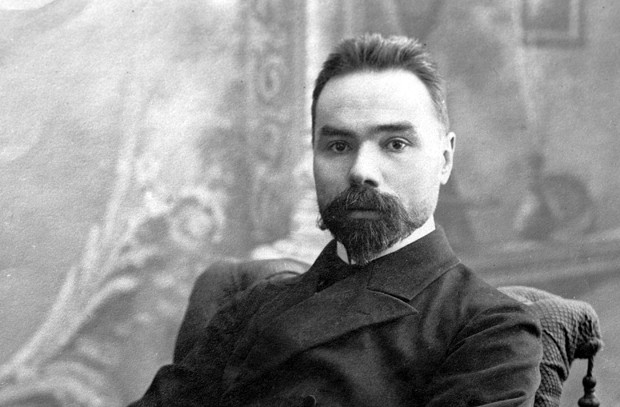
Solomon Volkov: It is very interesting to recall how the February revolution was met by people who remained in the history of Russian culture. Our ideas about the positions of these people from today's world do not correspond to what happened in reality. And here Valery Yakovlevich Bryusov, a poet whose fate in the history of Russian literature is complex and mysterious, is an extremely curious figure, I would say. This is a person who was a clear leader of pre -revolutionary Russian literature. In terms of influence on the current process, literary, it is not even anyone to compare with, maybe Bryusov in poetry was the same as bitter in prose. Moreover, notice, I now thought, they did not compete with each other in this sense, Bryusov did not climb into a prosaic territory.
Alexander Genis: How, he wrote the novel “Fiery Angel”.
Solomon Volkov: I mean in terms of a literary organizer and authority. He did not impose himself as an authority in the field of prose. And Gorky modestly refrained from evaluating poetry, they were engaged in his prosaic collections “Knowledge”. They respected each other very much. Gorky wrote a greeting to Bryusov, in which he called him the most cultural writer in Rus', and Bryusov, in turn, wrote very respectful letters to Gorky. In particular, he wrote to him when a revolution took place that "almost in one day our common dream became true."
Bryusov, who in March 1917 called for the fact that the war should be waged before the victorious end, was not a man of especially progressive aspirations. With every political turn, it turned out that he was taking this turn, and that he had almost moved in the direction of this turn from childhood. That is, say, a person who wrote one of the most occult, if you like, works of Russian literature, as a “fiery angel,” later claimed that he had been a materialist, an atheist, and brought him up from childhood. The same with the revolution. In fact, Bryusov can also find very conservative statements, and here he composed a poem called “Liberated Russia”, which I want to read. It was written immediately after the 1917 revolution. I must immediately warn our listeners that the verses are quite bad, but this is a very important socio -political document that characterizes the position of such a significant figure as Bryusov.
Liberated Russia, -
What marvelous words!
They have an awakened element
Folk pride - alive!
How many times, in the old years,
We distinguished the imperious call:
Call of update and freedom,
Grozov-Zizov of future centuries!
They, before us, are menacing
We were asked: "How long to wait?
Years will pass, and it will be too late!
The deadlines have its own seal.
Let the heavy lot have fallen to you:
Do you renounce him?
Rock scattered for all the tables
Tasks, labor and triumph! "
Who, who was deaf on these calls?
Who, who was blind in the middle of a long darkness?
With enthusiasm, the first rumble is harsh, -
We admitted the fuss of the hum.
Then ten years ago, break
A terrible roar ran ...
And now, under the voice of thunder,
The collapse broke and flies!
And those who worked in that - Glory!
Not for nothing of the victim without a number
Russia, in the days of the bloody struggle
And in the days of the past, brought!
Hundreds of lives were bent for nothing
On the block, in prisons and in the snow!
Their mortal groan was the anthem of the Fatherland,
Their feat will come to life for centuries!
As those and our generation
It fully fulfilled its duty.
Blessed, breathe an instant
What had been dreamed before in a dream!
Newspaper dreams are embodied
All the best, all living hearts:
Transfigured Russia
It became free - finally!
In my opinion, poems resemble the worst Soviet poetry. This reminds me of the most nasty verses of our stadium poets.
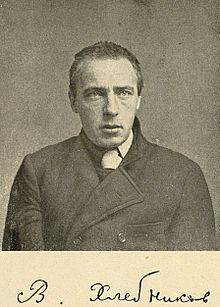
Alexander Genis: There is something in common. Because when people are too hard to engage in politics, they vividly lose aesthetic taste.
And I want to read Khlebnikov’s poem, which is also connected with the revolution. There is one historical detail that must always be remembered when we talk about the revolution. All the political forces of Russia believed that Russia has now become a unique country. The revolution that no one had foreseen seemed a miracle. This miracle should have been explained only by one - the historical uniqueness of Russia. The Bolsheviks also thought so. They also believed that Russia was destined to become “God -bearing” that it was destined to fulfill that very mission, which Marx dreamed about for the Western proletariat. And the revolution was perceived in more global terms than we imagine today. From here came Russian cosmism, which saw the task of the revolution in the total transformation of being. This is what we must remember when we listen to Khlebnikov’s poem with the famous beginning.
Freedom comes in,
Throwing flowers on the heart,
And we, with her, walking in the leg,
We talk with the sky on "you."
We, warriors, strictly hit
Hand on the harsh shields:
May the people be sovereign
Always, forever, here and there!
Let the virgins sing from the window,
Between the songs about the ancient campaign,
About the loyal sun -
Autocratic people.
Poems, of course, are much more interesting than that of Bryusov.
Solomon Volkov: with the exception of the first line, they are also not one of the best poems by Khlebnikov. But again, the mood of the poet and the understanding of his socio-political position at that moment are important to us here.
Александр Генис: Кто-то сказал, что это «Интернационал», переведенный на русский язык.
Соломон Волков: Похоже звучит, да.
Александр Генис: Это стихотворение написано 19 апреля 1917 года, очень по горячим следам. Мне кажется, что в этих стихах Хлебникова много что можно увидеть. Например, «свобода приходит нагая» - эта строка стала знаменитой. Почему она нагая? Потому что это та героическая нагота, которая есть в греческих скульптурах, которая есть в любой классицистической и романтической живописи.
Соломон Волков: Но так же и беззащитность здесь акцентируется, раз нагая, значит беззащитная. Ее нужно защищать, эту свободу.
Александр Генис: Может быть. Но это и голая правда.
Соломон Волков: Первая строчка очень многомерная.
Александр Генис: Она говорит о том, что свобода — это ноль, с нее все начинается. Тот космический ноль, который позволяет человеку вырасти до неба и говорить с небом на «ты». Когда мы говорим о Хлебникове, мы должны всегда помнить, что где-то тут рядом и Циолковский, и Платонов, и Заболоцкий, где-то здесь ходит русский космизм, который представлял себе революцию как богоборческий или богоискательский катаклизм в историческом развитии человечества.
А теперь мы выполним просьбу одного нашего слушателя, который после предыдущей программы в цикле «1917 - век спустя» попросил нас подробнее рассказать о музыкальном эпизоде, связанным с новым гимном России, попыткой нового гимна. Соломон, напомните нашим слушателям.
Соломон Волков: Месяц назад мы показали оркестровую обработку Игоря Стравинского знаменитой песни «Эй ухнем», которая приобрела статус революционного гимна сразу же после революции. То есть она до революции уже воспринималась как протестная песня, ее исполнение чрезвычайно не поощрялось царским правительством. Она воспринималась как бунташная песня. Когда совершилась революция, то вдруг обнаружилось, что гимна нет, а нужен какой-то гимн для торжественных оказий. Такой гимн был из России заказан Игорю Федоровичу Стравинскому, который в то время жил в Швейцарии.
Тут любопытно следующее обстоятельство. Стравинский, когда он в 1962 году приехал после многолетнего отсутствия в Советский Союз, он подчеркивал, что убежал не от большевиков в Европу, а от царского правительства.
И еще очень любопытный элемент — эволюция его политических взглядов. Потому что поздний Стравинский был чрезвычайно консервативной фигурой, и трудно себе вообразить, с каким энтузиазмом он принял известие о революции. Он тогда отправил телеграмму матушке, где говорил о том, что наконец наша дорогая освобожденная Россия вступила на новый путь. Стравинский был готов вернуться в Россию тогда. А звали его такие громкие фигуры, как Горький, Шаляпин и Бенуа. Они звали не только Стравинского, они звали Дягилева в основном, которого хотели видеть новым министром культуры. Они считали, что лучшей кандидатуры на пост министра культуры будет Дягилев. А уже Дягилев сделал непосредственный заказ Стравинскому, и он за одну ночь надиктовал гимн.
Александр Генис: Как «Марсельезу».
Соломон Волков: Получилось удивительное сочинение. Я не удивлен, что оно вызвала такой резонанс наших слушателей. Потому что для меня это как неизвестный фрагмент из оперы Мусоргского «Хованщина». Очень необычная оркестровка для духовых и ударных.
Александр Генис: То есть там нет струнных вообще.
Соломон Волков: Вот такое монументальное впечатление, Мусоргский, транскрибированный на языке ХХ века. Удивительная вещь, которая показывает связь традиции, тоже бунташной, потому что Мусоргский же был в значительной степени анархистом по своим убеждениям, у него была масса приятелей с анархическими устремлениями, что давало возможность советским исследователям говорить о том, что Мусоргский был революционером. Он не был революционером, он был, конечно, анархистом по своим убеждениям. Стравинский великолепно передал революционный дух. Очень жалко, конечно, что это сочинение не прижилось в русской музыкальной культуре. Сейчас мы его покажем. Дирижирует сам Игорь Федорович Стравинский во время своего исторического визита в Москву в 1962 году.
(Music)