
Translated material
Exit to the battle
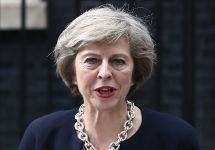
British Prime Minister Teresa May will ask the parliament to announce early elections on June 8, three years ahead of schedule, BBC reports . May made an emergency statement about the intention to dissolve the House of Commons after a meeting with the ministers at Dauning Street. May in the past excluded the possibility of early elections until 2020.
The leader of the conservatives, confidently leading in popularity in all surveys, explained the early elections by the desire for stability, when the country began negotiations on leaving the European Union. According to May, the political games of other parties interfere with their successful conduct and exacerbate the situation within the country.
“Therefore, we need universal elections. And we need them now,” the Prime Minister said. “The country acts as a whole, but Westminster is not.”
The opposition Labor Party promised to block the final agreement on the exit from the EU. The Scottish National Party promised to vote against agreements. Liberal Democrats threatened to start the parliament with the work of the parliament.
Opposition politicians welcomed May's decision. The leader of the Labor Labor Jeremy Korbin noted that the elections will give the British the opportunity to "vote for the government that will put the interests of the majority at the forefront."
“This is an opportunity to change the direction of the country's development. If you do not want a catastrophically heavy Brexit, if you want Britain to stay in a single market, if you want Britain to remain open, tolerant and united,” said Tim Farron's liberal democrats.
The act on the fixed term of powers of the parliament from 2011 provides that universal elections to the parliament are held every five years on the first Thursday of May. Previous elections to the British Parliament took place on May 7, 2015, the next elections were to be held no earlier than 2020. The bill on early elections must approve the parliament. To accept it requires two -thirds of the votes of members of the House of Commons, that is, support 434 out of 650 deputies.
According to the results of the vote on June 23, 2016 , 51.9 percent of subjects spoke out of Britain from the EU, and 48.1 percent, respectively. At the same time, out of the four components of the United Kingdom, Brexit supporters received the majority only in England and Wales, while Scotland and Northern Ireland advocated the continuation of membership in the European Union. So, in Scotland, Brexit opponents gained 62 percent of the vote, supporters - 38 percent.
The next day, Prime Minister David Cameron announcedhis intention to leave the post . On July 13, Queen Elizabeth II accepted his resignation , appointing May Minister of the Interior May.
On November 3, 2016, the London high court ruled that the government has no right to initiate Brexit without approval by its parliament. On February 9, the House of Communities of the British Parliament adopted in final reading an act that approves the launch of Article 50 of the Lisbon Treaty on the procedure for the country's withdrawal from the European Union. The government bill was supported by 494 deputies, 122 were opposed to 122. During the debuts preceding the final vote, deputies discussed several amendments, among which - permission from the European Union to remain on the territory of the United Kingdom after the completion of the Brexit process. As a result, not one of the amendments was accepted.
On March 29, May signed an official notification on the use of the 50th article by the Lisbon Treaty in order to leave the country to withdraw the country from the European Union. The letter was awarded to the chairman of the European Council Donald Tuska. This was the formal beginning of the Brexit procedure.