
Translated material
Midman
The Russia 1 TV channel is preparing the premiere of the series Optimists directed by Alexei Popogrebsky-a drama about the life of employees of the Soviet Ministry of Foreign Affairs in the 1960s

They shot the series "Optimists", of course, not now - but it is broadcast very on time.
“We do not want how to howl, but we want peace even less on their conditions”-so the main character of the series sets out the foreign policy doctrine of the USSR in the early 1960s-and this sounds relevant again.
Relations with America are again spoiled - as then. The representative of our country to the UN shouts from the rostrum to Western colleagues no worse than Khrushchev in the series. In Moscow, everyone is talking about five-story buildings, spring, in the Tretyakov Gallery exhibition "Thaw", well, and scoop glasses are again in trend.
In the series, these are Ruta Blauman (Severia Yanushauskaite) - an elegant American of Latvian origin, who married a Soviet pilot, moved to the USSR and was in diplomatic work. On her initiative, the Foreign Ministry has created an information and analytical group (IAG), where young, advanced, already with post-war education, diplomats prepare reviews and certificates for the authorities, and at the same time try to instill in this elderly and unestitioned authorities manners and a progressive view of the world. In one of the first scenes, three young heroes learn to play golf right on the red breech carpet - one of the obstacles is Stalin's desktop.
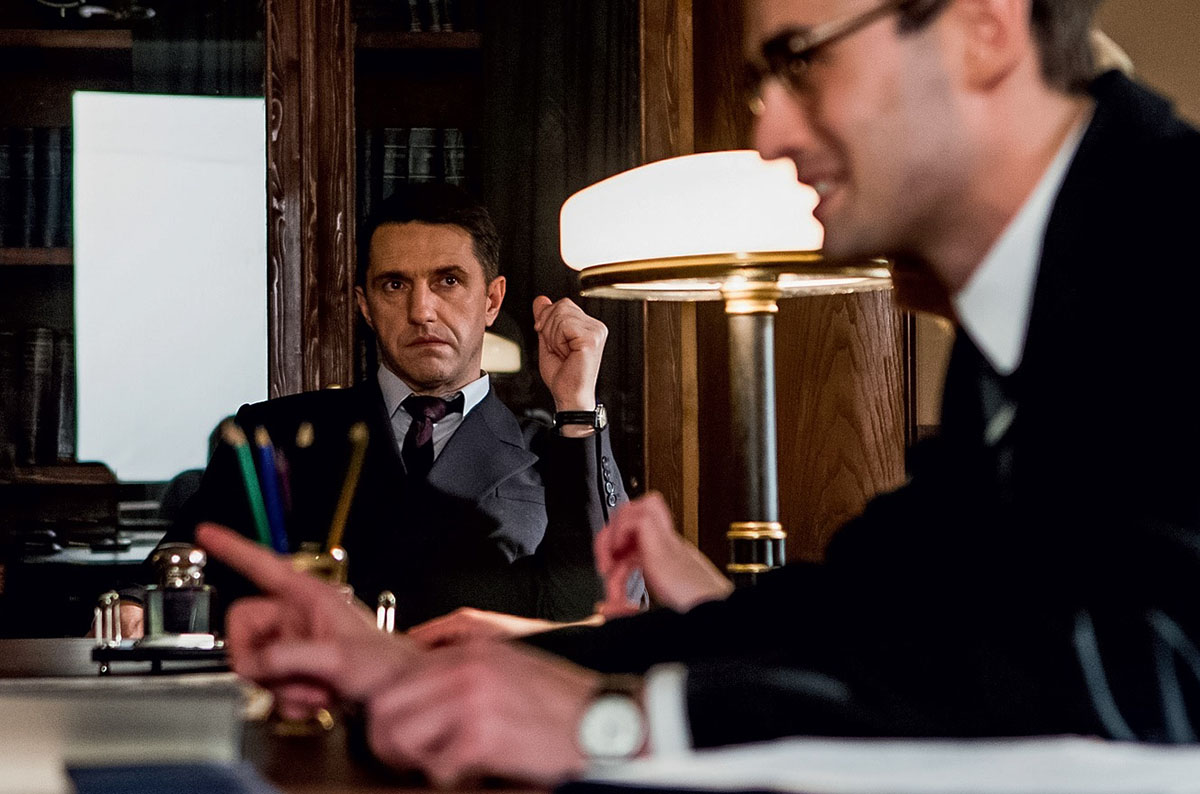
The authorities are looking at this, seriously, no one perceives these young non -standard people. But suddenly in the IAG they refer to Grigory Biryukov’s fault from the International Department of the Central Committee of the CPSU (Vladimir Vdovichenkov), and he undertakes to correct everything.
This school of progressors inside the Foreign Ministry is fictitious, but the series is based on the real events of May-October 1960: a scandal with a shot down American spy pilot Powers, a torn summit in Paris, the Cuban Revolution, the launch of the squirrel and arrows.
Relations with America are again spoiled - as then. The representative of our country to the UN shouts from the rostrum to Western colleagues no worse than Khrushchev in the series
Part of the system
“Optimists” is another series about the 1960s, six or seventh for the last five-year plan. But if you count only those where the thaw is not just the background, but also the topic, then the third is after the “thaw” (2013) and “mysterious passion” (2016).
It is clear why this era has been taking us so lately. The main thaw conflict is the intelligentsia and collaboration. And “thaw” and “mysterious passion” - about it. About hopes, disappointment, searching for the method, if you do not reconcile, then coexist with the system, about the choice between internal emigration (the external will be later, in the 1970s) and well-being, about the boundaries of the permitted front, like the poet Yana Tushinsky (Evgenia Yevtushenko) in “mysterious passion”, about the pervadial and the ability to remain in the profession, like the operator of Khrustalev in "Thaw."
The kinship with the “thaw” of Valery Todorovsky “Optimists” emphasize in every possible way: in the new series he is a producer, and then Evgenia Brik, Victoria Isakova, Yegor Koreshkov and the Red-Kremovy Muscovich-407, on which Khrustalev traveled.
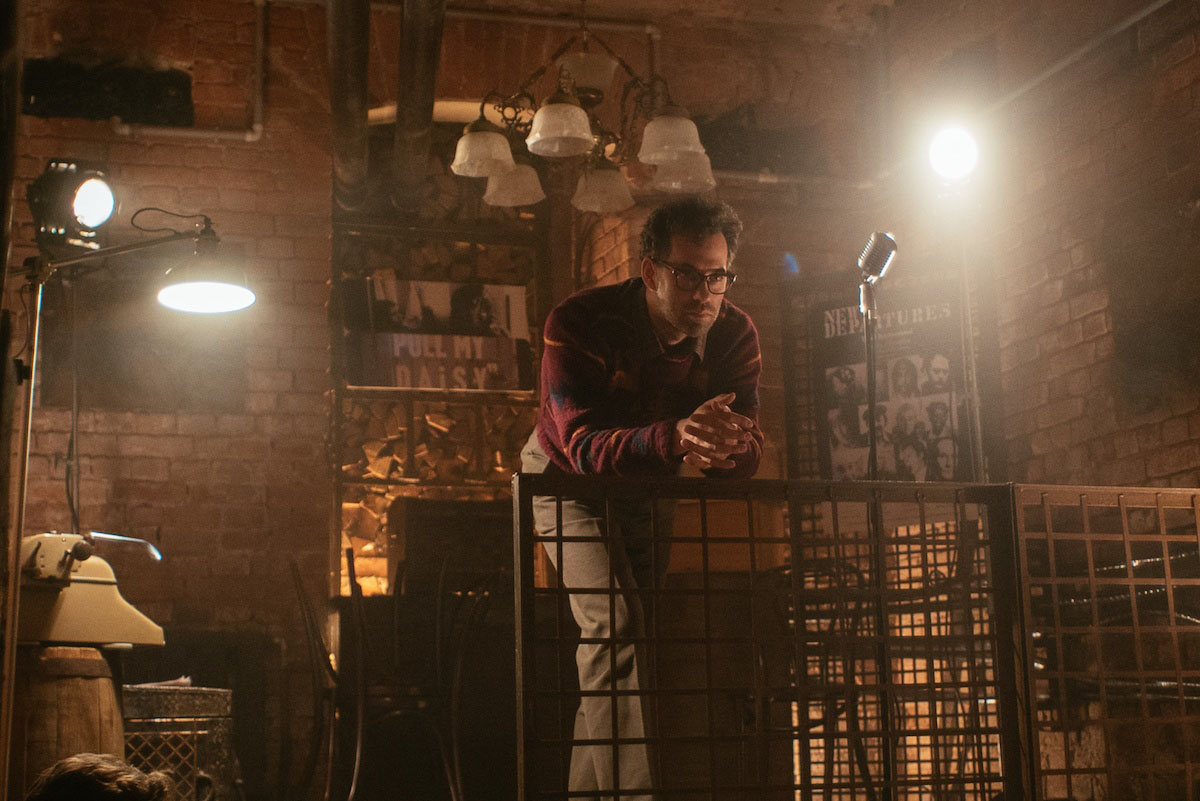
But with the main conflict in Optimists, everything is different. Here the heroes are at least the main ones - not the creative intelligentsia, but officials or intellectuals in the civil service. Workers of the Central Committee, KGB, Foreign Ministry, government members, diplomats - they are not just in the system, they are the system. No matter how unnecessary element the experimental IAG seem to this very system - the heroes are trying to prove that the system is needed. They only try to ennoble the system - reform from the inside, adapt to new trends.
The world of design
It is clear that the “optimists” had a more powerful source of inspiration - American “madmen” (“Mad Men”). They decided to make the Russian Madman, perhaps, before they figured out who this story will be on our basis. Which of the Soviet people of the 1960s can be decorated five times per series in new trees, summer coats, hats, tablets and thread gloves? Unless we will remove diplomats - that's about them. The author of the idea and leading screenwriter of the “Optimists” Mikhail Idov does not hide either his “Madmania” or that he conceived the series, working on a book about Soviet design.
But in the "madmen" things are not a background, but heroes. The series talks about the rise of American consumer culture and the birth of the industrials that accompany it. On our basis, this will begin about forty years later, when the market appears, and with it advertising and advertisers, a public policy will arise and PR managers, “generation P”. That is, Russian “madmen” should have been shot about our 1990s. Only this period is not at all so movie generation, it is customary to associate it with devastation, and exclusively gangster sagas are removed about it.
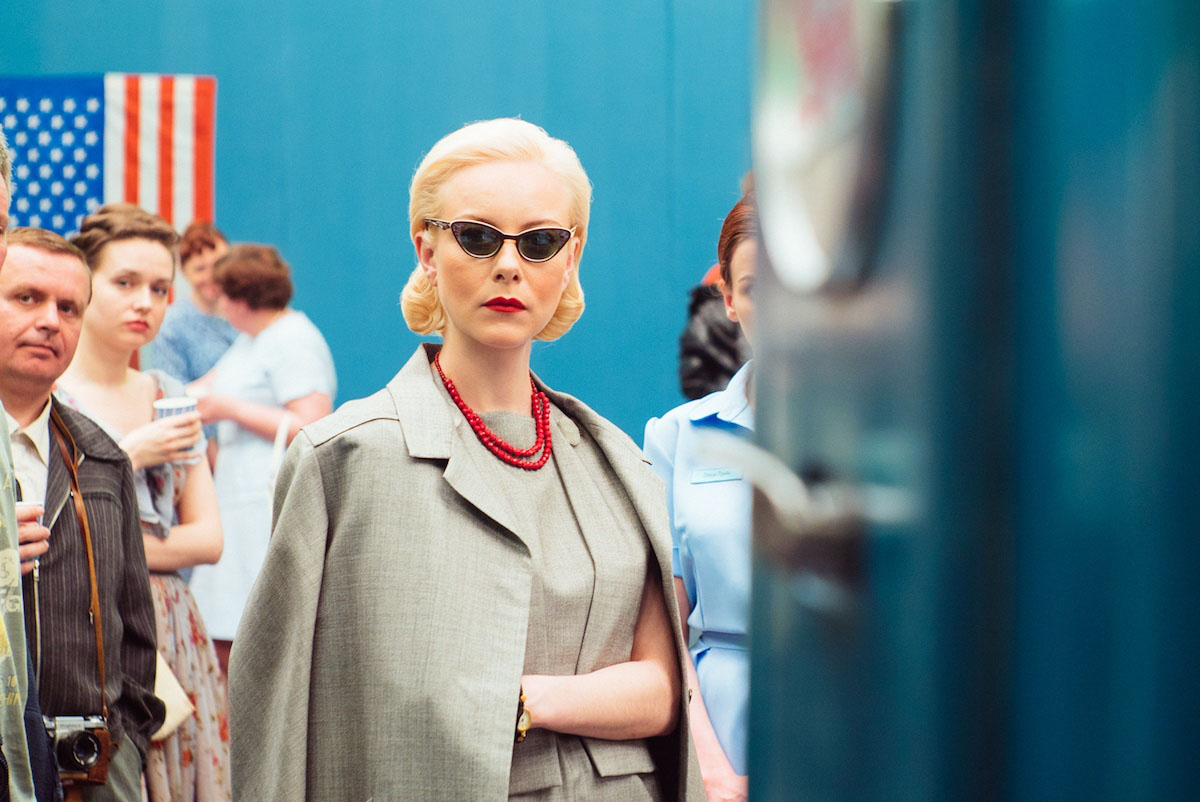
In “Optimists”, the entourage is much more elegant and further from reality, on top of which the artists of the series with obvious pleasure arrange all this Stalinist empire, round floor lamps, minimalist journal tables and stylish fonts of the geometric grotesque family. Heroes live in an ideal design world: a tile in the Moscow cuisine of Ruta seems to have come with her from the United States, and even in a small -sized apartment of a novice diplomat there are relevant racks, curtains with a geometric print and a pretty wife in a fashionable jacket.
The creators of the series, however, argue that the main thing here is not a decor. “I hope he does not take an era that we really saw from different angles and angles many times, but by characters, history and plot,” says Idov in an interview with the Kino-Poisk portal.
Relations of state security
But with the characters the situation is not very clear. Who are they and what do they want? Formally, a brief dossier is issued for each of them - but it does not help to understand them. What, for example, drives Tsekovsky Biryukov? What is this character? How did the refined blaueman manage to quit America and leave for the USSR - and does she really love this rustic pilot? Or does he still love a Hobist's handsome man?
It seems that dramatic things happen to them - one chooses between her husband and lover, the other falls in love for the first time, the third worries that he renounced the repressed relatives, the fourth suddenly meets the cherished dream in Paris, and everyone has serious career tension. But even if someone led an eyebrow. No, no extra psychology on diplomatic faces.
And not only the character and psychology - the individuals completely optional acts of the heroes are puzzled every now and then.
Here, a novice Soviet diplomat comes to a secret meeting with a foreigner - in broad daylight, on a deserted street, on his own very noticeable, brightly painted car.
So, sending a walk adored little daughter to walk with his passion, the hero (by the way, the widower) forgets about the existence of both for almost a day. And he will not catch up until the passion appears.
Here the Salagu-Madovs is instructed by the chief hebist of the ministry-but does not call to himself, but he goes to his gym. And Salag Boyko talks to him, without ceasing to change clothes, and then also sticks a hand in a boxing glove under his nose - tie it, huh?
History and plot, of course, can turn away. In the export version of “Optimists”, spy games promise the viewer - the slogan sounds like this: “Let the Spy Games Begin”. But in the first episodes, the authors clearly protect us from excessive action and unrest. All problems are resolved within the series - not a single question does not hang unanswered for a long time, any knotted knot was soon and safely unleashed.
Which of the Soviet people of the 1960s can be decorated five times per series in new trees, summer coats, hats, tablets and thread gloves? Unless the diplomats
Both main characters have according to the patron at the very top, so it turns out that the uncouth direct boss is not very terrible.
All characters are very convenient for scriptwriters interconnected. Spy passions are family. Problems - political and international - are solved, if not in family, then in a friendly circle. The head of the Mids Gabists turns out to be someone’s classmate, a native husband helps to protect the country from a large international scandal, it is also not difficult to convey a breakthrough foreign policy idea to Khrushchev: the subordinate plays with his son tennis.
The art of compromise
This toy is well illustrated by the titers of the series, where the clouds are thickening over a mug of tea, the plane slides along the scale of the vintage radio, the border barriers open and close on the desktop calendar, and the highway of the Foreign Ministry turns out to be an ink device.
However, it is not a fact that the authors wanted this. Judging by the interview, the script of the series began to write back in 2010 for another channel, then the idea was bought by the VGTRK, but the scriptwriters attracted by state television, so adapted the idea to a large audience that the showranners simply left the project. Then the work resumed - already with new producers and director, the number of screenwriters increased four times, then the script was again turned over, already in the process of filming. In general, it is difficult to get rid of the feeling that about the same thing happened with the original author’s idea as in the tongue twister that the heroine of the series is kneaded before the broadcast, the TV presenter Galya: “The heron is stubborn, the heron was dry.”
But do not throw a reanimated heron now. We remember: the plot about the thaw is a plot about a compromise. The story of how a group of young, non-standard people who think people is trying to teach the state colossus to play golf-it is not only about the 1960s and the Ministry of Foreign Affairs.
Photo: kinopoisk.ru