
Translated material
"Hearing in Irkutsk will be the hottest"
Exposure from the online interview with ecologists Alexander Kolotov and Natalya Tumureeva following the results of the public hearings on the projects of the Mongolian hydroelectric power stations from March 20 to 24.
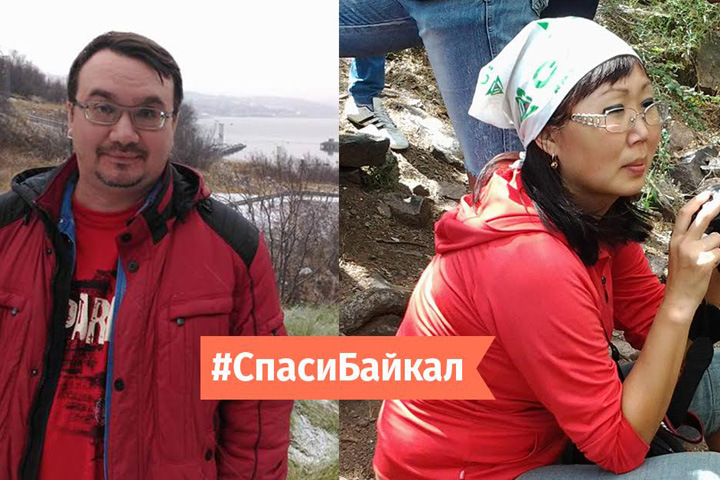
Project #Spasibaikal held another online interview in groups on social networks. This time we decided to discuss the public hearings on the projects of the Mongol Hydroelectric Power Station from March 20 to 24 in Buryatia. And they turned to the ecologists - to those whom the Mongol delegation, tired of negative assessments to their presentations, accused of subversive work with the population of the regions of the republic in hearts. To answer the questions of the participants of the groups, we invited the Russian coordinator of the ecological coalition “River without borders” Alexander Kolotov (Krasnoyarsk), and a member of the Council of the Buryat regional branch in Baikal Natalya Tumureev (Ulan-Ude). Ahead-similar hearings in the Irkutsk region (will be held on May 16-18), so that the answers of ecologists immersed in the theme of the Mongol hydroelectric power stations will be very relevant and interesting.
Alexey Schmidt: What will this boltology change? Mongolia decided to build and build.
Alexander Kolotov: It is important to understand that public hearings on the Mongol Hydroelectric Power Station, which are now taking place on the territory of Russia, are not “boltology” at all, but the necessary accounting of the opinions of interested parties, which has the most serious consequences for the future fate of the project, since it helps to identify and evaluate potential risks and threats associated with the implementation of the project. But, of course, Mongolia is a sovereign country, and no one has the right to forbid it to build any structures on its territory - whether it is hydroelectric power stations, nuclear power plants or the GAES.
Evgeny Kiselev: How many decades for ... Lee ("polluted") Baikal. And they found the guilty - the Mongols. And not ashamed?
Alexander Kolotov : It should be ashamed of those who polluted Baikal (and defended the BCBK, for example) - I do not belong to such people. And the Mongols, by the way, no one makes guilty. This is only about the fact that the projects of the Mongol hydroelectric power stations in the Selenges basin carry huge risks and threats to the Baikal ecosystem, so their comprehensive thorough assessment is necessary to understand how permissible the implementation of such projects is from the point of view of maintaining the unique object of the UNESCO World Heritage Heritage - Lake Baikal.
Natalya Tumureeva: The Mongols at the hearings did not convince me of the safety of these projects, but on the contrary, they sowed even greater doubts ... about their own problems: garbage, fires. drains, etc. It is. Yes, and this is the fault of social activists, we taught our government to carry out their work for free. Every year they organized all sorts of raids, cleaning, etc. So everyone is used to the fact that volunteers will come and everything will be removed. But the volunteers have the ability to grow up and be disappointed in what does not bring a result. For 15 years I have been cleaning garbage on the banks of Lake Baikal every summer and only now I realized that our government should be forced to do this. We work in this direction. I am also engaged in teaching children how to behave in Lake Baikal.
Ignat Sobol: We must start saving Baikal on his own, on his territory. How many such problem points adjacent to Baikal villages. Here is one of them - “In distant Eastern Siberia, there is such a Chelutai station, 3 km, Zaigraevsky district. After this station, Suek processes 500 coal carriages, which is exported to Japan. SUEK and Russian Railways company regularly pay taxes. The village of Zheleznodorozhnikov itself in decline. There are three -story houses, the sewage system does not work. Feces in the summer go into groundwater, freeze in winter, forming a huge lake. The stench is indescribable. The population of private houses drink water from wells. Before drinking, they are defended, removing white flakes. They complained to the authorities - a promise to figure it out, then threats began to act. I was in this village and it really is. ” Then he sits down at the negotiating table and they will understand our desire to take care of Lake Baikal.
Alexander Kolotov: I agree with you that it is necessary to save Baikal, and you need to restore order on your territory. But I think that the processes should go in parallel: we need to take care of the purity of Lake Baikal, and hold a hand on the pulse of the Mongolian projects of the hydroelectric power station on the selenga. Otherwise, we simply have nothing to discuss - the World Bank, if desired, is able to quickly help in the implementation of large hydraulic projects if they do not meet any resistance from local residents.
Ilya Ignatov: What is the problem, block the Irkutsk hydroelectric station if you love Baikal. Stop burning the forest, cut down. Take care of your land and Russia and do not lie down with your advice to others. Moreover, their land was turned into a trash.
Alexander Kolotov: Thanks for the advice. And about the Irkutsk hydroelectric power station, I completely agree with you and I will be glad if during the regional environmental assessment of the impact of the Mongol hydroelectric power plants an assessment of the impact on Baikal from the Angarsk cascade of Russian hydroelectric power stations will be assessed. Write to your Mongolian colleagues, let them include this item in their technical specifications.
Anatoly Druzhinin: It is impossible to block the Irkutsk hydroelectric power station, this means “block the hangar”. And if, on the contrary, open the dams of hydroelectric power stations, drain the Irkutsk and fraternal seas, then this will be enormous power interference in the ecology. 50 years ago they filled out - the climate has changed, now let's salt everything, let the climate change again. By the way, this will not remove the problem of the Mongol hydroelectric power stations, because the level of Baikal will fall even more. And instead of hydroelectric power station, you will have to build something else-nuclear power plants or gas TPPs.
Pavel Orlov : Are you aware that the hangar from Lake Baikal flows, and does not fall into it? Crossing the hydroelectric power station is how to?
Zhavhlan Vladimir : The influence will be meager, international experts have long proved.
Alexander Kolotov: It’s a pity, but these mythical “international experts” did not come to hearings in Buryatia. And it is doubly a pity that representatives of the World Bank and the Mongol delegation at each hearing assured the residents of the republic that there was no study of the influence of the Mongol hydroelectric power stations, that they could have been conducted, so they cannot answer all specific issues of local residents at the hearing, we must wait for the completion of research.
Dmitry Zolotarev: You need to know several things: ecologists are not hydrologists! In the material about the hearings, there are only general phrases and injection of fears designed for the layman. Not a single calculation has been given with a concrete place of construction, taking into account the planned infrastructure. In Mongolia, since the USSR, with the help of Soviet experts, research has been conducted 25 possible places of construction of the hydroelectric power station. There are materials that no one even mentions in the article.
“The ecologist said, the ecologist explained” ... Who are the environmentalists? Especially yours, those slurred, uncomplicated ecologists that you refer to here? I repeat: no ecologist is able to competently talk about the problems of water pools related to the construction of artificial reservoirs and large energy structures such as hydroelectric power stations!
Why are the opinions of scientists, for example, directly from the limnological institute, those who directly deal with the problems of Baikal, in particular by studying the possible consequences related to the possible construction of hydroelectric power plants in Mongolia? By the way, I repeatedly talked personally with these scientists, with Academician Grachev in particular. I have materials and calculations. The word " #ecologist " has long acquired a negative shade, I would have interpreted it in dictionaries as "clicus, troublemaken, not having fundamental knowledge and education, as a rule, arranging public unrest in order to extort and subsequent exposure of state funds to eliminate the fictional and non -existent threat to the nature of the inevitable environmental catastrophe of the planetary scale, And/or to achieve political goals of opposition groups and movements. ” #Ecology has long become a convenient political tool and the subject of speculation. The liberal-ecological lobby of Buryatia shown itself especially vividly in this ...
Alexander Kolotov: Dear Dmitry! If you are a specialist-hydrologist, then why do you based your question on some article in the media, and not on the submitted documentation? It is quite accessible in Russian - for example, here .
And the opinions of respected scientists from research institutes of the SB RAS, we actively brought to the attention of local residents during the hearings-apparently, you simply were not at any of these public events. But if you really have important materials and calculations, then now there is a collection of comments and suggestions on the projects of the Mongolian hydroelectric power stations - they can be submitted through public receptions in Buryatia or through the website of the minis project developers.
Dmitry Zolotarev: 1. It is very curious in what form, and the opinions of which specialists you gave the public. In which communique or brief of the meeting can I see this? 2. I am based on this replica (by no means a question) on the article in the NSN posted in this group by its administrators, an article about the hearings, not "some kind of article in the media."
Alexander Kolotov: Dmitry Zolotarev: 1. At the hearings there were our booklets with quotes of Russian scientists about the possible consequences of building hydroelectric power stations on the selent for the Baikal ecosystem. If you came to the hearing, you would certainly get your copy. 2. You are in your replica, without familiarizing yourself with the initial documentation, scatter unfounded accusations. I see no reason to make excuses for you, but I am ready to accept your apologies.
Dmitry Zolotarev: 1. A lot of "would". I asked the question where I can get acquainted with the above quotes and names. Therefore, nowhere, as well as the entire population asking for this question, and in view of the multiplicity physically, they did not have the opportunity “at the hearing” to be present and get a booklet with quotes. You, as we are convinced, do not consider it possible and necessary to inform the population in detail, neither on demand, nor without it, so this condition is not more than a fiction; As an expert of a major foreign news agency, I have reason to draw such conclusions. Among other things, you publish an empty unfounded article and give me an accusation of unfounded ... a familiar manner of behavior, however, she only proves that I am right. It is a pity of the time that I at first seriously took your group and you: appeal to you is a completely empty business.
- According to paragraph 2: very arrogant and pathetic, Alexander , to be prepared for what cannot be - I am not only not going to apologize to you, but I also do not see a reason.
Alexander Kolotov : Dmitry, if you are a specialist -hydrologist and expert of a major foreign news agency, then please work with sources more thoroughly: 1) these were not “my hearings” - these were the hearings organized by the Minis project. 2) Typographic booklets were distributed to local residents, participants in the hearings. The opinions of scientists cited there as quotes, I repeat once again, can be found on a clock-long accessible Internet resources #Savbaikal and "Dam.no!". 3) I have nothing to do with the project #Savbaikal and I do not understand about the publication of which article you are talking all the time. 4) I do not dare to detain you anymore and distract from materials with calculations.
Igor Sidorov : If there are really specialists in the organization #Savbaikal, then please answer three questions. 1. What volume of water comes to the dam with the hydroelectric power station and what volume of water comes out of the hydroelectric power station? 2. What volume of water is collected by selenga from the territory of Russia. 3. How far does Omul go to Selenga (let me remind you, this is such a fish)? Having no answers to these three questions, the whole discussion is meaningless. Only PR with a subtext "Give us money."
Alexander Kolotov: #Spasibaikal is an information project under the publication Taiga.info. As for your three questions, the officially presented technical information in Russian is limited only by this . Look, are there any answers to your questions? The opinions of Russian scientists (including the Selenginsky Omul population), which are not presented on the Minis project website, can be found on the sites #Spasibaikal and "Dam.no!".
Igor Sidorov: Thank you. But there are no answers to my questions there.
Alexander Kolotov: Igor, to such concrete questions (and they were at almost every hearing in Buryatia), representatives of the Minis project answered that they need to wait, let the experts first conduct the necessary research, and then present all the results, and there will be answers to all questions.
Igor Sidorov: Well, there is at least one among you who studied in the 4th grade of high school? There were tasks on the topic of the first question.
Alexander Kolotov: Igor Sidorov, of course, no! We were all kicked out of the third class, so we never reached the flow of water from the pool :(
Igor Sidorov: I see. They sucked in Baikal. For he is big. At least one piece of paper was removed from the shore of Lake Baikal, as true people do? Or are you only mastering a facebook?
Victor Donskoy : Mongolia does not need a hydroelectric power station. Mongolia needs water for the mining industry. It was then that the Chinese and VB were fussing to hap minerals at a cheap, and at the same time finish Baikal. There is not a single competent conclusion of Russian hydrogeologists. Ecologists have no idea what water resources are and how to handle them. Discussions are held in villages at the level of milkmaids, shepherds, and not researchers. On dick, all this farce with a discussion is among the people? They should discuss at the level of state memberships and governments.
Alexander Kolotov: If it were not for the intervention of ecologists, shepherds and milkmaids, we would now observe the beginning of full -range hydraulic construction on Selenga. Because the discussion at the level of State Commission and governments did not lead to anything, and the projects of the Mongol Hydroelectric Power Station were confidently advancing in the right direction with energetic people with the help of deduced technocrats. Only our complaint to the Inspectorate Council of the World Bank was able to change the situation (among the signatories there really are shepherds, ecologists, and beekeepers, and many more). In general, if we are discussing projects affecting local residents, we will continue to treat the “farce” and listen only to the technocrats of the territories (which today will “make” the new megaproject, tomorrow another, and they will still live in the third Rome), then we will constantly get the appropriate attitude of the people to such guides in the “brighter future” ...
Dmitry Zolotarev: Mongolia has the same rights as any state of the world. Naturally, issues similar to the construction of the hydroelectric power station, that is, affecting our common natural resources, we must decide, coordinating everything with each other, in the conditions of exceptional respect for each other, finding compromises.
Natalya Tumureeva : No one is deteriorating anyone's rights. Mongolia has the right to build on its territory everything he wants. But according to the agreement on cross -border waters, we are obliged to discuss these projects together. Also, according to the policy of the World Bank, they are obliged to conduct hearings on projects that affect the World Heritage Party, are also required to take into account the opinion of the indigenous peoples and local communities, the life of which this project will influence. It surprises me more that people who have not been at the hearings or who do not live in Buryatia and do not see all the changes that are happening now are expressed here. You can spit, haste, shout that environmentalists are not hydrologists, that they did not study in the 4th grade. I have figs, I am a local resident. And from the Minis group, we first of all wanted to hear whether they would take into account all the risks from this construction. Risk is an event that can occur, or maybe not. We asked specific questions to which we did not receive a single specific answer, and therefore caused such a negative reaction. Now Minis tells us that we must provide them with research. What are you talking about at all? It was they who had to come and prove to us that they took into account all the risks and developed measures to reduce them.
B. Batt *ү *shig: So about cross -border agreements why we must ask you and consult when you have already agreed to build a pipeline in the PRC when you have already agreed to build a Chinese plant off the coast of Lake Baikal, when you cut the forests to China for pennies and without agreeing and not consulting with us? And all this time the river is not dependent on us, and on you, everything serves its own to Baikal. You must give us how much per year, a month, a day, per hour of a second will flow into the PRC through a pipeline. And how many forests you chopped off!
Alexander Kolotov: In short, this is due to the fact that Selenga is a cross-border river, but Baikal-no. In addition, Mongolia at one time signed an agreement with Russia, according to which the Russian Federation should take into account when making a decision on any hydraulic projects in the Selengi basin.
Nadezhda Popova Dear Hydrologues, Ecologists and everyone who can answer. The conversation about the removal of drinking water from Lake Baikal to China is true or just chatter?
Alexander Kolotov: If we are talking about the construction of a water supply from Lake Baikal to China - this is, of course, chatter. It is enough to look at the economy of the project. На слушаниях в Бурятии был представлен проект ГЭС «Орхон» со строительством канала по переброске воды из реки Орхон в Гоби протяженностью 750 км. Реализация этого проекта потребует около $1,5 млрд плюс ежегодное техобслуживание канала в размере $75 млн. Для предлагаемого водопровода Байкал-Китай протяженностью примерно 2000 км (по не самому простому рельефу) эти цифры можно смело умножать минимум в несколько раз.
Маргарита Тавер : Пишут, Байкалу 70 млн лет, и все было в порядке. Но ведь сейчас все изменилось. Мы построили разные ГЭС, Монголия тоже имеет право. И – построит. Тут можно было бы что-то монголам предложить со стороны нашего государства, например, электроэнергию подешевле, да кому нужны жители Байкала? А – охранная зона Байкала, про которую все молчат? Местным жителям – эвакуироваться пора!
Александр Колотов: Разумеется, России в целом и компании «ИнтерРАО» в частности нужно кардинально пересмотреть свою ценовую политику по продаже электроэнергии в Монголию (которая зачастую платит за российское электричество больше, чем гораздо более богатый Китай). Однако нельзя забывать, что Монголия – одно из лучших мест в мире для крупномасштабного развития ВИЭ (возобовляемых источников энергии), в первую очередь, солнца и ветра. У ГЭС на Селенге действительно есть альтернативы – другое дело, что международные финансовые группы поощряют правительство Монголии поддерживать невыгодные для страны мегапроекты вроде строительства крупных ГЭС. Возьмем в качестве примера ГЭС Эгийн-гол: проекту более двадцати лет, стройка до сих пор так и не началась, но проект исправно, из года в год, тянет деньги из тощего национального бюджета Монголии. Предыдущую дирекцию по строительству ГЭС Эгийн-гол ликвидировали десять лет назад, израсходовав на проект не один миллион долларов. С 2013 года новая дирекция потратила на проект 7 миллионов долларов и 1,1 миллиарда тугриков, в итоге так ничего и не сделав. На днях ее также ликвидировали, но сразу же учредили новую госкомпанию по строительству ГЭС Эгийн-гол. В общем, перед нами настоящий вечный двигатель по опустошению госбюджета – со строительством ГЭС такое бывает сплошь и рядом.
Валерий Черных: Посмотрите со стороны, кому нужен этот шум? Сейчас владельцы электроэнергии продают ее в Монголию по немалой цене. Хотели б и в Китай продать. Но Монголии то же хочется жить в современном мире. У нее есть потенциал, который она намерена разрабатывать. Вы хотите, что бы Монголия оставалась на уровне кочевников-скотоводов? Им не легко, наши энергетики не идут на снижение тарифов, потому они стремятся найти средства на развитие своей энергетики. Но особенно меня удивляет разговор о том, что Селенга и Байкал обмелеет после строительства ГЭС. По представлению людей ГЭС поглощает воду? График заполнения можно согласовать. Но наши энергетики вынуждены будут сократить сброс из Байкала, потерять прибыль. Эт того все бодание. Капиталисты не хотят терять свои доходы.
Александр Колотов: То есть если обмеления не будет, то пусть строят? Мне вообще удивительны эти рассуждения инженеров, которые к строительству плотин и водохранилищ относятся как к задачкам по наполнению бассейнов из школьных учебников. Если, мол, правильно спроектируем и посчитаем расход, то все у нас будет нормально, обмеления не будет, давайте строить. Товарищи инженеры, российские и монгольские, жизнь гораздо богаче школьных учебников. Возведение крупных плотин ведет к кардинальному изменению местных экосистем. В нашем конкретном случае, по предварительным прогнозам ученых, более 65% прогнозируемых последствий строительства монгольских ГЭС на Селенге могут быть отнесены к разряду негативных для экосистем реки и Байкала, а оставшиеся 35% не поддаются прогнозу до момента ввода ГЭС в эксплуатацию. Это не школьные бассейны, это гораздо более сложные и взаимосвязанные живые системы.
Валерий Черных: Где бы прочитать конкретные выкладки с цифрами и фактами по 65%? Хочу напомнить, современному уровню всего-то пять десятков лет. И когда его подняли, действительно принесли не малый ущерб бентосным и пелагическим видам. Временное понижение уровня Байкала, если его допустят наши энергетики, подобного вреда не принесет.
Владимир Скращук: Валерий Черных конкретные выкладки вы можете запросить в ИНЦ СО РАН, это их данные… И по поводу энергетиков: ну просто неприлично уже в 2017 году писать про то, как они сами по себе устанавливают объем сброса из иркутского водохранилища, не считаясь ни с кем. Вам лично для справки: Иркутская ГЭС с конца 2014 года выполняет сбросы на уровне 1200-1250 кубометров в секунду, это практически нижний предел. Кроме того, энергетики не устанавливают цены на свою продукцию: внутри России это делают региональные энергетические комиссии, за пределами – оптовый продавец (и это не те, кто производит энергию)… Есть Росводресурсы, есть Енисейское бассейновое управление, есть автономные системы контроля в Объединенном диспетчерском управлении Сибири. Ни одна ГЭС не может регулировать объемы сброса в своих интересах. (…) Да, для собственников важна прибыль. Но поскольку энергетика имеет стратегическое значение для страны, работа отрасли очень жестко регулируется в интересах государства и общества. В том числе и в вопросах экологии. Вы можете не верить, но энергетики, к примеру, сточные воды в реки не сливают.
СпасиБайкал: Как оцениваете результат слушаний в Бурятии? Какие у вас ожидания и прогнозы по поводу общественных слушаний в Иркутской области?
Александр Колотов: Результат слушаний в Бурятии однозначен – подавляющее большинство местных жителей выступает против строительства ГЭС в бассейне крупнейшего притока Байкала. И если Всемирный банк все-таки вынудит правительство Монголии продолжить реализацию столь непопулярных проектов, то это будет явное и недвусмысленное разжигание трансграничного конфликта. И тогда можно будет с уверенностью говорить о том, что любые технико-экономические обоснования монгольских ГЭС – лишь прикрытие для создания банкирами из Вашингтона (именно там находится штаб-квартира Всемирного банка) долговременной политической напряженности в отношениях между двумя соседними странами.
Что касается слушаний в Иркутской области. Монгольская делегация, усиленная представителями Всемирного банка, на слушаниях в Бурятии четко продемонстрировала свою тактику ведения общественных консультаций: минимум конкретики, максимум тумана, путаные объяснения плюс голословные обещания, которые вряд ли кто-то собирается выполнять. На слушаниях в Слюдянке и в Еланцах подобная тактика также может сработать. Однако в Иркутске слушания пройдут в научном центре СО РАН – и можно не сомневаться, что местные специалисты потребуют от заказчиков проектов монгольских ГЭС гораздо больше сведений, чем они готовы представить. Это будут последние слушания всего цикла общественных консультаций – и я думаю, они будут самыми горячими.
СпасиБайкал : Как может развиваться ситуация с проектами MINIS? Как не упустить из виду ГЭС Эгийн-гол?
Александр Колотов: Ситуация с проектом MINIS может развиваться по-разному, но его судьба во многом определится решениями, которые будут приниматься этим летом. В июне в Монголии пройдут выборы президента страны, а буквально через месяц Всемирный банк будет решать, продлить ли срок действия проекта MINIS еще на пару лет или по-тихому свернуть всю лавочку. Поэтому неудивительно, что правительство Монголии резко активизировало усилия по продвижению проекта строительства еще одной гидроэлектростанции на притоке Селенги – ГЭС «Эгийн-гол». Этот проект формально не относится к MINIS и не зависит от решений Всемирного банка, что оставляет монгольскому правительству возможность продолжать оказывать через него давление на Россию. Другое дело, что таким образом, на мой взгляд, монгольские чиновники в очередной раз показывают, что для них на первом месте стоит не забота о Байкале и Селенге (в чем они пытаются уверить нас на общественных слушаниях), а вполне конкретные политические соображения. И, конечно же, желание любой ценой превратить монгольские реки в неиссякаемый источник прибыли, вне зависимости от любых социально-экологических последствий такого шага.
Prepared by Julia Kamulik