
Translated material
Reuters accused the Russian Institute for Strategic Research of Interference in the President of the United States. What does this institution do?
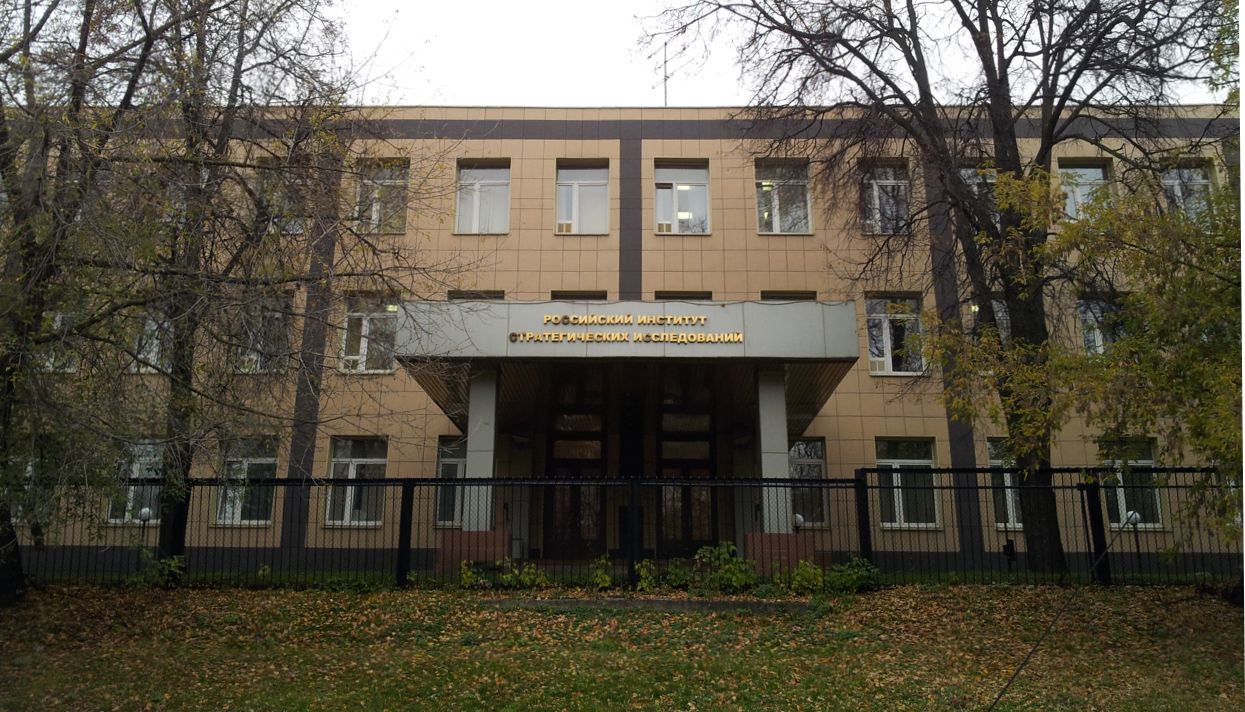
On April 20, Reuters reported that the plan of the propaganda campaign to intervene in the election of the US President by Russia was developed at the Russian Institute of Strategic Research (RISI). The head of RISI, the former Prime Minister of Russia and the head of the foreign intelligence service, Mikhail Fradkov, denied this information and accused journalists of conspiracyology. Medusa tells what Risi and his experts do.
Risi intervened in the election of the US President: Reuters version
In the publication of RISI's involvement in the development of a plan for interfering in the election of the American president Reuters refers to seven former and current American officials. With their help, the agency learned about two documents allegedly prepared in RISI. They described proposals for propaganda activities in connection with the elections of the US President.
The publication states that one of the documents dated June 2016 was proposed to continue the strategy that had begun back in March - to publish on social networks and international media under the control of the Russian authorities, calls to vote for a US presidential candidate with a milder policy against Russia. In March 2016, according to the Reuters source, the RT channel controlled by the Russian authorities, the Sputnik agency and other media received an indication in a positive way to talk about the Donald Trump campaign. The second document was developed in October 2016. It proposed to disseminate reports of possible elections in the elections and discredit Hillary Clinton. Both documents, as Reuters writes, were considered "at the highest levels" of the Russian government.
April 19 - even before the publication of Reuters, Risi distributed a statement in which he called the Western media outlet “an inappropriate joke” about whether the institute recommended that the Kremlin arrange a campaign to interfere with the American elections. The names of these media in the statement were not indicated.
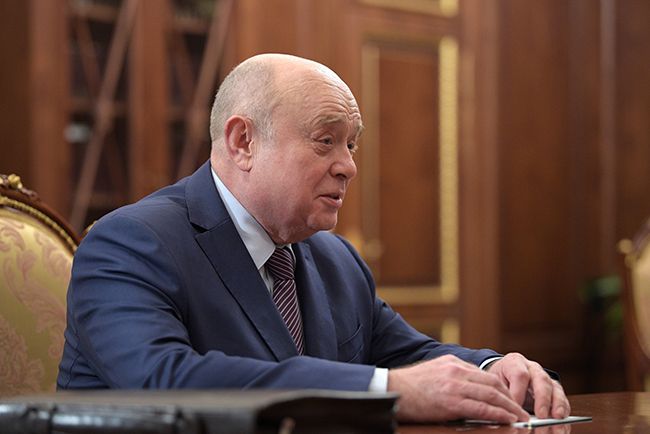
On April 20, a commentary on the site of the institute appeared Director of RISI Mikhail Fradkov regarding the publication in Reuters. He stated that the agency’s journalists “did not commeminate in their conspiracy consciousness existing realities with lustful fantasies, in order to once again draw attention to the topic of Russia's participation in a pre -election campaign in the United States.” Fradkov suggested that “Rice starts to interfere with someone” and assured that the institute’s specialists would continue to engage in “deep analytical research and forecasts built on their basis”.
What else was interfering with RISI
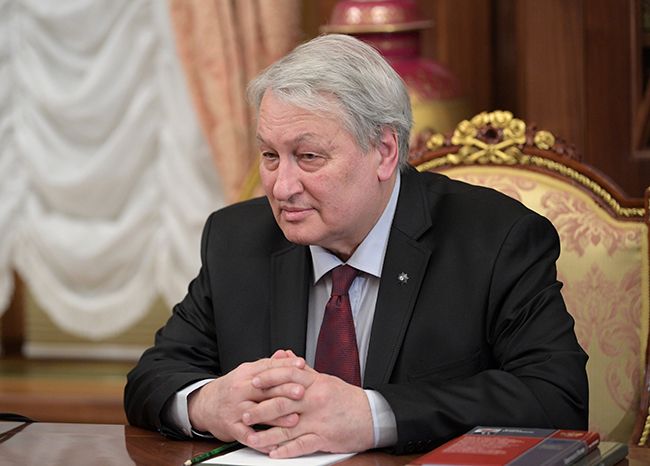
The Russian Institute for Strategic Research was founded in 1992 and until 2009 was part of the foreign intelligence service. RISI is engaged in the information support of the Presidential Administration, the Council of the Federation, State Duma, the Security Council, ministries and departments of Russia. In 2009, the institute was allocated from the SVR to a separate structure, the post of retired Lieutenant General Leonid Reshetnikov took the post of director.
In January 2015, the former leading researcher RISI, Alexander Sytin, published a post called "Anatomy of the failure: on the mechanism of adoption of foreign policy decisions of the Kremlin." In it, he said that Rice with his reports convinced the administration of the President of the Russian Federation to join the Crimea to Russia and support the Novorossia project, despite the fact that "the quality of these works, even regardless of their analytical significance, left much to be desired."
Sytin wrote that even during the work of Reshetnikov’s work in the Balkans (he oversee the Balkan direction in the SVR), Lieutenant General “Church”. And this accepted with him - the former communist - "extreme forms of passion for a white movement, a white Orthodox idea, the spiritual and territorial revival of the empire." “The main case of his life was the arrangement of the Pantheon of the White Guards who had fled from the Crimea, who set up a camp on the Greek island of Lemnos and almost completely extinct on this island from hunger and household disorder,” wrote Sytin. According to him, many RISI employees supported Reshetnikov’s ideas with “extreme, very emotional anti -war.”
In January 2016, employees of the Asian Center and the Middle East RISI presented the monograph “ISIS as a threat to international security”. The experts of the institute called the terrorist group “organized, global project”, which “uses the most modern achievements of world thought”, and the West took direct part in creating the group, according to RISI. The authors of the study also believed that I would support the terrorists by Saudi Arabia, Qatar and Türkiye.
In March 2016, Risi presented the report “Foreign Media in 2015 - Anti -Russian Vector”, in which he published a list of Western publications that are most aggressive against Russia. Among them were the German Frankfurter Allgemeine Zeitung, the American The New York Times and The Wall Street Journal, the British The Guardian, The Financial Times and the BBC, the French Le Monde and Le Figaro. It was possible to draw up a similar rating using the “Aggressive Index”: in order to calculate it, it was necessary to divide the number of negative publications about Russia by the number of neutral ones.
In May 2016, experts at the institute presented a report in the Moscow City Duma, in which they called statements about the AIDS epidemic in Russia part of the information war announced by the West. The speakers, for example, said that in Moscow HIV fight better than in St. Petersburg, because Moscow is a symbol of “original Russian cultural values”, and St. Petersburg is Western European. The best form of protection, Rice's speakers called the monogamous heterosexual family, storing loyalty to each other.
In December 2016, Reshetnikov made several statements to Belarus. In particular, he said that in Belarus, “everything is moving according to the Ukrainian scenario,” and the Belarusian language was created by a resolution of the Organizing Bureau of the Central Committee of the All -Union Communist Party of Bolsheviks in 1926. In the Belarusian Foreign Ministry, in response, they said that Reshetnikov’s statement “absolutely does not correspond to the strategic nature of the Belarusian-Russian relations.” According to Reshetnikov, he "did not think that they would react to this."
On January 4, 2017, the post of director of RISI, by decree of the President of Russia, was occupied by the former head of government and SVR Mikhail Fradkov.
Sasha Sulim