
Translated material
The birth of freedom
Local Self -Government Day as the main holiday of Russia
The other day, the famous political scientist Alexander Morozov wrote on his Facebook page that now in Russia a “difficult historical moment”: “Here, gays are deported and killed, and there is right away joyfully:“ Call our local government school! ”
Commentators together agreed that working local self -government can be combined with the murder of gays, and that straining in Russia is pointless, since you still will not achieve anything. In general, many tried in every possible way to belittle the role of local civil activity against the backdrop of the objectively created in Russia to violate the rights of different people.
However, with all the tragic pathos, it is simply impossible to agree with caustic comments on civil education and local self -government. Because it is they who are the only Lukovka that will pull Russia out of the lake, where it is drowning now.
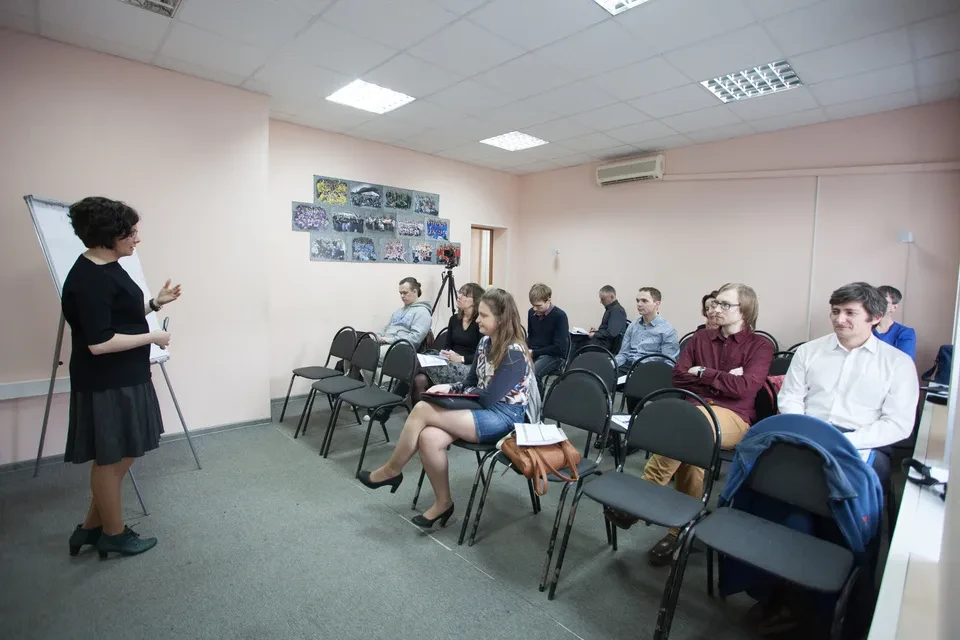
400 people passed through training at the school of local government over the two years of its existence. For the scale of Russia, of course, this is very small. But this is not just 400 people. These are 400 leaders who have new social skills, new social culture. These are one of those people who, if they become a little more, can not only achieve a peaceful transit of power, but also ensure a sustainable democratization of society.
The theory of distributed leadership, so popular now in business, for some reason is very little discussed in the issue of social relations. But it is here and precisely for our country that the salvation will be the expansion of the number of leaders who will be able to organize the lives of people around themselves, relying on the support of the same people. This is local self -government: managing yourself, your home and land under it, your small business, your school, your clinic, your local police, local roads, parks and parking lots, public and cultural spaces.
People live in poverty: according to the latest data, a third of Russians have not made ends meet. People live in lawlessness: the Constitution of the Russian Federation today is violated by officials and security forces everywhere. People live in the dark: they don’t even understand who deceives them and where, but they feel it with all five feelings and sixth in addition.
Today's Russia is a country that has been taken away from its people. You can reason for a long time who and when he took away whether it belonged to the people at all before, and who was to blame. It is much more important to answer the question "What to do?"
The country can and should begin to return to the people. Return, starting from the closest, local. No revolution, revolution, and even unexpectedly won the presidential elections to some opposition candidate, the country, the people, will be returned to us. Thousands of local leaders will be returned to the country, who, on behalf of millions and next to millions, already today claim the rights to their homeland: the right to fresh air and water, to housing and safety, freedom of speech and freedom of assembly.
People are more likely to believe a loved one than a person from a TV or YouTube. Local leaders pull their neighbors, fellow villagers, residents of the same city with them: spreading the skills and knowledge that they received from those who are engaged in civil education.
Today in Moscow, graduates of the school of local self -government overgrown with district teams in the elections, creating around themselves the power of attraction and, in fact, forming local communities. It is they who become the center of gathering for those who fight against the anti -constitutional law on the demolition of quarters, against point development, against environmental crimes. They lead the district chronicle, butt with officials, conduct pickets and rallies, publish newspapers, teach people new, unusual skills of civil interaction and civic activity.
Obtaining new social resources in society leads to institutional changes. This is what Christian Veltzel proves in his book “Birth of Freedom”. The book was recently published in Russian - which is as relevant for our country. Veltzel proves his thesis, bringing fairly serious sociological calculations on the material of dozens of countries of the world.
The only thing you want to supplement this book, translating it from the category of scientific papers, into the category of leadership to action, is that good does not happen in itself. Good is always the result of a person’s conscious activity. And only entropy occurs in itself.
There are more and more people who are just drawn into social activities every day. And every day, I tell people how to organize a general meeting of owners, how to write petitions and collect signatures, how to hold meetings and rallies. People learn before our eyes and reveal a new, unknown happiness - the happiness of collective action, the happiness of leadership, the happiness of cohesion, the happiness of neighboring friendship.
Someday, the day of local self-government, April 21, will be the main holiday in Russia. Well, maybe the second after the New Year. Happy holiday to you!
Julia Galyamin