
Translated material
Antituristic experiment
In the Crimea, in the Altai, Krasnodar and Stavropol Territory, it is planned to introduce a resort fee from visitors in the amount of up to 100 rubles per day in the experimental order of the experiment. The experiment is supposed to be carried out for five years, from January 1, 2018 to December 31, 2022.
According to the information agency of RBC , referring to the bill developed by the Ministry of the North Caucasus, approved by the Government Commission on Forever Activities, it is assumed that the regions themselves will establish the exact amount of the collection. In addition, a category of citizens who can not pay the fee is determined - these are beneficiaries and children under 18 years of age. At the same time, the regions are left to expand the circle of freed from the collection.
The document is also assumed that it will be collected from visitors (including business trips) at the places of their accommodation, be to the hotel or private house, which the owners rent to tourists. It is expected that the owners of the locations will be transferred about them themselves. Funds that are planned to be raised in this way, according to the bill, will go to the budget of the regions and will be spent on the development of their resort ifstranda.
Natalya Osipova, Executive Director of the Association of Tourism Agencies, agreed to comment on the situation for Polit.ru.
“The first thing that raises the question in this situation is the regions themselves in which it is planned to conduct experiments. And most of all fears in this sense are caused by the Krasnodar Territory and Crimea.
These are the most popular regions in terms of beach seasonal tourism, and it seems risk to put experiments on them. What will happen if the experiment does not go well if any plugs begin? In this case, we risk, especially in conditions of competition from Turkey in this summer season, to lose a fairly large number of vacationers. Perhaps it is worthwhile to think and not take such a large-scale and wide field for the experiment, but to limit yourself to some one resort-for example, Zheleznovodsk or Pyatigorsk in the Caucasian mineral waters and see how it will work there.
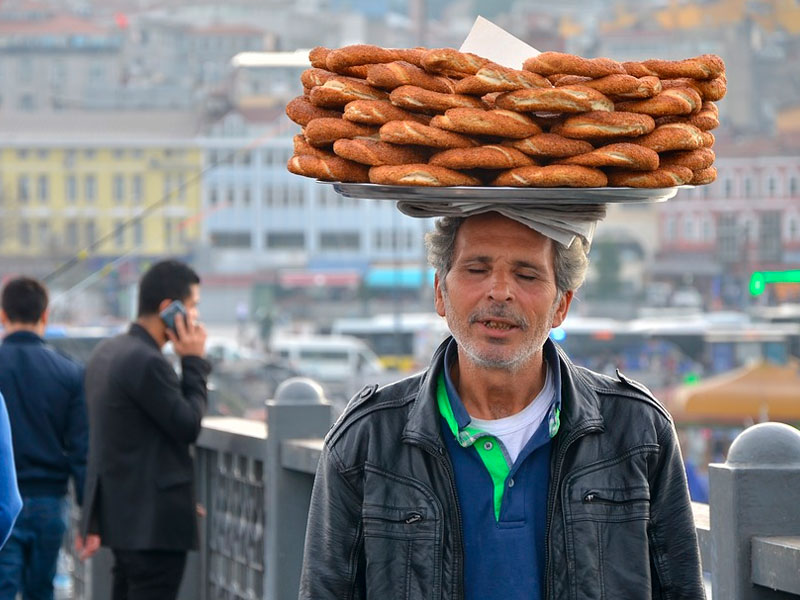 Types of Istanbul. Seller of bread
The second thing to say about is the size of the resort fee. Of course, he confuses, given that his upper bar is 100 rubles per person per day. If some region has a temptation to use the upper bar, the load on the tourist will significantly increase. And if Türkiye pays our travel companies at 35 dollars on deep booking for each tourist, then we, on the contrary, are “loading” our vouchers with the addition of this resort fee. If, for example, a family of four people travel for two weeks, as it often happens, it can cost her up to 400 rubles for each of the 14 days, and this is more than five thousand rubles of additional cost. I don’t know how reasonable it is now to introduce this.
The third point that also alarms us is that in different regions the size of these fees can be different. It turns out that the picture of the common tourist flow is changing, and a single tourist space due to this is violated in terms of value. Here, for example, Crimea will introduce a fee of 20 rubles, and the Krasnodar Territory - at 80. And what will we get? Diverse.
The fourth question that arises when you think about this experiment is associated with the administration of such a fee. Who will do this? Yes, both hotels and private traders can be both gathering operators. For example, today the private trader bought a patent and accepts tourists from him, and the authorities know what he is doing, and some income from his patent goes to the budget. But will this private trader report for each tourist, and even pay a resort fee? Here a big question arises.
And again, it turns out that the main load will be carried by the largest accommodation facilities that already work in the “white” field. And now we, therefore, will still load them with this organizational, technical and financial mechanism-they will be forced to report, somewhere to hand over all this ... And how will it all work in the hot season? When they actually should first of all engage in the service of tourists, they should give up all their forces to ensure the quality of rest, its safety, and they will also be forced to poke around with a resort collection?
The fifth question that arises here is targeted spending. We must see how much as a result the territory will receive money from this fee. If the tourist flow is not so large there, there is a temptation to increase this collection. But then the flow can immediately decrease, and as a result, how long will we get? What is this money for? If it will be five to ten million rubles, then what can be done on them? Almost nothing. And if the resorts plan to attract a large amount of money in order to make some serious changes, update the resort infrastructure-let's say, put the streets, curbs, flower beds, lawns in order, then we will get a noticeable burden on tourists.
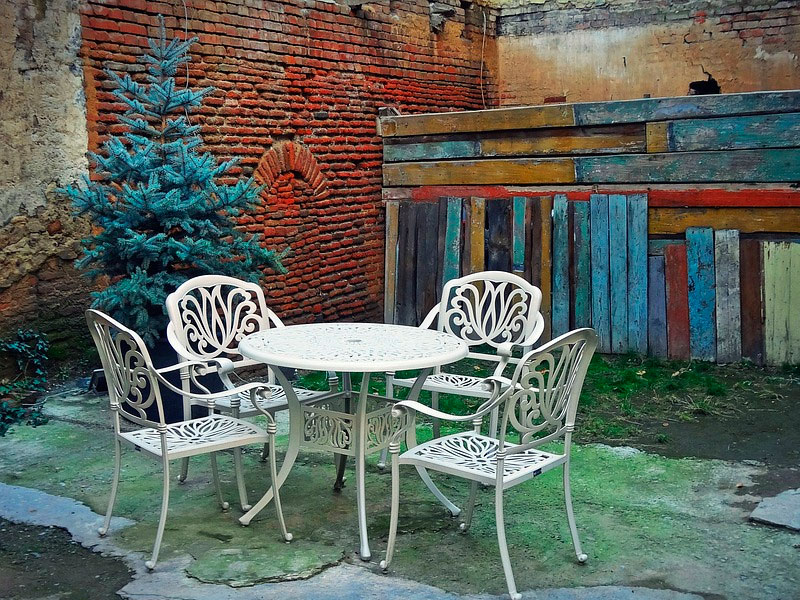 Empty table in a private cafe
So there are more questions in connection with this initiative than answers, and not everything here is definitely. And it is not a fact that the introduction of such a fee will really give the effect that the authors of the bill await, ”said Natalya Osipova.
Answering the question of the duration of the experiment, she expressed the opinion that the terms of its holding look quite reasonable if the experiment was conducted only in one or two resorts, and not in a number of regions of the country. However, as the expert emphasized, the scale of innovations looks unfounded or risky, and in this connection this period seems to be large.
“Maybe if you watched the same Pyatigorsk or Zheleznovodsk for five years, we just saw some kind of holistic picture. That is, the period of the experiment itself, possibly, is not bad, but five years of trial for such large -scale regions is a lot. And a bit too much over these five years can happen, there can be a lot of all sorts of not calculated things to date.
If, for example, the experiment from the first year will go badly, why continue it for five years? Moreover, when such large regions are involved in it that take the main share of the tourist stream, especially the summer, ”Natalya Osipova explained.