
Translated material
Thought is like a cobblestone. April theses of Lenin and modern politics
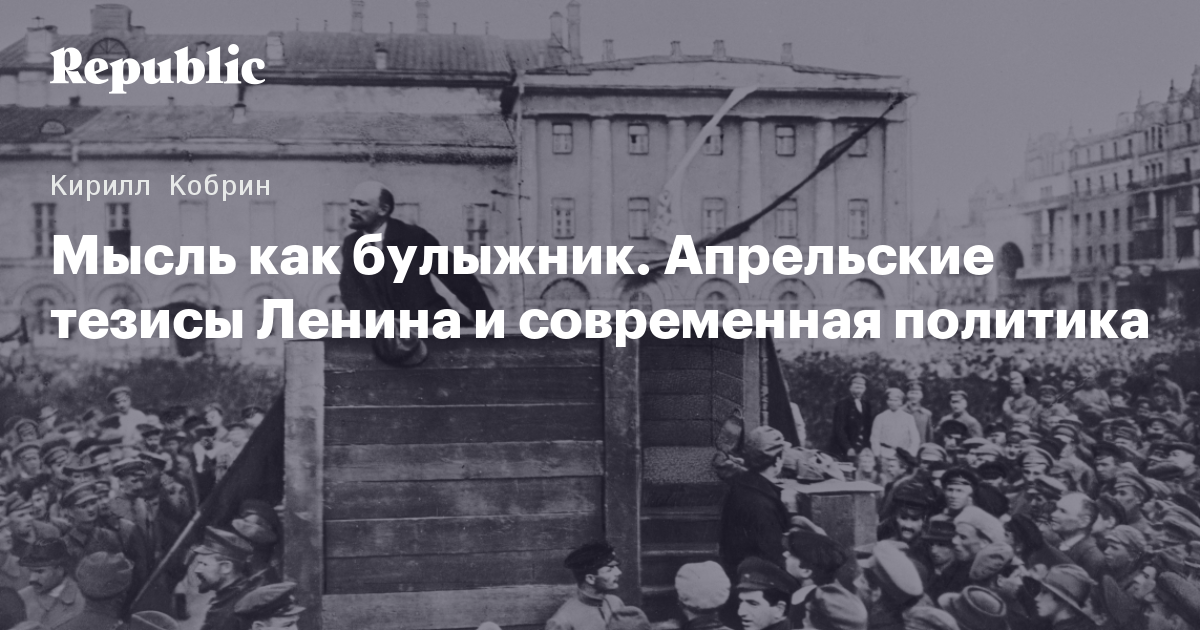
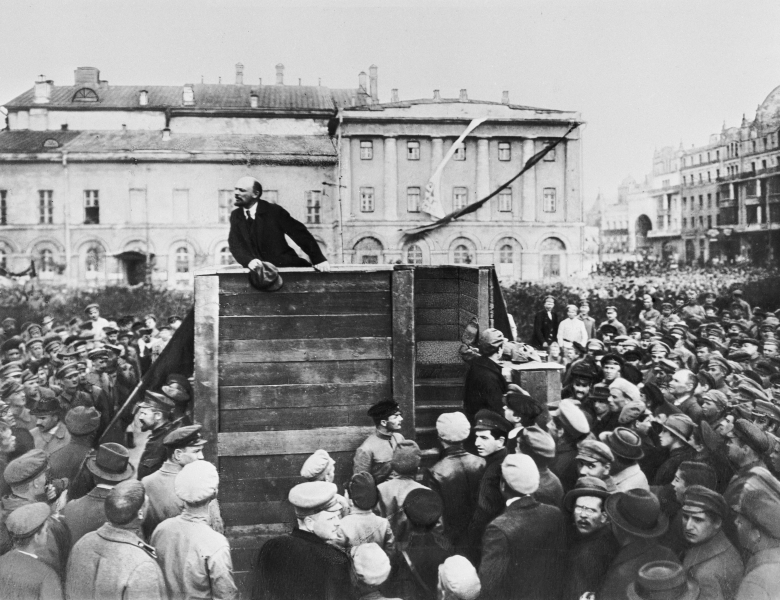
V.I. Lenin on Theater Square in front of the troops going to the front, 1920. Photo: TASS
At the end of 1916, Vladimir Lenin, who was then in exile in Zurich, admitted in an interview with a young friend of the struggle, they say, we, the “old people” (there were 46 years old), will not see the next revolution in Russia during his lifetime, but it will certainly be - and now you will be lucky to see and do it. Of course, it was impossible to see from afar in all the details the crisis of the Russian Empire, but in general it seemed, and not only to Lenin, that it would not collapse soon. Who could predict that in February 1917, “Rus fades in two days”, how did Vasily Rozanov write in the “Apocalypse of our time”? Nobody.
At about the same time, Lenin has another conversation - with the young Romanian revolutionary poet Valeriu Mark. Lenin says: “Of course, I am not radical enough. And a person cannot be a sufficiently radical. In other words, the degree of their radicalism should be compared with the reality itself, and therefore let the devil and fools worry about someone's degree of radicalism. ” About six months later, in April 1917, no one would risk accusing Lenin of a lack of radicalism. But it could well be suspected of inconsistency. After all, if in radicalism it is necessary to follow the reality itself, then in April the seventeenth everything turned upside down, and now the Russian reality desperately tried to keep up with Lenin. The armored car, on which the leader of the Bolsheviks rushed forward from the reality of the third month of the second Russian revolution, was “April theses”. This year they turned one hundred years old.
Subscribe to read the whole
Make a subscription Redefine.media to read Republic
Subscribe [you can pay for a Russian or foreign card. The subscription is extended automatically. You can unsubscribe at any time.]
Where are the money subscribers going