
Translated material
Achilles will never catch up with Dugin
Andrey Karagodin about Charles Clover's book “Black Wind, White Snow”
The Phantom Press publishing house published a book by British journalist Charles Clavera “Black Wind, White Snow”, dedicated to the history of Russian Eurasianism. At the request of Gorky, Andrei Karagodin got acquainted with this work, one of the first National Bolshes, Doctor of Historical Sciences, editor of Vogue and Gardener magazine. He wrote a bright emotional review as a participant in the events that Clover talks about, and as a professional historian - the opinion of the editorial office may not coincide with the opinion of the author.The book of Charles Clover cannot be read. She is terribly boring: not a single person in her right mind will master fifteen pages. In it, nothing, with some exceptions, is not distorted-but there is not a single fact unknown Wikipedia. The arrangement of these facts is stretched and helpless. The main idea (that Dugin Kameron Putin) is superficial, does not withstand criticism and, moreover, refuted by Dugin himself and many other plots, contradictory, like a life itself, which never fit into the graphomaniac scheme. Achilles will never catch up with the turtle; With the same success, it was possible to quote Pushkin about the fact that our government is the only European, and then to sing about how Putin, having arrived in the GDR, fell in love with the light switches in the entrance, good beer and all his life drift there with varying success - and there will be no shortage of examples either. We have five hundred pages of muttering and common places ending with a high -fierce quote from dull Borges (as Nikita Mikhalkov would say, this explains a lot). A large but meaningless work has been done; With his time, the clover is free to dispose of as he wants, but mine, as well as frayed on paper for this book, is a pity.
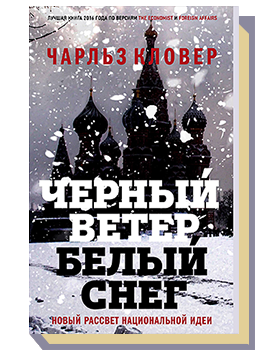 If they brought me the manuscript of this book as the Vogue editor, I would send the author to ruthlessly rewrite it, call the respondents again, and reduce the uninteresting text at times. If I had been filed for a review as a candidate of historical sciences and teacher of Moscow State University, I would have smashed it to fluff for banal unprofessionalism. Well, as a witness and an insider of many of the following events - I just grin silently. A couple of years ago, Clover called me in a cafe, asked, wrote down on a recorder. Immediately seeing that in front of me, as my friend Kostya called “Zhaba” Guryanov, a typical “neurubant”, I gave him a fiery river about Dugin’s postmodernism and hurried home. Clover is definitely not the one who is destined to write this story. Judging by the book, all the others he asked about the same reason.
And first of all, the main character himself, Alexander Gelievich Dugin. The clover between the matter admits that Dugin gave him a couple of interviews, and then lost interest in the Englishman - and this, in principle, is all that you need to know about this book. The common truth that is taught at school is “they didn’t give a word”: in order to speak out about someone or something, you yourself must represent the size that you listen to. In a hypertrophied form, this idea is expressed in the journal Interview Andy Warhol - one star interviews another, asking tricky questions. Pushkin about Pugachev, Limonov about Bykov, David Yallop about Ilyich Carlos, Nicholas Kolridge about Versace and Kelvina Klein, E.E. Gill about Cartier-Bresson, a seven of Ranurov. These textbook texts are interesting to read, because both the author and his hero are units, not zero. In any bookstore, in our west, on the shelves, hundreds of multi -page books about Putin are gathering dust, which are not worth anything compared to the only interview with Andrei Kolesnikov in the yellow “Kalina” - because his Putin knows, and Putin is interesting to speak with him. The rest of the Russian people calls everything else a capacious word "empty."
Schooling a meeting with me, the clover sent a request to Facebook friendship, to which, even when I conduct an audience, I did not answer: in the photo a dear wife, children, he himself jumps on a camel in the desert. Probably, in his youth, Clover wanted to become Lorens of Arabian. It did not work out. Why did he take up the book about Dugin, NBP, Putin? What did I decide to share with the city and the world sensational in quotation marks the idea that Eurasianism is an important factor in Russian policy of the last twenty years? At our ISTOM, Moscow State University is still taught at the first year of students: before you take the topic, look what other authors wrote about this about this, otherwise you will be funny, inventing anew bicycle and opening America. Then - find sources that no one has opened before you, or offer a new look at the already known, make sure of their representativeness and reliability. We say to students: in every work there should be a scientific novelty, AdDed Value. Well, what did the clover tell us from what we did not know? Why are these 500 pages written?
If you want to know everything about the old Eurasians and the first National Bolsheviks-read the work of Mikhail Agursky, who was already released in 1980 (!!!) in Paris. The history of the NBP day after day is meticulously, like his whole life, from the Vinclow Hotel to the Saratov prison, described by Limonov himself in many books. They were composed even more by Alexander Gelievich Dugin - and they are all on the Internet. Read about the Yuzhinsky bohemia in LJ Igor Ilyich Dudinsky, the beautiful documentary film “A different patrol” was shot on the same topic, it is in Yetube. There you can also find the conversation of the late Jemal with Pozner on Channel One - everything is said straightforward, no wandering around yes, like a clover. The “mysterious”, according to the author, Sasha Borodai talked about his premiere in the DPR in the program of Ksenia Sobchak on the Rain TV channel * recognized by the authorities of the Russian Federation as an organization performing the functions of a foreign agent - well, what are the riddles here? And even the songs of Evgeny Golovin about the faithful Rayh and Fuhrer, imagine, is on his memorial site - both in verses and in audio files. Why do you need a wretched echo when you can listen to real voices?
Foreigners have well books about our XIX century - where you need to sit in the archives, pick old newspapers with yards, show a boring meticulousness, which we ourselves, of course, are not enough. My friend David Moon wrote about the post -reform peasantry, Stephen Laul about the summer residents of imperial Russia, Orlando Faydes about the Russian revolution and the Crimean War - what excellent works! But with the latest history, where the heroes are our contemporaries, the Westerners have a complete failure: here they do not understand anything. If the pentyukh, who can be produced by any blizzard, was the Moscow correspondent for many years as an influential, seemingly newspaper Financial Times, it is not surprising that Putin once after time arranges the Westerners, like blind kittens. Our liberal bloggers are seriously discussing the vicissitudes of the Kremlin’s policy in the plots in the “Time” program, having no idea how and by whom decisions are really made. The clover as a serious storyteller about NBP looks completely stupid-how can one talk on the theme of rave music, without having ever tried ecstasy tablet?
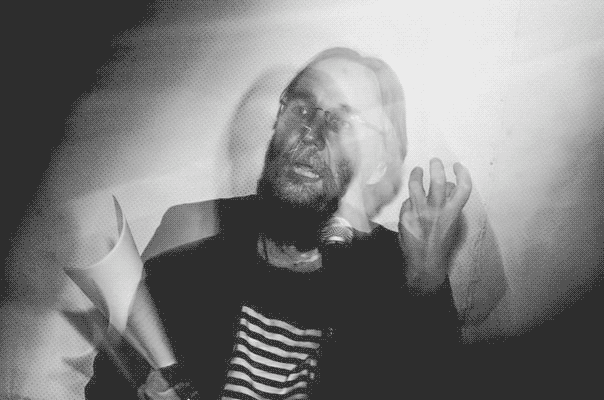 Alexander Gelievich Dugin talks about the sacred world of tradition
He wanted me to tell him some interesting stories about the National Bolsheviks. I could-for example, about the very congress of fascist parties in St. Petersburg in 1996, where the gap of Dugin and Limonov occurred repeatedly described. I was there and saw all this from the inside, from beginning to end. But in this story, among other things, Limonov’s carnivorous judgments about the painting of the small Dutch, born from the warmth of the knife and ice of the canal, in the midnight “red arrow” for vodka and lard, would appear, among other things; Composer Kurekhin, who is happy to change the American Smirnoff on the dashing port of Taribana and Strawberry Polyana; A new -type seminar in the NBP bunker with multiple reading “club and washer” in the style of magical mnemonics of Nikolai Kuzansky; A.G., barricaded in the compartment and requiring a “corridor to the Samashki” and many other bright details: any of those who in the topic of that bright time will recognize them and laugh, but Charles Clover, alas, is not.
I remember that on one summer day of 1993, we met with Dugin and Mamleev, bought a spitter beer and came to a conversation about the hidden Eurasianism of Luzhkov, to “Soviet Russia”: and here, as luck would be lucky, he had a non-incoming foreigner like Clover and began to force Dugin whether he supports the slogan “there is no dollar!” Of course, however, A. G. answered, pulled out a canister from under the table and poured a glass of a glass of beer from a stall to Savelovskaya with dimedroll foam-how the wind was blown away. Or here you have a story, how the Alliance of Anpilova and Barkashov really did not have: Limonov and Dugin gave me money by taxi and ordered me to bring the leader of the Communists from the recreation center of the Moscow State University, where they forbidden to spend the evening in another recreation center on the October field. Everything would be nothing, only Anpilov appeared with a retinue of five exalted grandmas and a harmonist refused to go without them - but there was no money for two taxis. Upon learning that Anpilov would not come, Barkashov did not come, who was waiting with his Chernarubaschiki in the "Lada" around the corner of the recreation center. That's all, and no conspiracyology for you - but not to Clover, with his lean face, the discoverer of capital truths, will I tell this cheerful Shukshin Apocrypha?
“There are men who talk about women, and there are those who speak with women,” Gianni Anelli once printed. So with this story. Clover - from among those who, with a breath, speaks of her: it can only regret it. If you want to know how it was really the case with the NBP, Eurasianism, Dugin, Putin, the DPR, etc., listen to those who are not talking about her, but with her, with history, and the story will be completely different: short, like a novel of Bunin, with a great sense of humor and unexpectedly simple answers to the most intricate questions. Five hundred clover pages do not cost four lines of Eugene Golovin:
Friends gave me an octopus
And looking through a drunken carrier
I cut off extra tentacles -
I'M a Madman for Five-Pointed Star.