
Translated material
The noise of time
The deafening "three sisters" of Timofei Kulyabin on the "Golden Mask"
Once, director Vitaly Mansky shot the documentary “Vladimir Vysotsky. The death of the poet ”about the last days of the life of Bard and the actor. Relatives of the hero, categorically without accepting the author’s concept, were forbidden to use Vysotsky’s songs in the film. It was a disaster: it was impossible to cut fragments of concerts and performances of the poet, without them the picture fell apart into pieces. And then Mansky simply removed the sound from concert episodes. On the screen in the grave silence, we saw a soundlessly screaming Vysotsky. This deafening dumb cry has become the main metaphor of the film.
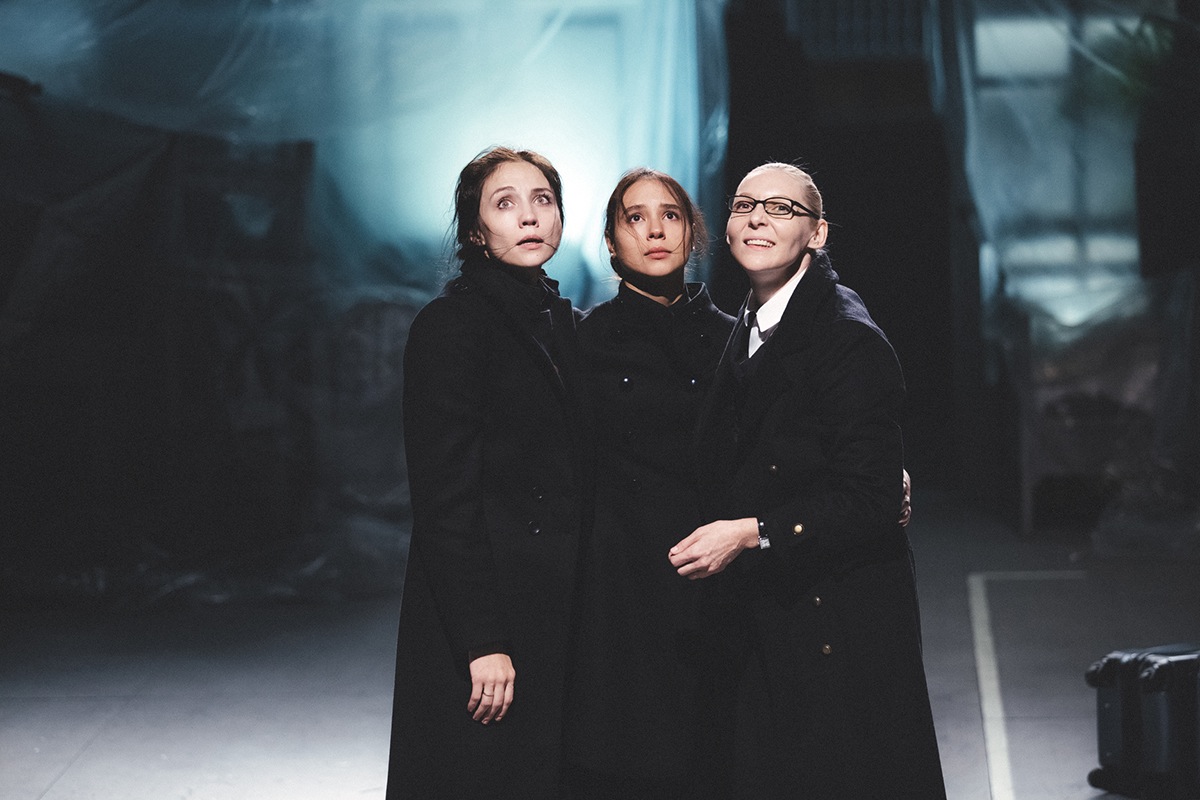
Three sisters Timofei Kulyabin are a whole dumb world in which only inanimate objects have the right of votes. The performance is entirely in the language of the deaf -mute - Chekhov’s text floats with a running line, as if composed again. It is impossible to break away from what is happening on the stage.
An amazing sound
The premiere of “Three Sisters” at the Krasny Torch Novosibirsk Theater took place six months after the nightmare of Tangaiser, Wagner’s opera, which Kulyabin put in the Novosibirsk Opera and Ballet Theater. Accused of abuse of the feelings of believers and the composer’s intention of the composer, the director survived the most severe psychological trauma, ending up on the bench under the hail of insults and threats emanating from groups of Orthodox hunveibins. The shameful this judgment was preparing its gag not only for the young director, but for the entire theater community, which was obvious. The community, to its honor, did not save and the mountain stood up to defend freedom of statements.
Six months later, Kulyabin showed the mumbled “three sisters”-and this performance, cut by Nemota, became to some extent an echo of the past scandal. However, the idea of putting Chekhov without a sound came to the director much earlier, and at that time, when the bearded ignoramuses, the directorial fantasies, in the rehearsal hall of the “Red Torch”, already comprehended the language of gestures in the meeting room. For more than a year, the actors of the future masterpiece were engaged with teachers, studying the language unknown to them.
Six months after Tangayzer, Kulyabin showed the mumbled “three sisters”-and this performance, cut by Nemotia, became to some extent an echo of the scandal
Having taught the characters to “speak”, the director, along with the artist Oleg Golovko, painted them “Prozorov’s house”, distributed their rooms, allocated each their corner with belongings, cabinets and cabinets, linen and felled plaids, meaningless pieces and things from which biographies are created. These household witnesses of human life spoke in a “human” language: the music of floor old watches, the ringing of family porcelain dishes, torn sobs of violin, which Andrei torments, the knock of heels along the creaky floorboards, the roar of chess figures in a wooden box, rustling of a wooden frame, rummaging through the puffed slippers of servants ... at some point this The pile of sounds becomes unbearable, because human speech breaks through it with such difficulty! Yes, this is such an amazing effect: it seems to us that silent characters say. Male and female voices, their different timbres and intonations, their screams and sobs, their laughter and a love whisper - the entire amount of emotions that human speech can convey, becomes visible, tangible, audible. The stress is growing with each new appearance, and now the charming Vershinin (Pavel Polyakov) flirts with excited sisters, and boasts of a stupid book of bore Kulygin (Denis Frank), and the clumsy Chebutykin (Andrey Chernykh) drags his vulgar samovar with sparkling Bengal lights, and the inexhaustible Rhodes (Sergey Bogomolov) Builds a frame for a selfie, and enthusiastic Fedotics (Alexei Into) demonstrates his gift: “Here, by the way, is a top! An amazing sound! ”..." An amazing sound. " Everyone obediently falls to the table - so deaf “listen” to the sound. The top is spinning, curls between plates and glasses: "Z-z-z-z-z-z-z-zs!"
Overcoming non -metabolic
In the third act, Kulyabin, along with the sound, turns off the light, leaving on the stage only small flashlights in the hands of the heroes scurrying in the dark and flickering light from the running line. The night bustle caused by a fire, the cough of the firecrackers, sleeping right on the floor, bales with clothes, flying sheets, bare feet - all this resembles the hut in the camp zone, such a sudden failure in the thick of the 20th century. However, the time of action is definitely impossible to establish-somewhere between the eras, on the breakup of centuries.
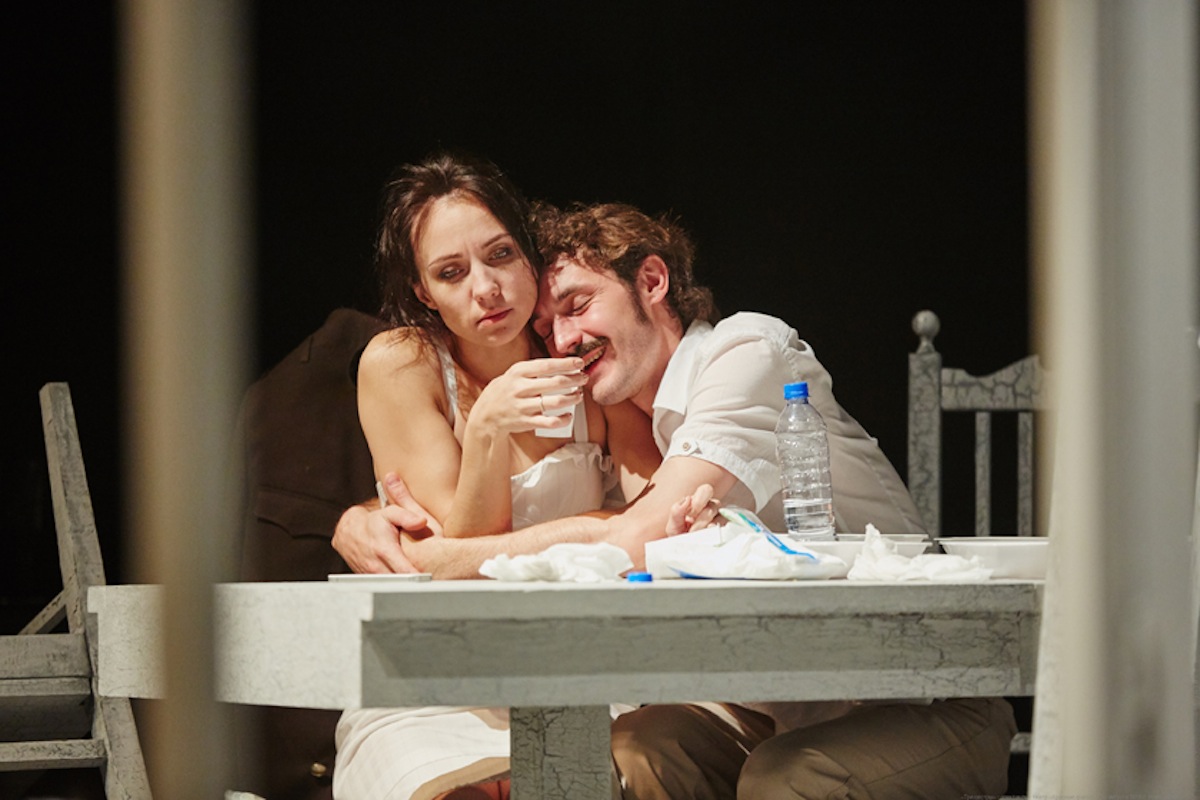
The military garrison, on the military abstract overcoats, at every inhabitant at home in his hands-an iPhone or iPad, in TV is dancing naked pop-hooligan Miley Cyrus, ancient chess are adjacent to computer “shooters” and meowed cats for YouTube, Vershinin with Masha exchange SMS: “Tram-pam-pam”, but The news of family troubles comes with a common letter - with a courier. As a particle of the cultural layer of the era, each of us is very familiar with this mixture of the times where you can find a volume of the lifetime edition of Dostoevsky or Tolstoy, and the yellowed Soviet newspaper, and a feathery handle with the nested end, and a set of photographs of the “Soviet Crimea”, and there are many more stupid rubbish, not compatible with either modern technologies, or at modern speeds.
And Chebutykin, taping the Tararabombia with a stick, is the same hero of our time as the leafing Facebook Tuzenbach.
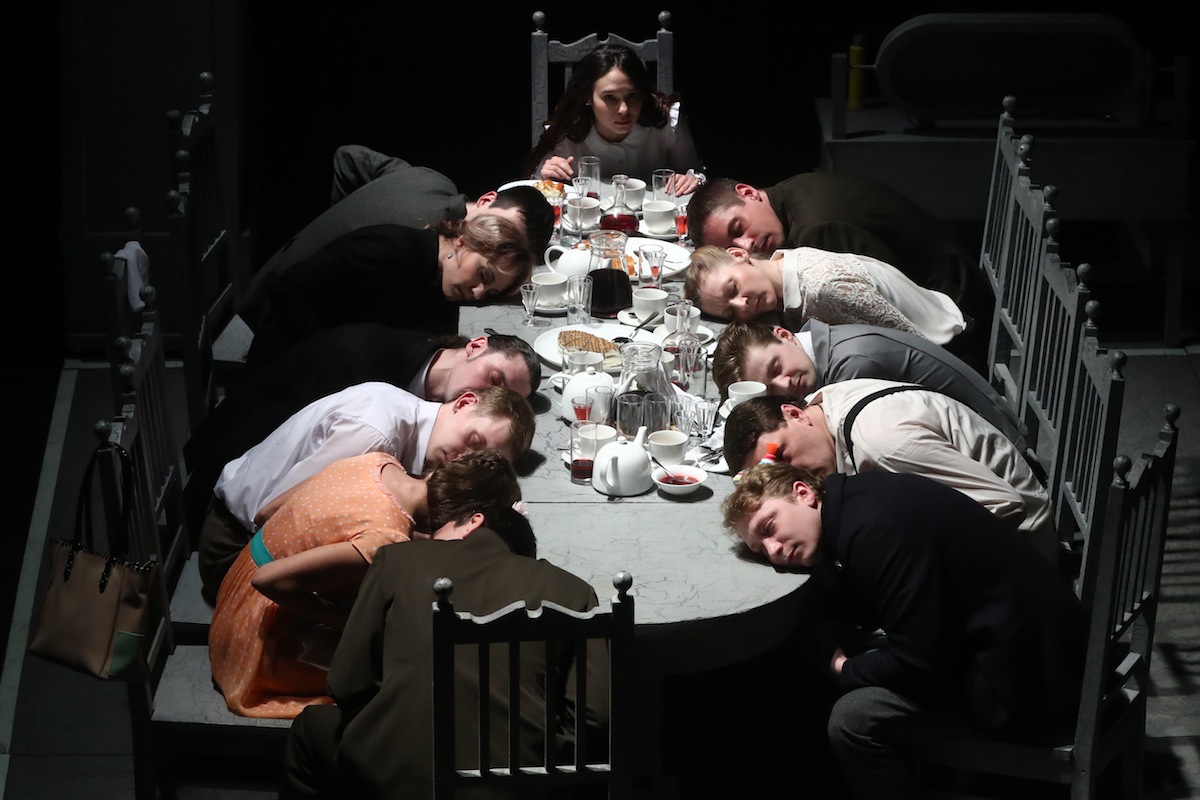
Having deprived the artists of the speech, Kulyabin did not say them to silence, but on the contrary - forced him to look for a new stage language. This overcoming non -metabolic was the basis for the actors for continuous existence on the stage: we see everything that happens with each between phenomena and episodes. You can follow the heroes in their public loneliness endlessly - how to look at the fire or listen to the rain. Here is a businesslike Natasha (Claudia Kachusova) leads beauty before a date with Protopopov - she paints her nails on his feet, plucks eyebrows, conjures over her hairstyle, chooses an outfit. Here is a drunk Chebutykin crushes furniture. Here Andrei sets up the violin. Here Irina displays in a girlish album with colored pencils a desperate "to Moscow!" Here the glass behind the glass gets drunk with a thin Tuzenbach (Anton Voilovich), slides from a chair to the floor directly to the feet of the salty (Konstantin Telegin) and suggests: "Let's put up." He speaks with his hands, and it is clear how the “tongue” is braided. The only character who is allowed to speak out loud in this world of silence is Ferapont (Sergey Novikov). God (and the director) was speechless, and this invaluable gift of a cosole-speaking man mediocre on delusional rumors and incoherent mutteries. There is no justice in the world!
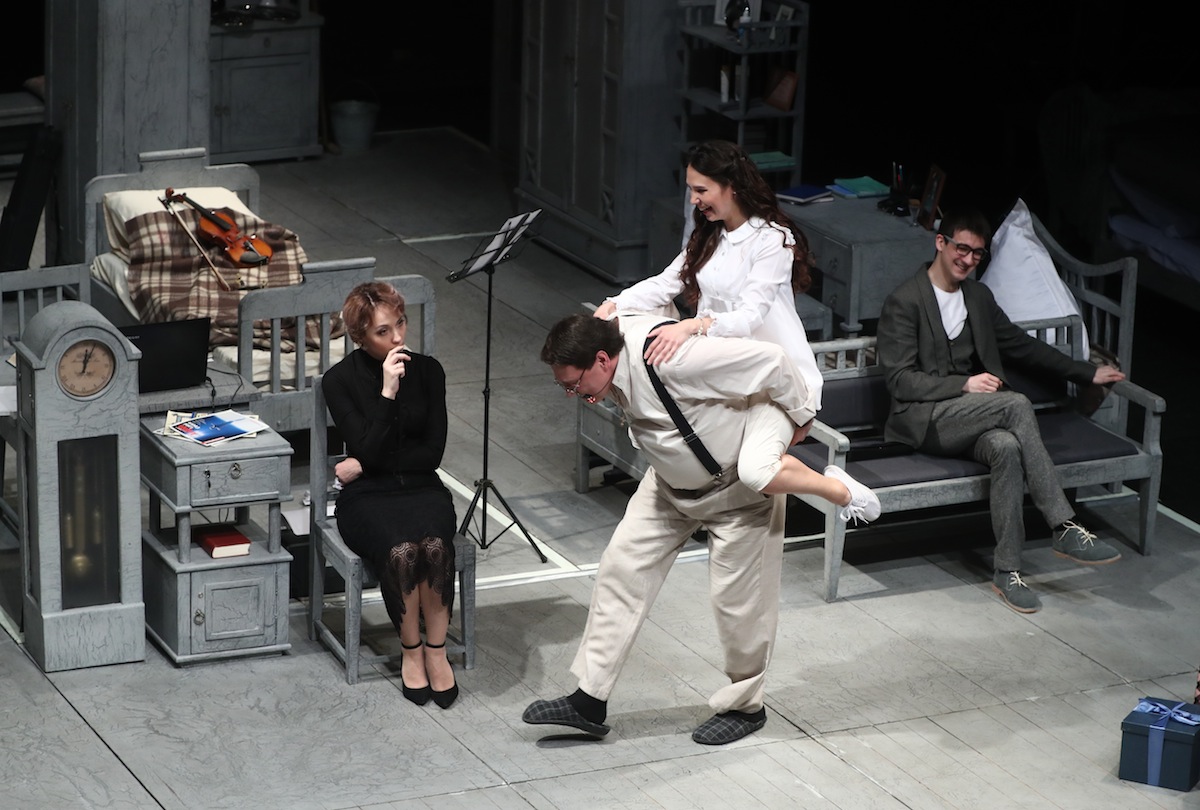
Depriving artists of speech, Kulyabin did not say them to silence, but on the contrary - forced him to look for a new stage language
Absolute hearing
One of the main scenes is the night revelation of the sisters, Irina’s hysteria, a recognition in the sinful love of Masha. This is the only episode in which we hear the voices of the heroines: the emotional intensity of the scene is so high that gestures turn into a real animal howl and the letters sparkling on the black screen merge with a piercing voice of human suffering.
Actresses (Irina Krivonos - Olga, Daria Emelyanova - Masha, Linda Akhmetzyanova - Irina) play this scene virtually, connecting in one pulsating lump of pain.
Surprisingly, Chekhov’s text opens as if for the first time, shimmers with new meanings and paradoxes, like colored pebbles of a children's kaleidoscope. Yes, and the actors themselves plunge into this text, as in the abyss of their own subconscious, opening the door behind the door, the box behind the casket, obsessed with the goal of finding the same key to the piano, lost once. There will be a key - and the piano will sing, and there will be a sound, and the music will play so fun that "we will understand why we live and why we suffer."
Yes, the music will rumble with a frantic mazurka, and we will finally hear what the heroes hear: the incessant dead rumble, which is the real “noise of time”. And we stubbornly take him for music.
On April 19, the jury of the National Theater Prize “Golden Mask” -2017 awarded the play “Three Sisters” (Red Torch theater, Novosibirsk) a special prize for a virtuoso acting ensemble.
Photo: Viktor Dmitriev/The press service of the Golden Mask, Stanislav Krasilnikov/TASS