
Translated material
Eggs for the president
Venezuela - on the threshold of the Civil War. In Karakas, the most powerful anti -government manifestation in recent years was held - more than half a million people protested. President Maduro threw units of the National Guard against them. Bottom line: three dead, more than 400 detainees. What will end with the crisis, which one of the local newspapers called “The last phase of the agony of the Era Charves,” - versed The New Times
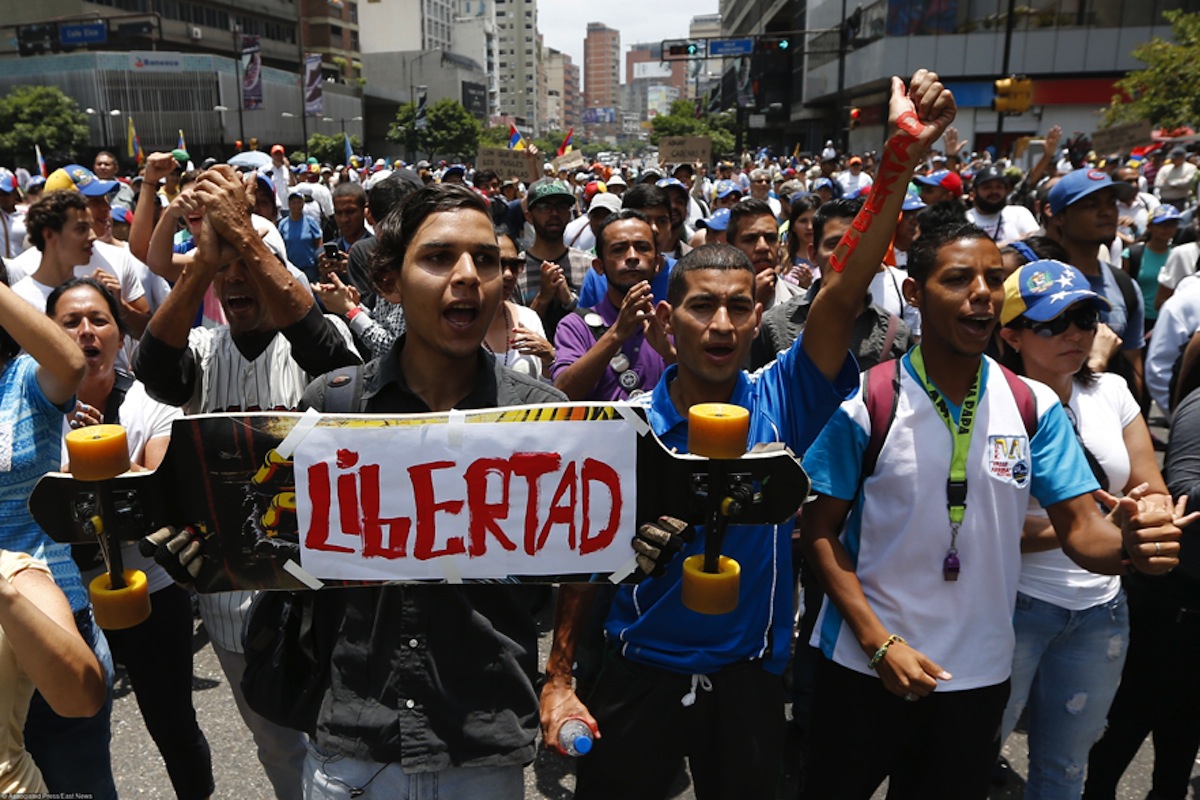
On April 18, on the eve of the manifestation, which the opposition called the “mother of all protests”, President Nicholas Maduro announced that the country has been disclosed in the country planned by the United States. “Empireed an accomplice” was called Hulio Borges, chairman of the National Assembly (Parliament), which is under the control of the opposition. Maduro explained how he plans to fight the “conspirators”: a special presidential decree of up to 500 thousand people increased the number of national Bolivarian police - a pro -government militia created by Hugo Chavez in 2005. To each Milicano (militia), the president promised the Kalashnikov assault rifle.
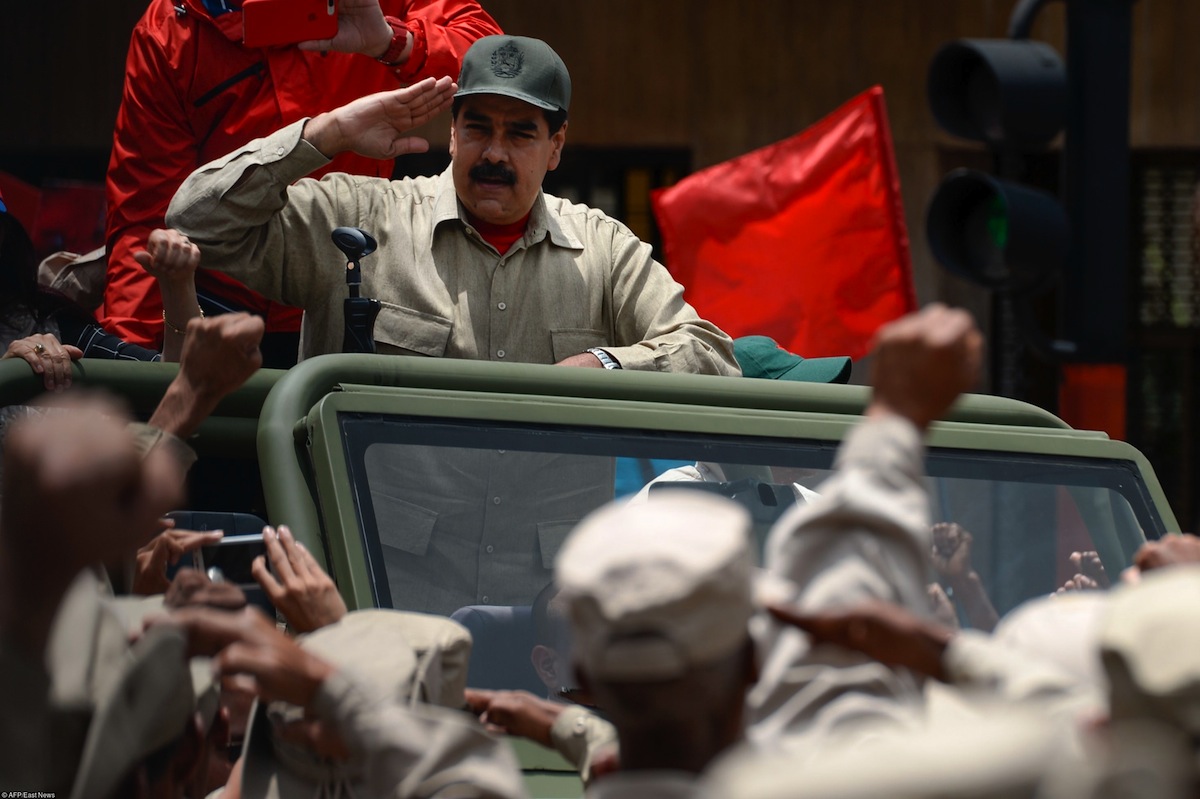
Maduro panicked, and the reason is clear. Powerful demonstrations do not stop in Venezuela since April 1. In the course of their dispersal by the authorities, six people were killed, dozens were injured, about 400 were detained, and more than 200 are still in custody. In the city of San Felix in the west of the country, the president was thrown into eggs at the very moment when Maduro returned from a military parade, standing in an open jeep with all his regalia-presidential ribbon and a standard: bodyguards tried in vain to save him from a city of flying eggs. The television channels - and they are almost all under the control of the authorities - had to urgently interrupt the live broadcast. However, dozens of amateur videos from Maduro immediately appeared on the network, shaking off the remains of broken eggs from the head. In the video you can hear the word that people threw to the president with the eggs - "damned." The patience of the Venezuelans was exhausted.
People and animals are starving
According to surveys, seven of ten citizens of the country require Maduro’s resignation primarily because of its inability to overcome the acute economic crisis. According to the National Association of Teachers, a family in which two adults work can afford to break only 6.5% of the products it necessary. Inflation in the country, according to IMF estimates, will be 1600% by the end of the year, and the prices for products will rise by 17,700% compared to 2015. Venezuela GDP, again, according to the IMF, will be reduced in 2017 by 7%, and the next by 4%.
“The United States can strike a Venezuela, and she will most likely respond to the unleashing of a full -scale war in the Caribbean. As a result, the Maduro mode will be defeated "
The impending disaster is visible to the naked eye. Thousands of people on the streets are rummaged in garbage tanks. But those who have saved the kip of banknotes do not become lucky. Venezuelan currency - Bolivar - costs nothing: 100 Bolivars (the largest bill) - this is only 2 American centers on the black market (Bolivar’s official Bolivar exchange rate 10: 1. - NT). New banknotes with a dignity of 10 thousand or 20 thousand Bolivars, which, according to Maduro, were brought on Russian aircraft, so far few have seen. People with backpacks, full of money, go to banks to change cash, but there they are shown to the door. According to surveys, 70% of the Venezuelans would like the country in its domestic calculations to transfer to the US dollar following the example of Panama, Ecuador and Salvador.
Not only people, but also animals suffer from hunger. As soon as he moves his legs in the metropolitan zoo, a terribly losing 45-year-old elephant named Rupert. The favorite of the public, he must consume daily in addition to hay and herbs up to 70 kg of fruit, but he is given only a few half -rotten pumpkin. Many other animals have already died.
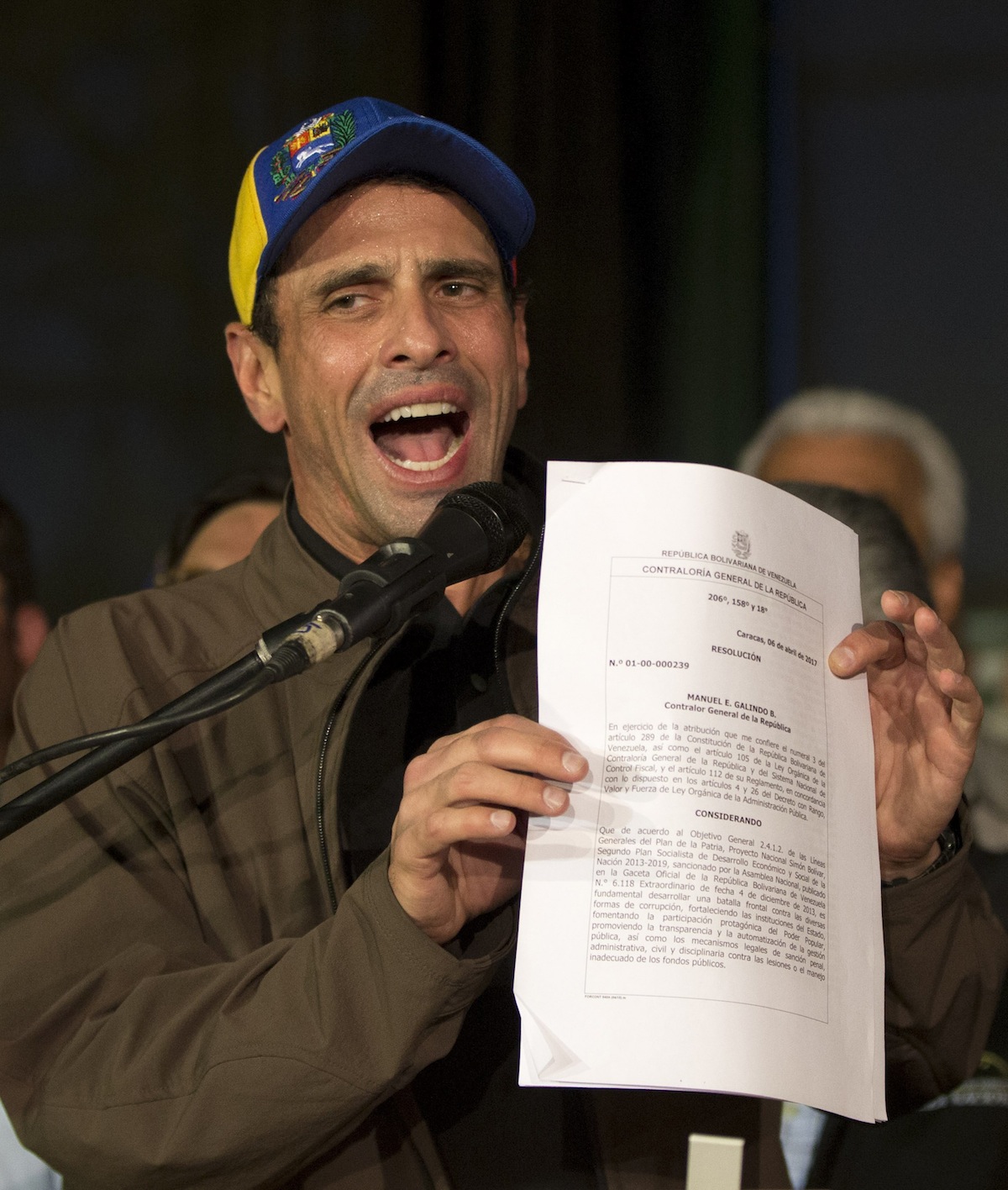
The humanitarian crisis is not the only cause of a popular rebellion. At the end of March, the Supreme Court (Armed Forces) suddenly stated that he was taking on the functions of the parliament-due to the fact that the deputies show “contempt” to the court. Many countries of Latin America - members of the organization of American states (OAG) - regarded this step as a coup, threatening to exclude Venezuela from the OAG. As a result, Maduro was forced to reverse, and Karakas streets were filled with hundreds of thousands of people demanding to dismiss seven members of the Supreme Court. However, the authorities, instead of trying to calm the nation, made another provocative decision: the opposition leader, the Governor of the state of Miranda, 45-year-old Enrique Caprichel, was deprived of the right to participate in the elections to occupy state dubbing for 15 years. Kapriles was accused of some violations when he, as a governor, agreed on the state budget with the local legislative council. Now he will not be able to put up his candidacy in the 2018 presidential election. After the death of the former “folk idol”, Hugo Chavez Kapriles and Maduro had already encountered his forehead in the forehead in the 2013 election - then Maduro won with a meager advantage. But now, the observers are sure, Caprilus would have defeated any CHAVIST candidate.
By the way, after the defeat in previous elections, opponents of the regime repeatedly accused Kapriles of indecision and even cowardice: he allegedly did not demand after many fans of recalculating the votes, and during the violent anti -government manifestations of the summer of 2014, and did not come to the aid of Leopoldo Lopez to the street, which was sentenced to almost 14 years in prison for the prison for the prison "Organization of riots." Indeed: during those events, the opposition split, a significant part of it went to dialogue with the government-as a result, the authorities managed to cancel the referendum on the early review of Maduro planned for 2016. But now Capriles again has become an indisputable leader in the opposition. He demanded the restoration of his civil rights, and he was supported by the Secretary General of the Uruguayan Luis Almagro.
The perfect storm
The Chavist regime in Venezuela can fall not only because of the pressure of the opposition. In June 2016, the American Elovo Held Elovo -speaking newspaper published a column called “predictions of Nostradamus and Donald Trump”. Its author, an American of the Cuban roots, studied at Venezuela, a former member of the House of Representatives of Florida Benjamin Dyurrre recalled the prediction of the French visitor: the Third World War will begin in the Middle East. However, today Durra is expressing a new consideration: with the advent of Donald Trump, a large-scale international military conflict may begin due to Venezuela and with its direct participation.
“In recent years, Washington preferred to keep firewood away from fire, that is, not to allow violent actions against Latin America,” Benjamin Dyurre notes in a conversation with NT. “But now the situation may change.” Venezuela accumulated too many risk factors. Its security agencies are under the full control of Cubans. The oil industry is connected with Iran through the joint company Venirogc. Karakas is working closely with the Lebanese Shiite Group "Hezbollah", which is also supported by Iran. Moreover, in the continuous stream is information about the involvement of the Venezuelan elite in the drug trafficking ... The United States can strike at Venezuela, and she will most likely respond to the unleashing of a full -scale war in the Caribbean basin. As a result, Maduro’s regime will be broken, ”the deurre summarizes.
In early April, the Spanish newspaper ABC reported the revelations with which Venezuez Gioris Gusman made in the United States - he headed the Office for Combating the Crime and Financing of Venezuela terrorism from 2013 to 2105. According to Gusman, Cuba fully controls telephone negotiations in Venezuela, and all the information received settles in the G2 department of the Cuban special services. Guzman does not have accurate data, but it can be assumed that electronic tracking of Venezuela is carried out from the former Soviet interception center in Lourdess. At the same time, the ex-operative reports the transfer of Islamist terrorists from the Middle East to Venezuela through the territory of Brazil. ABC publishes a detailed route that they use: it begins in the town of Santa-de-de-Uarn on the border of Brazil and Venezuela and leads to Karakas and other key cities of the country. According to Gusman, only about 40 Islamic militants from Syria and Iraq were thus transferred to Venezuela alone in Venezuela. The probable goal is their further transfer to the territory of the United States to organize terrorist attacks.
The former director of the Venezuela immigration department of Meltero Renhifo has even more impressive data. In an interview with El Nuevo Held, he said that the authorities annually give up to 10 thousand Venezuelan passports to the Syrians and Iranians who arrive in the country for an unknown purpose.
Shadow of default
Until now, the United States has looked at strengthening the economic and military interaction of Venezuela and Russia, if not through fingers, then not so closely. But the situation is changing. The Congresses of Jeff Duncan and Albio Silreza called for the American Ministry of Finance to verify the deal of the Venezuelan State Oil Company PDVSA with Rosneft, according to which the PDVSA’s assets of PDVSA have transferred to the Russian company. We are talking about Citgo, an oil refinery operator (refineries) and oil pipelines in the United States, whose headquarters are located in Houston. Citgo has 13 thousand gas stations in the United States and, in particular, has a monopoly on an important segment of the highway connecting New York and Washington. Duncan and Susiness called on the Foreign Affairs Committee of Congress and the Ministry of Finance to immediately verify this deal, which, in their opinion, "can seriously undermine the national security and energy independence of the United States." According to congressmen, in exchange for collateral rights, Rosneft granted a PDVSA loan for $ 1.5 billion. And on April 20, the AR agency reported that Citgo made a contribution to the inauguration of Trump in the amount of $ 500 thousand - as much as American Exxon, and much more than Pepsi ($ 250 thousand) and $ 250 thousand) and Walmart ($ 150 thousand).
Citgo, the “daughter” of the Venezuelan PDVSA in the United States, according to the AP agency, has made a fee to the inauguration of Trump of $ 500 thousand. At the same time, Rosneft disposes of the collateral rights to Citgo assets, ”the Congress of Duncan and Sulgs say
Venezuela National Assembly has repeatedly expressed its dissatisfaction with the contracts concluded between PDVSA and Rosneft, which were not approved by parliament. Now, it turns out, the same concern is expressed in the US Congress. The meaning of anxiety on the Capitol Hill is understandable. Rosneft, having received the collateral of 49.9% of Citgo shares, may wait for Venezuela to declare default on its external borrowings and after that to fully select a large oil operator in the United States. In this case, the congressmen believe, a legal conflict arises: Rosneft, which is imposed on the US sanctions, can begin to operate in American territory through dummies.
“Venezuela's default can lead to the fact that the ownership of Citgo can transfer to Rosneft,” the Duncan’s statement said in a statement. In his opinion, “this can give Russia control over the sixth of the US NPs, the ability to influence gasoline prices and, in a certain sense, to the strategic advantage of the United States in the global oil market.”
But the threat also arises for the Russian authorities. Until now, Moscow has not received most payments on a loan of $ 6.2 billion issued by Karakas in 2009-2010 for the purchase of Russian weapons (Venezuela’s debt was required to repay oil supplies, but in 2017 a delay arose). If the power in this country moves to the opposition, Russia will lose billions abandoned to master oil fields in Venezuela. The fears of this kind of high -ranking Russian officials are already expressing in the conversations “not for recording”.
By the way, the clarification of relations between Moscow and Karakas has already begun. Last week, at the request of the “Sovcomflot” in the Caribbean, a tanker with Venezuelan oil was detained. Due to the debts of PDVSA, the cargo was arrested before the “Sovcomflot”. And it turns out that yesterday “friend No. 1 in Latin America” - Venezuela - can soon become another headache for President Putin, in addition to the existing Syrian and Ukrainian.
Photo: Ariana Cubillos/Ap Photo/East News, Federico Parra/Ap Photo/East News, Ariana Cubillos/Ap Photo/East News