
Translated material
Mobile Dicks from Chukotka
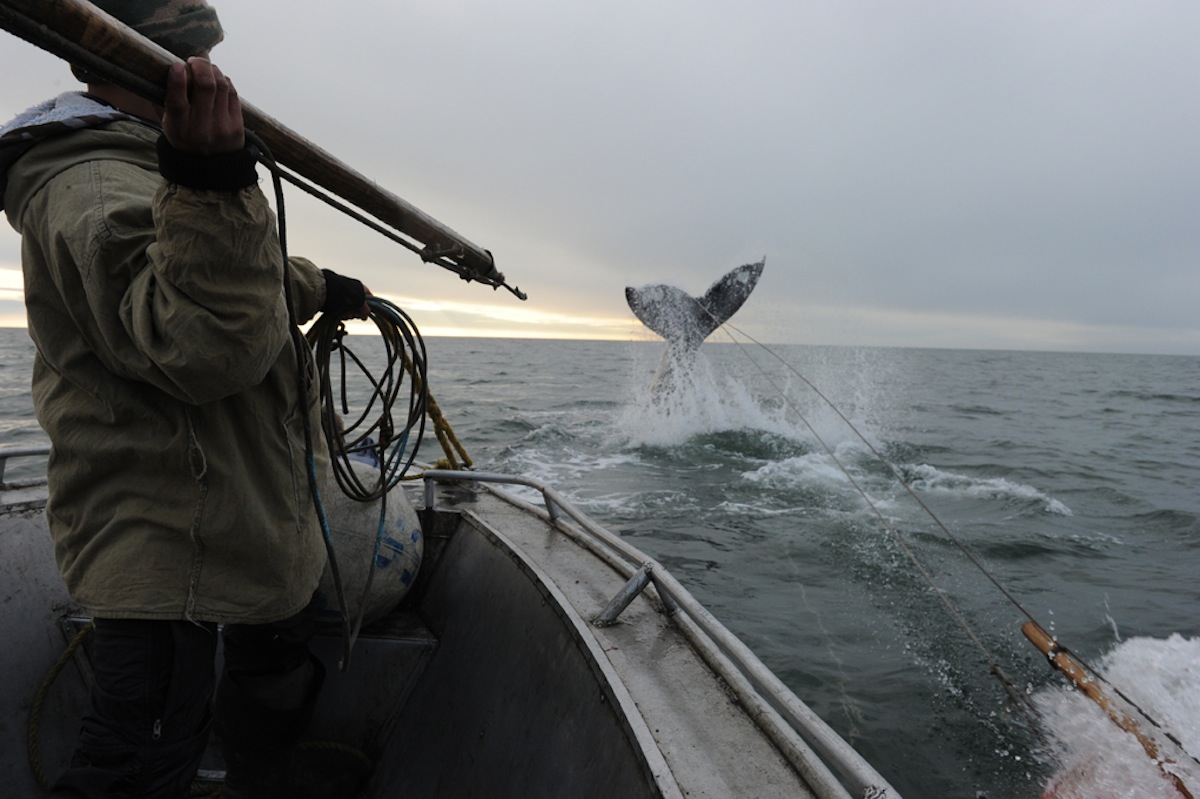
In the spring, the Chukotka is opening the season hunting season, which usually lasts until the fall. In the village of Lorino - the whaling capital of the region - already boast of the first booty.
Hunting for whales for commercial purposes is prohibited - this is how the International Commission on Kitoboye Providence decided in 1982. But this ban does not apply to the fishing that the locals lead. In addition, there are international quotas for capturing whales. For Russia, Kvota is 140 whales of the Chukchi-California population per season. And for the Chukchi Autonomous Okrug - no more than 60 gray and one Greenland whale, which, by the way, is allowed only in these parts. Quota is distributed by Chukchi settlements in the same village of Lorino, where, as is commonly believed, the most experienced hunters have been living since ancient times.
An interesting detail: it is customary to share quotas for capture on Chukotka. For example, if you are allowed to catch five whales, and you have caught only one by the end of the season - share the remains of quota with those who have already exhausted your own.
But if quota is a matter of justice, then the hunting for whales itself - take more - the issue of self -identification. The inhabitants of Chukotka hunt for whales as much as they remember, whale hunting skills have been passed on for centuries, from generation to generation, and their meat and sluggish skin are an important part of the main diet.
To this day, the Chukotka is hunting for whales in the same way as in distant times using boats and harpoons. Only now the boats are motor. Although what is there ... For hunting for a Greenland whale, she still uses boat-partners-the only way you can get to the whale silently and imperceptibly. But to catch a gray whale, three motor boats are enough.
Each hunter knows that going to the whale is dangerous: whales do not give up without resistance. As soon as the animal fell on the harpoon, it is necessary to sharply expand the boat, otherwise the whale can hit its tail. Especially the "pugnish" (as the hunters call them) can clarify the bottom of the boat with his nose and turn it over. In ancient times, hunters who found themselves in the water did not get - it was believed that they were taken by the sea.
On the shore of hunters are waiting for local residents. The production is cut right here, cutting off pieces of carcass with knives. Kita’s skin is Mantac is a real delicacy, and everyone tries to get at least a piece.
The first whale caught in the spring is always a big event: many people are going on the shore, and you have to compete for the best pieces. Moreover, by and large, local residents almost do not see any other fresh meat.
Photo: Andrey Shapran, pos. Lorino, Chukotka - Novosibirsk