
Translated material
Extremists from God
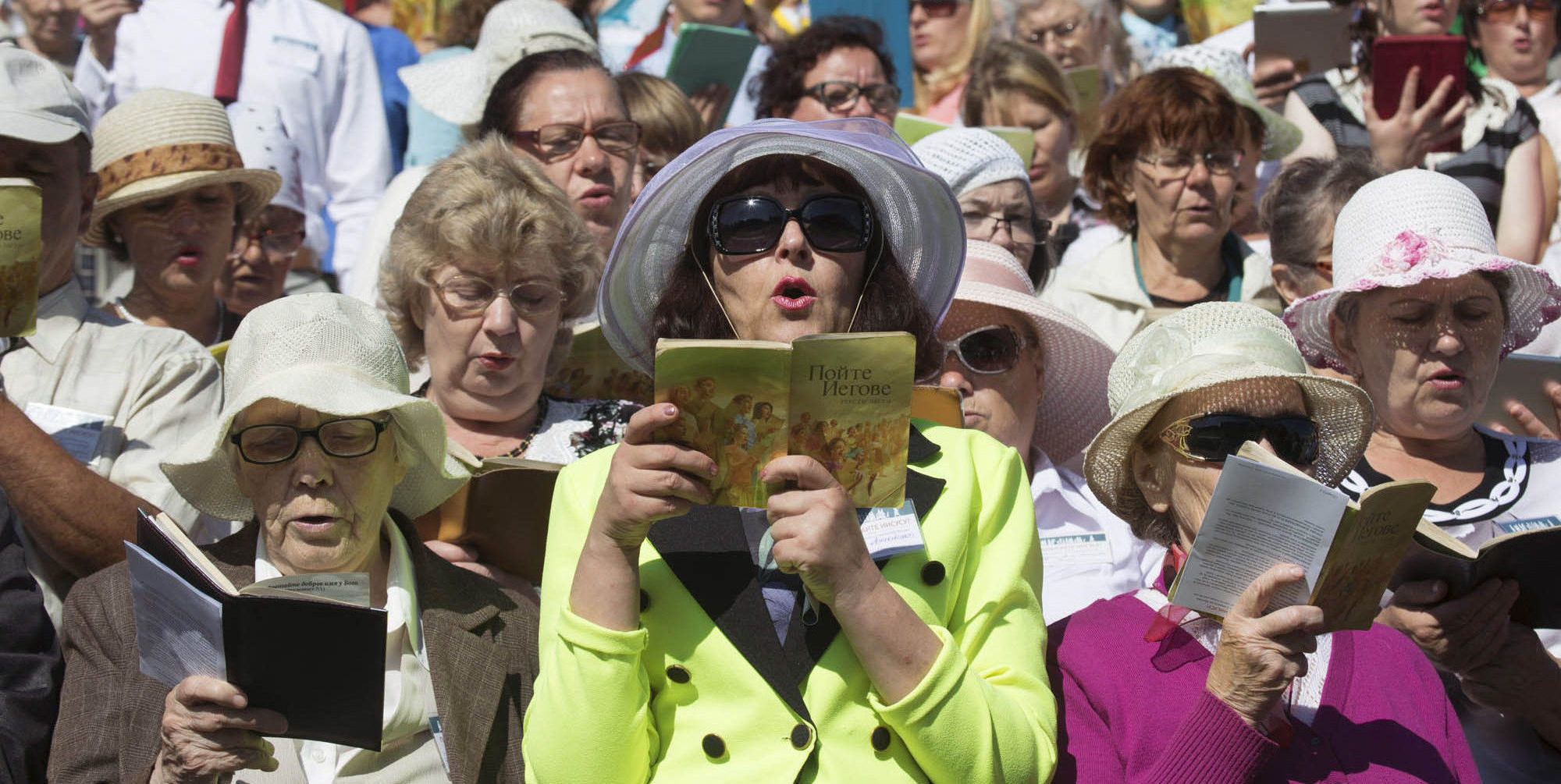
The Supreme Court recognized as extremists and banned Jehovah's Witnesses in Russia. Who goes to “Witnesses”, and why it is pointless to ban them, says the religious scholar Nikolai Mitrokhin
I met the “witnesses of Jehovah” in the mid-1990s in the former Soviet Central Asian republics. I studied the religious life of this region and, coming to the next regional center, went in turn to interview all noticeable communities. From other Christian communities of the Western type, “witnesses” were distinguished by one - there were many of them. And they were everywhere.
Then, as now, many were sure that “Jehovah's Witnesses” were the fruit of perestroika freedoms. However, this is not so - “witnesses” inherited from the USSR.
Religion of the American salesman
Jehovah's Witnesses are a typical eschatological religious group of the American type. If you simplify, they believe in the imminent, already during their lifetime, the end of the world and in a single god - Jehovah (the name used in the first century of Christianity), which will destroy the terrible trial of sinners, and will save the elect. “Witnesses” deny the Christian doctrine of the Trinity (God-fool, God-pats and Jesus), and they do not consider Christ God, but they are revered. The day of his death is the only holiday they celebrate.
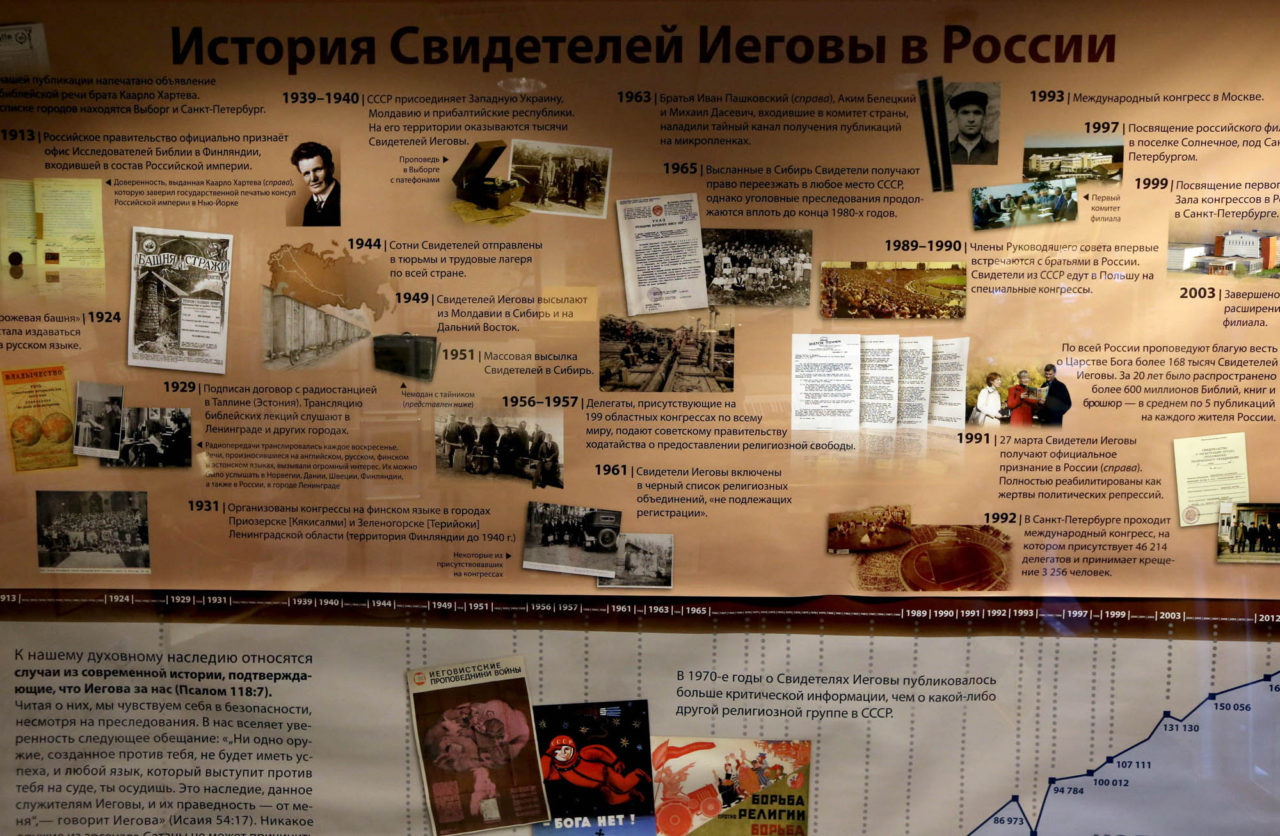 In the Museum of the organization "Management Center for Jehovah's Witnesses in Russia" in the village of Solnechnoy. Photo: Alexander Demyanchuk/TASS
From a complex and regularly revised theology, a set of permits and prohibitions is followed, which are aimed at maintaining the life and behavior of a decent salesman from the lower middle class.
“Witnesses” are allowed moderately (for the immoderate exclude) alcohol use and the use of contraceptives. Extraordinary connections and smoking are prohibited. “Witnesses” should not “worship Caesar” - you can’t participate in the elections, engage in politics, honor state symbols and serve in the army. The greatest criticism from the side is the ban on blood transfusion and organs transplant. Then the “witnesses” unexpectedly found what to answer when the AIDS epidemic began. They support blood substitutes.
For the most active members of the organization, something like family monasteries is organized-“managerial centers”, where they are strict graphics, but under relatively comfortable conditions, they can live and work (almost free); The term is from one year to the whole of life.
The expectation of an early end of the world is a familiar activity for many religious groups-from Russian Old Believers to Maja Indians. Such groups are self -isolated from the sinful world - some by leaving the forest, who limiting the circle of communication.
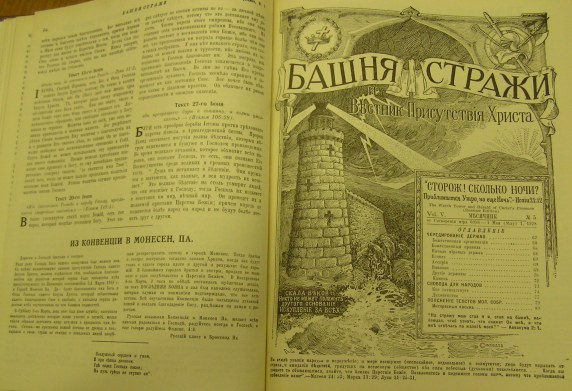 The cover of the magazine "Watchtower" 1928. Initially, the magazine was called the "Law Tower", and in 1964 its name changed to "Watchtower". Photo: Boris Alekseevich/Wikipedia.org
“Witnesses” from other similar movements are distinguished by a way of spreading and supporting their teachings. It is based on the commercial practice of the distribution of magazines of the 19th century. The whole organization, in fact, is gathered a couple of times a week only for the joint reading of its main magazine “The Guard Tower”, which is produced by foremen in New York Brooklyn, and then translates and spreads in dozens of languages. For receiving and reading the magazine, members pay symbolic money, which are carefully collected and sent along the chain: from the local cell - to the regional, from there to the national and finally - to the main management office. Free distribution of magazines and a courtyard bypass of quarters with offers to talk about God are aimed at the same - an increase in the audience, writing (and jointly reading) the magazine.
95% of the modern public, these religious classes seem strange and ridiculous, although from the point of view of sociologists they do not differ from going on party meetings, network sales of cosmetics, visiting sports clubs, applying tattoos, a vehicle or collecting brands.
“Jehovah's Witnesses”, according to themselves, work in 240 countries (this is more than part of the UN). At the same time, it is numerously quite compact, although a rapidly growing organization - only 8.3 million members.
The religion of the Soviet man
As the “witnesses” took root in the USSR, it is well told inthe book of Emily Baran published three years ago. Polish and Romanian peasants and bazaar merchants learned the teachings of the “witnesses” at the turn of the 1920-1930s, and before the war, unexpectedly, he became Soviet citizens (when the USSR occupied part of Poland and Romania). The Soviet authorities did not endure large groups that had constant relations with the abroad, and chose to evict a Jehovist asset - five thousand people - to Siberia. A significant part is to the camp, the rest - to the settlement. For victims of repression, this was grief, for exotic teaching - a tremendous chance.
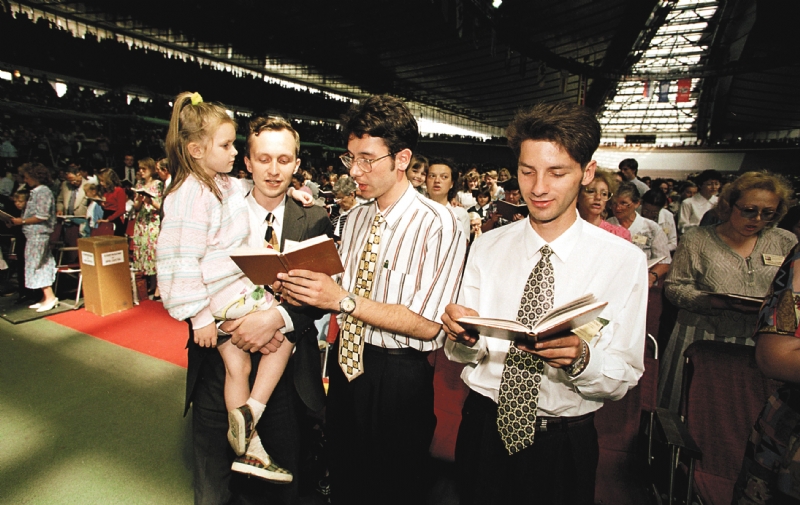 The Moscow community of the religious organization `Witnesses Jehovah` in the premises of the cycle track in Krylatsky 2000. Photo: Alexander Fomin/Photoxpress.ru
Already in the 1950s, in the main place of expulsion-the Irkutsk region-the most significant center of “witnesses” in the USSR is formed. In the 2000s, on the website of the Irkutsk Regional Administration and neighboring Buryatia, one could find allegations that “Jehovah's Witnesses” are a religion traditional for the region. Irkipediareports the data for 2011: “About 5,500 people in the Irkutsk region are members of the Jehovah's Witness religious organization. In the Irkutsk region there are about 50 of their meetings, in each from 80 to 150 people. The meetings are combined in three districts-with centers in Usolye-Sibirsky, Irkutsk, Bratsk. ”
Read also 30% of the Orthodox believe that there are no God up to 85% of the inhabitants of Russia call themselves Orthodox. At the same time, about a third of them admit that they do not believe in God, and those who believe almost do not go to church. So how many Orthodox are there really in Russia?
The camps turned out to be a suitable place for agitation, radical-decent youth, especially Ukrainian-speaking, with fertile listeners, and the half-prisoner amnesty-a good way to spread the teachings throughout the country. Already in the late 1950s, the former participants of the Ukrainian rebel army, who were forbidden to return to their native lands, and former Russian criminals who stood with machine operators and locksmiths, dug in the steppes of dugouts to put home-made machines and print the “Law Tower”.
Why was it necessary to become “witnesses” to peasants, merchants, strong guys with working specialties, graduates of provincial technical schools, large housewives or pensioners? I will have the same explanation as the religious preachers - in search of a radical change in myself and my lifestyle. The daily frustrations of a small person, his forever predetermined life, his unnecessary to anyone outside the narrow family circle (in which there is often so little happiness) - all this torments many. Recipes for how to effectively transform themselves are always popular. However, as a rule, they do not work, because it is difficult to follow them.
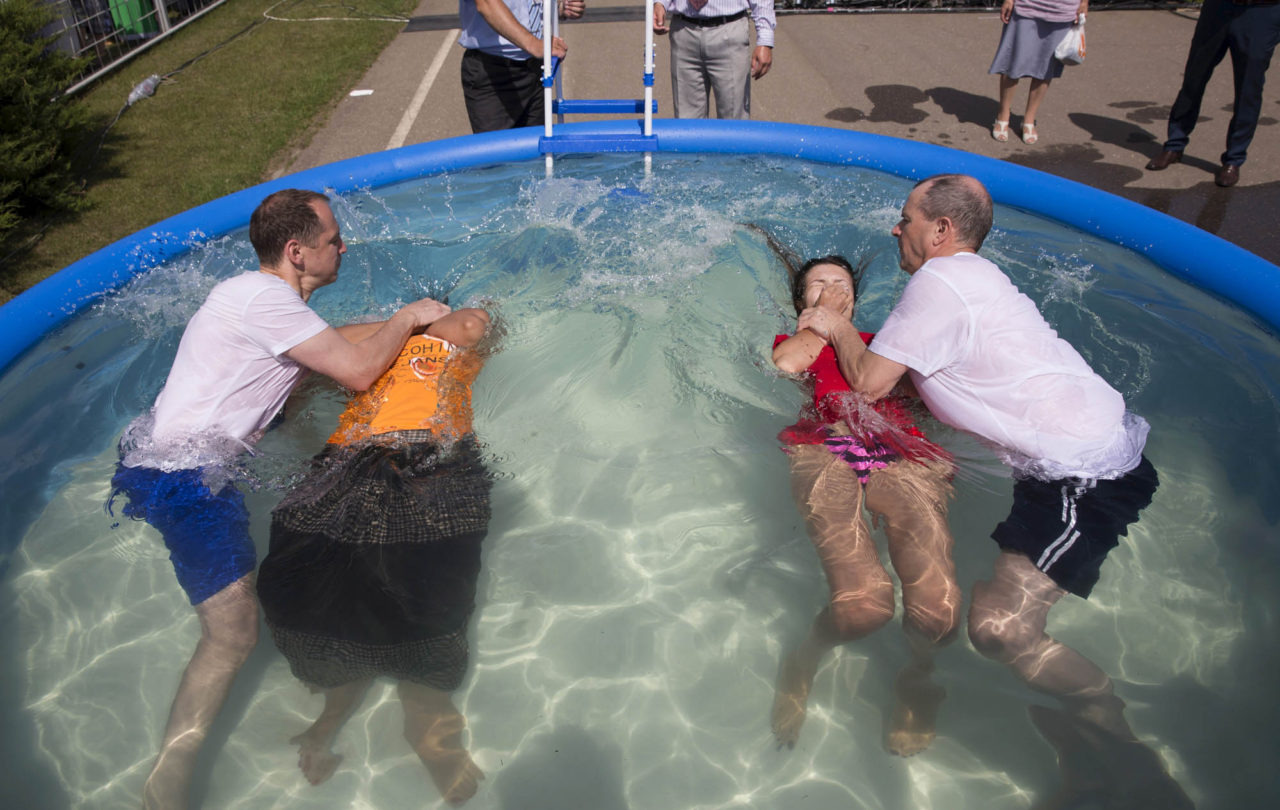 `Jehovah's witnesses in Minsk. 2015. Photo: Vasily Fedosenko/Reuters/Pixstream
“Witnesses”, like other religious groups, offer their members a discipline model of joint action. You can sit at home, eat your beggarly pension and watch TV - or you can again feel like a “pioneer” (the title in the hierarchy for a missionary, campaigning on the streets and apartments), do the right business, communicate with the same enthusiastic people, and make friends with youth. You are a young worker, your prospect is to put bricks all your life, and the soul wants changes and career growth. Six months in Jehovah's Witnesses, and such a mason can become the head of the grassroots cell, and in a couple of years to make a decent career in the organization. The wife is satisfied - the husband does not drink even in business, the circle of communication is expanding, on the holidays you can go to a family to “their own” to another region of Russia, children grow up in a circle of “advancers” with a sense of their own especiallyness. Free evenings are busy with the organization’s affairs, yes, but it is better than drunken scandals, and indeed what the evenings are busy with “simple” Soviet and post -Soviet citizens.
Atheists from the heart
In 2006, I made a series of interviews with a former employee of the propaganda department of the Central Committee of the CPSU Vladimir Saprykin, whose career began with an energetic struggle against “witnesses” in the Karaganda region. I managed to look into the affairs of the period when the party power fought especially intensely with the “witnesses”. In the early 1960s, they were literally hundreds to camps as part of the campaign to combat religion in general.
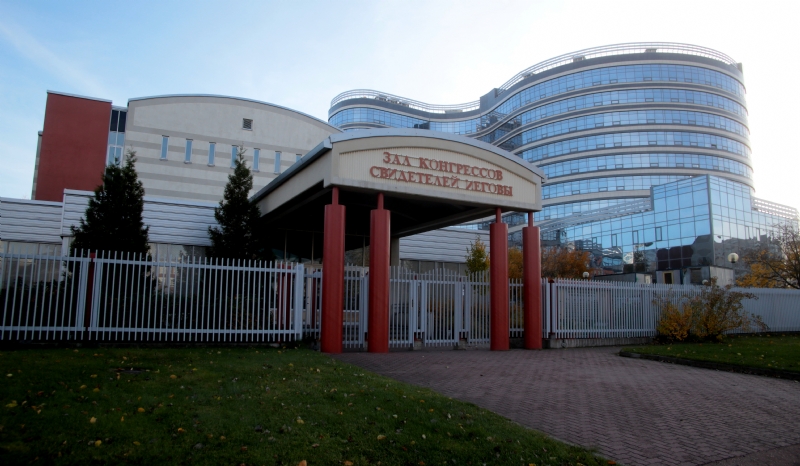 Hall of Congresses of Jehovah's Witnesses in St. Petersburg Photo: Photoxpress
Saprykin fought with “witnesses” from the heart, with a passion that burned in it and half a century after the events. He dreamed of making them "completely free", "return to his essence." A whole group of provincial demiurges from the local intelligentsia agreed with him - they tried in chorus to re -educate the local cell of the “witnesses” through the controversy, then intimidated and pressed to relatives, then bought it, and as a result, with the support of the KGB, they simply transplanted the group’s nucleus.
Their rhetoric surprisingly coincides with the declarations of modern fighters with Jehovah's Witnesses. “We advocate for the freedom of choosing a person in all areas, including in religious ... Therefore, read, compare, think, disagree, argue! Critical thinking is an integral sign of human freedom. Let's not refuse our freedom so easily! " This is not a statement by the Libertarian group, but a declaration of a group of priests of the Russian Orthodox Church, united at the Center for Religious Studies in the name of the Holy Martyr Irinei Lyon. It was they who achieved the ban on Jehovah's Witnesses now.
In the early 1960s, the KGB and such local enthusiasts managed to deliver several serious strikes on the infrastructure of Jehovah's Witnesses in the USSR. The heads of the organization, hundreds of managers and activists of the lower organizations were arrested and condemned, were seized, archives and correspondence, printing houses were captured.
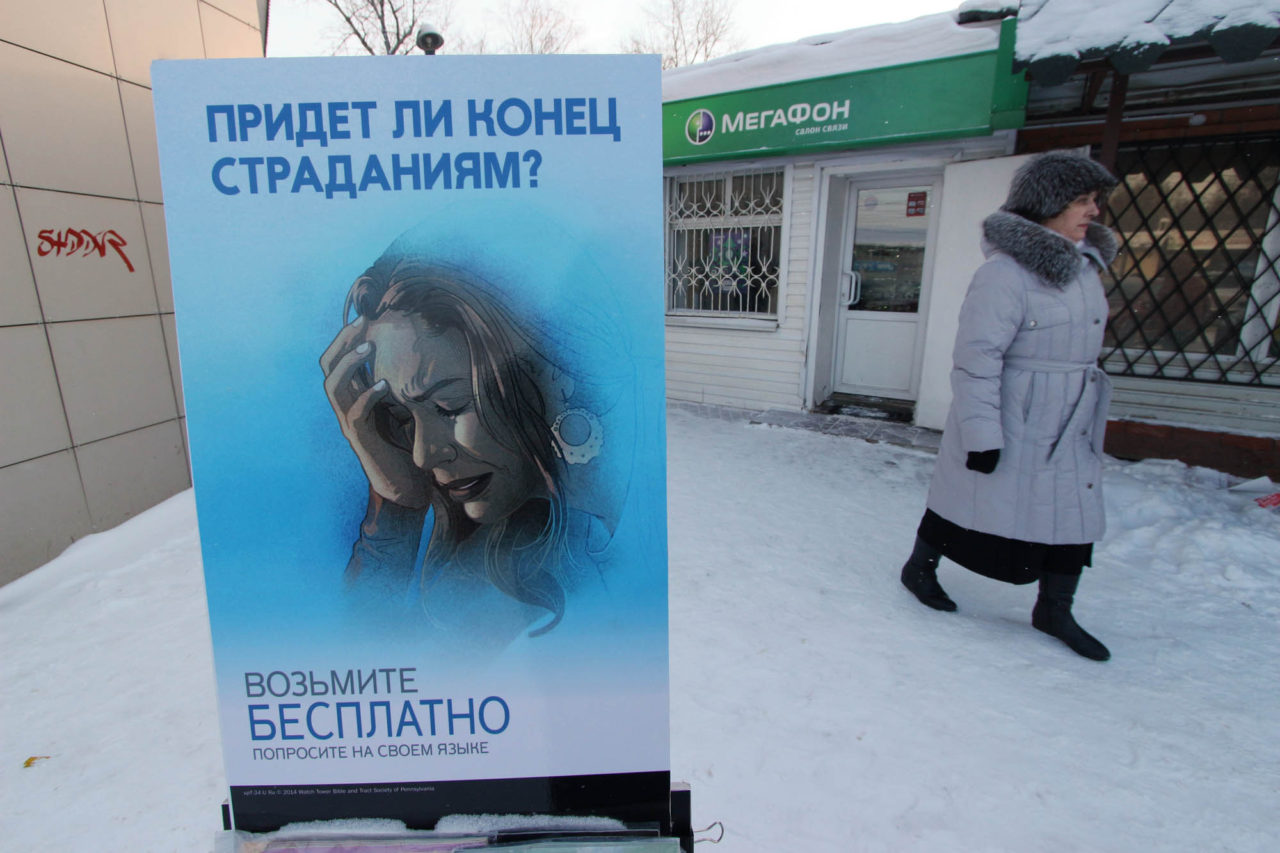 Moscow region. On one of the streets in Tuchkovo. 2016. Photo: Alexander Artemenkov/TASS
However, this did not lead to the "eradication" of the "witnesses of Jehovah". In addition to three centers of their constant activity - Western Ukraine, Moldova and the Irkutsk region -
Read also The struggle against soullessness of the Old Believers from Latin America saves the soul in the deaf Far Eastern village of Dersu for eight years. And all the years the main problem of immigrants is the soullessness of the state machine that does not fulfill its obligations to them
 Groups and organizations during the 1960-1970s were formed almost throughout the USSR-from the Arkhangelsk region and Primorye to Turkmenistan and Uzbekistan.
The movement was distributed by those who left the camps, labor migrants from the traditional regions of the confession of teachings, and missionaries.
Soviet construction sites, new cities, working hostels were a favorable environment for the spread of new religious exercises - the youth who came there was torn from the usual lifestyle, related ties and interests. And I wanted a new, including self -education and self -transmission, to walk in costumes, think about high. The Komsomol and other authorities chose most of these “personnel” through the system of social elevators, however, there was enough for religious organizations.
By the way, in 1962, Saprykin fought for the exit from the “witnesses” not on anyone, but the cavalier of the Order of Lenin, the old party member, the plaster, the ethnic Kazakh woman Maria Ozukova, who refused to support the resolution with the condemnation of the religious organization at the meeting of his construction plant, which consisted of several members of her team.
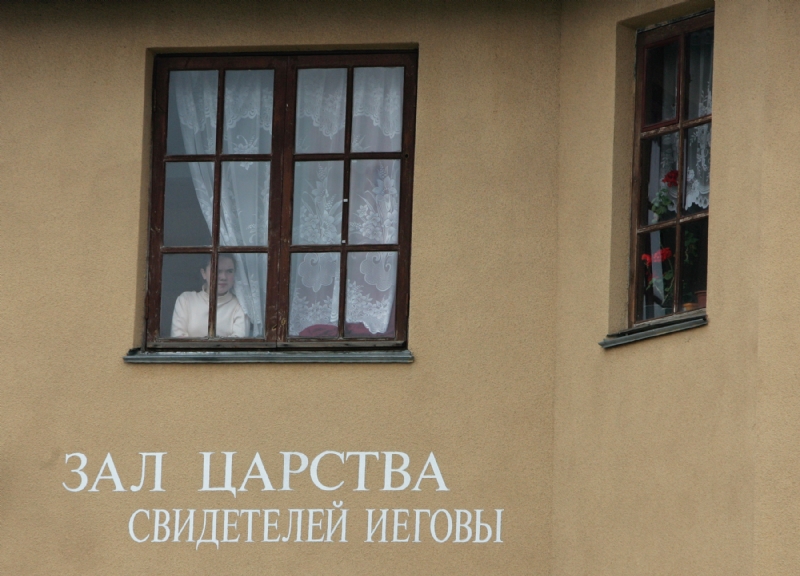 The Hall of the Kingdom of Jehovah's Witnesses in Sochi. 2007. Photo: Natalya Kolesnikova/Photoxpress
After Khrushchev’s resignation, the systematic arrests of Jehovah's Witnesses stopped, although a prison was waiting for some for the ostrast. On the rest of the Presidium of the Supreme Council of the RSFSR of March 18, 1966, the Decree “On Administrative Responsibility for Violation of the Legislation of Religious Boats” was spread, according to which a fine of 50 rubles could be obtained for a circle - a weekly salary of a qualified worker. The religious scholar Sergei Ivanenko recorded in his book that in the 1970-1980s, attempts to deal with “witnesses” with the help of fines and study at the meetings were just as in vain.
Anti -cultists from the heart
Perestroika legalized Jehovah's Witnesses throughout the post -Soviet space. However, this freedom was enough for a short while. The new states of Central Asia and Transcaucasia went against “witnesses” through the USSR and about the same result.
In Russia, “witnesses” were officially registered in March 1991 and had no serious problems for a long time. They built their central managerial body near St. Petersburg-“Vephil” in the village of Solnechny-and several dozen buildings for prayer meetings. Of course, by virtue of its activity, relative openness and American connections, “witnesses” (along with Krishnas, Mormons, Scientologists and Pentecostals) were one of the main goals for various heaters organizations formed in Russia in the second half of the 1990s-from Cossacks and neo-Nazis to professional anti-culturalists (stakes with sects).
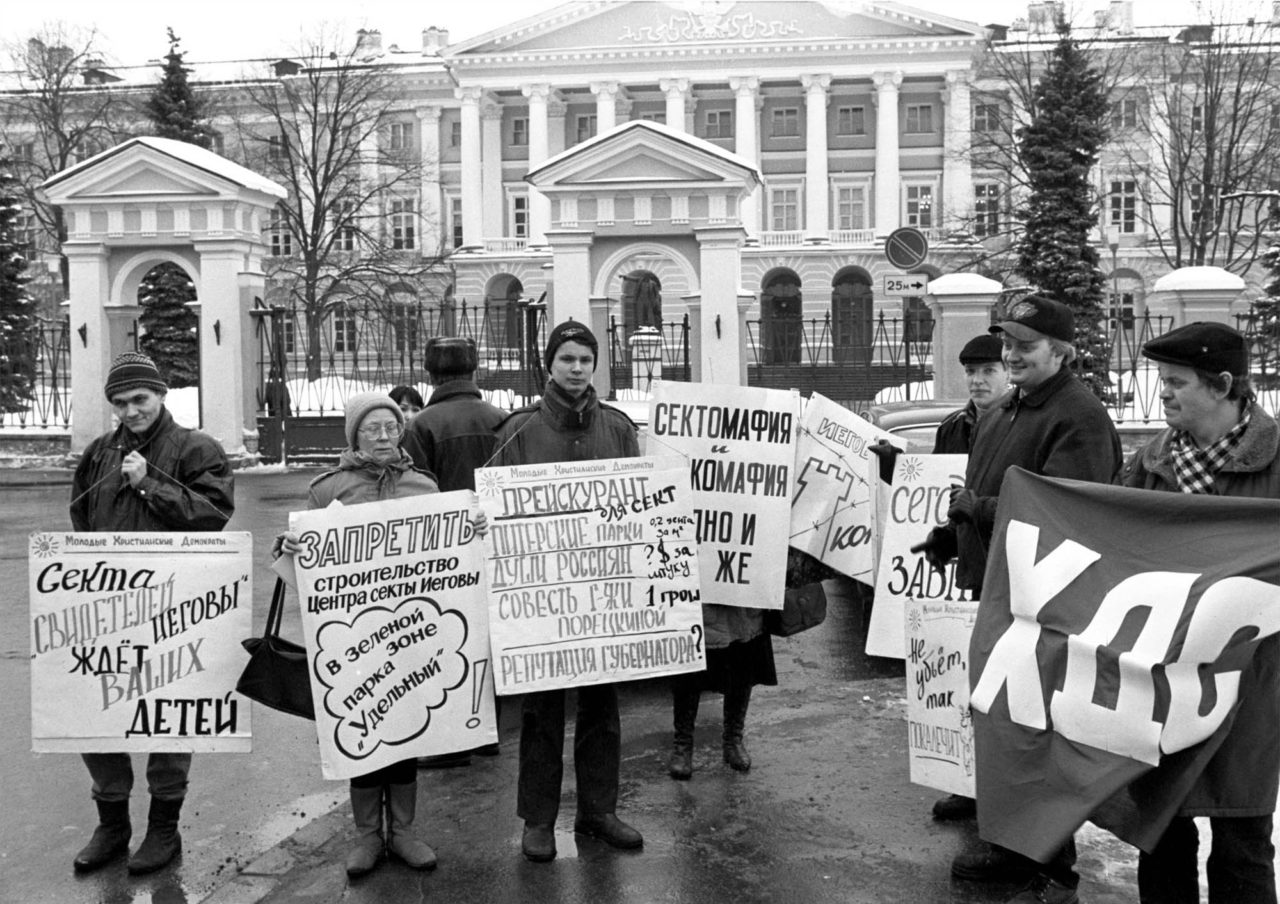 The protest against Jehovah's activities in St. Petersburg. 1997. Photo: TASS
Anti-cultism was brought to Russia by the former Moscow hippie, Alexander Dvorkin, who emigrated to the USA in the 1970s and laid there in Orthodox emigrant circles. In the early 1990s, he left his work at the Freedom radio station and returned to Russia, where he made a successful career at the junction of the interests of the Moscow Patriarchate and Russian law enforcement agencies. The above -mentioned center of Irenaeus Lyon is, in fact, he.
Professor Dvorkin has been working at the Orthodox Holy Tikhonovsky Humanitarian University for many years, until 2012 he was the head of sectors. In 2009, he headed the Council for Religious Examination under the Ministry of Justice of the Russian Federation (now - deputy chairman). Interestingly, the Minister of Justice Alexander Konovalov is also a graduate of St. Tikhonov University and is very proud of this.
We can confidently say that the ban will affect the interests of at least 300-400 thousand Russian citizens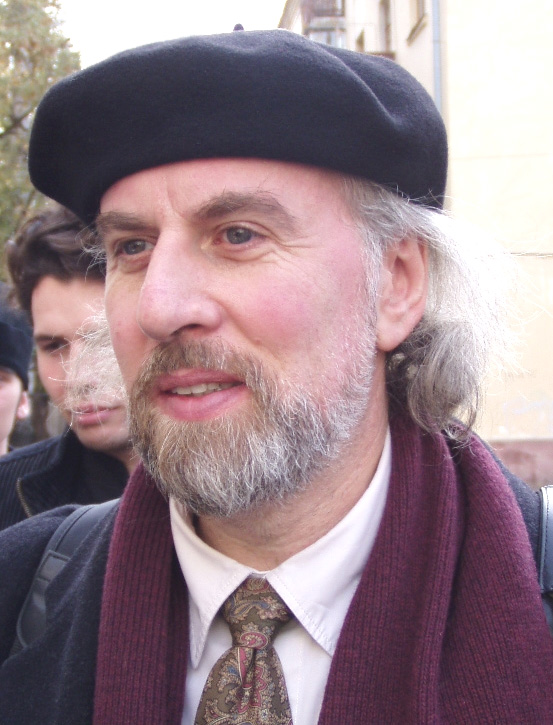 Alexander Dvorkin photo: Evgeny Mukhtarov/Wikipedia.org
Having supported the minist’s initiative on the ban on Jehovah's Witnesses, the Supreme Court put not only the “sectarians”, but also the Russian authorities in a difficult situation. In Russia, “witnesses” have more than 400 local organizations and about 168 thousand registered members. During registration, only full members are taken into account, but usually in reading the Bible, the “guards' towers” and other religious events are involved quite a lot of sympathetic. We can confidently say that the ban will affect the interests of at least 300-400 thousand Russian citizens. Supporting them with extremists is not just to offend them, to provoke their conflicts with relatives, neighboring and distant acquaintances. In fact, this means a sharp increase in the load on the entire “fight against extremism” system, which the Russian authorities have built over the past two decades. The fighters of the Russian Guard will be easy to make raids on meetings and “put on the floor” of such “extremists”. However, taking into account the scale of the organization, you will have to do this a lot and often. And, as experience shows, without much use.
In no country in the world, the organization of “Jehovah's Witnesses” was destroyed by power measures, to expect that these 400 thousand people are somewhere, emigrate, and difficult. Already now, when it became known about the ban, the Jehovah's Witnesses received the support and sympathy for almost all media and many public figures, including some Orthodox priests. In this situation, a successful state campaign to discredit, dissolution and pushing under the carpet of a large religious community is doomed to failure.
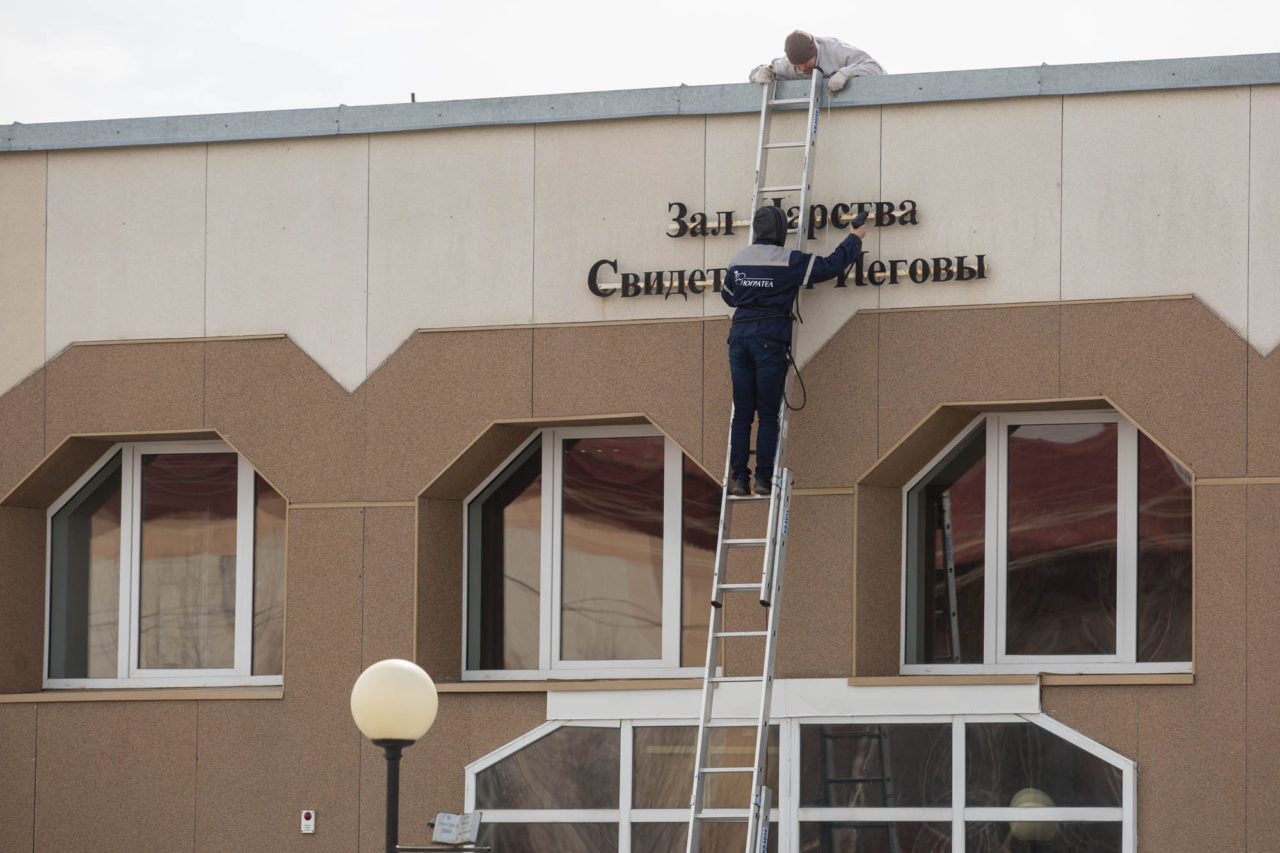 April 24, 2017. The Surgut office of the Jehovah's Witnesses Surgut Office removes the sign in connection with the prohibition of their activities in Russia. Photo: Alexey Andronov/Ura.ru/TASS
The authorities will have to decide - either go to the mass arrests of the organization’s managers and activists - and send hundreds and thousands of people to camps, which will ultimately contribute to the growth of authority and the spread of movement, as in Soviet times. Or it is pointily planting those who, according to the FSB-MVD, represent a “special danger”, and turn a blind eye to the actual continuation of the organization.
I would like the country's leadership to change his mind and find a legal form to play the decision of the Supreme Court back. However, there is little hope for this.
282 ban Jehovists Religion Witnesses Jehovah Sect proceedings Courts Christianity Extremism