
Translated material
The Ukrainian poet Boris Oleinik died
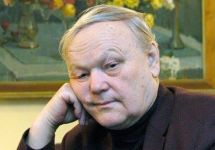
In Kyiv, at the age of 82, the Ukrainian poet and public figure Boris Oleinik died. This was announced by a friend of the writer, journalist Mikhail Masliy.
Oleinik is the author of more than 40 books of poetry and journalism. His verses were translated into Russian, Italian, Czech, Slovak, Polish, Serbokhorvat, Romanian and other languages.
In 1958, Oleinik graduated from the Faculty of Journalism of the Kyiv State University named after T. G. Shevchenko. In 1961 he joined the CPSU. For 11 years he headed the party organization of the Union of Writers of Ukraine. During this time, not a single writer was expelled from it.
In May-June 1986, Oleinik was among the first catastrophes in Chernobyl first. He conducted reports on Ukrainian and central television. In the article "Chernobyl testing" he directly spoke of the authorities in the accident. In July 1988, at the XIX conference of the CPSU in Moscow, in a report on the Stalinist terror, he first mentioned the Holodomor of 1932-1933.
In 1990-1991, Oleinik was a member of the CPSU Central Committee. After Ukraine gaining independence, Oleinik was one of the main initiators of the restoration of the Communist Party as an independent National Communist Party.
In 1992-2006, Oleinik was a deputy of the Verkhovna Rada. He headed the parliamentary delegation of Ukraine in PACE. In 2005, Oleinik was excluded from the KPU faction for the support of the government of Yulia Tymoshenko.
In 2005, Oleinik was awarded the title of Hero of Ukraine "for selfless service to Ukraine in the literary and state field, an outstanding contribution to the preservation of national spiritual culture, a significant personal role in the rise of the international authority of Ukraine."
Oleinik - laureate of the USSR Stateistry (1975), National Prize of Ukraine named after Taras Shevchenko (1983). Acting member of the National Academy of Sciences of Ukraine.