
Translated material
Human Rights Watch: Assad systematically uses chemical weapons against civilians
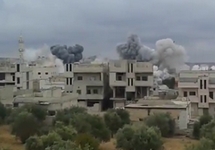
Human Rights Watch Human Rights has issued a report on chemical attacks in Syria, containing new evidence of the systematic application by the Bashar Assad of Chemical Weapons, including against the civilian population. This was reported on the organization’s website.
The report provides evidence of the involvement of the Syrian government forces in the April attack on Khan Sheikhun. Invited HRW experts studied photographs of the crater at the scene of the explosion and found that Soviet-made Kab-500 or Kab-250 bombs developed for use with Zarin were dropped into the city. In addition, human rights activists determined the signs of Himatima using Zarin, interviewing the witnesses of the event and studying the photos of the victims.
In addition, the report provides information about three more cases of the use of chemical weapons by the Assad regime. Human rights activists managed to establish the names of 64 victims of Himatak, which took place on December 11 and 12, 2016 in the east of the city of Hama, located near Khan Sheikhun.
Another attack was recorded on March 30 in the north of Hama. As a result of this attack, no one died, but there were victims, including among the civilians.
The authors of the report conclude that controlled by the Assad of force systematically use chemical weapons using the following methods: discharge by aviation of bombs with neuroparalytic gas, discharge of ammunition filled with chlorine, shelling of artillery from the Earth with the same ammunition.
Human Rights Watch recalls that the actions of the Syrian government forces can be qualified as crimes against humanity. Human rights activists urge the UN Security Council to adopt a resolution that would oblige all aspects of the Syrian conflict to promote the investigation of chemical attacks.
The attack on Khan Sheikhun occurred on April 4 . Bombs with Zarin, as well as presumably chlorine, were thrown into the city. As a result of the raid, more than 80 people died, including children.
In Damascus, they said that Assad’s aircraft did not use chemical weapons, but bombed the plant and the warehouse of chemical shells of the rebels. At such an explanation of events in Khan-Sheikhun, they also insist in Moscow.
On April 12, Russia imposed a veto on the draft resolution of the UN Security Council condemning a raid on Khan-Sheikhun and the demand for Assad to promote an international investigation of this crime.
On April 25, the United States expanded sanctions against Syria because of Han-Sheikhuna. 271 employee of the Syrian National Research Center - a state institution, which is supposed to be in the production of chemical weapons and means of its delivery, underwent restrictions.