
Translated material
Temporary residents
Moscow does not know what to do with former refugees inherited from the Soviet Union
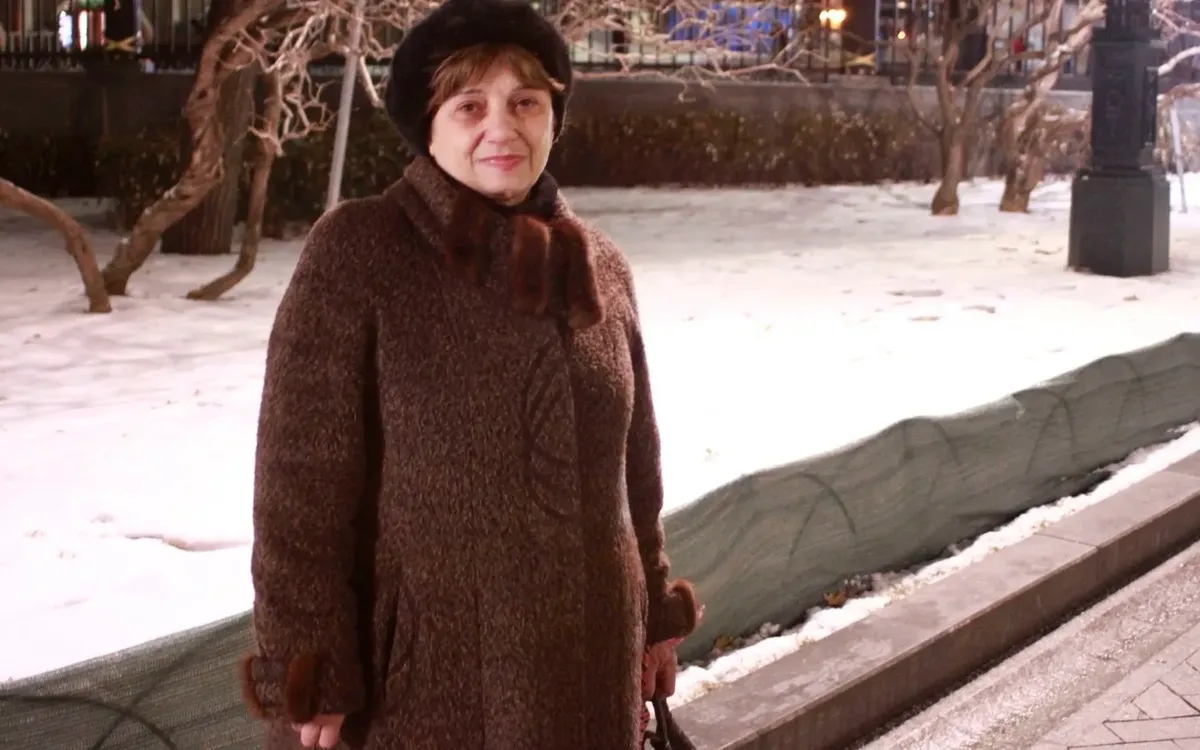
Maria and her daughter Marietta
Marietta Akopova and her mother came to Moscow in the late 1980s, when ethnic clashes began in Azerbaijan. Marietta is an Armenian, but she lived in Baku all her life. When the pogroms began in the city, friends persuaded them with their mother to leave immediately. Then, besides, they killed their relative.
Marietta took a vacation at work, although the authorities did not want to let her go. She decided not to quit, because she believed that in a few weeks she would be able to return to Azerbaijan.
She never returned home.
Marietta decided to go to Moscow almost at random: she often came here for treatment and the city knew well. In addition, in Moscow there was a program for helping refugees affected in the interethnic conflict in Azerbaijan. In connection with the order of the Moscow government, the city association of hotels Akopov was provided with a temporary asylum and a room was allocated at the Zarya Hotel. There Marietta and her mother Maria were temporarily registered. In total, they lived in Zara for more than 10 years.
Until 2002, the hotel was city property, but was subsequently privatized. When the “dawn” turned into private hands, the Akopovs were on the street.
The eviction happened suddenly. In December 2001, Marietta went to the store, at home, in the room, her mother remained. When she returned, representatives of the new owner of the hotel no longer let her into the room. “Mom was kicked out in one robe, without everything, and it was December,” recalls Marietta. All the property of the Akopovs was taken out of the room, most of the things Mariett and Maria then could not find most of the things.
Two months before the court, the Akopovs lived with friends. Soon the new owner of the hotel sued the Akopovs. On February 13, 2002, by the decision of the Butyrsky District Court of Moscow, they were already officially evicted, and then, as not having other housing, two rooms were provided in Vostryakovo. However, the house in which they were relocated, the state-owned supervision soon recognized as unsuitable for living: the microdistrict was in the sanitary protection zone of the DSK-3 plant. After the next eviction of Mariette and Mary, I had to wander around the acquaintances again.
In 2004, the Akopovs stood in line for receiving an apartment. By law, they could claim their own housing, since by that time they received citizenship of the Russian Federation, but they did not have their homes (and Russian citizens, as it is written in the Constitution, still have the right to housing). But the queue for his own apartment is a very long time, and it was Akopov that had one or other good people.
In 2007, Akopov managed to conclude a short -term rental of housing with the housing policy department and get an apartment on Botanical Street. According to Marietta, this was facilitated by Irina Raber, who was at that time the prefect of the North-Eastern District. The short -term hiring agreement had to be constantly renewed, because it is concluded for a period of not more than 12 months, and housing remains owned by the city. Without extending the contract, accommodation in the apartment would be considered illegal.
In 2011, when the Prefect of the NEA changed, the short -term hiring agreement with the Akopov Department of Housing Policy did not conclude anymore. Marietta appealed to the Department of Urban Property of Moscow, wrote to the deputies - but everything was unsuccessfully, the wall was not to break through the wall.
Then Mama Marietta survived a heart attack.
In the Department of Housing Policy, Mariette and Maria proposed to get a subsidy - the law provides that people who need housing have the right to receive an amount of independent purchase from the budget. Marietta was ready to get this subsidy and buy an apartment in a house under construction. But she was refused the allocation of money. The department explained that according to the law, a house in which an apartment will be bought using a subsidy should be completed by at least 70%. But apartments in such houses are more expensive, subsidies are no longer enough.
However, the Akopovs considered the option with an almost completed house - in Podolsk. But he was non -actual (benefits for residents of such houses do not apply ) , they decided that their pensions for life in such a house would not be enough.
All these years, the Akopovs continued to live in an apartment on Botanical, and officials are trying to evict them from there. In the summer of 2016, the city property department filed a lawsuit in court. The officials of the department tried to prove that since 2011, Marietta and his mother illegally lived in an apartment on Botanical Street. In January, Mariette still managed to win the case in the Ostankino court and challenge the eviction "without providing other dwelling." However, the Department of Urban Property of Moscow appealed this decision. In the DGI they insist on the fact that after the city stopped renewing with the Akopov contract of short -term hiring, they were invited to buy housing or, under an employment agreement, get an apartment in Podolsk or Zelenograd. Yes, indeed, in the non -subtitian house.
Lawyers of the “civil assistance”, where the Akopovs turned, insist: to challenge the legality of the Enforcement, according to Article 181 of the Civil Code of the Russian Federation, it was necessary for three years, and since 2007, when Mariettu and Mary were instilled in the apartment, more than nine has passed. In addition, one of the short -term hiring agreements indicates that the apartment of Akopov was allocated from the maneuverable fund - as persons who were in an emergency. According to the Housing Code of the Russian Federation, from apartments related to a maneuverable fund, old -age pensioners cannot be evicted. Mama Marietta Maria is 87 years old, and she is seriously ill. Marietta herself is also a pensioner, she underwent several operations. She has one kidney, and even that sick.
Lesson to teachers
Tatyana Metreveli with her sister Lyudmila Movsesyants, her parents and little son came to Moscow in 1990. Like the Akopovs, they fled from Baku. By decision of the chairman of the Executive Committee of the City Council of Deputies in Moscow, a program of assistance to the fraternal peoples of Azerbaijan, Nagorno -Karabakh and Abkhazia to the victims as a result of interethnic conflicts was then launched. Two years later, the Moscow government issued a refugee certificate to the family, and the father of Tatyana and Lyudmila, by decision of the Moscow City Council, received a place in the hostel on the Kashirsky highway. Subsequently, he prescribed his wife there, planned to prescribe daughters with his grandson, but it turned out to be very problematic. There were not enough housing for everyone - refugees were recorded in the tight rooms of hostels in whole crowds, without looking at the Housing Code. Together with the family of Movsesyants, another refugee, Chelingarov, was registered in the same room. He did not have a relative or acquaintances to the Movsesyans. Until 2004, he lived with them, and then left for the United States and, accordingly, was discharged from the room.
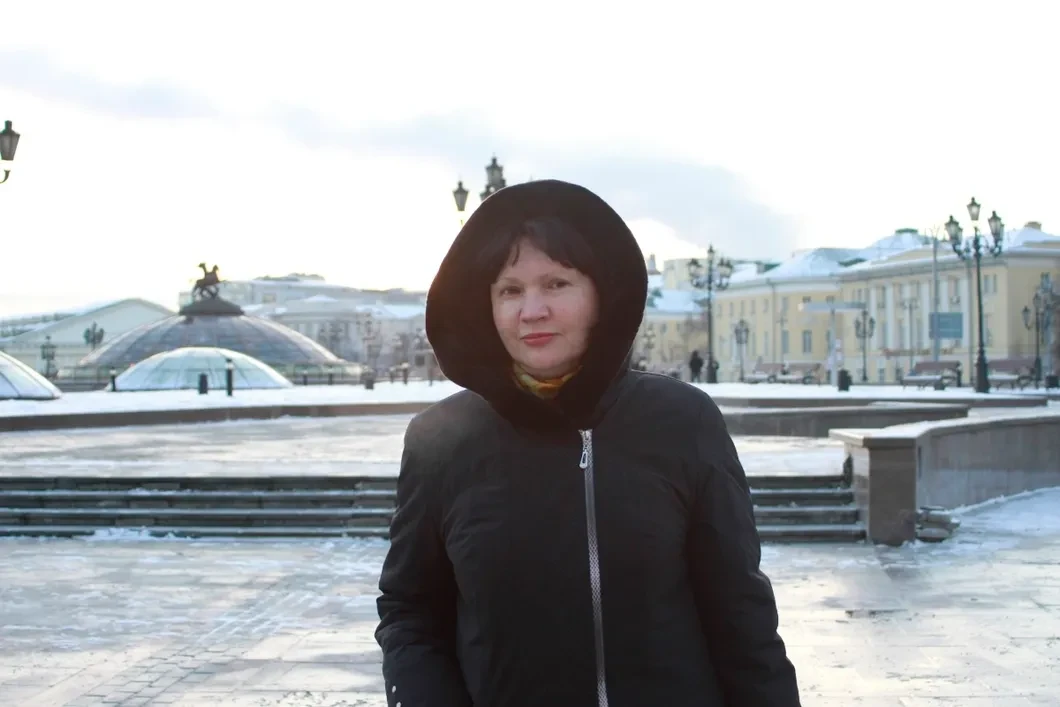
In addition to Chelingarov, another person was registered in this room - Akopyan, but he lived in another room.
Tatyana and her son and Lyudmila could not get a separate room. Wandering. The living space, according to Tatyana, then officially gave only the elderly and the disabled. The rest in the hostel was not enough.
In 2001, they all received Russian passports, and with them, as I thought, and the rights of Russians.
Until 2004, Lyudmila and Tatyana and her son huddled in rented apartments, sometimes even spent the night at the school in which they worked. There were too many people in the room of his father and mother. It was impossible to even register there - not like to live. Sisters moved to their parents in a room on Kashirskoye Shosse only in 2004, when Chelingarov left for America. Akopyan still lived in another room. Then the parents died at the sisters. First dad, then mom.
And in 2011, the sisters managed to move and achieve registration in the parental room. Akopyan at first did not object to Tatyana and Lyudmila and her son to live in her father’s room, but six months later he unexpectedly filed a lawsuit against their residence in the room. The Moscow City Court satisfied this claim. In 2012, Movsesyants and Metrevli were deprived of Moscow registration. The court explained that initially the tenants of the room were parents of Movsesyants, Akopyan and Chelingarov. After the death of the parents of Tatyana and Lyudmila, only Akopyan remained the tenant. He is not their relative, therefore, according to Article 69 of the Housing Code of the Russian Federation, it is impossible to instill them for one living space under a social hiring agreement. Also, the court did not see the evidence that Akopyan had not previously objected to Movsesyants and Metreveli.
Article 7 of the Law of Moscow dated 06/14/2006 “On ensuring the right of residents of the city of Moscow” says that “ residents of Moscow can be recognized by those in need of housing if they have submitted them to recognize them in need of residential premises in the manner established by this law, if they have Russian citizenship, live in Moscow on a legally for more than 10 years, did not do anything that could worsen the conditions under which they could have worsened They live, for 5 years, or are recognized as poor according to the law of the city of Moscow. ” However, the city property department insists that Tatyana and her son and sister have been living in Russia for less than 10 years: supposedly for them since the loss of permanent registration, Moscow is a place of temporary stay, and not a place of residence. The evidence that the Movsesyants and Metrevye have been living in Moscow for about 30 years, I did not even see the Presnensky court, where the sisters applied for the illegal deprivation of their registration. The court’s decision was in no way affected by the fact that since 1992 they were registered with the migration service of Moscow as refugees and constantly extended temporary registration.
Now Tatyana and her son and Lyudmila live in the same room on the Kashirsky highway, but at any moment they can be on the street. The court’s decision on their eviction of the Movsesyants and Metrevil was not able to challenge.
Both sisters worked for many years at school. Tatyana - 16 years old, Lyudmila and even more - 24, both are teachers of the Russian language and literature. Tatyana is not working now, Lyudmila teaches at the lyceum No. 1451. Colleagues-teachers acted in court as witnesses, both women presented certificates from work. If they still lose in the struggle for housing, then they will have nowhere to go. Teacher savings are not enough even to buy a room.
Maria Efimova