
Translated material
Brothers and sisters Marine Le Pen
European ultra -right: to whom and what Moscow pays for "friendship"
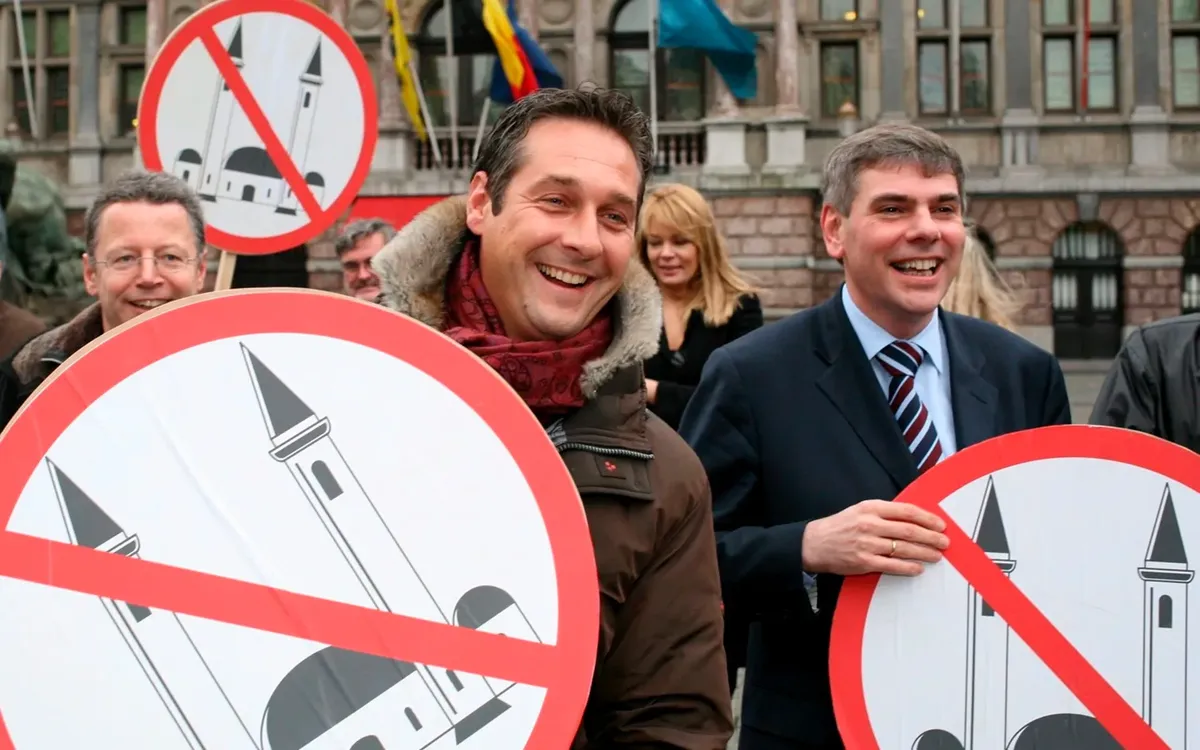
In the mid-90s, in the closet of the Brussels branch of TASS, I found a thick folder with the inscription "Ultra-right." A prominent place in this dossier was occupied by the National Front of the odious Jean-Mari Le Pen in France, as well as its Belgian hypostasis, which disappeared in 2012, unlike a slightly more successful Flemish bloc (FB). In 2004, the FB was dissolved by a court decision for racism and xenophobia, but recreated under the name “Flemish interest”, without changing the essence. On the official website of Flemish interest, one of its leaders Philip Devinter poses with the deputy prime minister of the Government of the Russian Federation Dmitry Rogozin.
This was in June 2014, just against the backdrop of the Crimean Ukrainian events. The whole delegation of Flemish interest participated in the conference of parliamentarians in Moscow, chaired by the State Duma speaker Sergey Naryshkin. The site prudently indicates that
Five delegation members went to Russia for several days not for party money: the Russian authorities took over all expenses.
Perhaps Rogozin and Naryshkin, who at different times served in Russian representative offices in Brussels, were previously familiar with the famous deputy Devinter in Belgium. Presenting it to you.
Flemish legionnaire
Flemish politician, born in 1962, deputy of the Federal Parliament of Belgium. It gained fame back in 1988, when in an interview with the West German neo -Nazi weekly Deutsche Nationalzeitung called the greatest battles of Poitiers, the Battle of Golden Spurs and the battle of the SS Flemish Legion on the Eastern Front. The first (732) - Franks against the Arab invasion of Europe, the second (1302) - Flemish militias against the troops of the French king, the third - Flemish SS men against the Red Army (how are you so illegible in relations, Dmitry Olegovich?).
In the same year, a young Belgian politician, along with a senior comrade, famous Nazi Bert Erickson, tried to lay flowers on the graves of 38 Flemish SS members who fought for Nazi Germany in Lommel's cemetery. The police blocked the rally attempt. And on December 1, 2001, at a meeting of the Sint-Martens charity foundation, which helped the SS of the Eastern Front in need of the SS veterans, the Devinter began the speech with the words of their former oath: “My honor is called“ fidelity ”.
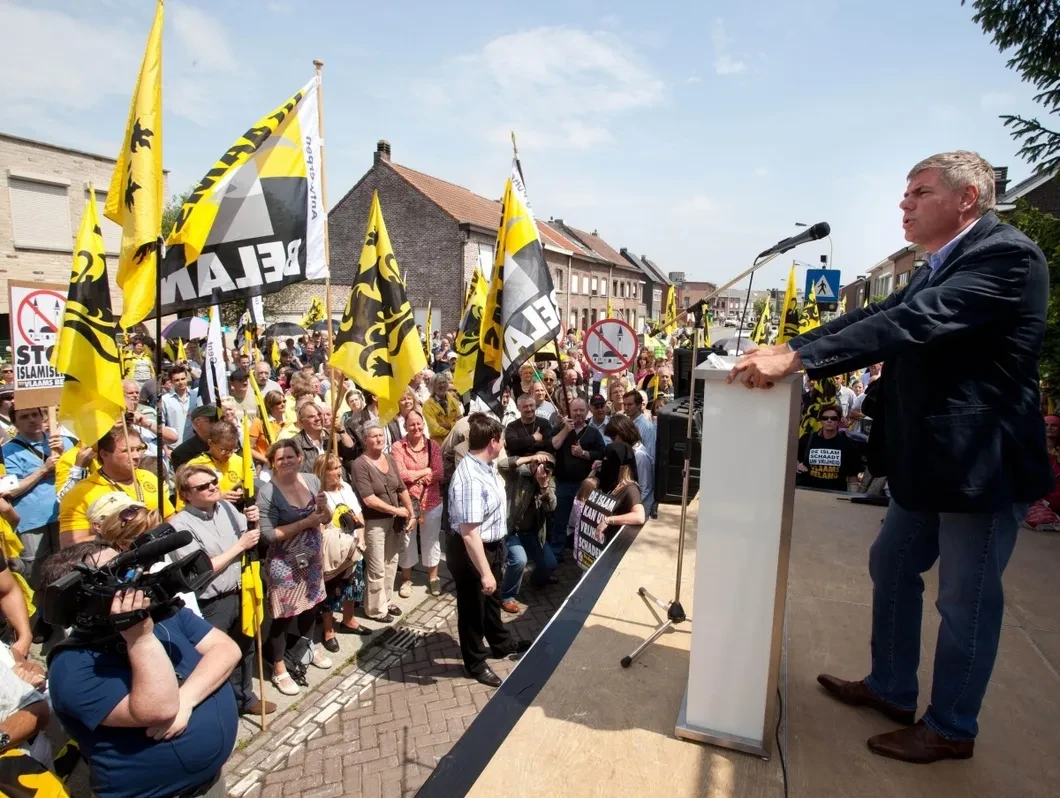
Devinter publicly defended Le Pen from the “attacks” of the European Parliamentary majority, declaring complete solidarity with then a deputy from France. In addition to banal xenophobia, he and his party promote separatism, playing behind the Flanders separation from Belgium. Rogozin and Naryshkin, of course, know what article such a policy would be judged in Russia. Belgian laws are more tolerant.
In September 2016, the same site of Flemish interest tells us, Devinter was at the invitation of the Russian parliament among foreign observers in the State Duma elections. In Moscow, he was represented by a “European observer”, although he and the like he had nothing to do with the OSCE mission to observe the elections.
“I admire Putin’s policy. Today, Moscow is better than Washington to European interests, ”the Devinter wrote in the newspaper De Morgen.
And in early February, his name appears again in the news. Now, according to RIA Novosti, RT and other media, the Belgian parliamentary delegation visited the Russian Khmeimim air base in Syria.
Colleagues also reported about the “Russian bread-salt”, which our military met by the Belgians, and quoted the words of Devinter, who was “even ashamed in some way” that he was a European. But they shyly silent about the political color of the delegation. It contained both federal deputies from Flemish interest - Philip Devinter and Jan Penris, Senator Anke Vandermeersh and deputy of the regional Assembly of Flanders Flanders Flanders Flanders (also FB). Another “member of the delegation”, no one elected activist of the former Belgian National Front Marco Santi. He organized the trip "at the invitation of the Syrian government."
Penris and Kreelman also acted as “international observers” in the Crimean referendum along with members of other dwarf neo -Nazi parties in Europe. According to the Belgian media, their mission was fully funded by the Kremlin. And inexperienced in international affairs, the chiefs of the DPR even presented Craelman to the "deputy of the European Parliament." Adventurers from the ultra -right parties made a “observation of the elections” in the post -Soviet space by a small profitable business.
Luke Michelle even in Belgium is not known to anyone. But on October 13, 2011, at the International Conference in the Public Chamber of the Russian Federation, he shared world experience in monitoring the electoral process. A member of the neo -Nazi Federation of National and European Acts (Fane), he organized in 2006 the Eurasian Coat for Democracy and Elections (EDE).
The impostors for Russian money “observed” the votes in Transnistria, in Crimea, in the DPR and LPR, distributing to the right and left interviews about “European democratic standards”.
Filling a vacuum formed in international relations “after Crimea”, the Russian authorities invites representatives of the right and left extras from Europe to Moscow. Great hope is on Marin Le Pen, but small ones are also useful.
The leading performances of the leaders of all these parties were as if written off from the election program Marine Le Pen, who, however, has a little modernized, removing the obvious neo -Nazi and anti -Semitic positions of her father and co -founder of the National Front. The place of anti -Semitism was taken by anti -Islamism. The terrorist threat really bothers all Europeans today, and you can write off the rest of the reactionary nonsense to fight it to fight it. “Eternally yesterday,” they would call them in the Russian press a couple of decades ago.
According to European experts and EU institutions, the Kremlin, taking into account the balance of power between Russia and the European Union, methodically works at the level of bilateral relations with countries, regions, certain parties, social groups (businessmen). If in Soviet times he relied on the Communist Party (which he paid well), today - on populist: the National Front and the Le Pen family in France, an alternative to Germany, the Party of Independence of the United Corolmia (UKIP) with its eccentric and noisy leader Nail Farah, Golden Dawn in Greece, Yobbik - in Hungary - in Hungar Bulgaria, Flemish interest - in Belgium, the Freedom Party - in Austria ...
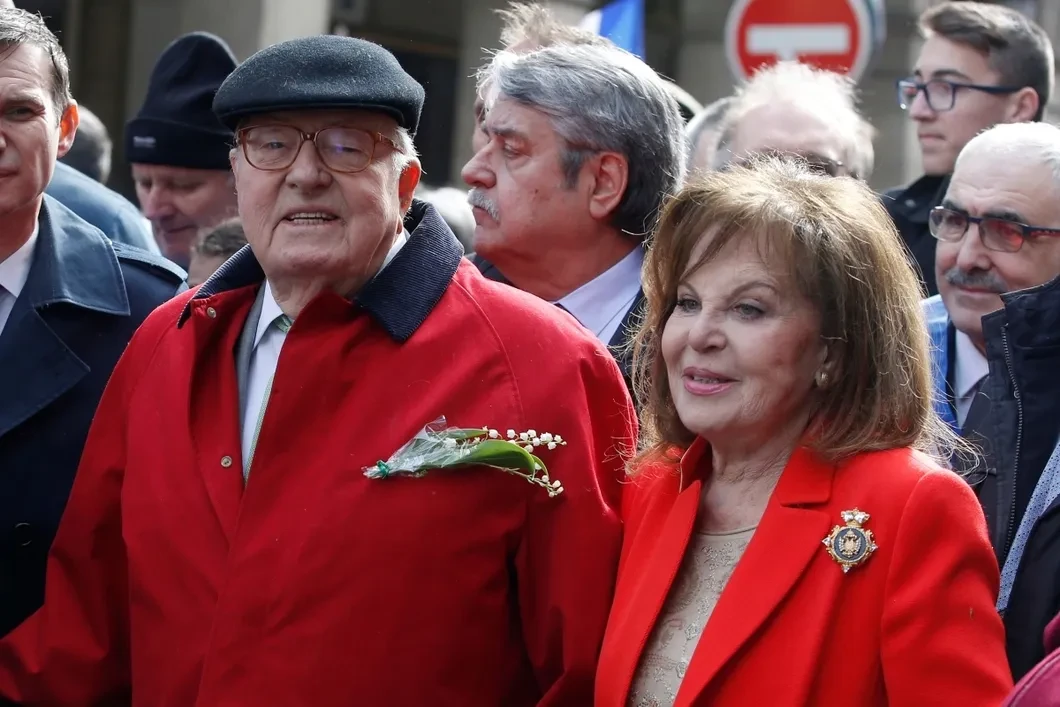
All in the first place are pathos words about patriotism and national sovereignty. They want to withdraw their countries from the EU, return national currencies instead of the euro, increase tariff barriers to imports, restore control on the borders, abolishing the Schengen, expel migrants suspected in radical moods, abandon the soil rights when determining citizenship in favor of blood law ...
It turns out that the Russian government and the media paid by her in their propaganda in Europe and the Russian audience are based on groups with a certain “shower”, representing them to Russians as Europe. At the same time, it is still realizing that it is better to make up for “real” Europe. Avoid to clarify what kind of party, embarrassed by the words “ultra” or “Nazi”. Or the brands of the “European Parliament” and “OSCE” are attached to this counterfeit. Wow, there is still a residual look at the standards ...
Although it seems that there is no longer any reason to be shy. These parties exist, reflect the mood of a part of society. Today, marginal, but, as the rise of the National Front in France shows, nothing forever. The more crisis the time, the greater the craving for extreme. The situation in Western Europe resembles the 30s of the last century, when, against the backdrop of a crisis, democratic elections and referendums gave monstrous results. Today, a painful migration, crisis of the hostel of cultures has been added to the economic crisis.
Balance of payments
The fertile theme in the contacts of Moscow with European “informals” - economic sanctions against Russia and Russian antisancations.
According to the largest ING Bank in Belgium and Holland, Belgium has lost 165 million euros of income and 3,000 jobs from Russia's boycott by Russia. VIF-L'Express magazine recalls that in 2010, Vallonia was for the region (in Belgium, external economic relations are in the competence of the constituent entities of the Federation) Russia was the 15th largest economic partner, and in 2015 it became the 22nd. Of course, because of the sanctions, too, but first of all, according to the General Director of the Vallonian Agency for Export and Foreign Investments (Avex), Shatal de Blo, due to the state of the Russian economy against the backdrop of the fall in oil and gas prices.
The deputy of the Belgian parliament of Aldo Karkachi proposed at the end of last year a resolution requiring the country's government to initiate the abolition of sanctions introduced against the Russian Federation in connection with the accession of Crimea and the destabilization of the East of Ukraine.
Karkachi was elected to the Belgian parliament from the People’s Party. Having first went to the polls in 2010, she spent one deputy in the federal parliament in four years later - to the regional parliament of Wallonia.
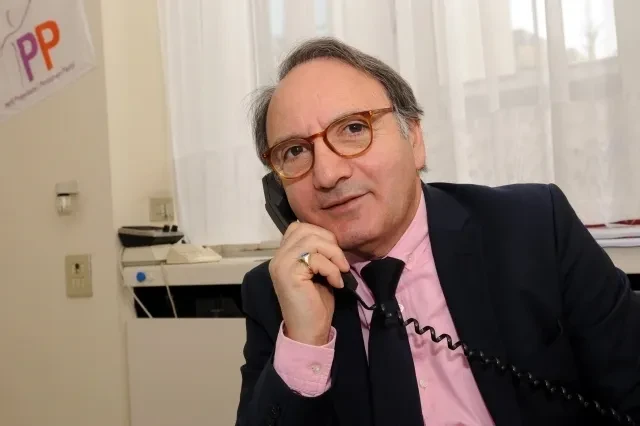
Belgian political scientists position the People’s Party as the extreme right and consider the heiress of the Rex party, founded in the 30s by the ally of Hitler Leon Degrell. But it is deprived of the anti -Semisism characteristic of the European "ultra". If only because its chairman Mishael Modricamen is simultaneously the president of the Belgian liberal Israelites community. But today, the place of previous anti -Semitism amid a terrorist threat and illegal migration to a large extent occupied Islamophobia in Europe. The main election topics of NPB were immigration, security and taxes.
In March 2015, the business of the NPB as part of Modrican and Karkachi, which represented the Euroskepetic Alliance for direct democracy in Europe (Adde), at the invitation of the Russian side was accepted in the State Duma, the Federation Council and the Ministry of Foreign Affairs of the Russian Federation. The most thorough conversation was with Alexei Pushkov. The interview with them was distributed by the Russia-24 channel. The Belgians, returning to their homeland in Moscow, emphasized their significance, talking about the trip through all the channels available to them.
Even before the trip, Modricamen told local journalists that Russians live in eastern Ukraine and Russia could not allow the rapprochement of this region with NATO. That he himself is not a big fan of Putin, but considers EU sanctions excessive and provocative. That the response counter -sanctions of Russia hit the Belgian farmers, small and medium -sized businesses, and exporters.
In Moscow, Russian interlocutors called the guests "people of good will in Belgium, who bring an alternative point of view to the people." And they suggested that while the Belgians suffer losses from counter -sanctions, trade between the United States and Russia is growing ...
Among other, Karkachi persistently brought this argument last November to the conference participants in the Walloon Business Club in Namur, where he brought Alexander Tokovinin as a speaker of the new ambassador in Belgium.
Provincial businessmen are mainly of the middle hand, which, unlike large corporations like Siemens, are not so important for image costs, are ready to neglect moral values for Russian expanses. It is profitable and interesting to earn money in Russia. The Belgo-Luxembourg Chamber of Commerce and Industry in Russia and Belarus annually organizes entrepreneurs' trips to Russian regions, where governors accept them like a king.
These transnational corporations can express Fe in connection with the landing of Khodorkovsky, Magnitsky’s business or the accession of Crimea, and we are modest people, we work, once told me the Belgian businessman.
Allies: Russophiles and Putinophiles
I took examples mainly in little Belgium, but the described situation is also characteristic of other EU countries.
It is difficult to say how Russian propaganda acts on public opinion in Western Europe. Apparently, her influence here is still exaggerated. Yes, RT broadcasts in different languages and fills YouTube for free all with the new exposures of Assange and “alternative” plots from Syria. Yes, the satellite agency for public money is made by content in 130 cities of 34 countries of the world and distributes it in various forms in 30 languages. Yes, eight pages of the Russian tab appear regularly on advertising in 16 languages in newspapers of 22 countries, including Le Soir, Le Figaro, El Pais, The New York Times, The Daily Telegraph, Suddeutsche Zeitung.
Rather, it falls on the fertilized ground of confusion and fermentation, the search for solutions to unexpected problems outside the mainstream, on the extremely right and extreme left flanks of the political spectrum. The phenomena of Le Pen and Melanshon in France, the strengthening of Flemish nationalists and the take -off of the marginal leftist labor party in Belgium, the popularity of Ultra in other countries is not from Kremlin propaganda, but in Winison with it.
The Institute of Safety Studies, the Analytical Center for EU structures, assesses that from 15 to 20% of Europeans believed the arguments of Moscow during the Ukrainian crisis in 2014-2015. These are not only adherents of the right and left “ultra”, but also part of the intelligentsia, which was disappointed in traditional parties and is looking for alternatives. Even if the alternative is densely painted with a mixture of Euroskpticism, cave anti -Americanism, desperate rejection of globalization, neglect of human rights, hostility of Islam, militant heterosexualism, anti -Semitism, conspiracies. Everyone finds the product in this mixture to their taste.
Arguments (selected and sifted) are in abundance on television RT and in the agency "Sputnik" financed by the Russian state at the expense of the country's not too fat budget. The “trolls” factories excite disproportionate excitement on the Internet around any plot that has at least some kind of attitude towards Russia. So, an interview with the expert of the factory Balanch under the heading “Trump leaves Syria to Russians”, which appeared after the American elections on the website of VIF-L'Express magazine, was immediately replicated and commented on Facebook on the Euro Pro Poutine Russian Brothers, which has 140 thousand “frands”.
Among Russian diplomats in Europe, one of the crown words is “Russophobia”. They indicate any criticism of the Kremlin. In European political science, his antonym - “Russophilia” appeared, in the sense of searching for the alternative to the EU political mainstream of the EU in the image of the Russian state.
In France, Belgium and the Netherlands, the Russophilia covered the fairly wide circles of Russian expans and descendants of white emigrants, as well as “friends of Moscow”, including Marin Le Pen and more moderate Francois Fiion. True, as Merlin, a specialist in the post -Soviet space from the free university of Brussels, who herself considers itself a deep Russophile, is corrected, in this case it is more about Putinophilia. Prochrevsky forces in Europe do not give a damn about the infringement of human rights in Russia, but genuine Russophiles - no, she says.
The opposition of this trend on the part of the Center forces, in particular, Christian democrats, to some extent, the Social Democrats, not to mention the liberals, is growing. Wilfried Martens, who is in Brussels, bears the name of the many-year leader of the Christian democrats of Europe and the former Prime Minister of Belgium, released
Reference material on 87 pages called "Bear in Sheep's skin." It lists the government and non -governmental organizations of Russia, which are political lobbying in Europe and receive funding from the Russian state budget, from Gazprom and Lukoil.
Among them is the same Eurasian Coat for democracy and elections of Luke Michel and others. Details, with the names of those who are involved directly or simply inadvertently lit up.
It is hardly worth being afraid of sanctions against all of them. It’s just that times are changing, these politicians, political scientists, and journalists have to work and, possibly, to establish friendship with partners in Europe. Indeed, in the 90s and Dmitry Kiselev led on Channel One to the Grant of the European Commission the pro-European program “Window to Europe”. Therefore, for the future it is worthwhile to know who is who.