
Translated material
Terry amount
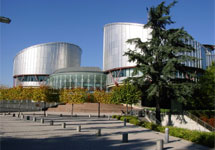
The ECHR awarded the Russians Alexander Olisov, Nikita Danishkin and Yuri Umbreli compensation totaling 95 thousand euros for torture in the police - the police, according to the court website. They will also be paid 3 thousand euros of legal costs.
The court decision concerns complaints of residents of the Sverdlovsk region and Orenburg, filed after incidents that are not related to each other. The applicants turned to the ECHR in the period from 2009 to 2014. In all three cases, the victims were detained on suspicion of a criminal offense and for some time were held by security forces, the motivating part of the decision said.
The Strasbourg Court recognized as proven that Russia violated Article 3 (prohibition of torture) of the European Convention against applicants. The second accusation is in violation by Russia of Article 13 of the Convention (the right to an effective means of legal protection) - the collegium did not consider it necessary to consider as separate from the first.
The investigators of the Nizhny Novgorod CPE who detained Danishkina demanded to confess to the preparation of a terrorist act. For several hours he was interrogated, tied up in a towing cable in the "Turkish pose" and throwing it on the floor. As Mediazona reports with reference to Albert Kuznetsov, a lawyer of the Committee on the Prevention of torture, representing Danishkin’s interests - Personally participated in the torture by the head of the regional CPE, Colonel Alexei Trifonov.
The police officers strangled the umbrella with a cellophane bag, trying to seek confession in the theft of a gold chain and a phone. Olsov, suspected of trying to order the murder, was beaten, posed in the poses causing torment, strangled.
In all cases, the detentions were not documented by the Russian police. The applicants provided the court with a medical examination of injuries, which, as the court ruled, could indeed be applied during torture.
“These circumstances were enough for the plaintiffs to be recognized as reliable,” the motivating part of the court’s decision says. “In such circumstances, the burden of proof lies with the state, which was supposed to provide a convincing explanation and evidence that would question the version of the plaintiffs.”
However, in all three cases, the authorities did not, refusing to conduct an investigation against the accused security forces who stated that the plaintiffs had injured themselves. Refusals were approved by the courts of local jurisdictions. The ECHR drew attention to the fact that the Russian courts recognized as unconfirmed and unconvincing testimonies against the police.
On Tuesday, decisions were made on two more similar complaints. A resident of the Kuban Nikolai Sitnikov and Volgogradese Vadim Kondakov , now serving a term of the IK-25 strict regime in the city of Frolovo in its region, also awarded 20 thousand euros of compensation for violation of Article 3 of the European Convention by Russia.
In 2007, the 19-year-old at that time Sitnikov was detained in Komi in the rape case. He was beaten with his feet and a rubber club, insulted, and also sprayed gas from a spray can in his face, seeking confession. As a result, he signed "a confession."
In 2009, Kondakova was beaten with a club, and also tortured with a shock from the electric shocker so that he confessed to an attack on a neighbor who died after beating.
In early March, the Russian government stated that it would not comply with the requirements of the ECHR to combat torture in the police departments. In September 2016, the ECHR invited the Russian government to go to the world with Tatyana Shmeleva, a mother to the death of Denis Rabrzhikovsky beaten to the police. However, Deputy Minister of Justice, Georgy Matyushkin, authorized by the ECHR, in his response said that Russia would not accept these proposals. "We inform you that the Russian government will not take measures to friendly settlement," the document says. At the same time, Russia admitted that police officers violated the right of Vrzhikovsky to life and human appeal.
System measures to combat violence in the police were listed in the application of the lawyer of the human rights organization "Zone of Law" Ilnur Sharapov, representing the interests of Shmeleva. Among them are the installation of video surveillance cameras in all police areas, medical examinations of the detainees, the development of a strict regulation on the communication of police officers with the detainees. It was also proposed to increase the states of investigators who are engaged in police officials. Russia refused to take these measures against violence in the police.
In 2010, Rotrzhikovsky, detained on suspicion of involvement in apartment theft, wasbeaten to death in a police station. The policemen twice sentenced a sentence. In 2014, four operatives received from one and a half to 5 years 1 month in prison. Two escaped with conditional terms. However, in 2015, the appellate instance abolished this sentence and returned the case to the St. Petersburg head of the TFR. There the investigation was suspended. Shmeleva tried to appeal this decision in court, but the investigation has not yet been resumed.