
Translated material
She investigated the nature of fascism
Memory of Elena Moiseevna Rzhevskaya
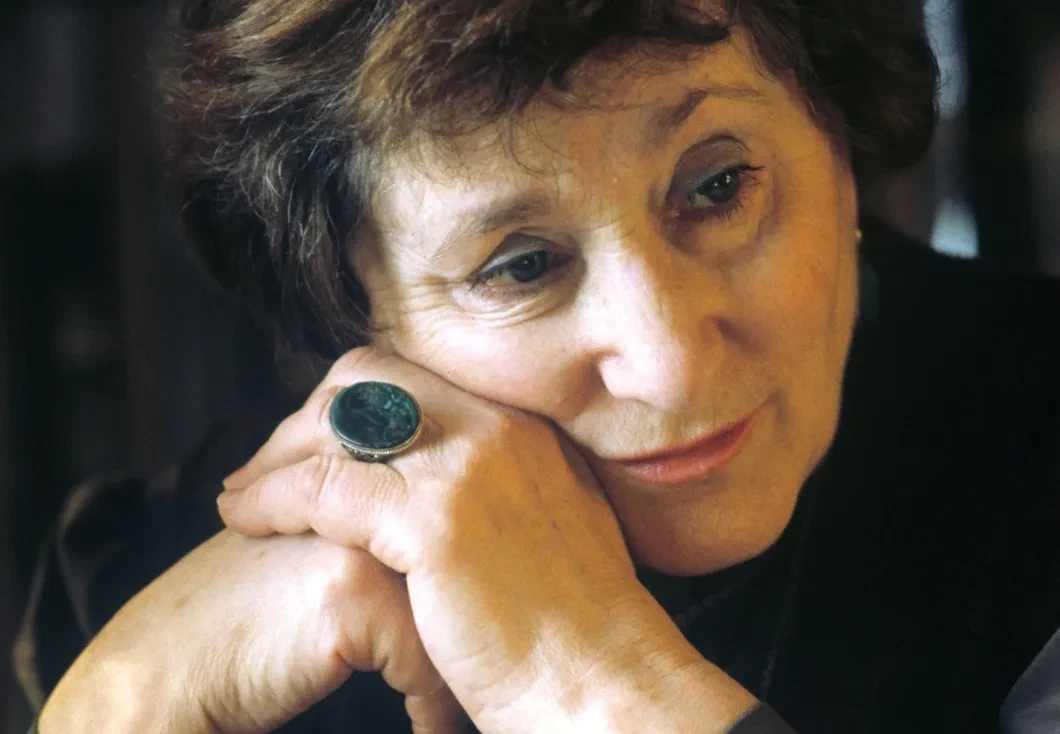
She passed away very shortly before the holiday, which we owe to a large extent to this wonderful woman - Victory Day. Rzhevskaya took the pseudonym because the front -line path for her began under Rzhev. And ended in Berlin.
For all her rare femininity, Elena Moiseevna is one of the most courageous women of our era, which had an amazing external and internal beauty. In her diary records and memoirs, Rzhevskaya captured the life of war, human destinies, investigated the nature of fascism. She left for the front on a 12 trolley bus that she walked from Gorky Street (current Tverskaya). Elena Kagan was 21 years old, her daughter - two, and her husband - poet Pavel Kogan - died near Novorossiysk. The young translator fell into the most fed - in terrible battles under Rzhev, which lasted 17 months:
“Rzhev is my fate, my inexplicable pain, and my name. When we say Rzhev, we mean, of course, the entire area, the entire territory - more than 90 villages disappeared from the face of the earth. ”
From Rzhev of the 42nd to Berlin of the 45th-a path filled with fate, people, roads. The Rzhevskaya for three years in the trenches and villages watched and wrote down what was happening around, translated documents and testimonies of the prisoners.
In May 1945, she participated in search of the body of Hitler and Goebbels, in the investigation of the circumstances of their suicide, was a member of the secret group of three, created on the personal order of Stalin.
Stalin carefully grace information about Hitler's corpse, without revealing the truth even to Marshal Zhukov. Rzhevskaya’s book “Berlin, May 1945: Notes of a military translator” were published only twenty years after the victory. And they became a sensation. And her first stories about the ordinary, about the ordinary life of the front -line often fell under the blow - not that, not so, too gloomy. But now the writer's journalism is called the most accurate and the most honest.
Marshal Zhukov considered her memories of that time one of the best. But Rzhevskaya writes not only about the war. The indigenous Muscovite, she describes the pre -war and post -war capital with unusual grace and love, the habit of the inhabitants of the old courtyards, the school of those years.
The circumstances in the world and in our country prompted Rzhevskaya to again turn to the topic of Nazism, his genesis, his fatal seduction and total destructiveness for each person that she did in the book-research book about Goebbels. The last collection of Elena Moiseevna Rzhevskaya was her autobiography “Behind the XX Century”.
Eternal memory to a great writer and an unusually charming and beautiful woman.
Olga Martynenko, especially for "New"
Elena Moiseevna Rzhevskaya
- Born on October 27, 1919 in Gomel.Until 1941, she studied at the Faculty of Philology of the Moscow Institute of History, Philosophy and Literature. Chernyshevsky. In October 1941, she entered the courses of military translators at the Military Faculty of Foreign Languages Ka Stavropol of the Kuibyshev region. Since January 1942, military translator of the GRU General Staff. In April 1942, she was appointed military translator of the headquarters of the 30th Army of the Kalinin Front.
Member of the assault on Berlin, Guard Lieutenant. She was awarded the Orders of the Patriotic War of the II degree, the Red Star, the medals "For the liberation of Warsaw", and "For the capture of Berlin." When she returned home to Moscow, she graduated from the Literary Institute. Gorky (1948) and began to write. The front notebooks that she led throughout the war helped.
Running notes, scraps of dialogue, sketches on the move served as blanks for stories. But only in 1961 was her collection “Spring in the overcoat” was published. Since then, she wrote, if not autobiographical prose, then based on the experienced. These are the Rzhev novels: “February - curved roads”, “Near approaches”, “Roamed heat”. The story of pre -war Moscow is “punctuation marks”. And a very personal story about Warsaw, about the path to Berlin - “distant hum”. In 1965, the book “Berlin, May 1945” was published. It included stories about the war and notes about the last days of the battle for Berlin, combining a lyrical diary with a documentary narrative. Co -author of ten documentary films of military topics. Member of the joint venture of the Russian Federation, International PEC Club. Laureate of the award named after A. Sakharov (1995), awarded the A. Fadeev gold medal for his contribution to the development of military literature.
Co -author of ten documentary films of military topics. Member of the joint venture of the Russian Federation, International PEC Club. Laureate of the award named after A. Sakharov (1995), awarded the A. Fadeev gold medal for his contribution to the development of military literature.