
Translated material
Suslikov - Stalin
Instead of the memorial, they were going to erect a monument to the leader with repressed in the Murmansk region
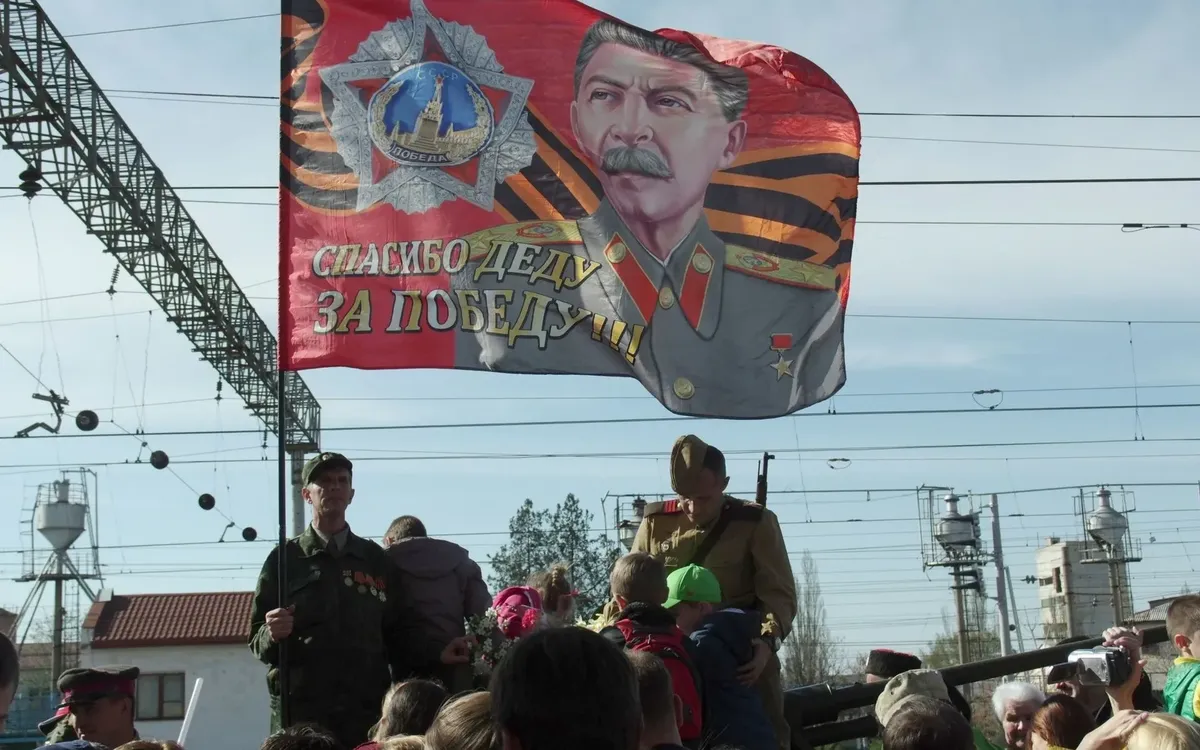
In Murmansk, money is collected for the installation of a bust Joseph Stalin. The initiators are the Union of Soviet Officers. They are going to install in the city center in the fall-to the 100th anniversary of the revolution.
The chairman of the Murmansk Organization of the Union of Soviet Officers Arkady Suslikov, to the question of the "New", answered that he hopes to restore historical justice. The bust, according to him, wants to interpret in the same place where he once stood similar - in the square near the former garrison house of officers on Lenin Avenue, who was Stalin Avenue.
Now in this building reconstruction - there should be a doll theater. But in the bushes nearby, Stalinist Ghuslikov allegedly discovered a pedestal from the old bust - and intended on it and “create an idol”. He says that the decision was made at a meeting of representatives of all garrisons of the region, and in addition was supported at a meeting of the Council of Gero Cities.
True, as the “new” historian and local historian Dmitry Ermolaev told, there was no bust in that place. There was a gypsum figure of the leader of the peoples in full growth. She stood for about the end of the 50s. Something "Soviet officers" were reproached with the scale of the plan. However, the project budget is limited. But the sculptor, who would agree to sculpt the Kremlin highlander, has already been found - this is the Murmansk amateur author Alexander Arsentiev, a former master in tombstones, which now regularly opens in the region the busts and monuments of controversial artistic value, but of unconditional patriotic orientation.
Suslikov already has an answer to the initiative to install the monument by the company:
- Yes, we had repressed, but there were those who went into battle for Stalin. He restored the Kola Territory after the war.
Well, to be precise, the land was restored just the repressed: the prisoners of the Belrechela worked at the Apatit plant, the convicts of the 509th and 511th construction projects on laying railway branches for the needs of the mining industry. In total, since the 30s, 12 camps have been operating on a small Kola Peninsula. For the period of political repression for the execution, 1379 people were sentenced to execution, by different terms of 3055, sent to exile and sent from the country - 411.
Historians note that in a statistical reflection, the scale of repressions here was higher than in the country as a whole: the number of illegal arrests for political reasons per thousand people were 6.04 in 1937 (in the USSR - 4.65). Voronk came for the managing trust of Apatit Kondritov and director of the Museum of Local Lore Alymov, for the abbot of the Trifonov Monastery Paisiy and the commander of the Northern Fleet Dushenov, for the journalists of the first Murmansk newspaper Polyarlar Pravda and the Aborigines-Odlevodes, who were accused of organizing the mythical “Sami nationalist resistant resource sabotage and impartial organization. "
The scale of repression was directly related to the needs of the growing industry of the North. In the 30s, 8 thousand dispossessed families were driven to the construction of large plants-a total of about 40 thousand special settlers. They, in fact, built the economy of the region. The plants erected on their bones are still working. But there is no monument to these people. NPO “Khibinsky Memorial” has been demanding its installation since 2011, but everything rests on the reluctance of the city hall of the city of Kirovsk, the former Khibinogorsk, where special migrants were reduced. For 6 years now, the land has not been allocated for various reasons for the construction of the monument, or they are offered to transfer it away from the city center. Apparently, so as not to cause unpleasant associations.