
Translated material
Who does not work, then does not go
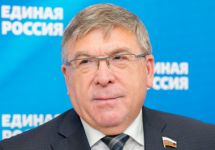
Disabled people who officially do not work anywhere and do not transfer money to the compulsory medical insurance fund may prohibit traveling abroad. This was stated by the chairman of the Federation Council Committee on Social Policy, Uneneros Valery Ryazan, reports Rossiyskaya Gazeta.
Under the current law, regional budgets transfer money to the Fund of MHI for children, students, disabled people, pensioners and "other categories of citizens". The latter include self -employed. According to Ryazansky, the authorities do not plan to deprive them of free medical care, but will introduce some restrictions.
“It may be determined that if people, receiving income, do not legalize their relations with the state, then they will receive emergency medical care, but, for example, they will not be able to go abroad. Thus, the state will remind citizens that unfamilled social obligations have accumulated behind them,” the head of the committee said.
According to Ryazansky, the state will not force the self -employed to leave the shadow. However, conditions can be created in which it will be more profitable to officially issue their activities. In particular, the self -employed may have problems with the pension, the member of the SF.
On September 6, the speaker of the Federation Council Valentina Matvienko said that the regions should not pay social services for non -working citizens , those who do not indicate the place of work and do not pay taxes. Referring to the data of the Accounts Chamber, Matvienko noted that the regions annually allocate about 40 billion rubles to pay for social services for non -working Russians. "Young and healthy, it is clear that they live on something, why those who work are paid for them. Everyone should carry their own suitcase," Matvienko said.
The speaker of the SPA invited the Ministry of Health and the Ministry of Finance to prepare the relevant amendments to the legislation in order to make changes to the Law on Compulsory medical insurance of citizens to the State Duma simultaneously with the draft federal budget for 2017. According to Matvienko, these amendments should be prepared before October 1. "It is necessary to either oblige non -working citizens to pay contributions or reduce the amount of medical care," the senator said.
On September 8, Matvienko again stated that unemployed Russians must make contributions for compulsory medical insurance. "It is necessary to reconcile: non -working citizens of working age should be on tax accounting, they must report their income. Do not reconcile so that there are no shadow income and concealment of the payment of compulsory medical insurance to the fund," Matvienko said.
On September 28, Deputy Prime Minister Olga Golodets announced the development of a bill according to which non-working Russians will pay for the actual use of social infrastructure . She noted that Russian legislation allows the Russians not to work, in this case they do not pay insurance premiums, including the compulsory medical insurance system.
On October 21, the Minister of Labor and Social Protection, Maxim Topilin, said that officially non -working citizens of working age should submit 20 thousand rubles a year to the compulsory medical insurance fund . "We want to identify those who have income, but they do not pay anything, do not participate in anything. It seems to me that 20 thousand is normal, not even enough," the minister said. However, he noted that the exact amount has not yet been determined.
A source in the government noted that the new tax can affect 5 million people. Thus, at an annual rate of 20 thousand rubles, the budget will be able to receive 100 billion rubles from non -working citizens annually.
On March 2, the chairman of the Council of the Federation Council on the Budget and Financial Market Sergey Ryabukhin said that the government is actively discussing the charge from unemployed citizens who have no objective reasons to be non -working, ”for the use of compulsory medical insurance services. However, the introduction of such a tax payment contradicts the Constitution. It is necessary "another way to motivate able -bodied, but non -working citizens to work," Ryabukhin believes.
Meanwhile, the Ministry of Labor proposes to introduce the register of the non -working population in Russia at the level of the constituent entities of the Federation was announced at the round table in the Council of People's Commissars of the Department of Legal and International Activities of the Department Denis Korsakov. In the future, such registers can help local authorities take into account those citizens who could deduct contributions to social funds on their own.