
Translated material
Couraged bread
Türkiye lifted the restrictions on the import of Russian wheat as part of the process of processing goods within the customs territory. This was stated by the Minister of Economy of the country Nikhat Zeibekchi, Interfax reports .
This mode allows Turkish companies to purchase raw materials and materials, as well as intermediate goods without paying customs duties, if they are designed to process within the country and subsequent export of finished products.
Since March 15, Türkiye has excluded Russia from among countries that enjoy the right of duty -free import of certain types of plant products. After this date, Russian exporters could supply wheat and corn to Turkey with a duty of 130 percent, rice - at 45, sunflower oil - 36 percent.
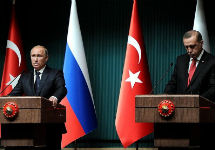
On the eve of the Turkish and Russia Presidents, Recep Tayyip Erdogan and Vladimir Putin, agreed to withdraw all mutual trade restrictions, except for the ban on the import of Turkish tomatoes. They stated this during a press conference, the Kremlin press service reports .
“Today, during our meeting, in addition to tomatoes, we have come to an agreement on all issues. Undoubtedly, we wish the Turkish tomatoes to be in the Russian market because they are delicious and cheap. And this is advice to our partners,” Erdogan said.
"We agreed on a comprehensive solution to all the problems related to restrictions. We proceed from the fact that any restrictions destroy the economy, ultimately harm our manufacturers," the Russian president said. According to him, restrictions on tomato imports will be canceled after Russian manufacturers pay for investments made in connection with the closure of the market.
“Indeed, Turkish tomatoes are cheaper, and we understand it perfectly, and we are interested in our consumer to receive a cheaper product. But we are also interested in ensuring that the agricultural sector of Russia develops, and those who take loans under the guarantee of the government do not find themselves from a broken trough,” Putin said.
Relations between Moscow and Ankara deteriorated sharply after the Turkish Air Force on November 24, 2015 shot down the Russian Su-24 near the border with Syria. Then restrictions on food imports from Turkey were introduced. The government banned from January 1, 2016 the import of frozen meat and turkey meat, several categories of vegetables and fruits, cloves, as well as salts into Russia . A visa -free regime was canceled, air traffic and tourist arrival in Turkey was prohibited.
In June 2016, relations between countries improved after telephone conversations of Putin and Erdogan . On June 30, at the direction of the President, Prime Minister Dmitry Medvedev instructed the government to prepare measures tophased to remove restrictions in the field of economic relations with Turkey. "We need to prepare proposals to change the relevant decisions, that is, adjusting the decree and decree of the government. We will act in stages. Here, on the one hand, it is necessary, on the one hand, to cancel these restrictions taking into account the improvement of the general political background, but not to the detriment of Russian manufacturers and those partners who have already occupied the released niches," Medvedev said.
However, on July 5, Medvedev said that the supply of Turkish vegetables to Russia will not be resumed in the near future . “We haven’t made any decisions, we will discuss with Turkish partners, what and how, but this does not mean that we immediately ran and opened everything. Only one thing was made for tourist routes,” Medvedev said.