
Translated material
"Secret", "Top Secret and personally"
The past and the failure of the Second World War: what the British archives are talking about
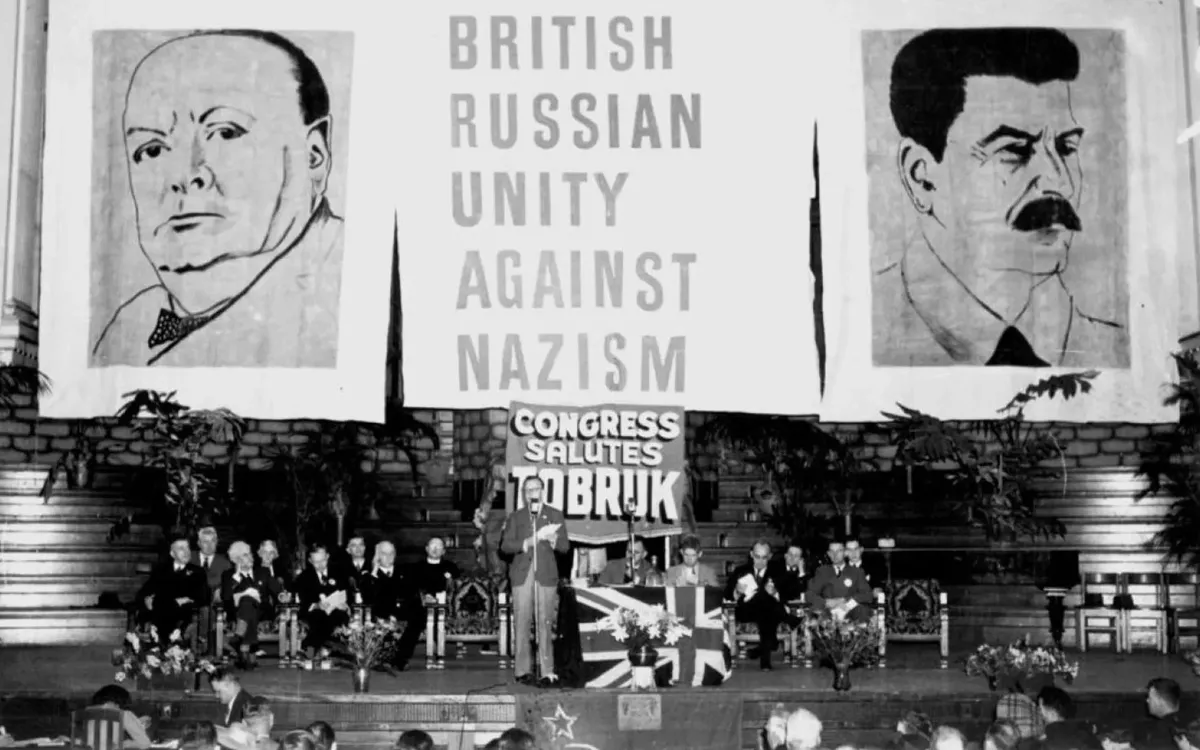
The story has no subjunctive mood, but those who analyzed the situation and planned actions have always had multivariation. The history of the Second World War is described, reflected in facts, official documents or finished correspondence of the first persons, and finally in the memoirs. The “kitchen” of cabinets and headquarters is not so widely known. Each solution at the highest level is the result of a collision of opinions with a floor below, a comparison of options and forecasts.
As this process was in the UK, you can find out by going through protocols, telegrams, analytical reports that are stored in modern gray-brown buildings of the national archive in the green area of Kew in the west of London. Some are digitized, but the majority on paper with typewritten, less often printing texts. They are the vultures of “secret”, “top secret and personally”, but now everyone can get acquainted with them. It is enough to arrange a reader ticket.
These are documents of the military cabinet, as it was called from 1939 until the end of the war, the government, its units: the Committee of the Chiefs of Staff, the United Staff of Planning and the United Intelligence Committee.
The allied of Western democracies with the USSR was born on uncomfortable ground. Back in March, the 40th Molotov, in a report at the session of the Supreme Council, accused England and France of unleashing the war against Germany “under the pretext of fulfilling its obligations to Poland” and in the abandonment of peaceful proposals of the Third Reich.
Here is the protocol of the military office of March 12, 1940 . Prime Minister Chamberlain issued a report of the Committee of Chiefs of Staff on the possibility of war with Russia as an ally of Germany (in British documents Russia was called the USSR). They were afraid that Soviet aircraft would hit Central Asia in British India - Hitler's dream.
In an optional script, the headquarters recommended preventively hit the oil regions of the Caucasus. This would damage not only the USSR, which then took 80% of its oil from the Caucasus, but also Germany, which could largely use Soviet oil. The chief of staff of the Air Force Sir Sirill Newel warned that such plans are difficult to implement. And the Minister of Foreign Affairs, Lord Galifax, recommended that the Middle East for blows to Baku were to be held with the transfer of bombers: while Russia entering the war is unlikely to focus on the defense of Britain from the Germans. But the plans should be just in case.
The attitude has changed sharply with Hitler's attack on the USSR. After the surrender of France and the occupation of the Germans of other European countries, Great Britain fought alone against the axis, with difficulty holding or losing the territory and spheres of influence - from the British islands and North Africa to Burma and Australia. She desperately needed a military ally. The United States has self -speaking behind the ocean, and declared neutral.
How to help Russia?
Prime Minister Winston Churchill, whom you can’t call for a friend of Soviet Russia for past matters, sent a personal message to Stalin on July 8, 1941 .
“We will do everything to help you, how much time, geography and our resources will allow it,” Churchill wrote. He reported the massive bombing of the British aircraft of industrial regions and military facilities in Germany and occupied Europe, about the battles in Africa, which distracted part of the German troops from the Eastern Front. And on July 10, the British prime minister confirmed to Stalin two main points of the Anglo-Soviet agreement: mutual assistance without restrictions on the quantity or quality and obligation of the parties not to conclude a separate peace with Germany. On August 15, in a joint message to Stalin Churchill and US President Roosevelt promised to “provide the maximum of materials that the USSR urgently are needed”.
In the first months between Moscow and Great Britain there is a stressful search for forms and assistance opportunities - from the supply of equipment to the opening of the second front and even the direct participation of the allied forces in battles on the Eastern Front.
Churchill on July 21 in a letter to Stalin makes it clear that the UK is not ready to open the front in Western Europe. The reasons are superior forces and powerful strengthening of the Germans in France, Belgium and Holland, a lack of resources from a country who has fought alone for more than a year. The landing would turn into an unnecessary disaster, concludes Winston Churchill.
The minutes of the meeting of the military cabinet dated September 15, 1941 on Dauning Street, 10. Chairman Churchill, the Lesser Small Print Clement Ettli, the Foreign Minister Antoni Eden, the Treasury Chancellor Kingsley Wood, the Council-Chairman of the Council John Anderson, the Minister without the portfolio Arthur Greenwood, the Minister of Labor and the State Labor Code, the Minister of Labor and the State Ernest Bevin, Lord Galifax - now in the role of a British ambassador to the United States.
Churchill read a letter from Stalin on September 13. Stalin proposed to open a second front, if not in Western Europe, then, perhaps, by landing 25-30 British divisions in Arkhangelsk or transferring them through Iran to the Caucasus and further to Ukraine. In this letter, he thanked the British government for the proposal to help aluminum, tanks, aircraft, but asked that this would not be on a commercial basis, but on the basis of “partnership and cooperation”. (As a result, all the assistance of Great Britain to the Soviet Union during the war years was free.) Stalin also asked for compensating for the loss of the Baltic Fleet of the USSR after the war if he had to be flooded in the Gulf of Finland.
The military cabinet left the request for 25-30 divisions without comment and suggested that Stalin answer the point of the Baltic Fleet: compensation is possible by enemy ships.
At the same meeting, the issue of declaring the war of Romania, Hungary and Finland, which collaborated with Hitler, was discussed. London did not want to add official opponents to himself. Therefore, they limited themselves to the fact that they threatened Helsinki with a declaration of war if the Finns did not stop an attack on Leningrad. This has already saved the lives of thousands of defenders of the city.
But the Soviet government was disappointed with the degree of support of the West in a catastrophic situation at the front. Stalin counted on more serious help.
On October 27, 1941 , opening a meeting of the military cabinet, Churchill attracted attention to the telegram No. 29 from the British ambassador to the USSR Stafford Crypt from Kuibyshev, where the embassies were evacuated on October 26.
Sir Stafford beat the alarm: the relationship between London and Moscow worsens. And if the UK cannot open a second front, the situation should improve the situation to Russia. Churchill, anticipating the discussion of the cabinet members, said that he had long sent the crypts a telegram indicating the reasons why London could not send troops. The head of the Foreign office, Iden noted that the ambassador Ivan Mayi spoke to him about the same proposals. The British and Soviet diplomats retrained the same Kremlin’s signal: the Soviet government is extremely concerned about the course of events, “the ship is in distress”.
But the Minister of Supply, the millionaire and media Magnate Lord William Eitken Biverbrook calmly smoked a cigar, advised not to rush and see the notes of recent conversations, his and the US ambassador to the USSR, Averella Harriman, with Stalin. The Biverbroke got the impression that Stalin was actually not so much insisting on the commissioning of troops into Russia and even at the opening of the second front. Stalin was more interested in the supply of tanks, aircraft, materials and raw materials.
Churchill also skeptically appreciated the proposal to send British troops to the Caucasus or Ukraine. It would take a lot of time, two or three months for the British corps to begin to act there. Further, he developed his thought, “if we send the British troops to the Caucasus, to ensure them to fully load the railway through Persia” and stop the delivery of goods for Russia: “We will not support such an offer.”
The cabinet suggested that the Minister of War David Mardeszon report on the conditions of Arkhangelsk, through which Russia helped Russia in the First World allies in the Entente. The eyes turned to the northern ports.
The proposal was also mentioned to send two squadrons of British fighters to Murmansk. The Russians would have encouraged if the British squadrons along with the personnel went further south to participate in the air battles on the main Russian front, Churchill noted. The idea did not receive full development, although British pilots still fought in the Soviet sky.
Northern convoys
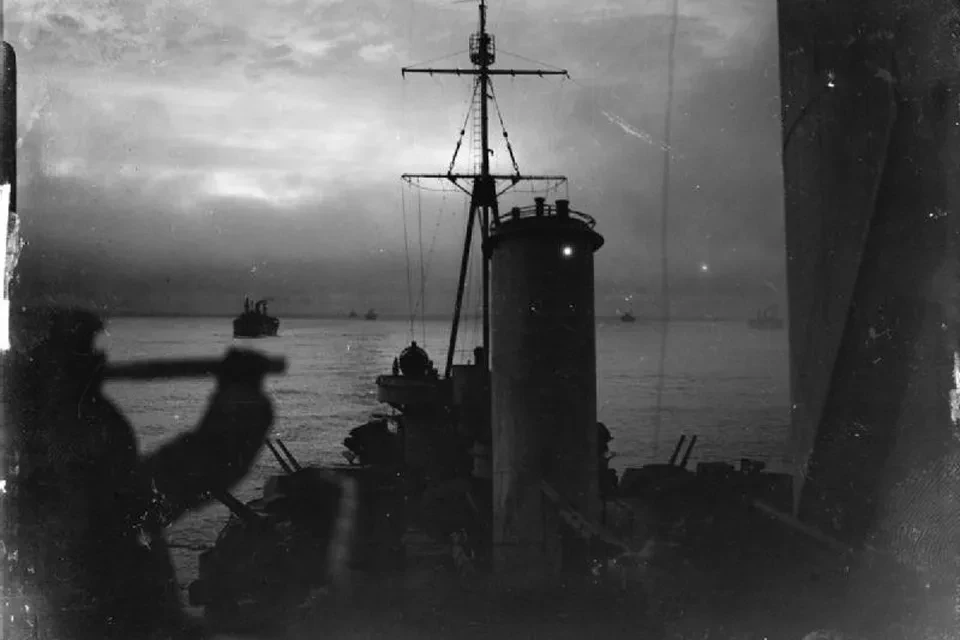
The most successful and indisputable allied assistance project was the Arctic Convoys. The first - “Dervish” - went from Iceland on August 21, 1941 and ten days later arrived in Arkhangelsk without loss. It consisted of only six ships with military cargoes, and its escort - of three mine minesweepers, three destroyers and three anti -submarine ships.
Throughout the war, the theme of Russian convoys was on the agenda of the military office. At first, the convoys sailed from Iceland, but since September 1942 they began to form in the Bay of Loch Yu in the north of Scotland. Their path lay along the northern shores of the occupied Norway to Murmansk and Arkhangelsk. At first, there were practically no losses, but then the Germans realized and transferred the forces of interception to Norway.
On April 1, 1942 , the Committee of the Chiefs of Staff was chaired by the chief of the Imperial General Staff of General Alan Bruka, a veteran of the First World War, a participant in the evacuation of the Allies from Dunkerk, and the organizer of the defense of the British Isles.
The head of the naval headquarters, the first naval Lord Admiral Dudley Pound, then called the hero of the victory over the German submarines in the battle for the Atlantic, attracted attention to the serious difficulty of passing the convoys. German aviation intensified in Norway, ships and 10 submarines of the German Navy operated in Norwegian waters. March was a difficult month due to the impossibility of using a more northern route before the ice melting.
“We will continue to do everything possible, but the losses will probably be very difficult,” concluded the “old cunning badger,” as he was called in the British fleet.
The most criticized decision of the Pound will be the order “To disperse!”, Given by the PQ -17 convoy. The convoy went from Reykjavik on June 27, 1942 with strategic goods and military equipment from the USA, Canada and Great Britain. The convoy was scattered after messages about the withdrawal of German battleships and cruisers to intercept it. As a result, only 11 out of 36 merchant ships broke into Soviet ports. This sea tragedy was the first defeat of Russian convoys, after which the project had to be adjusted. But the “anxiety signals” sounded before.
From the protocol of the military cabinet of April 13, 1942 : “One vessel from a convoy returning from Russia was sunk by bombers and two by the enemy submarines. The Prime Minister considers it important to explain the seriousness of our risks and efforts to the Russian government, the need for complete cooperation by Russian aviation and the fleet in the protection of convoys. He will send a telegram of this content of Stalin ”...
The Committee of the Chiefs of Staff on July 10, 1942 (after the PQ -17 disaster): “Sir Dudley Pound reported the death of six ships. The fate of the other twelve is unknown, but there is a hope that some have survived. ”
The main marshal of the Aviation Sir Charles Portal at the same meeting reported on the plan to send the Hampen torpedo bombers to Murmansk to ensure the next convoy along the coast of Norway. But to deliver service personnel and 500 tons of equipment for the functioning of the base in such a short time was unrealistic. The base of the English torpedo bombers in Murmansk "did not take place."
The idea of placing English aviation in the Russian North returned later, but the matter was not arguing. At a meeting of the military cabinet on March 1, 1943, the Minister Eden said that he made a tough representation of the Maisky’s ambassador in connection with the “difficulties that the Russian authorities repair the squadron of the Royal Air Force to Northern Russia to protect the convoys.” The military office has reported that "the Russian authorities confiscated the radio equipment necessary for the protection of convoys."
On July 13, 1942, the Committee of the Chiefs of Staff was examined by a draft of a telegram to Stalin, written by Churchill based on the results of a meeting of the defense committee. It is recommended in the circumstances not to send convoys to Northern Russia. At the same time, a telegram was prepared by US President Roosevelt:
“Top secret and personally.
Sent by the Prime Minister
President July 14.Only four vessels reached Arkhangelsk, and four or five of 33 ships, which made up the PQ -17 convoy, stuck in the ice off the coast of the new land. If half had passed, we would continue efforts, but when only about a quarter of the courts arrive at the destination, the operation is not successful enough. For example, from the sent 600 tanks, a little more than a hundred were delivered, and about five hundred are lost. This does not help anyone except the enemy. The Admiralty cannot risk the direction of warships east of the island of Medvezhy <...>.
The prospects for deliveries to Russia in this way are bad. Murmansk is significantly destroyed, there are signs of the preparatory attack of the Germans on him. By the end of the polar day, Arkhangelsk will freeze. Some deliveries can go through the bassra. They are prepared, but in terms of quantity this is not much. Thus, Russia at a difficult moment turned out to be almost cut off from northern marine communications. We are waiting for your answer before explaining the state of affairs to Stalin. ”
In another message, Roosevelt of September 21, 1942, Churchill offers joint operations of two American divisions, Canadian corps and several Soviet divisions to cleanse the North Norway in 1943–1944 specially prepared for the Arctic. But he fears that this operation, under the code name "Jupiter" without real preparations will remain on paper. Which happened.
From July to September 1942 and from March to November 1943, Arctic convoys did not go to Russia.
Caravans loading can be judged by a secret official note in the Forein Office archive of November 10, 1942 (FO 954–3A-198):
“Mr. Harvey
Here are the figures for deliveries to Russia along the northern route, which your minister wanted for his speech on Thursday. This is data for the year about the goods of both American and British origin:
Aircraft - 3052 , tanks - 4084 , cars - 30 031, mixed cargo - 831,000 deadweight tons. In addition, 42,000 tons of aviation alcohol and gasoline and 66,000 tons of diesel fuel were delivered. Mixed cargoes include anti -tank rifles, machine guns, spare parts for aircraft and tanks, shells and ammunition for small arms, a large number of various side equipment for the fleet, army and aviation. There are steel products and mechanisms, machines and electrical equipment, batch of non -ferrous metals (aluminum, brass, copper, zinc, nickel and tin). In addition, food and medication. "
The composition of the goods changed as agreed. On October 5, 1942, the military office considered, for example, the request of the Maisk Ambassador to increase the supply of aircraft at the expense of other goods.
Arctic convoys continued to walk until the end of May 1945. The northern route was the fastest, but also the most dangerous. It took about 40% of transportation, which is comparable to deliveries along the longest path - from America to the Soviet Far East - and twice as much as through Iran.
An important and promising ally
Great Britain cherished the allies with the USSR, tried to avoid prepositions for a deterioration in relations. On May 11, 1942, Churchill chaired the office. At the table is Ettli, a former ambassador in Moscow, and now the Lord of the Small Press Crypt, the Lord Chairman of the Council John Anderson, Minister of Production Oliver Littleton, Foreign Minister Eden, Minister of Labor and Council of Labor Bevin.
Iden noted the spread of rumors “in two or three capitals” about the possible or began peace negotiations of Great Britain with Germany. Since the rumors are full of Ankara, it is completely clear that they are dissolved by the Turks hesitating in choosing. The Germans speculate on their traditional fear of Russia. The Minister confirmed the instructions to all the British ambassadors to resolutely refute these rumors in order to exclude suspicions with the "our Russian allies."
London counted on the help and support of Moscow not only at the European Military Theater, but also in other regions. Stalingrad was not yet known in Europe, and it was far from a fracture in the war, but the United Planning Headquarters had views of joint actions with the USSR in the Middle East and against Japan. Variant planning is the necessary work of the military, even if then these options remain on paper.
At a meeting of the military cabinet on July 7, 1942, a headache was the threat of the Germans captured by the Delta Neil and the Suez Canal. This would be a catastrophe, would have turned out to be a loss of oil of the Persian Gulf, communications with India and the Transiransky Supply Way to the Soviet Union. The ministers discussed the calculations of the Joint Planning Headquarters. Стратегия и тактика Германии в 1942 году, утверждали военные аналитики, подчинены цели разгрома России, и «пока русские сражаются, Германия не сможет выделить более пяти («лишних») дивизий и еще 50–60 самолетов для развития успеха против (союзников) в Египте».
Любые просьбы о помощи к России, несущей главное бремя войны против Гитлера, в ближайшее время неуместны, признали военные. Но в перспективе российские войска — это источник усиления союзников, а в «худшем варианте» развития событий на Ближнем Востоке — единственный источник своевременного пополнения сил для обороны Ирака. В ответ на содействие СССР рассматривался вариант, при котором после разгрома Роммеля в Северной Африке англо-американское авиационное соединение будет переброшено на Кавказ в распоряжение советского Верховного командования. До этого не дошло.
17 июня 1942 года Объединенный штаб планирования представил доклад о вариантах войны с Японией, захватившей к тому времени Британскую Бирму, Малайю, Сингапур, Гонконг, Голландскую Индию (Индонезию) и угрожавшей Австралии. Как и многие другие вариантные планы, этот остался на бумаге. В сопроводительной записке секретаря Военного кабинета он был определен как «сугубо предварительный».
Военные отмечали, что Япония будет стремиться «устранить угрозу со стороны России при ближайшей удобной возможности», а нападение Японии на российское Приморье «было бы тяжелым осложнением для России в войне против Германии». Поэтому переброску помощи в Приморье надо начинать немедленно, учитывая сложную логистику. Ее эффективность «полностью зависит от сотрудничества русских и требует прежде всего консультаций между США и Россией».
Из пяти пунктов плана подрыва способности Японии продолжать войну три полностью зависели от России (атомных бомбардировок Хиросимы и Нагасаки в британском плане, конечно, не предвиделось). Имелись в виду оккупация промышленных и сырьевых районов в Манчжоу-го, Корее и Северном Китае, затруднение морских коммуникаций Японии с Северным Китаем и Манчжоу-го по Желтому морю, интенсивные и продолжительные бомбардировки промышленных районов Японии с береговых баз.
Наращивание необходимых сил в Северном Китае без помощи России может занять годы, докладывали военные. Но союзники мало знают о способности России выстоять против неминуемого в этом случае нападения на нее японцев. Критически важно, чтобы Америка смогла оказать ей немедленную и эффективную помощь.
Еще один доклад Подкомитета послевоенного планирования, составленный 1 мая 1944 года , остался в анналах: «О влиянии советской политики на британские стратегические интересы». Допуски военных экспертов относительно дальнейшей политики СССР, которые легли в основу доклада, были далеки от оптимизма, и все же рекомендации правительству вполне позитивны: постараться обеспечить полное и дружественное участие СССР в системе международной безопасности, избегать трений. Поскольку Лондон ощущает угрозу со стороны СССР своим жизненно важным нефтяным интересам и коммуникациям на Ближнем Востоке, его политика направлена на то, чтобы США были на его стороне в случае развития этой угрозы. Общее ослабление стран Европы после этой войны создает вакуум, который СССР при желании может заполнить. Этому можно противодействовать лишь в тесном сотрудничестве с западноевропейскими странами, особенно с Францией.
И в заключение: «Мы считаем маловероятным, что СССР начнет проводить агрессивную политику сразу в послевоенные годы. Его главной заботой будут безопасность и развитие страны. Но невозможно предусмотреть, как долго эти обстоятельства будут сохраняться. Если они увидят признаки слабости или нерешительности с нашей стороны, то могут поддаться искушению продвинуть свои интересы за наш счет».
Работа военных — анализировать обстановку и писать вариантные планы на все случаи. Работа политиков — принимать эти планы или предавать забвению. Это относится к секретной «кухне».
А примером публичного воплощения британской политики в отношении СССР времен Второй мировой войны, «народной дипломатии» была деятельность Клементины Черчилль, жены британского премьера. Она была главой Фонда помощи России Британского Красного Креста, который действовал с 1941 по 1946 год и оказал большую помощь Советскому Союзу медикаментами, оборудованием для больниц, продовольствием.
В марте 1945 года по приглашению советского Красного Креста Клементина приехала в СССР, посетила Ленинград, Сталинград, Ростов-на-Дону, Кисловодск, Пятигорск, Одессу, Ялту… Из Крыма через Одессу она выехала в Москву, где ей вручили орден Трудового Красного Знамени и где она встретила День Победы.