
Translated material
In an inconvenient war
In World War II, France was faced with circumstances that first prevented her from fighting at full strength, and then to remember this
“Paris offended, Paris is broken, Paris is tormented, but Paris is freed! Freed up on his own, <...> with the support and assistance of the whole of France: that is, the fighting France, that is, France the only France of the real, France is eternal. " Having made this speech after the triumphal passage on the Germans taken from the Germans Paris (08/25/1944), General de Gaulle knew better than others that there was no “France the only” and “France of the present”.
From de Gaulle to ss
Life becomes especially ambiguous, paradoxical and confusing when, after the victory, they begin to appoint heroes and look for the guilty.
Let me remind you two pre -war circumstances: 1) the French extreme desire to avoid the repetition of the First World Milia; 2) the political crisis against the background of the most acute class contradictions-especially after the victory in the 1936th “Popular Front”: the ruling layers were very afraid of the “red plague”.
Now we will arrange the participants in military events on the political map of France ( not forgetting that the “senior comrades” from London, Washington, Moscow or Berlin moved them on the map ).
So, on the left are fearless communists who formed the basis of the partisan movement (Maki). By the fall of 1943, the partisans were from 25 to 40 thousand, by the summer of 1944-already about 100 thousand. Among them are a lot of “ours” (Russians, Armenians, Ukrainians ...). In the center is General de Gaulle with his “Free France” (later “fighting France”). To the right you will find representatives of the so-called “vichy-proof” -people who first worked for Peten, and then moved to the other side. The approach of the reactionary Petenovsky regime to the construction of the country was close to many of them, but at the same time they were either disappointed or hated the Germans from the very beginning.
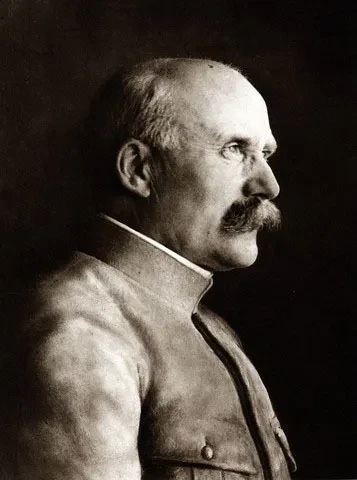
Of course, the hero of the First World War Marshal Peten did not feel for them. But all the same, the old man first led the country on the principle of “relax and enjoy”, and then reached the fulfillment of the most terrible Nazi teams: from the creation of the “police” (the French “branch” of the Gestapo) to massive deportations to the death camp.
There were also men from the annexed French territories Alzas and Moselle (134 thousand), who were called to the Wehrmacht without asking, and sent to die on the Eastern Front.
There were convinced Nazis - both both in the service of Peten and voluntarily departed in the SS (about 10 thousand people).
But most of the French in this war “didn’t climb anywhere”, content with the fact that the Germans retain their lives, wine, meager bread and relative freedom.
“It is easy to say that <future president> Mitteran1 went over to the resistance late, but there were not so many French French, who had chosen this path by the end of 1942,” the historian Pierre Pean recalls.
The time of Marshal Peten
On June 17, 1940, after Marshal Peten called the French army to surrender, General de Gaulle departed from Bordeaux to London. The next day, with the help of the BBC, he turned to the French calling for resistance. Today, there are streets and Square on June 18, 1940 in every French city, and then almost no one heard the general, although it appeared in the newspapers and repeated on the radio.
Among the first, 128 fishermen arrived at the general from the deaf Breton island of Saint ... Two days before that, the writer and pilot Romain Gary reached the transit through Algeria ... Ten and hundreds came to London from France, who had just had to give their native lands to the Germans. These were fighters, humiliated twice: both defeat and indifference from their own.
Fortunately, the British accepted well. True, there was almost no one to accept: a month after de Gaulle’s appeal, his army did not even have 7 thousand.
In late August, she increased five times in three days due to the inhabitants of the African colonies - people who did not have French citizenship.
And so it was the whole war: the De Gaulle army (the maximum number by May 1943-73 thousand people) was no less than half of the colonial fighters. When in 1943 it was united with the French “African Army” (General Giro), the proportion became even more impressive.
“I think that if a referendum had been conducted in 1940, 90 percent of the French would have voted for Peten and the prudent German occupation,” said the founder of the Left newspaper Liberal, Emmanuel d'Asty de la Vierry, a native of a wealthy aristocratic family and a hero of resistance (a rare combination). But the referendum was not needed. In 1940, Marshal Peten was a hero for many.
De Gaulle's time has not come yet. It did not even seem to be around.
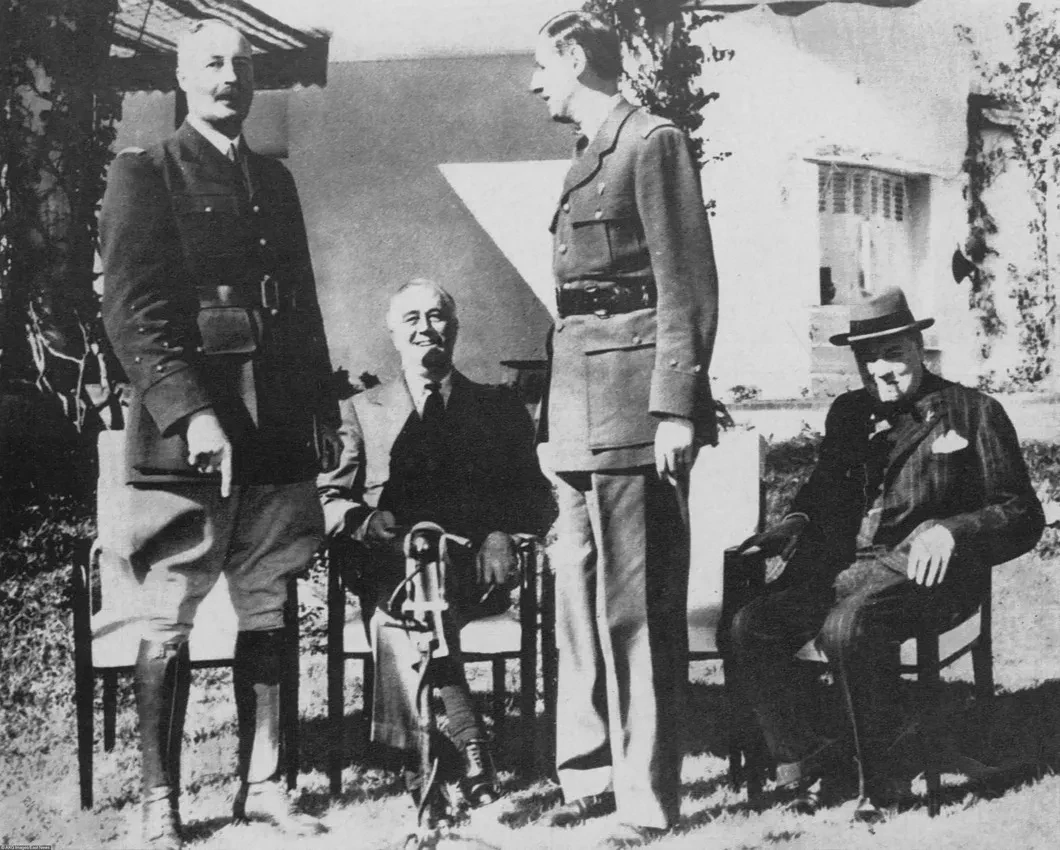
“His country stopped resistance, he himself is nothing more than a refugee, and if we stop supporting him, he is a finished person. And you look at him! .. No, look at him! It imagines Stalin with two hundred divisions behind his back, ”Churchill said these words behind de Gaulle on January 17, 1943. Churchill and Roosevelt arranged a conference in Casablanca, not only to discuss actions on the fronts and assistance to the Soviet Union, but then, in order to persuade de Gaulle to cooperate with the “wichest-consumer” fat.
Four front war war
Giro in 1940 ended up in a German prison, from where he escaped in April 1942. In November, he set off to Africa and offered the services to the Americans. In December, in Algeria, General Giro ordered to shoot a resistance fighter who killed the allies of the prominent Wichist Admiral Darlan2. The same admiral, who, having learned in November about the decision of the Nazis to capture the French fleet in Toulon, gave an order to flood.
After that, the Americans appointed Darlan by the supreme representative of France in Africa, which caused the powerless rage of de Gaulle. Once again, the general was indicated to his place. In May 1942, de Gaulle learned about the landing of the British on the French island of Madagascar only from the journalists who called him at three in the morning. In June 1944, Churchill called de Gaulle to London to put it before: the landing in Normandy will take place tomorrow, the Eisenhower will command the parade ...
... Well, in Casablanca in January 1943, Roosevelt and Churchill insisted that de Gaulle and fat lead the French resistance together.
The photograph, in which de Gaulle and fat, is depicted against the background of Roosevelt and Churchill's handshake, it turned out not the first time: the generals pulled their hands so quickly that the photographers did not have time to make a frame.
And still it was the peak of cooperation between two French generals.
In the next months, GIRO managed to plan a operation to liberate the island behind the Corsica Communists, and de Hall, to push fat from power in order to become a sole chef of resistance in November 1943.
But solely - does not mean everyone recognized. De Gaulle had limited possibilities for monitoring the partisans operating in France, and could not convince the allies that he was a legitimate representative of the French government.
Roosevelt almost until the end of the war examined the option of taking France under the temporary department of the allies. After landing in Normandy, the Americans brought with them francs printed in the United States. And only the desire of Churchill and Stalin to leave “strong France” abroad, as well as de Gaulle's heavy stubbornness helped the French at the finish of the war to squeeze among the winners.
On May 8, the Act on the surrender of Germany, along with Zhukov, Montgomery and Eisenhower, signed the French General de Latra de Tassini. ( Until November 1942, the heroic general served the Vichy regime. )
In addition, there were not so few Frenchmen from the army of Peten, who fought desperately against the British and Americans during the defense of the colonies. De Gaulle did not understand this right away, and therefore a joint attempt with the British in September 1941 to take Dakar ended in complete failure. In Gabon, Syria and Lebanon, the Wichists, after the defeat, preferred to surrender, but not to go over to the side of Free France. In Madagascar, 8 thousand Vichyists fought off from the British exactly half a year. Etc.
Bir-Haceme
But, of course, France is not remembering these samples now. The French remember the names of their dead heroes. By heart, they know the main song of resistance - “ Chant des Partisans ”, the motive of which was composed by Anna Marley, a French singer of Russian origin.
They do not forget about Normandy-Neman (still mechanic Andre Peyroni) and about those whom de Gaulle after the war called the “companions of liberation”.
There were 1038 people. Alena Gaya died 11. Two weeks ago, one of the youngest and very first fighters of the De Gaulle Army.
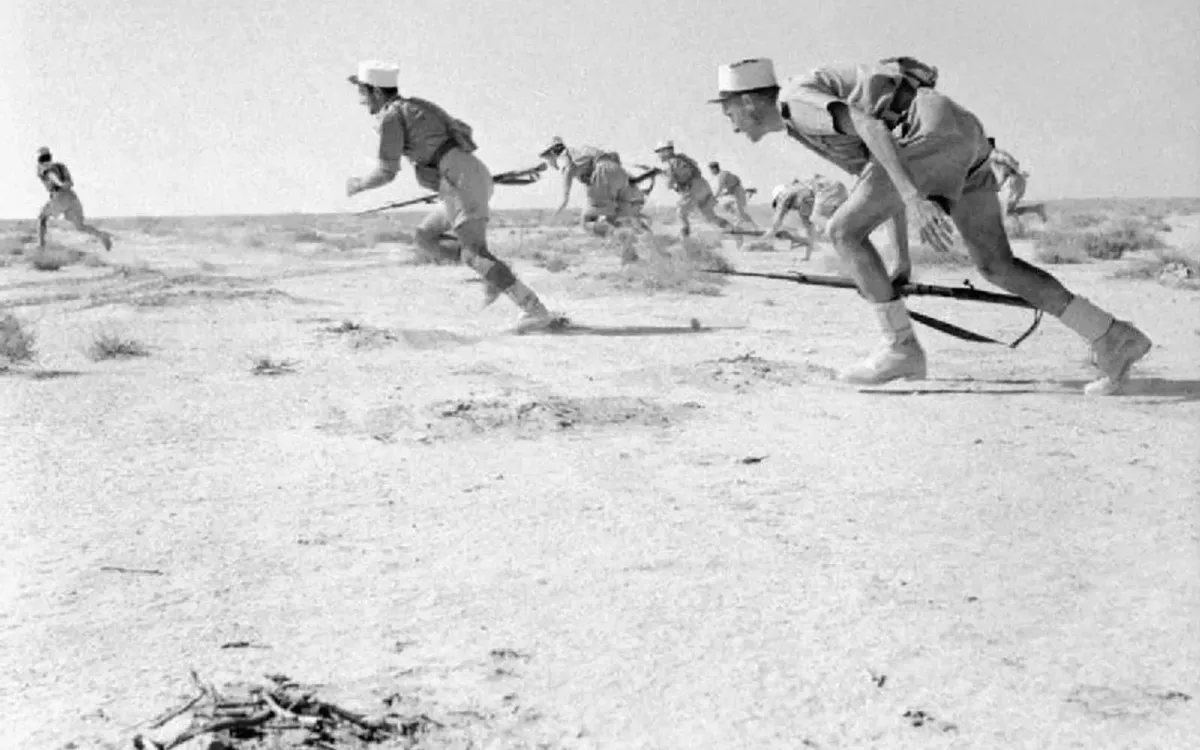
In February, Andre Salva, the last participant in the battle of Bir Hakeme, died. The battle, which "saved the honor of fighting France." From 05.26 to 06/11/1942, that is, seventeen days, 3,700 Frenchmen held back, dug in the middle of the Libyan desert, 32,000 soldiers of General Rommel. They restrained under the hail of shells and carpet bombing.
“Many of us had dogs,” recalled Pierre Hitzmann, one of the French heroes. - When English planes flew, the dogs calmly walked. When the planes of the Luftwaffe approached, the dogs whined and hid in the pits. "
People do not always know how to distinguish good from evil as clearly.
1st President, “Wishisto-Provincial” Mitterand every year placed wreaths at the grave of Peten-on the anniversary of the surrender of Germany in the First World War (11/11/1918). The first, however, was done by General de Gaulle.
The 2nd number was ordered by another hero of the resistance, Henri d'Asti de la Vierry - the monarchist and the brother of the creator of the left newspaper Liberal (see above).