
Translated material
Handsome man, not a monster
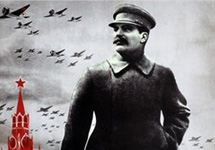
Half of Russians fully approves the activities of Joseph Stalin as the head of the USSR during the Great Patriotic War. This is evidenced by the results of the survey of the Public Opinion Foundation.
Over 12 years, the number of people positively answered this question has increased by 10 percent.
A third of respondents, 32 percent, call the role of Stalin in the war partly positive and partly negative. A negative assessment of Stalin was given 8 percent of the survey participants, 11 percent of Russians found it difficult to answer.
According to the study, 55 percent of the respondents believe that today in Russia the role of Stalin in victory in the Great Patriotic War is evaluated rightly. 19 percent expressed the opposite point of view.
The number of the state positively assessing the activities of the Memory of the Great Patriotic War increased from 54 to 63 percent.
According to 69 percent of the survey participants, now the history of the Great Patriotic War in Russia is covered objectively, 18 percent of the respondents do not agree with this. At the same time, more than 39 percent of Russians believe that the history of war today is illuminated more truthfully than in Soviet times, 23 consider the opposite, and 24 noted that nothing has changed in this regard.
Every year, the Communists in early May place Portraits of Stalin on the streets of Russian cities. Last year, on the 70th anniversary of Victory, banners depicting the Generalissimo on the initiative of the Communists appeared in many cities of Russia.
On May 5, 2015, the Memorial International Human Rights Society stated that Stalin’s image should not be used for congratulations on Victory Day. The scale of his crimes is such that the glorification of Stalin should be prohibited by law.
"The installation of any monument with the figure of Stalin is blasphemous. Stalin’s crimes have no analogues in domestic history. Their scale is such that the appearance of his images in public space in any positive context is unacceptable and should be prohibited by law," the memorial said. At the same time, it is emphasized that we are not talking about the prohibition of mentioning the name of the dictator.
"It is not in any way that Stalin from history and prohibit its mention, as Stalin himself did with the destroyed associates, is in any way. But the place of dictators - in museum halls, textbooks, historical monographs in the context of their acts, and not in the squares of cities," the statement said.