
Translated material
"Certificates in the Last Judgment, which was canceled"
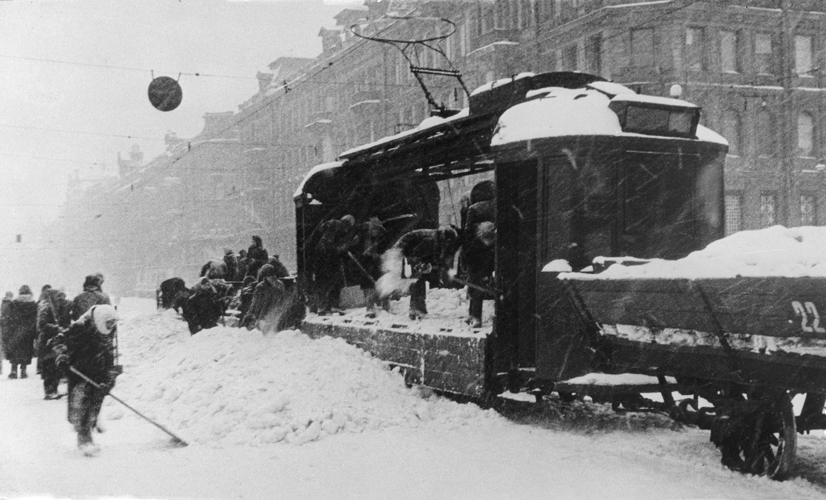
In the New York Publishing House of Ugly Duckling Presse, the anthology of the blocked poetry of poets of the post-Burius generation “Written in the Dark”, collected and prepared by Polina Barskova, a philologist and a scientist studying the culture of blockade Leningrad, was published. Anthology is bilingual - several translators worked on it. The editors and co -authors of the translations were Evgeny Ostashevsky and Matvey Yankelevich, the editor of Ugly Duckling Presse, which specializes in the translations of Russian -speaking poetry of the first half of the 20th century, including the Oberiuts.
The Anthology includes the verses of the five authors who were in Leningrad during the blockade - this is Gennady Mountains, Dmitry Maksimov, Sergey Rudakov, Vladimir Sterligov and Pavel Saltsman. Actually, not all of them are poets as such: the mountains took place as a successful Soviet science fiction writer, Sterligov and Salzman are known as avant-garde artists.
We talked with Polina Barskova and Irina Sandomirskaya (a professor, a philologist who also studies the language of the blockade, author of the book “Blockade in the Word: Essays on the Critical Theory and Biopolitics of Language”) On the decay of the language and the destruction of speech, which does not imply the addressee, but decades the reader and the translator, and additionally talked with the editor of the Translations Collection Matvey Yankelevich.
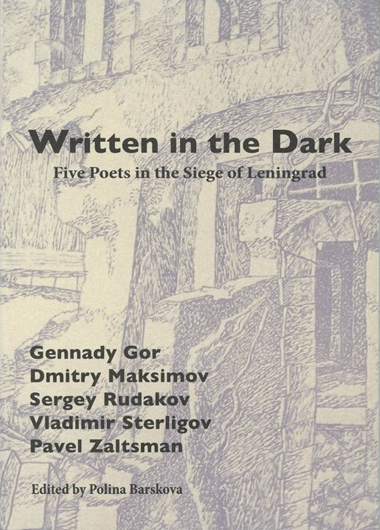 © Ugly Duckling Presse
- Why did these texts enter the anthology? Was there a problem of choice from a certain body of texts - or these verses were the only ones that “came” to you?
Polina Barskova: There was a problem of choice - each of these poets wrote much more than these texts, and the criterion arose in the form of a historical framework: to focus on the blockade. As a result, we have almost four poems left from Maximov, although he wrote much more; By the way, he, in my opinion, is one of the most remarkable Russian erotic poets-modernists! It was more complicated with the mountain - we were difficult and for a long time with Matvey, Zhenya Ostashevsky and other translators discussed the choice of the most representative things (the mountains constantly re -re -re -rewind itself). Sterligov took little from Sterligov - rather, he was a writer of the artist. It seems to me that the poems happened to him from this blockade horror and the horror of Harms' death. Why do people write poetry in such situations? It seems to me that Sterligov became so terribly from Harms that he could not do anything else, except to fill his departure at least somehow, poems.
There is another way to answer the question why they were, because there were many different poets in the blockade, and someone could make a more representative selection, but at that moment I had neither the strength nor curiosity to make the universal anthology of blockade poetry: in this case, I was interested in the texts of people who wrote not for publication. It was important to show the other world of the blockade. It so happened that the people whose poems turned out to be, are connected by aesthetic, “family” connections, these are the post-Burius (I use this term for the lack of the best-each of the poets is somehow curiously connected with the Oberiuts, inherits them).
-In the preface to the book, you are talking about what you have to do the emphasis on, in order to more distinctly expanding some things for the international audience,-did you look for some other angle?
Barskova: Yes, the task was to try to do this also by an American book. And understand how to start a conversation about it with an American reader. The preparatory work was done by Matvey and Zhenya - they have already introduced to the American narrow reader the poetry of the Oberiuts. The task that pursues me and seems interesting or unbearably difficult is to explain to people who do not know anything about the Soviet century or know something not what the blockade of Leningrad is. Although after all, the best book on this topic, in my opinion, was written by the American, journalist Harrison Salisbury , is called “900 days”. It was published back in the 60s-but I have the feeling that you still need to start with a presumption, as if everything needs to be explained again. The first question that I was asked in the summer at the seminar of historians in St. Petersburg - why did you choose the verses of these people, why don't you talk about more life -affirming texts? It’s like in the Gulag Museum in Moscow the guide noticed: “We do not want to upset anyone.” But we, the authors of this anthology, gatherers, would like to “upset” this tin, dust, gilding, which often seems covered with blocking memory.
- In the introduction, you use the word “surrealism” as a designation of a strange, unbearable. Can we talk about surrealism as registration of distorted reality, which itself is outside the norm? And how does the documentary function in these texts change in this vein, where the document does not meet the norm?
Irina Sandomirskaya: I want to say right away that there are no misunderstandings that I am very close to my heart and admire the efforts and perseverance of its performers, who took up it and brought to the end, while realizing the unattainability of the goal. I myself am present in this conversation exclusively as a reader and therefore ask the question: what, in fact, I read, looking at these poetic and prosaic lines? If the document is what exactly? I’m not sure that the documentary can be approved without asking the question of what we mean by the document in this case and what exactly is documented. Foucault wrote about the contrast of the document and the monument. It may seem that we are talking about the difference between the document as a historically impassive certificate and the monument as an artifact of the affective cult. However, the document is something that the historian receives ready, while the archaeologist digs out incomprehensible from where and he consists of incomprehensible fragments, which is even unknown whether they are fragments of the same thing. And the historian working as an archaeologist is forced to take responsibility by making a reconstruction. But is it necessary to talk about poetry as documentation or it would be more correct to treat it as a monument in the sense of Foucault - and is this kind of attitude yet another way to exploit poetry? Poetry is already subjected to exploitation - we constantly come up with “usefulness” to it.
Barskova: In the blockade notes of one artist I was struck by one moment: there he finds a box on the street, and in it - perfectly beauty, a perfectly frozen baby. And so he writes that, probably, this is superreality, surreal, reality “over reality”. And his task is not some kind of special vision by the method of complex raising-as French and Spanish surrealists did-and find the ability to record this scene. The result may look as strange as what the Dali was seen. But at the same time, when you register what is happening, you have a completely unconscious consciousness. Oberiutic surreal is not superreality, but the unchanged consciousness, say, Harms, which simply records an absolute change in the order of things around. I do not agree with the popular look at Harms and his associates, as soon as the eccentrics, children's wizards - in their work, they still first tried to approach the methods of depicting real reality.
Sandomirskaya: The artist in a state of altered consciousness substitutes himself as a target; They are printed on it and leave traces on it, it registers them. This is an incredibly courageous form of what is now called Artistic Research - empirical knowledge of reality by artistic methods, extracting theory from artistic practice. A study of reality, which does not lend itself to description: go describe this baby who froze in a box. When the artist becomes a target for history, the description is no longer an analysis, but a fixation of what is happening, empirical development of an indescribable story in the experience of a dying body.
Barskova: We do not know much about what happened in the city. Many scientists did not leave - biologists, doctors: they understood that they would observe the unprecedented. We do not know much about what was happening in the Stalinist camps. The blockade for many in a sense was an experimental field.
Sandomirskaya: For power, including. I have talked many times that it is important to look at the experience of the blockade administering: from the outside and from above from the Kremlin, from the inside from the city organs. A huge number of power technologies were trained on the blockade.
Barskova: Mountains and Saltsman are wonderful examples of how important and difficult to distinguish in these verses the levels of evidence and poetry, trying to understand in what relations they are. Both mountains and Salzman describe the new civilization in which they found themselves, a new anthropology. For example, the mountains writes about a new sensuality that has arisen in a blockade. Lydia Ginzburg in blockade texts also wrote about new monstrous relationships with her body. But besides Ginzburg, it is already known: the city develops a powerful black market with its own relationship, there is a kind of terrible hypersexuality, everything can be bought for bread. This is described with wonderful and bitter observation in the novel of the blockade of Anatoly Darova “Blockade” (1946), for example. The monstrous exacerbation of all desires is also a huge part of the blockade existence. And what to do about it? Olga Bergholz also writes about this - the desires of life and death are connected and become very strong. At some point, it seems to her that she is finally pregnant, she is happy, but in fact it is a dystrophic swelling, it grows in her. The mountain says about the desire to possess and eat: "I ate a girl laughing as a flake." There is a certain “new city”, living according to its completely hellish rules.
-I noticed the strange experiences of bodily in these texts: it is clear that it is connected with food, but the topic of food is somehow passing. Animals in these verses are not sacred symbolism, like the Oberiuts, but food: “cats are hot”, the frequent mention of cows, milk, the obsessive concept of unnecessary in the paraphernalia of any concept, as if objects are divided into those that can be eaten and which cannot be eaten. At the mountain “Unnecessary Dyatel knocks” (because he is inaccessible outside the window) and an unnecessary moon.
Barskova: The word "unnecessary" - " unneeded " - it was difficult to translate. It’s like the Ginzburg “unconnected man” - how to translate it? When I thought about the right and unnecessary, I was helped by Reading Agamben: he had the idea that a person in a concentration camp, in a situation of dystrophy, a creature that could not afford anything unnecessary. On the other hand, I want to ask Irina a question about poetry - is it necessary or unnecessary in this situation?
Sandomirskaya: This is the fact that there is no need for poetry, there is no need. In a situation of survival, it does not help and is a pure excess and redundancy. Even now in our conversation we are trying to adapt it to something: to documenting, to calculate a new anthropological state, to understanding what is happening in the world. But poetry should be completely useless. And the hunger should not be part of the economy: hunger is associated with the satisfaction of necessity and is not a prototype of desire, because we will satisfy the hunger, but the desire - no, it always wants more, does not want to satisfy and there is no need.
Benjamin has the opposition of “just life”, or “just life”, and “good life”. “Just life” is a life, reduced to pure survival, feeding on the satisfaction of its need; And “good life” is a different level, and poetry, due to its non-existence, is part of it, part that is not satisfied with satisfaction. I asked Polina: if we want to talk about poetry as evidence of the blockade, why do we need poetry in this sense? There is enough evidence. The blockade archive is so huge and diverse that it is impossible to disassemble and process it; Why else poetry?
Barskova: And the question arises for philologists: how can we be with this poetry? Returning to the remark about its redundancy - we have enough diary certificates of the same Saltsman. Here he is in the diary-by the way, published-writes about how he tries to bury his father, about going to the Christmas toys store, about how the baby is put in a stroller to breathe in the winter of the 41st and make sure that they do not stole and do not eat. For evidence, this is more than enough. And it is not clear what to do with these verses, what they add to the diary. In this sense, it seems to me an exciting and wild story with the mountain - he himself also did not know what to do with them.
- Perhaps poetry in prohibitive situations brings the security function of the existence of thought? Even at the level of archetypes, poetry is a ritualized way of ordering the world: prayers, lamentations, cries. In these verses there are many psalm -like texts, counters, repetitions, nonsense, soothing rhythm.
Barskova: Yes, there is a lot of self -termination, complacency. Like in Triptich Maximov, who turns, develops into a lullaby. And then the question arises - how to work with these texts, given that the techniques that we find in this poetry can be designed? How to work as a historian and how to work a philologist? What is the design, technique, and what is the symptom, an attempt to work “directly” with a blockage reality? At the same time, when we read block diaries, we see that one of the signs of dystrophy is the use of diminutive forms (especially when talking about food). It was believed that when a person begins to talk like that, he can already be left, he cannot be helped. They felt well this moment of irreversibility at the level of the language when the last feature was passed. Here in verses we also see this terrible infantilization.
Sandomirskaya: We are dealing with poetry, which “does not want” to publish, reflecting its state of blockage. A blocking topic is something about deprivation of yourself: about the extermination of your inner other. Not only about the loss of another person, but also about the refusal under the pressure of extreme necessity from a certain external part. Moreover, only internal reality remains where you can eat only yourself. This is eating yourself, a closure in yourself, a complete dependence on internal resources and the constant sacrifice of one part of yourself for survival another is an extremely dramatic thing leading to the emergence of peace, where there is no other. He disappears or eats it - and reality arises, where you are kept on a self -mercenary, where you depend exclusively on your own internal resources. And this is also the moment of the experiment - how far it is possible to go in this self -mapping.
- I also noted that these texts are, as it were, turned inside itself. I did not see their reader in time-space.
Sandomirskaya: Because there is no reader. He died. They ate it. There is no message. This is not evidence, like the same Bergholtz, who wanted to testify from the rostrum. There is no one to contact: there are no judges, there is no public. And there will be no court - these are anti -mixed verses that do not involve atonement. There is no one outside: there is no one to judge or testify. It's about the problem of evidence in the Last Judgment, which was canceled.
But here is the difficulty of evidence in general, which Levy wrote about so correctly after Primo: no one has the right to be a witness. Anyone who has not reached the end cannot be a full -fledged witness. And the one who has reached the end will no longer say anything.
Barskova: I used to assume that the mountains did not publish these verses because I was afraid. This is logical - the mountains were passionate, for example, prey, and a logical chain was built: he could not write what he wrote, but then he found resources to become a prosperous Soviet functionary and decided that the publication of these verses would prevent the performance of this role. I am not inclined to completely throw out this argument into the window, but still there were other reasons for the inner impossibility of publishing these verses. As a poet, I try to imagine what the mountains could feel in relation to these blockade poems. Most likely, he felt that these verses did not have a reader at all.
I recently talked with a wonderful granddaughter Horus, who once again talked about how these verses came to the reader. This happened when the Austrian philologist Peter Urban collected poems for a bilingual publication, Russian-German. Before meeting with him, the Horus' family was in a confusion, what to do with these verses - they showed them to St. Petersburg writers, people with their professional and historical habits, and they answered: perhaps this is madness, and even if it is not mad, we don’t know how to work with it, it would be better if this had not happened at all. And these verses came to us - and who they found, would I like to know? And how could the mountains imagine such a turn that these verses will come to the reader? It is difficult for these poems to find someone, they are not transitive. So do not turn, and no one to contact.
-Indeed, in these verses there is neither the enemy nor the opponent-there is no discourse of violence as something from the outside, which caused this monstrous situation. And there is no desire to tell someone about horror, injustice. Это сдавшийся язык, который претерпевает те же метаморфозы, что и тело, и сознание, он не может доминировать и навязывать смыслы. Я нашла в этих стихах только одного фашиста — анекдотического, нелепого, с котлетой! Как будто это ответная дегуманизация силы, которая ответственна за происходящее.
Сандомирская: Даже не дегуманизация этой силы, а ее отсутствие. Потому что там, снаружи, вообще ничего нет. Одно «хулиганство»: только люди сядут обедать, как «эти» прилетают бомбить (раздражение блокадника в передаче Лидии Гинзбург; отметим адскую иронию в слове «обедать»). Все это как бы понарошку. То, о чем пишет Гинзбург и о чем я читала во многих медицинских источниках, основанных на наблюдениях военных врачей, — это состояние предсмертного постепенного «уплывания», которое блокадные врачи называют мерцающим делирием. Реальность то наступает, то отступает, а потом тебе становится все равно, реальность это или нет. Это смягченная смерть, смерть без сопротивления. И блокадная поэзия описывает смерть как состояние, где нет репрессии и сопротивления. И думать самое блокаду как результат репрессии и сопротивления поэтому тоже не получается.
Деррида писал о Целане и его ныне ставших популярными словах о свидетельствовании « Niemand zeugt für den Zeugen » — «никто не свидетель свидетелю», или, если пренебречь правилом двойного отрицания в русском языке, «свидетель свидетелю — никто». Деррида пытался распутать это многозначное für . Свидетельствовать в пользу свидетеля или для сведения свидетеля, в качестве свидетеля или вместо него? Возможно, наше чтение этих стихов — это и есть свидетельствование во всей совокупности этих запутанных значений. В контексте литературы коллективной памяти, мне кажется, наш народ нашел бы для себя алиби именно в этой цитате: о каком бы значении für ни шла речь, все равно свидетелем свидетелю оказывается никто. Зачем мы занимаемся этим всем — ездим в эти мемориалы, копаемся в этих архивах? Имеем ли мы право находиться в местах, где мученики буквально ходят тенями, и высказываться на эту тему, находясь среди теней? Занимаясь этим, являемся ли мы свидетелями свидетельства или подтверждаем его негативность самому себе, потому что некому свидетельствовать, никто не слушает, никого там нет?
— Во время презентации антологии вы упоминали Светлану Алексиевич, говоря о чрезмерной эстетизации свидетельства…
Сандомирская: Да, тут есть проблема: не приводит ли ее хорошее намерение дать голос тем, у кого голоса нет, к заглушению этих голосов? Это этика конца 80-х, связанная с идеей постколониализма о том, что есть говорящие, а есть неговорящие и если последние не могут говорить, то мы можем стать их адвокатами, дав им свой голос. Вы начинаете говорить за них — тут и вступает многосмысленность этого für , «за»/«для»: я говорю в их пользу, делая их голос понятным и слышимым, но я их заглушаю, поэтому уже не могу быть уверена в том, что говорю в их пользу и что это именно то, что они сами имеют, но не умеют сказать.
Барскова: Конечно, это началось не с Алексиевич, а с ее учителей — в частности, Адамовича. Именно в его «Блокадной книге» есть все те приемы, которые использовала и Алексиевич. Она сама часто повторяет, что заимствовала его методику, а значит, и его этику.
Сандомирская: У меня эта этика вызывает большое уважение, но в то же время при ее использовании нужно быть очень осторожным.
Барскова: Самый страшный, сложный и проблематичный документ, который включен в «Блокадную книгу» Адамовича и Гранина, — дневник подростка Юры Рябинкина. Авторы берут на себя роль объяснителя, приглушителя и медиатора.
Сандомирская: Это, казалось бы, обычная работа перевода — сделать текст понятным в рамках общей нормы языка или эстетической цензуры высказывания. Тем не менее, возможно, именно из-за этого у Адамовича случился инфаркт. Подобная этика себя исчерпала — но можем ли мы осуждать людей, желающих донести шокирующие и необходимые вещи до публики, которая не хочет слушать? Что такое в этом контексте аутентичность? Мы делаем эти тексты транзитивными, а ведь нетранзитивность — их важнейшее качество и главная драма.
Барскова: Читатель Гора умер там, в блокаду. Это сформулировал в беседе Марк Липовецкий, и мне это показалось правильным, точным. Мы — не читатели этих текстов. Мы — что-то другое этих текстов.
Сандомирская: Мы не можем принять решение о том, как их читать: то ли критически, то ли «клинически», как объект медицинской семиотики. У нас нет над ними контроля. Возможно, в этом и заключается невозможность проекта памяти в том виде, в котором нам хотелось бы: сохранить страшное событие в коллективной памяти так, чтобы оно никогда больше не повторилось. Мы владеем этими текстами, но не имеем на них права. Это тексты, не принадлежащие никому, или принадлежащие всем, или кому угодно. Это наша память — но в то же время не наша. Переварить блокаду и пустить ее на удовлетворение собственного коллективного символического тела — тела нации — не получится. Блокада не капитализируется. Еще есть важный момент — чувство вины, из которого мы, возможно, этим занимаемся. Возможно, мы мучаемся дурной совестью и нам кажется, что так мы становимся более хорошими людьми.
Барскова: Мы выпустили эту книжку, мы ее купили, мы ее прочитали. И на секунду всем нам кажется, что мы от этого стали лучше. Потому что мы впустили на минуту в себя такую боль! Совершили такую работу памяти! Как видите, от этого могут возникнуть разные виды удовлетворения. И тем не менее важно помнить, что блокада никак на нас не работает. Она просто была, есть. И по какой-то таинственной причине просто вышло так, что эти тетради со стихами не исчезли.
Матвей Янкелевич
редактор издательства Ugly Duckling Presse, редактор англоязычных переводов антологии
«В хорошем переводе должна ощущаться дистанция другого языка»
— При переводе подобных текстов многие вещи вроде странных аллитераций теряются, но многие и появляются из ниоткуда. Скажем, «супы из клея и глюкозы» превращаются в « soups of glue And glucose » . Правомочен ли переводчик что-то добавлять?
— Мне кажется, что в переводе добавляется ровно столько, сколько и теряется. Переводчик имеет уникальную возможность добавить в текст новый культурный слой, вводя его в литературу иного языка. Сейчас я работаю над переводами Мандельштама и заметил любопытный момент. Я переводил стихотворение «Век» 1922 года, очень политически насыщенное, написанное во времена, когда распадается Оттоманская империя: греки выгоняют турок, происходит переселение из Греции в Турцию и наоборот, беженцы плывут в лодках — ситуация, схожая с тем, что происходит в современности. В какой-то момент я понял, что короткие и сжатые мандельштамовские строчки не работают в переводе. Терялась нервная и страшная синтаксическая составляющая этого стихотворения о переломе века. Тогда я оставил строфическую систему, но сделал строки в два раза длиннее — и там, где у Мандельштама двойные и тройные значения слов, я стал добавлять значения вместо того, чтобы их опускать. Разумеется, я не добавлял того, чего в тексте нет, но пытался указать на точки, где раздваиваются значения.
— В разговоре с Ириной и Полиной мы пришли к выводу о том, что адресата у этих стихов нет, да и сообщения нет. Необходимо ли конструировать сообщение и адресата при переводе? Ведь перевод — это в любом случае сообщение, перенос значения в другую культуру.
— Мне кажется, что хорошим был подход Жени Осташевского в духе Пауля Целана — он пытался сблизить перевод с оригиналом, делая его герметичным и замкнутым. Как редактор антологии, я думаю, что, вероятно, есть резон исходить из безадресности этих стихов — но тогда они не найдут слушателя. Как говорил Мандельштам, адресат в будущем — это некто неизвестный, который найдет текст, будто записку в бутылке. Это обретение адресата осуществляется именно в момент перевода, перехода стихотворения в иную культуру и сферу. Стихотворение в этом случае — беженец, перебирающийся на ту сторону. И на той стороне появляется отклик. И то, что стихи напечатаны в антологии на двух языках, может в том числе поспособствовать их «разгерметизации».
— Я заметила, что местами перевод как будто сам себя пишет. У Гора в стихах часто наблюдаются распад речи, афазия, заикание, дисфункциональность. И в переводе это передается будто ненамеренно — там, где в оригинале распада нет, в перевод он иногда просачивается: например, « I ' m both check And mate to myself . I am mute » — это вот mate / mute , мат самому себе становится немотой (в оригинале просто «Я — шах и мат себе. Я немой»). Или как у Стерлигова будто сама зарифмовалась смерть: « Tomorrow morn to building ' s depth / Will crawl the foot of soundless death » (в оригинале «А завтра , завтра в дно квартир / Вползет нога неслышной смерти»).
— Это некая магия перевода — так выходило не нарочно. Бывает так, что переводишь дословно и вдруг из этого вырастает некий звуковой стержень — то, что не всегда получается, когда форсируешь рифму в переводе (она не обязательно нужна, потому что можно добиться этого эффекта другими сочетаниями). А это стихотворение Стерлигова переводить было сложно — скажем, как перевести «квадратный лед на дне стакана», чтобы это не звучало как обычные ice cubes ? Перевели как « square Ice forms » . При прямом переводе получится банальность, а ведь квадратный лед — это что-то очень странное.
— Возможно, это стакан, в котором замерзла вода и он оттаивал по периметру, потому что в стакан кто-то вцепился руками, чтобы его отогреть? А если перевести буквально, то вместо страшной метафоры получится коктейль Old Fashioned .
— Да, это очень тонкий момент. Еще там было «дно квартир» — тоже сложный для перевода момент. Это и на русском звучит странно. Возможно, вышло не совсем так, как хотелось, зато сама собой получилась рифма глубины и смерти. В смысле рифмы особенно сложной была работа с «Застольным гимном лещу» Павла Зальцмана — мы решили, что ее там нужно сохранять. Мы дорабатывали этот перевод вместе с Чарльзом (Charles Swank) , и меня смущало, что там местами идут очень точные рифмы, поэтому мы их раскрепостили, «расслабили». В то же время возник вопрос про «гимн» — ведь прямой перевод « hymn » звучит чересчур церковно по-английски, а по-русски «гимн» имеет в том числе и политическое значение. Поэтому остановились на « ode » — это старомодная песенная форма.
— Есть ли разница между переводом текстов, рождающихся в совместимых с жизнью условиях, и текстов, рождающихся в безысходной уверенности в том, что их не опубликуют?
— Я думал об этом, когда переводил Хармса, который тоже много писал «в стол», — что такое «письмо в стол» и как стоит его переводить? Ситуации у Хармса и поэтов из антологии немного похожие — не безадресатность, но узкий круг читателей. Текст Хармса не авторизован, не подготовлен автором для печати — и перевод не должен сделать его тексты «законченными», окончательными, особенно учитывая то, как некоторые редакторы русскоязычных сборников Хармса «заканчивали» его текст. Переводя Хармса и Введенского, важно учитывать ощущение черновика, неточности — и человек, читающий по-английски, должен понимать, что перед ним именно перевод. В любом хорошем критическом переводе должна ощущаться дистанция другого языка, обозначающая, что ты как читатель пытаешься через перевод приблизиться к автору, пройти это расстояние, — в отличие от перевода, преподносящего текст так, словно он изначально был написан по-английски.
Важен и «имперский момент». Римляне, апроприировав культуру греков и переводя их тексты, вычеркивали авторов или переносили место действия и ландшафт с греческого на свой современный римский; нечто похожее происходит с имперской универсальностью английского языка. Возникает иллюзия, что на английский можно перевести что угодно. В упоении имперскостью мы забываем о том, что все языки автономны, мы ими на самом деле не владеем. Перевод должен сохранять автономность языка и дистанцию. Например, немецкий язык называется так от слова «немота», «немой» — говорящий на незнакомом языке для нас будто немой. Это показывает отношение к Другому, к языку, находящемуся вовне, все чужое отвергается. This is on the one hand. А с другой — мне кажется, что любое творческое произведение, написанное «в стол», неавторизованное, пребывает в постоянном состоянии незаконченности. И перевод должен эту неопределенность передать, а не определить. Потому что иначе получится, что мы «закрываем» незакрытый текст. Женя, например, «остранял» тексты еще сильнее, чтобы они выглядели совсем иностранными, иногда оставляя слова без артиклей.
С другой стороны, переигрывать я тоже не люблю: мне не нравится нарочито создавать и усугублять странность. Поэтому я ищу компромисс между двумя позициями: с одной стороны, я как редактор хочу, чтобы эти стихи прозвучали для англоязычного читателя, с другой — мне кажется важным не потерять иностранность текста, ощущение Другого. Эти блокадные тексты настолько странные, что Другое там присутствует всюду, его невозможно исключить.
Геннадий Гор
Кошачье жаркое. И гости сидят
За тем же столом.
На хлеб я гляжу, кости считаю
И жду, когда гости уйдут.
Но вот входит тесть (смерть, сон).
Гостей на салазках везут.
Меня на салазки кладут и везут.
Навстречу идет почтальон.
Телеграмма от жены: «жду».
Стекла сияют. Солнце кричит.
Деревья стоят, утонув навсегда.
Дома утонули. И люди в подштанниках
В пустоте, где воздух съедят.
И сердце стучит и зовет к жене,
А санки скрипят, все скрипят и скрипят.
И вот уж… но теща устала и сбросила в снег.
На дороге я синий лежу.
Сергей Рудаков
Ты понимаешь — в сердце страх и злоба.
Тебя застав лежащим на полу,
Не взял топор, не взял пилу —
Не сплотничал для друга гроба.
Во мраке смерть пристойнее глядит,
Но я отвел поношенные шторы.
Лед на стекле, бумажные узоры.
Узор крестом от выстрелов хранит.
Еще условье смерти — тишина.
Проблема эта дурно решена:
Включен приемник — каплет метроном
И не дает забыться полным сном.
И нарушают отдых твой короткий
Информбюро радиосводки.
Владимир Стерлигов
DEATH
Ложку поднес к губам — смерть,
Руку протянул, чтобы здравствуйте, — смерть,
Увидел птичку-чижика — смерть,
На ветке листочек — смерть,
С товарищами идешь на прогулку — смерть,
Посмотрел на капусту в тарелке — смерть,
Друзей провожаешь, их двое, — смерть,
Случайно взглянул куда-то — смерть.
29 июля 1942 г.
Павел Зальцман
Презреннейшие твари
В награбленных шелках
По подвалам куховарят
На высоких каблуках.
Эти твари красят губы
Над коровьим языком,
Их невысохшие груди
Набухают молоком.
Сам огонь в их плитах служит,
Усердствуя, как пес,
Он их сковороды лижет,
Сокровенные от нас.
Нас томит у их порога
Страшный запах каши,
Мы клянем себя и Бога
И просим, просим кушать.
Нет желания сильней,
Чем сбыть им наши вещи,
И мы следим за их спиной
В ожиданьи пищи.
24—26 июня 1942 г.
Николаевская, 73