
Translated material
Trenches on the couch
Five books about the war: Choice of Konstantin Milchin
Any selection of books about the war will be obviously incomplete. Is it possible not to include in this list “Life and Fate” by Vasily Grossman, “hot snow” Yuri Bondarev, “south of the main blow” Grigory Baklanov, “Cursed and killed” by Viktor Astafyev, “Volokolamsk highway” by Alexander Bek? And as the list will expand, inevitable claims and additions to it will grow. But each person has his own set of books, which personally formed his attitude to the Great Patriotic War - sometimes books that lose in literary virtues can take positions above the recognized classics. On Victory Day, the editor -in -chief of Gorky decided to recall his cherished list.Victor Nekrasov. In the trenches of Stalingrad
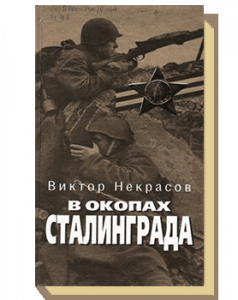 1942, hot summer, south, steppes. The Red Army retreats, the Germans are catching up. They have tanks, aviation, artillery, technology. Here is Stalingrad. The Germans remained to go to the Volga some a couple of hundred meters. And then everything: the water artery, according to which Baku oil enters the central regions, will be cut down, which means that the Soviet Union is doomed. But these last couple of hundred meters Germans will not pass. They passed half the world, subjugated all of Europe, but could not reach a few hundred meters to the Volga. The same Red Army soldiers who fled all summer from Kharkov to Stalingrad himself will become in the ground, will cling to the sleepers, for each stone and every bump. And break the enemy teeth. But this is a common - historical plan, a plan of armies and fronts. And the main action unfolds at the level of soldiers and officers who are fighting, dying, but win.
And there is an insanely charming storyteller and the main character. The "trenches" tell not only about the battle for Stalingrad. This is actually the perfect reading for a teenager. This is a book about how a real person should behave, how to drink, how to be friends, how to talk with girls. Viktor Nekrasov - a military engineer, a participant in the battles for Stalingrad - judging by all the memories, was just such an insanely charming person and was able to convey these qualities to his hero. His story, published in 1946, was generally one of the first prose books about the war. And after 72 years, one of the best remains.
And, by the way, keep in mind that “in the trenches of Stalingrad” is a almost whole literary universe, because with the same heroes there are several other texts. Say, the story of the “damn seven”, which was conceived as the end of the “trenches”, but in the end became a separate work. Or less famous-fantastic in essence and very Hollywood in execution-“The case on the Mamaev Kurgan”, in which the author himself, Viktor Nekrasov, many years after the war, comes to Volgograd, comes to the place where he once fought, and is carried out in time: it is transferred to 1942, and from some parallel reality, where his real servants are mixed, the characters of the novel and heroes are mixed film adaptation.
Boris Vasiliev. And the dawn here is quiet
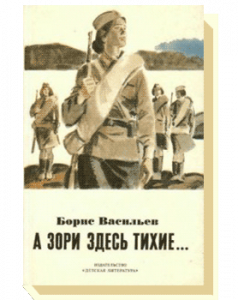 He asked him to send him to a part of the nonsense guys, and the girls were sent. Karelia, a relative rear, the anti -aircraft part, are an experienced foreman and five girls representing all layers of Soviet society. In the area where the unit is located, German saboteurs will break through, who need to be destroyed. The girls will die - the foreman, to their horror, will survive. But why talk about the plot, if the book is important in the first place completely different. With what to compare the school sensations from reading the story of Boris Vasiliev? Well, it was as if you watched the films at home on a small black and white TV of poor quality, then you suddenly got into a giant cinema, and there is the latest sound, and IMAX, and some other crazy technologies that, of course, were not in my childhood. But I well remember that before the “Zoray” I read a lot of books about the war, both memoirs and prose, and that the invisible wall always separated me from what was happening in the text. And here by some incomprehensible means a complete effect of presence has been achieved. You are there, you are inside, you are in action: you are drowning in a swamp, it’s a German saboteur jumps on you with a knife, you are participating in a shootout at the end with the foreman.
Eric von Manstein. Lost victories
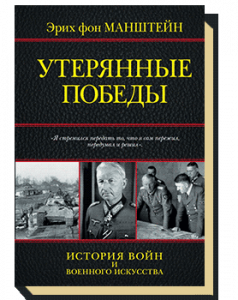 It was difficult to be a student-historian of the late 1990s and not get involved in reading memoirs of German generals. The AST publishing house, together with its satellites, reprinted and translated a significant body of memoir texts: first in color covers, then in solid blacks, finally in the famous Black-Orange series “Military Historical Library”. Gainz Guderian, Otto von Tibepelskirh, Hans-Ulrich Rudel and other Nemchura filled the regiments of bookstores. Closer to the end of the zero from these shelves, literature about Stalin will sweep away, but at the turn of the 1990s and zero there were a Wehrmacht, Luftwaffe and Kriegsmarine. In this painful interest in the Germans, there is clearly something from a teenage rebellion and from the Oedipus complex.
Manstein among colleagues-memoirists is not the most talented, but interest in him is increased because he, apparently, is still the most skilled of all German generals. He came up with how to defeat France in 1940; In 1943, in the third battle for Kharkov, he defeated the Red Army, having extremely modest forces. He was probably the most dangerous opponent, and, if not for his talents, victory would have come before. After the war, Manstein, captured by the British, fell under the tribunal and received a term for the murders committed by his units in the USSR. He, of course, considers this process to be ridiculous and does not understand at all why he was condemned. But even cooler is that he compares Stalingrad with farm -pounds. Fermopiles for the Germans. Well, that is, they tried to restrain the Red Army, as 300 Spartans Tsar Leonid tried to stop the Persian army. Fermopiles are good thousands of kilometers from the eastern border of Germany. Here is a bastard!
George Vladimov. General and his army
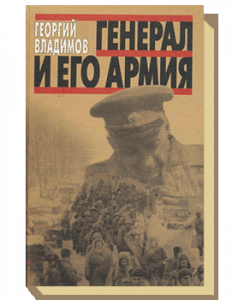 One of the most important post -Soviet novels about the war. The protagonist, General Kobrisov, must release Kyiv, who is called differently in the novel, but is still easily recognized. He wants to take it slyly, avoiding losses, but at the headquarters - intrigues. In parallel, the general recalls his life, how he was arrested, how he was released, when the war began, how he was absurdly almost died during the battle for Moscow. In the novel there are different historical characters - and Gainz Guderian under his name, and Erich von Manstein under a stranger, and General Andrei Vlasov, the main Soviet collaborator, which is shown neutrally.
In 1995, the General received a “Russian Boker”, at that time the most authoritative Russian literary prize. At the same time, the novel was violently criticized, Vladimir Bogomolov, the author of the famous book “In August of the Forty -Four”, was the most formidable opponent. Bogomolov reproached Vladimov for inaccuracies, for the chanting of Guderian, who, like almost all German generals, was involved in war crimes, and in Vladimov was shown a thoughtful philosopher. In the journalism of those years, even a special definition appeared for Vladimov - “Guderian”.
It is interesting how the novel was perceived now - there are enough irritants for everyone. On the one hand, Vlasov is not in a negative form and Guderian is a thinking reed. But on the other hand, the “general” is frankly anti -intelligent and anti -Ukrainian novel. The fatal sorester, like a snake, climbs into the soul subordinates to the general, and the Adjutant intellectual easily capitulates, and the only one who does not betray Kobrisov is a simple man-Order. Vladimov draws a cold war inside the military authorities: bad Ukrainians, led by Khrushchev, intrigue against good Russians.
Len Deuton. Second World War: mistakes, misses, losses
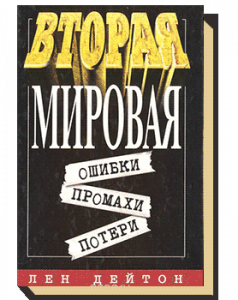 Len Deuton in the main specialty is the author of detectives, spy thrillers and, for a variety, culinary books. In addition, he writes the historical non-fiction about the Second World War. “Mistakes, misses, losses” are his most famous work. To some extent, this is very similar to our books about the war from the 1990s, because it is also a breakdown of the integration. The commanders are bad, politicians are even worse, this general was so mediocre, lost the battles at all theaters of military operations. He will lose, so he is thrown to another theater, he will be disgraced there. And this one lost the very first battle, the rest of the war sat in the headquarters, wrote memoirs and eventually showed himself to the world a hero. But these are all English showdowns, we have some conditional Sir Harold Alexander-a second-plan figure, for the British the highest. In general, to read about how the Englishman curses his generals and overtakes his heroes is extremely informative. In the 1990s in Russia, the young man enthusiastically injured by Viktor Suvorov’s book “The Icebreaker”-the usual path from delight to doubt, from doubt to the desire to expose and destroy. It is now seriously discussing Suvorov’s ideas seems comical, but, of course, the “icebreaker” influenced the whole generation of young people. It was nice to find out that the British not everything is so unambiguous.