Translated material
Horizons of the future
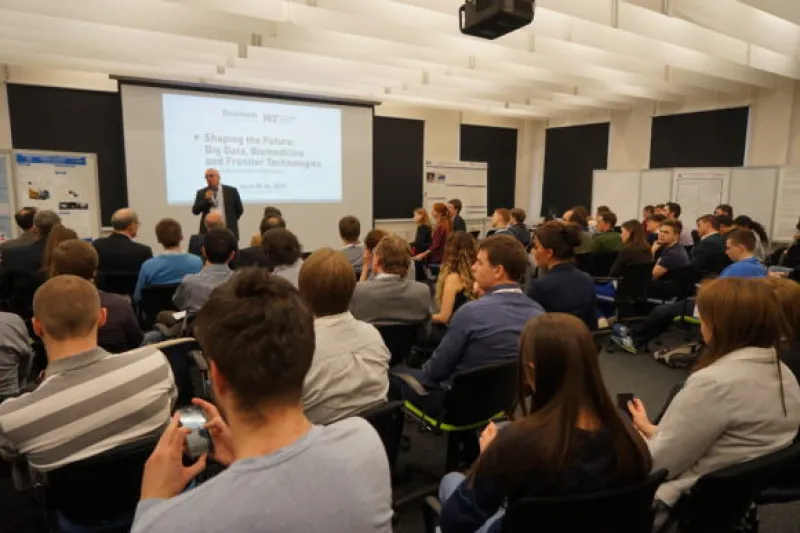
 April 25–26, 2017 in Moscow, in the Skolkovo Innovation Center, the international conference “Shaping the Future: Big Data, Biomedicine and Frontier Technologies”, organized jointly MIT and Scoltkh ( http://shapingthefuture2017.skoltech.ru ). We publish several responses from the participants of this scientific forum.
Phil Taylor (Phil Taylor), professor of energy systems of Newkasl University (Great Britain):
I really liked the conference. The level of presented studies was very high, and questions after each report were stimulated to further thoughts. The theme of the forum was very wide, but just those key problems of society that require scientifically finished decisions were considered.
I especially liked the reports on new results in flexible electronics (StretChable Electronics), machine training and the use of new materials for accumulating energy.
I cooperate with Skoltkh and MIT in the field of “smart” networks (Smart Grids), I am engaged in solving the problem of converting data networks on the network that would meet the trillema of accessibility, security and sustainability.
I have plans to start cooperation with Skoltech in the field of control over the frequency of alternating current of the electric networks of the future using energy batteries.
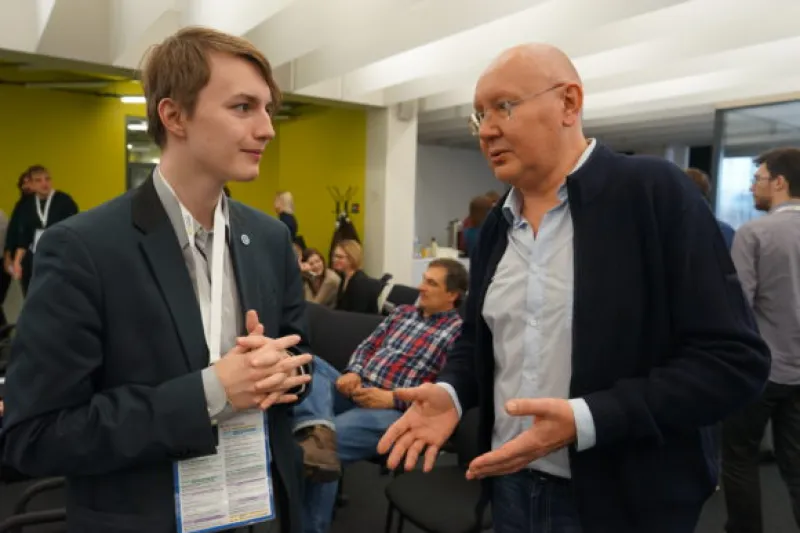
Sergey Nechaev, Director of the Interdisciplinary Scientific Center Poncele (Moscow):
The conference was quite interesting. Of course, and rather a representative than scientific, but it could not be otherwise. The most interesting was me the most interesting second (scientific) day. A certain inconvenience was associated with the conduct of parallel sessions - I wanted to listen to both biologists and people involved in networks, but I had to choose ... It is unfortunate that the Mattizics were not represented, but I understand that such a session would not fit into the overall concept of “practical applications”. Conducted a large number of young people with whom one could talk.
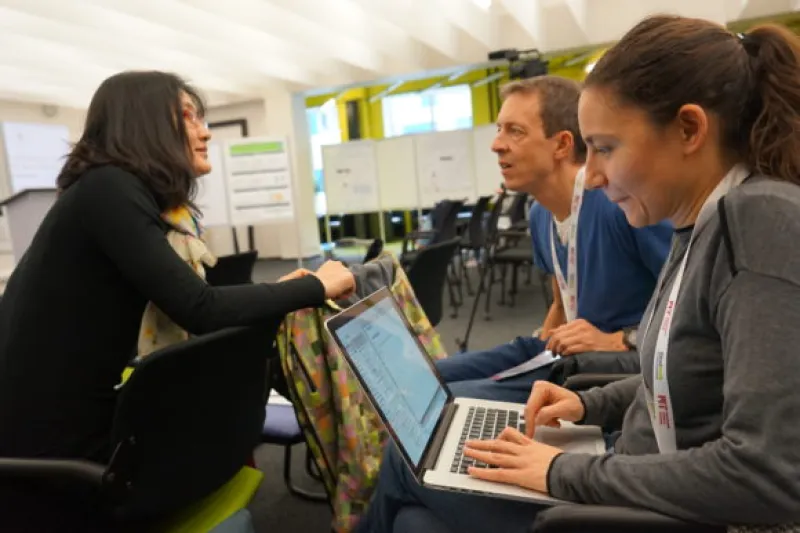
Karl vompson, professor of the faculty of material science and engineering MIT (USA):
I really liked the conference. She had an unusually wide topic, which allowed to learn about many important problems. The most interesting for me were biomedicine reports, since it was quite far from the field of my research.
The fourth year of work on the program has been going on, which is designed to create and support the Skoltha Center for Electrochemical Storage of Energy (Electrochemical Energy Storage). This is a tripartite project covering Scoltech, MIT and Moscow State University. I am a co -director of the center from MIT; Kate Stevenson (Keith Stevenson) - Director of the Center from Skoltha. Cooperation turned out to be very fruitful, the exchange of ideas and scientific results and mutual examination - very useful. The project has already involved 35 people, including six faculties, and he has already begun to bring important scientific results with publications in leading international magazines.