
Translated material
"ORO, Plata, Mata": melted by the sun
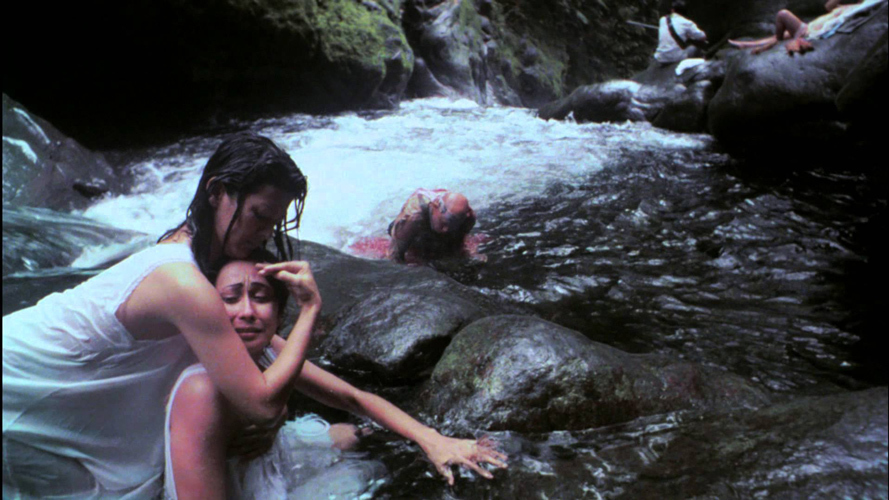
On Thursday, May 11, in St. Petersburg, a series of film screenings “Hidden” , dedicated to the hidden masterpieces of world cinema, begins (yes, such still remained). The first film shown in the Pavilion of the New Holland will be the experimental Saga of the Philippine director Peke Gallagi “Oro, Plata, Mata” (the world's first show with Russian subtitles!). Vasily Koretsky - about what this film is important for Philippine cinema and Russian viewer.
The Gallana Beijing belongs to the generation of Philippine directors, which caught the so-called second golden century of national cinema-the time of passionate and evil experiments that came, oddly enough, during the years of the military dictatorship of Ferdinand Markos (the first rise of the movie in the Philippines was in the 1950s, the era of the institute of superstars and high-budget studio paintings; the third began with 2000s and began with 2000 lifting independent of large studios and local cinema production, through the efforts of Lava Diaz, he continues now). Despite the strict state censorship, the 1970s and the beginning of the 80s were incredibly productive for independent and underground authors, who successfully combined in their films two Markos of the theme tablet in the "New Society"-social and sex. But if the films of Mike de Leon, Lino Brocki or Ishmael Bernal (he was actually a teacher of the Gallagi) rarely went beyond the boundaries of chamber drama, melodrama or experimental horror, “Oro, Plata, Mata” became an unprecedented attempt to draw a historical portrait of the nation: a film, the original timing of which was six hours, was released in 1982, it was released in 1982, it was released in 1982. Having ahead of the epic paintings of Lava Diaz for two decades, where the screen time before our eyes turns into a story itself.
 © Experimental Cinema of the Philippines
More precisely, not the whole nation - but, first of all, the pre -war high society has forever gone. Gallag in detail, in all physiological details, shows the process of disintegration of the aristocratic culture of mestizos and the general fall of morals and hierarchies, taking the fate of one clan as the model. In fact, “ORO, Plata, Mata” is the Philippine “Gone with the Wind”, but taken into the era of Napalm. Having raised the tragedy of a provincial landowning nobility to Wagnerian scale and seasoning with numerous conversational scenes by the bloody action in the spirit of Sam Beijing, Gallana subtly edited the genre of the Hollywood saga, supplying it impossible in the 1930s with the amount of sex and bloody giblets. But the radicalism of the film is not so much in the frankness of sexual scenes (by the way, quite restrained by the standards of the Bomba Philippine Erotic Genre popular in the early 70s) and literally igniting the screen of the degree of on-screen violence, but in its logocentricness, overload of secular chatter. The issues of etiquette and language occupy a central place in the picture: “ORO ...” demonstrates not only the wide social palette of heroes with unique speech characteristics and eloquent class patterns of behavior, but also the process of changing cultural preferences in the Philippine society. The time of Spanish hegemony ends, there is an American expansion, and the characters of the film are gradually moving from Tagalog and Spanish to English.
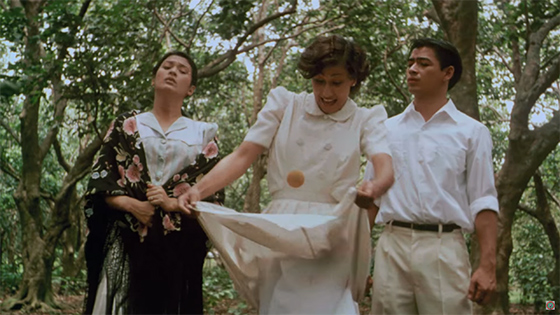
This three -hour begins (counting on national rental, Gallana halved the film twice) The saga and completely in the spirit of Alexei German: the noisy and multi -figure scene of the provincial aristocracy in Bacolod, the capital of the island of Negros. The camera continuously cuts out the crowd in different directions, grabbing fragments of dialogs drowned out by music and the ringing of instruments, hastily introducing more and more heroes. Behind this waterfall, the hustle and bustle is easy not to notice the real prologue of the picture-delicate delicate frames-postcards, portraits of carefree people of the pre-war era, which go on the opening credits. As befits a family chronicle, “ORO, Plata, Mata” opens with a family album, and this is the same way the album of the 1940s and the 1980s: because of a limited (a little more than a million dollars) Gallag budget could not afford, but even professional actors, and some of the roles are played by his friends and numerous relatives (for example, the clan patriarch is a grandfather. director).
 © Experimental Cinema of the Philippines
Written as a novel designed as an opera, the film is divided into three acts. And the first, the era of abundance ( ORO , “gold”) ends after 20 minutes - the news of the death of the Correchidor civil ship, which flew into the Japanese mine. The war began, and the audience in tears and panic leaves the party. The hosts leave the city - the Lorenzo family, their servants, friends and poor relatives. The head of the family, the elderly Don Claudio, is not only the owner of sugar plantations and a passionate entomologist, but also the key figure of local resistance, a sponsor of partisan detachments already formed in anticipation of the landing of the Japanese. He takes his family to the province, to the Hasenda, where the second act of the film ( Plata , Silver) is played among the fruit gardens and thickets of sugarcane), tapering here to the scale of the chamber drama about the growing up of two young people - the young Miguel Lorenzo (Joel Torre, then an unknown debut of commercials and nobody TV shows, now - the star of the Philippine cinema, who starred, in particular, in the “Bourne’s evolution”) and Trining Oida, a modest girl from the family simpler. The air, the sun and the abundance of secluded towns awaken sexuality in the heroes, while still romantic and awkward. But the offensive of the Japanese forces the family to leave this bucolic paradise, to retreat to the hunting borrowing in the often jungle, in the heart of darkness.
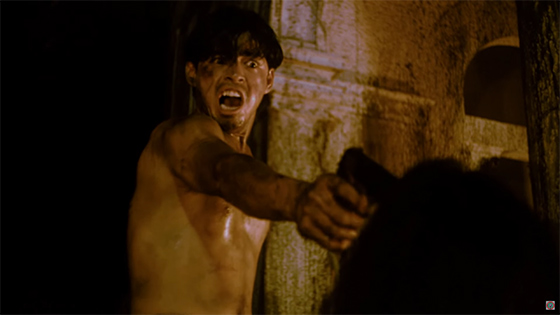
This final and longest (almost two hours) act of the picture is played out in fairy -tale landscapes that are familiar to every viewer of the same lava Diaz, among the rocks and majestic waterfalls, surrounded by dark to the blackness of the forest, filled with strange sounds and inhabited by spirits, harbinger of trouble ( Mata is “trouble”, “damage”). In the first panorama of the forest shelter of the Lorenzo family, we see all the signs of the impending fall of the heroes into the abyss of violence and animal passions-here they will gut the pig (the guts fall out directly onto the screen), a woman straightens out of the bushes and clothes-obviously after sex with someone from the servant. It is here, far from the burning civilization, that Miguel and Trining will finish their life universities, bringing to the ugly extremum the gender models of the old order. It will actually become a regimental whore, he will not only turn from a mother’s son into a clever soldier, but will also love to kill (a frame in which Joel Torre blows at half -headed Ku Ledesme, an actress of heavenly beauty, then made a truly shock effect on the Philippine audience, and now this separate scene looks stronger than many bloody compositions of John Wu).
 © Experimental Cinema of the Philippines
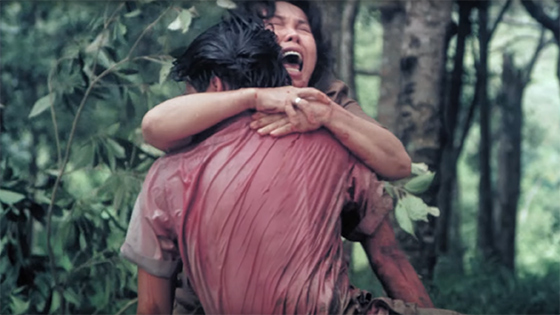
Looking at the Opus Magnum Gallagi (and this actually the director’s most important in the filmography of the director) from today, of course, is amazed at all the unexpected parallels and rhymes that are hidden in this ambitious, not always impeccable, but undoubtedly heroic, and in places a really virtuoso production. Filted in deaf often, like Fitzcarraldo, a team of semi -professional, sometimes - in extreme circumstances (for example, the final episode of the massacre was shot in two locations, in the buildings of the school and a bathhouse, which were detached from each other by 50 km, and the school part had to be finished by the beginning of the morning classes, removing all traces of false blood, soot, pyrotechnics and pyrotechnics and pyrotechnics and pyrotechnics and pyrotechnics and pyrotechnics drunk gangster revel), “Oro, Plata, Mata” is similar not only to the “ruined by the wind” captured by the “Wild gang”, but also to the “Apocalypse today” - the visit to the set of Coppola made a strong impression on Gallag; First of all, he discovered the importance of the role of the artist and the production design-before it never occurred to him that the director could set fire to a couple of villages only to remove the reflections of the fire in the eyes of the protagonist. And the Russian viewer will undoubtedly remind the “tired of the sun” (the connection of Mikhalkov’s tetralogy with the Saga Margaret Mitchell is still waiting for his researcher) - the same style of the salon drama, which fails in the hell of the war and the same trajectory - from the table scenes to naked and burned, studied flesh. Only, unlike Mikhalkov, Gallana focuses on the destructiveness of the state of the war, bringing the catastrophe of each of the parties the conflict. It is significant that Japanese soldiers practically do not appear on the screen - except in the form of disfigured corpses. But here it is clearly shown how the imperialist war turns into a civilian: all violence in the film comes from its own, from spontaneous partisan gangs, fighting against all, and first of all, against the former owners.
Unfortunately, despite all the above, the festival fate of the picture did not work out at all. Having finished the installation, Gallag received an offer from Pierre Risen, the Cannes selection and director, who shot in Hong Kong and the Philippines, decisively reduce the final, full action and ultrarealistic violence, but refused and stayed at home; As a result, Mike de Leon (two-week directors in 1982) and Lino Brock (the main competition of 1984) went to Cannes. “ORO, Plata, Mata” was invited only to Chicago, where the audience of Bukal approximately in those places that have become common today. I hope that the Russian spectator, learned by Herman, Mikhalkov, Hong Kong Kong and “Contemplative Cinema” at the same time, will be able to read this difficult (50,000 signs of the same subtitles) film text.