
Translated material
The most popular toy in the world
What is Fidget Spinner and how it is arranged
Do you know what it is?
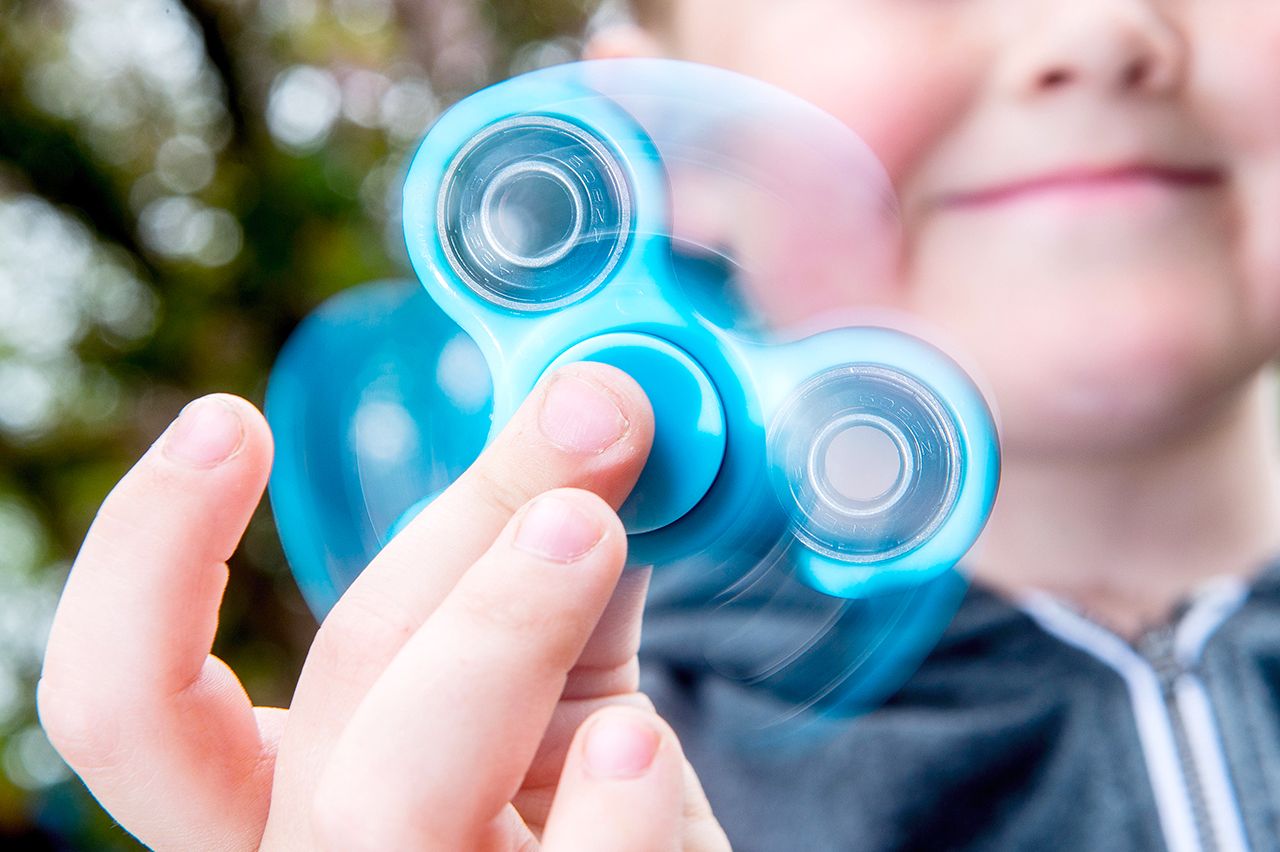
This is a new toy class - Fidget Spinner. Wireed calls them “a new cube of Rubik” and “New Tamagochi”. The New York Times - "Hulahup Generation Z".
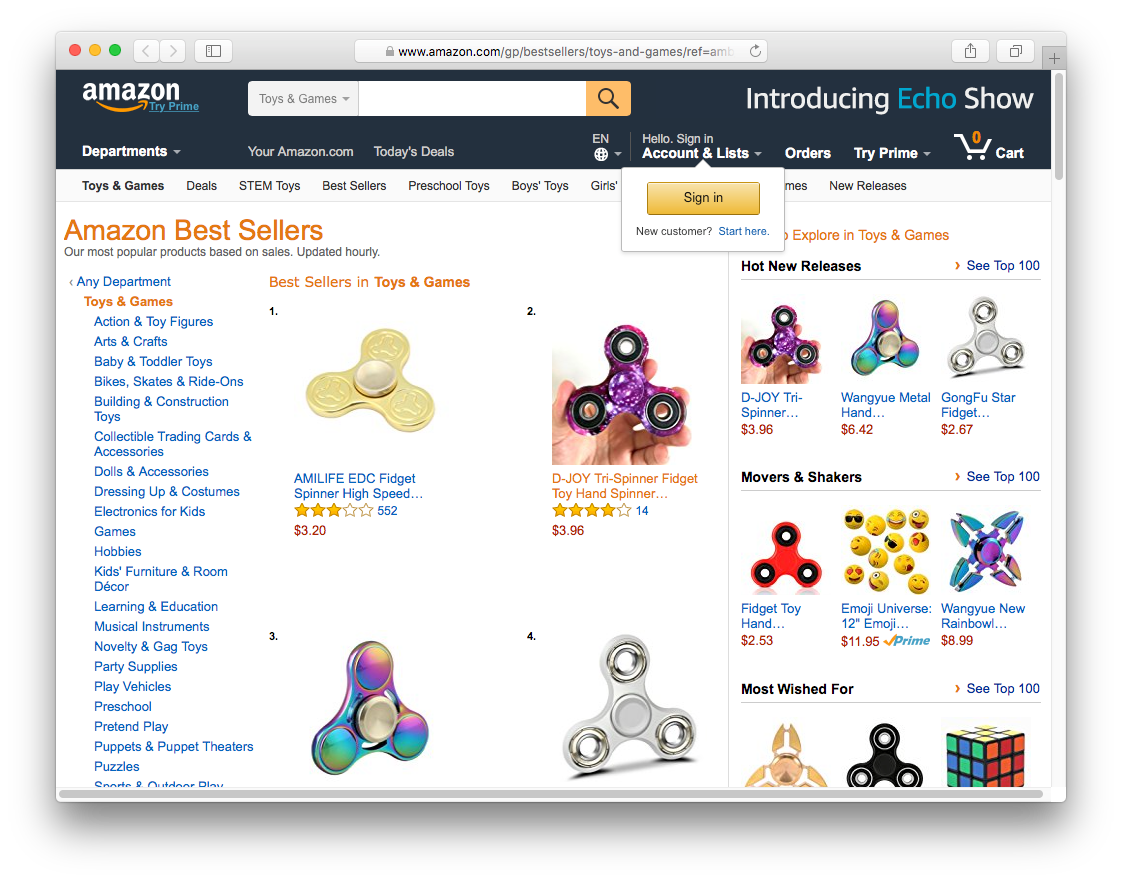
They became very popular in 2017 - so much so that in early May they caught up with US President Donald Trump in the number of search queries in Google. And in the top of Amazon, among the 20 most popular toys, different versions of spinners occupy 15 positions.
Fidget Spinner is a small bearing to which parts of plastic or other material are attached. The user holds his fingers by the inner, motionless, part and spin the external. This is how it looks like a gif:
The “classic” spinner has three rays, but there are options with two rays, and with four and round shape. Sometimes another bearing is built into each ray - and then the toy can be rotated not only around the central part.
In 1993, Spinner was invented by an inventor from Florida Katherine Hettinger. She told The Guardian that this happened “terrible summer” when she could not play with her daughter because of myasthenia-a disease characterized by very quick fatigue of muscles. Spinner allowed her to occupy the child.
Hattinger sold several thousand devices, and in 1999 patented her invention. But the matter did not go further. The manufacturer of Hasbro toys refused to produce spinners, and in 2005 the patent expired - Hattinger did not have money to extend it.
In subsequent years, small companies produced spinners as therapeutic devices for children with attention deficiency and hyperactivity, anxiety and autism. But by the end of 2016, no one was particularly interested in them.
On New Year's Eve, Forbes called the spinner "an office toy, which must be bought in 2017." Moreover, the publication had in mind devices that cost from 139 to 199 dollars. They were called "iPhones among desktop toys."
In 2017, it became much easier to buy spinners. On the same Amazon, ordinary versions now cost two or three dollars, and more expensive-10-15. In March and April, YouTube began to appear massively a video with reviews of spinners and tricks that can be done with their help (one of the tricks - to make the toy rotate on a non -standard surface - for example, on the tip of the nose or toes).
In some cases, spinners try to promote the most strongly and break something with their help. For example, a phone.
Teenagers were also carried away by the spinners, and so much that in some schools in the USA and Great Britain these toys have already banned - teachers believe that they distract students, and do not help concentrate, as manufacturers promise.
In April, several tens of millions of spinners were sold, but Katherine Hattinger did not earn anything on them. In early May, the 62-year-old inventor launched a crowdfunding campaign for Kickstarter and invited everyone to place orders for the “classic spinner”. In the first six days, it was possible to raise a little more than two thousand dollars; The goal of the campaign is 24 thousand dollars.
Perhaps Hattinger was inspired by an example of a campaign of another popular toy now - a cube for nervous people. In September, the brothers Mark and Matthew Maclaclans tried to raise 15 thousand dollars through Kickstarter. And they collected more than six million.
Sultan Suleimanov