
Translated material
The fragility of macron
The new French president can lose the elections in June
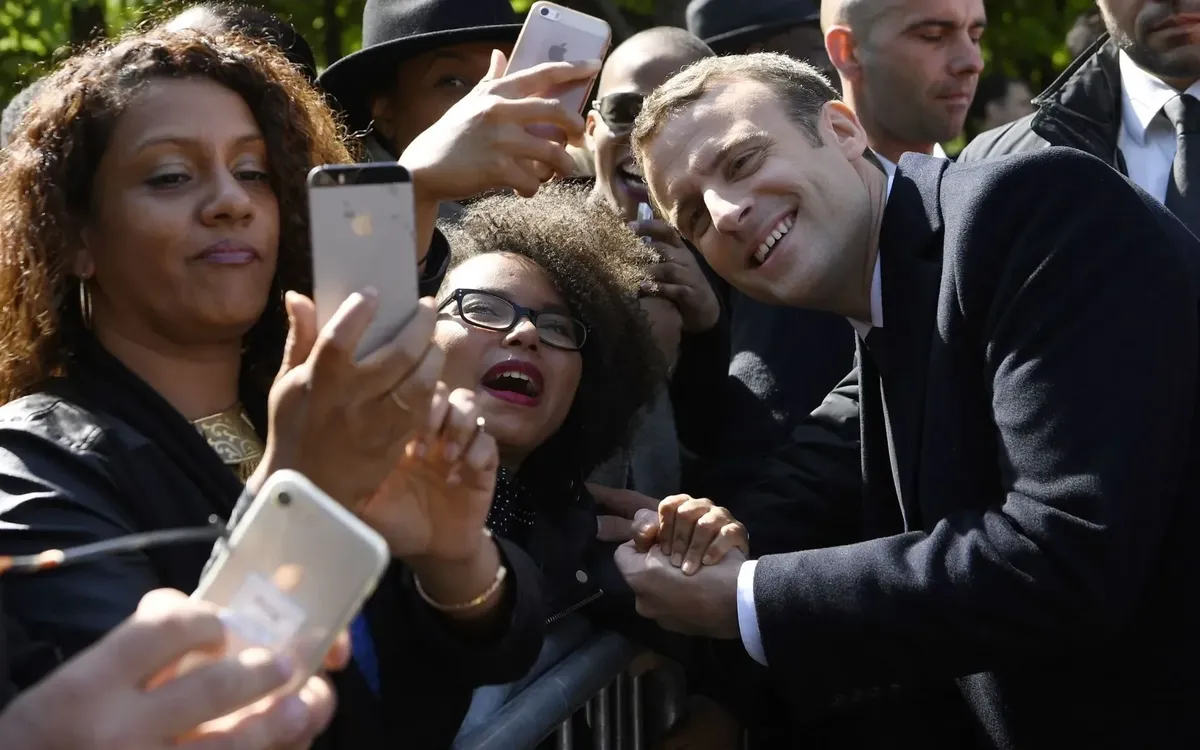
The entire previous week in the European media was dedicated to the laudatory odam of the victory of Emmanuel Macron in the France elections, interpreted as another evidence of the global trend for renewing political elites. The fact that in the case of Macron - the former Minister of Finance under President Olland, the update was extremely conditional, confuses the few. As, however, the peculiar accident of his victory: the corruption scandal around the main candidate of Republicans Francois Fiion literally brought down the rating of the latter at the end of winter, which is why he gave way to Macron, lagging back in the first round by 3%.
By the June election to the parliament of such a handicap, the new president will no longer, although there must be the so -called The “Presidential Prize” - given the proximity of these two elections in France, voters, as a rule, more willingly give their vote to the party of the newly elected head of the country and in the parliamentary elections, giving this the promised political course. Therefore, often elections to the National Assembly become formality. However, it seems not this time.
June elections to parliament will be the most important battle in the war of old parties with the new president. And the latter’s chances to come out the winner this time are small. There are two main reasons for this.
Firstly, the record 66% of the votes cast for Macron in the second round of the presidential election was already dubbed “marriage by calculation”, a kind of “vote from the contrary”. According to French Pollesters, only a quarter of those who were going to vote for Macron in the second round, really shared his ideas. More than 60% of the French surveyed after his election said that they did not want the dominance of the macron party in parliament, expecting the appearance of the prime minister independent of the president. In general, the victory of the newly elected head of the country is to a greater extent - the consequence of the formation of the United "Republican Front" as opposed to the "National Front" of Le Pen. But the republican coalition broke up immediately after the closure of the doors of the polling stations last Sunday - the leaders of the right -wing conservatives instantly stated that they became opposition to President Macron.
The second problem of the student of the philosopher Riker is the actual lack of his own party. Movement "Forward!" (En Marche!), Formed from scratch in April last year by Macron himself and even named so as to correspond to his initials, of course, was formed as the base of the political support of the presidential candidate and has never participated in some significant electoral processes on their own. "Forward!" - Nedideological movement, like the macron program itself. The only clear message is that all the elite renewal, under the implementation of which Macron announced throughout France a free set in candidates for upcoming parliamentary elections from among those who have no political experience. The quota of such "new persons" is among the candidates from En Marche! It should be at least 50%, which was well sold to the electorate as part of the macron election campaign, but threatens with risks during the parliamentary campaign.
The fact is that the elections to the French parliament are not held according to the proportional system - when they vote for a party list consisting of a certain number of candidates - but according to majority. All 577 seats in the national assembly will be distributed as a result of voting in the districts for specific candidates representing parties in the process of two rounds. Moreover, everyone who gained more than 12.5% of the number of registered voters, and the winner in it is determined by the relative majority.
In fact, the task of candidates in each of the districts is to implement the script for the presidential election, i.e. Go out onto the second round with the representative of the National Front and thus force voters to vote again “from the contrary”. The problem is that two do not necessarily go into the second round - it all depends on the turnout during the first round. And the most likely scenario for a significant part of the districts is the exit to the second round on one candidate from Macron, Le Pen and the Republican Party with the minimum final gap between them. And here, not so much the slogan of elite renewal, but the real party vehicles in the field, which help at the decisive moment, will be crucial. Of course, the new candidates of Macron have no such cars.
The team of the new president understands this risk well and tries to fight him.
Macron today is building not a new centrist party, but at once a new nadieological coalition.
He openly takes into the ranks "Forward!" Natives of the Socialist Party, which is in a semi -disclosure state. Supporters of a more radical left -wing policy and a former president of Melanchon are actively finished off from the other region. A number of Pollesters in connection with this position of the Ollanda party generally give them literally 15-20 seats in the new parliament, which, of course, pushes candidates from the socialists to join the ranks of Macron.
Macron himself understands that its main opponents in parliament will be Republicans, and is actively shifting to their field. Movement "Forward!" It became “ahead, the republic!”, The newly elected president will also offer the electorate the candidacy of the Prime Minister in the inter-election period. Macron is actively “trading” for new posts in the government with those Republicans who are ready to risk and run for parliament from his movement, but there are not many such daredevils.
The problem of such a coalition model of party construction in its fragility. Even if the macron manages to collect the majority in the parliament within his new party by political games, the party itself - motley and centrist - will fail at the same time, when the macron renewal train will end. The crisis of the French party model will not be overcome, but postponed for the next 5-8 years.