Date
Author
Владислав Моисеев

Preserved copy
Translated material
Shock watch video !!!

Study
" Life on the air "
After studying the place of suicide in the modern world, Samizdat “Batenka, you transformer” begins to publish its new large -scale study - we study the life of mankind live. In the near future, completely wonderful things await you: the worlds of Russian and Asian streaming, Instagram research, a trip to “Let them talk”, the reflection of the series “Black Mirror”, violence, deviation and a lot of things. And this series is revealed by a small lecture of the candidate of philosophical sciences Vladislav Moiseev about the philosophy of live broadcast, or how can we live with this shit.
1
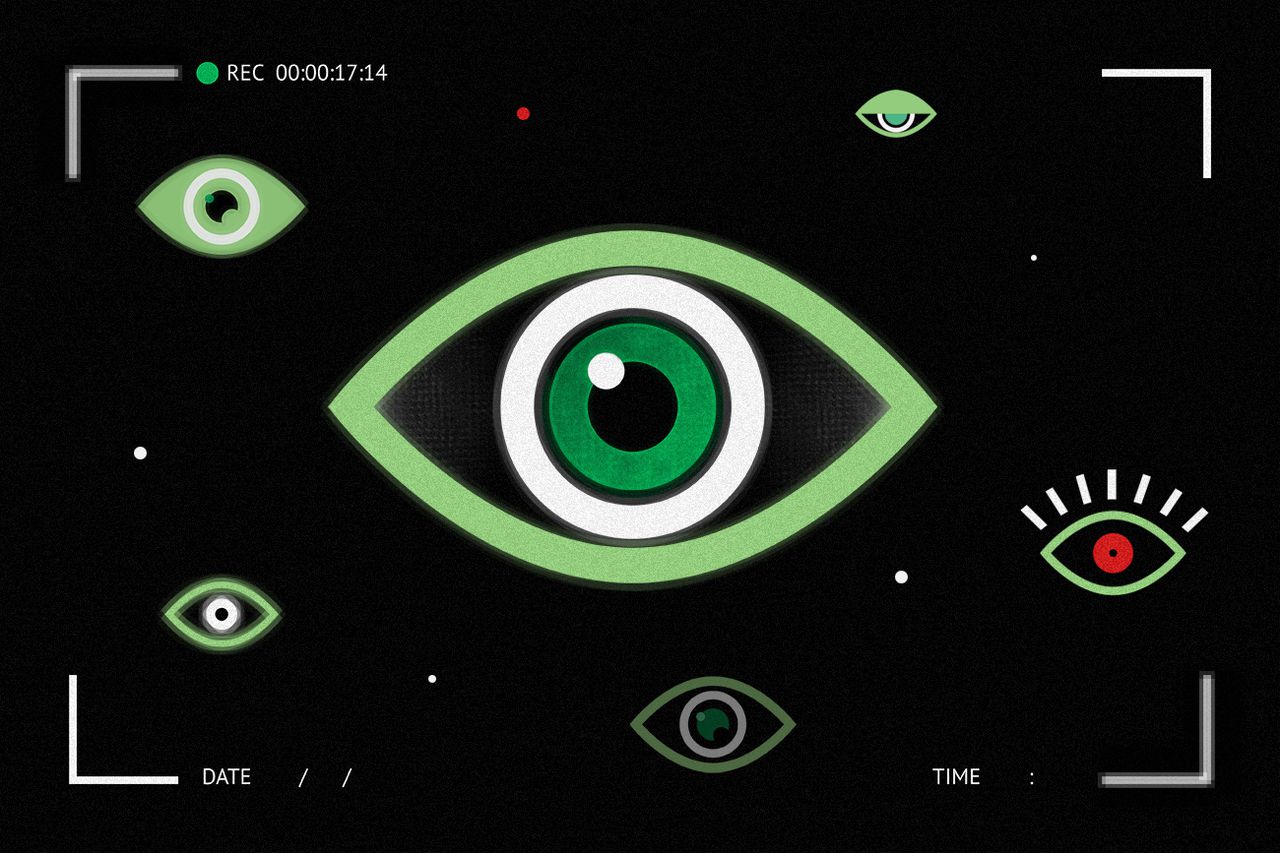
The news that someone burned himself died behind the wheel, raped or killed someone live, back in 2016 were perceived as something amazing. But today it is a dull common routine. This happens every day, the exception quickly turned into a routine. Egalitarized striming did not open anything new, except that he slightly expanded the keyhole through which you can observe the already extremely exposed humanity, even more than eroding the boundaries of privacy and private life.
2
By and large, a person was never extremely hidden from an external look and was always on a kind of live broadcast. It's about a slightly vulgarized perception of Western religious tradition. Within the framework of such a performance, the all -pervasive, all -seeing and constantly evaluating divine essence looked after everyone. The mass consumer of religion was not always devoted to theological subtleties and perceived it as a form of control. This is very similar to the effect of an unexpected hit in the frame: usually people, when someone begins to shoot them, is trying to sharply make their face more noble, their eyes are smarter, to pull their stomach. And if you are constantly in the frame, then the stomach should be constantly drawn, eyes are smart and so on. This show has only one spectator, but, as you know, sometimes this is enough to go straight to hell.
3
The idea of divine control, constant broadcast of all thoughts and actions into a supervisory institution is an exaggeration, a metaphorical structure. With the development of scientific progress and morality, the influence of religious dogmas weakened, and as a result, this systematically led a person to the idea that the world is more or less solved, control and there simply is no institution of external responsibility. In the first half of the twentieth century, mass television was a dynamic monument to the almighty man-console of reality. Many call him one of the main revolutions of the century. And that's right. But television for a long time remained predetermined and static, despite moving pictures. The recorded programs were reproduced on the air, in which everything went along the rolled-it was the perfect world in which it was unlikely that something could go wrong-the double could always be rewritten.
4
The emergence of a direct broadcast on television gave a real delight of unpredictability and the non -control of life with one double. This format questioned the emasculated predictable reality. A live broadcast gives the feeling that it is not a person who controls the world, but the world - by man. The murders, cataclysms, the crashes of spacecraft - this is unlikely to indicate that a person controls the situation, and in the world everything is OK. It is enough to recall one of the greatest direct broadcasts in history-September 11, 2001: the collapse of twin towers was perhaps the best video examination that the presumed conqueror of the world is a colossus on clay legs and his shatter position. It is only in the cinema Bruce Willis is landing on an asteroid, lays a bomb there, explodes it to a damn mother and saves the earth from imminent death. In fact, the world is fragile and unpredictable.
5
Live-it always sounded proudly and somehow in a special way, truthful and sincere. TV presenters still proudly make a weighty accent that their ether is straight. But it looks every day more and more stupid, given that now everyone can lead a stream from a smartphone or webcam. The philosopher-vorchun Jean Bodriyar wrote a lot about the screen culture. For example, he has excellent passages that media enchanted by the scenes of violence, exclusively discussing the details of death, terrorist attacks, become a kind of accomplices. You can argue with this. But he also has an interesting idea that being connected to vitality (various manifestations of bodily, pleasure) is a kind of ontological foundation of the twentieth century: it is much more important to be connected to vitality than to possess it. In this context, today's broadcasts of the stories of life and death, sex, absorption of food, murders, emergency situations are a collective recognition of their own boundaries and limits, the production of vitality for everyone and everyone. But the old man died before the invention of Periscope, what can we say about the application like classmates-Live.
6
If in the twentieth century the live broadcast was some significant effort and professional pride, now it’s hard to say that now it is not broadcast online-this format is completely egalitarized, everything playing pandas, sex, cute cats, fires, suicides and Russian rap. But this is only half a bastard. It is enough to walk along the street to be shot at hundreds of chambers sticking out of the most unexpected places. Who will watch all this, why does he need it, he will watch the video with you or not is incomprehensible. If in some public place there are no cameras that translate what is happening on faded screens, it already looks strange and even suspicious. The institutionalized live broadcast with an understandable chain of participants was transformed into an endless unauthorized film in everything in a row, all cameras merged into one ecstatic seizure of the absorption of the world and turned into a single, non -alien eye. This new vision is background and in many ways meaningless, it simply gives a sense of real reality. Because if the reality is displayed on the screen, then it exists. However, if someone seduces you with green, a handbag or even rape you, there is no guarantee that the divine eye will not roll up from indignation with the insignificance of human existence.
7
“The eye no longer extracts surplus value from a spectacle of pain, he stopped evaluating; Rather now, he began to “warn” and oversee, to interfere with the fact that at least some surplus value eluded the transcoding of a despotic machine, ”wrote Gilles Delez and Felix Guattari in his“ Anti-Edip ”. Of course, vision is control, the foundation of monstrous paranoia. Thousands and thousands of lenses are constantly instructed for a person. In practice, this control is often ineffective, illusory and not formally meaningless, cameras may not work at all. But the main thing is that they are. This is a sense of constant observation, even in the most awkward or secluded moments, wherever you are. This is true funny, but in a completely desacralized world, where traditional divine entities have long retired or leaned back, their functionality is taken by a new technological observer.