
Translated material
Comrade Matilda
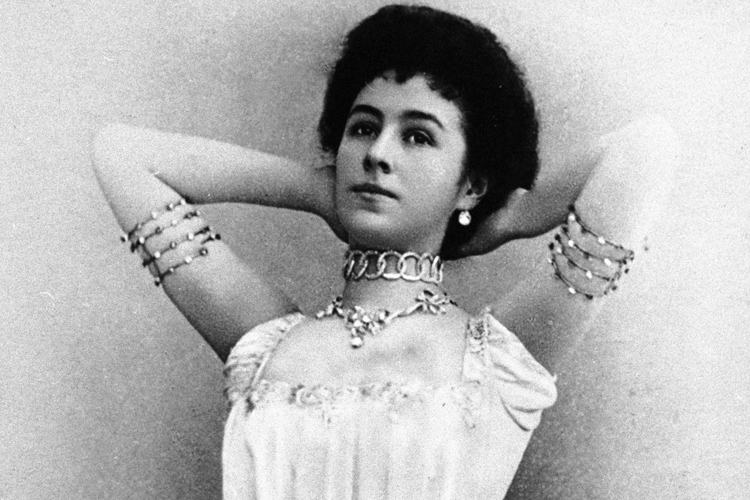
Let the idealist philosophers will put their hearts in the caches, let the legal philosophers check those principles for the protection of which they are upset, and let them go to the first ballet, which will be given on the stage. They will see, they will feel with the paint of shame on their faces that they have dedicated their whole lives to nothing else, namely, just composing ballets.
M.E. Saltykov-Shchedrin, "Modern Ghosts"
Clio is malleable. Some sculpt from it melodrama, other sacred text, a third criminal investigation. But there are those who turn it into a light and not knowing boundaries of shalunyu fantasy.
The scandal about the film director of the teacher, dedicated to the novel by Ballerina Matilda Kshesinskaya and Emperor Nicholas, recently broke out. An influential clergyman and a cute deputy prosecutor call the plot of this one that is not yet released on the screens of the film by slander, blasphemous for the memory of the Holy Tsar. The liberal public calls for respect for the facts and finds Obscurantism and attempt on freedom of creativity in an initiated deputy. The teacher complains of grass and threatens to sue. Minister of Culture and Presidential Press Secretary of the President like on his side. The church is silent and frowning. Even the Russian Wikipedia was bent and rocking, saying that the ballerina only “met with Tsarevich Nikolai Alexandrovich”, and then “became a mistress” of the two great princes. It is not clear to the people whether the future emperor had a connection with her or could not be, because, as the hired experts testify, it was ugly, unlike the classic English wife in its beauty. Who to believe?
I have an answer. Believe Ivan People’s. Who is it? A wonderful person: Russian emigrant of Estonian origin (real name Jan Sibul), a revolutionary, an weapon merchant, a playwright, a mystic, a dance theorist (especially naked) and, most importantly, the creator of a thousand and one fake - from the bonds of the United States of Russia to fantastic stories about great actresses, poets, composers, scientists and travelers, Published by him in the 1910-1930s in Sunday issues of publications belonging to the newspaper Empire Magnat Herst. If the XX century was indeed a madman's dream, then Ivan the People’s was the most adequate, that is, the true, its expression.
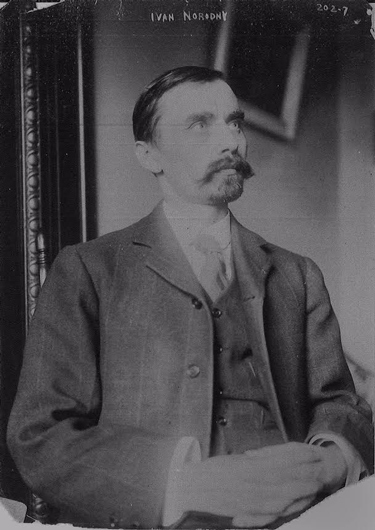 Ivan Ivanovich Narodnaya (1908)
In August 1919, in several American and English newspapers, a long national article was published, dedicated to the fate of the favorite of Tsar Matilda Kshesinsky and other dancers of the imperial ballet. In the article, on the scope of the entitled “What the Bolsheviks did with the beautiful royal ballet: sometimes the tragic, sometimes comic, but the invariably heartbreaking fate of the beautiful dancers, who once delighted the spoiled great princes and the nobility of the old and forever disappeared by imperial Russia,” folk tells that it actually happened to the small whim The imperial scene after the revolution, who was overthrown by her august patron (yes, they were connected by the bonds of real noble love), which expelled her from the palace presented by the king, in which the entire aristocratic and artistic bohemian of Petrograd gathered, and destroyed the fairy-tale world of the Mariinsky and Bolshoi Theaters.
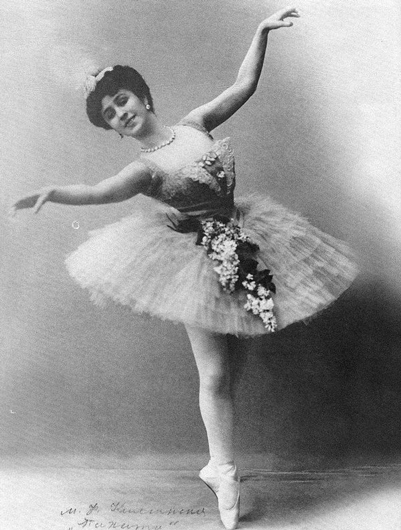 Matilda Kshesinskaya, the former favorite of the king and the richest dancer of the imperial ballet, who changed places with his valet and relocated to his farm in a remote Russian village (photography from the article by Ivan Folk)
It turns out that from the terror of the Bolsheviks of the Kshesinskaya, it was possible to escape with the help of its former valet Feodor, who, after the revolution, became a Soviet functionary. Theodore invited her to change places: he drove into her palace, and she - into his house in the village of Ligov, located many miles from Petrograd (in fact in the modern line of the city; there Kshesinskaya, by the way, was born).
Kshesinskaya, writes people on the basis of secret information he received, having lost his beautiful dresses and jewelry, changed into a rude costume of the Russian peasant woman. Instead of the palace, she settled in a hut, consisting of two rooms - residential and kitchen. She has a small kindergarten with apple trees and stables with crusts and horses belonging to the peasant farm. Kshesinskaya is now interested in rabbits and wolfhound dogs, which she raises in the hope of making some money. She herself works on the farm. With his own hands grows potatoes, cabbage, etc. A brilliant dancer is satisfied with her new life. Simple men and their wives who can neither read nor write, do not know who she is. Russian peasants, people writes, passionately love music and dances. Very often, young guys and girls gather in a barn or in the meadow and sing and dance under the accordina (Concertina) or the violin of a village musician. Comrade Matilda takes a lively part in these amusements: dances and sings with others. Once, a wandering gypsy orchestra arrived in the village and presented to the peasants fragments of several famous Russian ballets. Comrade Matilda jumped out to the site and performed several wonderful PAs in the moonlight with enchanting skill. The peasants, who hitherto not paying much attention to her talent, scratched his heads and admit that she was very different from other women.
What happened next, the people's does not tell, but goes to the fate of other famous ballerinas, who managed to survive in the bloody season. Madame Geltzer found herself in the new Bolshevik theater and dances in the ballet “Ghost of the bourgeois”, where she is trying to seduce a courteal ghost in the form of a giant mushroom, but she is given to a rough and strong Hercules-Proletaria, who carries her out of the scene. Tamara Karsavina, fleeing the encroachments on the side of the influential Bolshevik, fled to London. And the beautiful ballerina Natasha Muratova cut off her beautiful hair, changed into a gypsy, took a drum, a violin and a wolfhound dog (apparently, the beloved breed of Russian ballerinas) named Boris and in the fortuneteller’s costume went to wander. She reached a steppe place called Kievka, where she decided to breed horses and sheep. There, she found an amazing berry, from which she learned to make a dummy delicious drink, which soon replaced the local residents with vodka and beer banned by the authorities. Then, from this berry, she began to make sweets, earned enough money to open her own store, in which the local guys packaged sweets in birch bark boxes, and the townsfolk gathered, ate and discussed politics. And once she took off her makeup and appeared before the locals in the image of an amazingly beautiful girl in a picturesque South Russian dress. Finally, she began to put her printed photos in the boxes with the text telling about her fate. And she also took an oath not to marry and not sell her store until the power of the Bolsheviks ends in Russia.
Many charming ballerinas of the Imperial Theater testifies to the people's, like Kshesinskaya and Muratova, in distant villages, and some organized small mobile ballet troupes there. The noble riches of aristocrats and merchants, which disappeared from the cities, were now revealed in remote villages, and no one will surprise anyone with the most wonderful emeralds, rubles and pearls around the neck.
So it was. And it doesn’t matter that in fact, Kshesinskaya, after the February Revolution, left with her son in Kislovodsk, and then through Constantinople to Europe (two years before this story, the people published a fantastic article about the flight of the daughter of Emperor Tatyana to America, where she was supposedly about to start a career for the dancers; many people believed). Who needs facts if you want something good? This is a dream, a fairy tale, utopia, an attempt to save the fragile creation of the old world at least in the imagination - a ready -made libretto for a classic ballet.
And you know what? Although the national article only casually speaks of the love of the ballerina and the emperor (once on the beautiful gala concert she decided to sit next to the king, and the gallant Nikolai himself set up her chair, and there was no queen at that concert), I know what needs to be done to stop the meaningless and merciless argument. Neither a romantic melodrama, nor life, nor examination and counter -experts will bring complete satisfaction. Historians, politicians, artists and clergymen need to listen to the wonderful fantasy of Ivan People’s. The director should be the teacher on the basis of it to create an all-producing folk ballet film. The monarchist’s deputy could dance Kshesinskaya in the village, a bishop with experts-ordinary men and women with emerald and pearl pendants, and at the same time a gypsy camp, the Minister of Culture would act as a savior of Theodore, a state man. It would not have to be touched at all (a portrait on the stage or the vague-allegorical dance of Kshesinskaya-already enough). And the music would be written by the one who we have all the music and orders.
And Klio Torcykhora will become. And the story will stop its current. And everyone will be fine.