
Translated material
"We are growing too fast"
Vox Media operating director Loren Rabaino - about how to do modern media

Vox Media is now one of the main media companies in America. The holding includes eight publications - Vox, The Verge, Polygon, SB National, Eater, Racked, Curb and Recode, which cover about all the topics that may interest the American audience. The company claims that every month of its publications is read and watched by 170 million unique visitors, develops video on Facebook, its own publication system and believes that the era, when the site was the main one for the online publication, has passed. The publisher of Medusa Ilya Redister talked with the Vox Media operating director Lauren Rabaino about what modern media is - and how to live with it.
On May 27, Lauren Rabaino will speak at Skype at the Storm conference . Tickets for the conference (including video broadcast) on sale, buy them here . According to the promotional code of the Lauren, a 30%discount!
- You at a lecture one year ago said that the web died. Do you really think so?
-I said that the web sites are dead. Although it is obvious that sites are not dead. Facebook - site. YouTube - site. But media companies are now thinking about sites differently than before. Because before it was the end point of the meeting with the audience, but now not. We now thought that social networks should bring people to our site. Have you brought a lot of traffic from the social network? Success. This does not work anymore. We now count the views on Facebook, in the search for Google, in the Accelerated Mobile Pages , we count the video views. Many of these people never come to our site, and this is normal.
“You still said that media is a brand.” It seems to me that this definition is not enough. What is a media brand? We are not television, we are not a radio, we are not a site, not a magazine or a newspaper. We are something new. What?
- Yes, and therefore I focus on the word “brand”, because the brand does not connect you with an obsolete heritage. I do not think that TV channels and newspapers have ever considered themselves comprehensive brands. The media company is constantly striving to be everywhere. So when you ask me what the brand is, I am talking about the mission, voice, talent of the team, integrity of content and its quality. The brand consists of this. And the concept of existence in just one place sunk into oblivion. In general, it freed us! We should not close on one platform. We should no longer tell stories in the same way. We should not have one formalized process for everything, even for advertising. You can distribute your mission everywhere, you will reach the document. So I think that the disappearance of a single medium is completely normal.
- There is a wonderful sign in which it is shown how many platforms there are certain American publications. The record holder is Wall Street Journal, they have 23 platforms, you have much less. How do you decide where to go, but where is it not worth it? How do you make a decision, what to invest in?
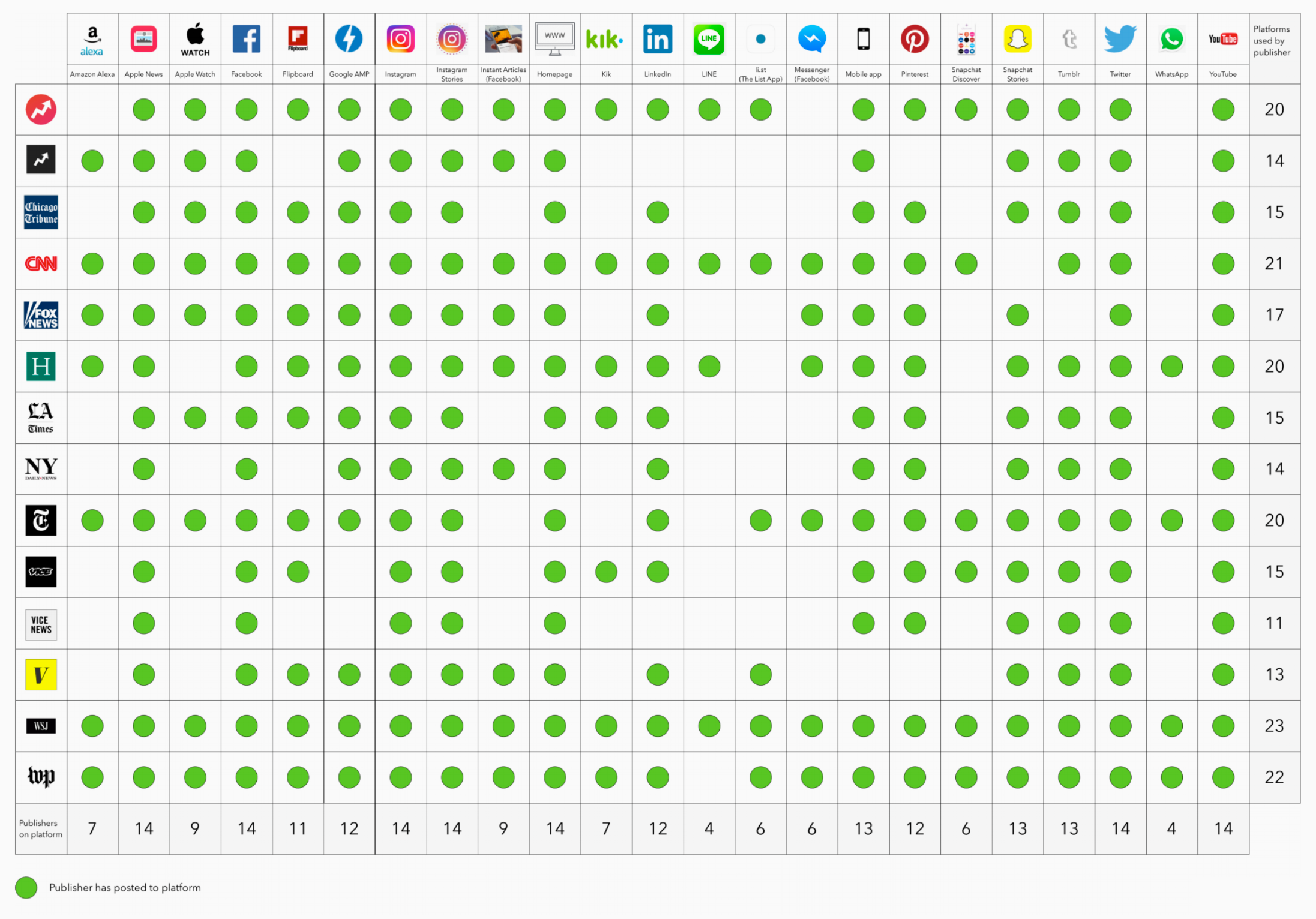
- We take into account the three factors. The first is what the potential of the platform for the audience coverage. Let's say that there are hundreds of millions of people in Snapchat, who may be interesting our content. Another example ... Well, let's say Instagram. He is now small for us, so we are growing it. In general, the overall potential of growth and coverage is important to us, because this follows the second factor: potential income from the platform. And the third thing - how much this platform corresponds to our brand, how it affects our reputation. Because the platform helps us promote our mission. And we must convey it to the audience that suits us. And if you take into account all three factors, this helps to select those platforms that you should pay attention to. There are approximately 15 sites on which we focus. We constantly check them on the subject of whether they fit into these three categories. And we very, very seriously we can prioritize this.
The result is three priorities.
There are basic platforms, priority platforms and developing. Basic platforms are what we are already traditionally very, very good for us to know how to do, and where we can work with our eyes closed. This is a search that includes both smart SEO and AMP , and our site.
Priority platforms are where we see growth and what we put in full and try to grow as soon as possible. This also includes a video on Facebook. And our ultimate goal is to make these platforms also become basic for us. So that we can do it as easily and good as texts.
And there are developing platforms. This includes, for example, podcasts. We increase their number, we look at them, we think whether they have a place in our ecosystem.
- What else worries me: how much do you change the content from the platform to the platform? We were convinced that it is bad to make content for one platform, and then adapt to another. Because each platform determines how you tell stories. But it is also impossible to tell one story in five ways, there is not enough strength. How can you save yourself in this variety?
-Recently, we began to think completely differently what we are doing here. In many ways because of the video on Facebook. Our idea sounds like this: Social Feed First. Not just Facebook First or Video First, namely how it will look in the context of the user's social tape. What does he want to sparkle? And it depends on what intonation you choose to describe the topic and how it will be designed at all. Have you seen an expleiner that Ezra Klein did about Syria? He has more than 100 million views on our platforms. Obviously, the text that he would write would look completely different.
- What worries me - modern means of analysts with this whole cross -platform unable to cope at all. Google Analytics cannot count our audience both on Facebook and on the site. And in the podcasts. That is, in fact, we do not know how many people regularly read us.
- We made our tool. He collects data with Facebook, YouTube, Instagram, from our mailings. So we track the behavior of our audience at all sites. What to do is much more difficult to understand which of these users on different platforms is the same people. And track the through behavior of people in all sites.
- Well, that is, in fact, you also do not know what size your audience is.
- Yes, we know how many readers we have at all venues, we cannot calculate the unique visitors. And yes, there is no way to find out now.
“But at the same time, we must somehow consider this audience.” And we cannot just add the numbers of coverage on Facebook and visitors on the site. It seems to me that this is one of the most important problems for media now. We can’t even make views on Facebook and on the site.
- Yes, because viewing on Facebook is not equal to viewing on the site. We have this method for this: we have identified two approaches when working with statistics. Macro and micro. MacroVovement is what kind of coverage we have. It is considered different for each platform. For mailings - how many letters were open. For our platform - how many pages are viewed. For Facebook - how many contacts we had in the tape and how many views. And we add all this. It turns out a giant figure. It is important for us to understand how big it is. And then we switch to the micro level in which we measure involvement - that is, what actions the users performed. And of course, they are also different on different platforms. For Mailers, it can be clicks on links or sending a letter to a friend. For Facebook, these are comments, roughs, reactions. For our platform - whether we switched to the next page or left a comment. And it is clear that these figures are also not quite similar, but we also fold them, and for us this is an opportunity to get the most integral picture. Here is the total number of people who saw us, and here's the total number of interactions with our content.
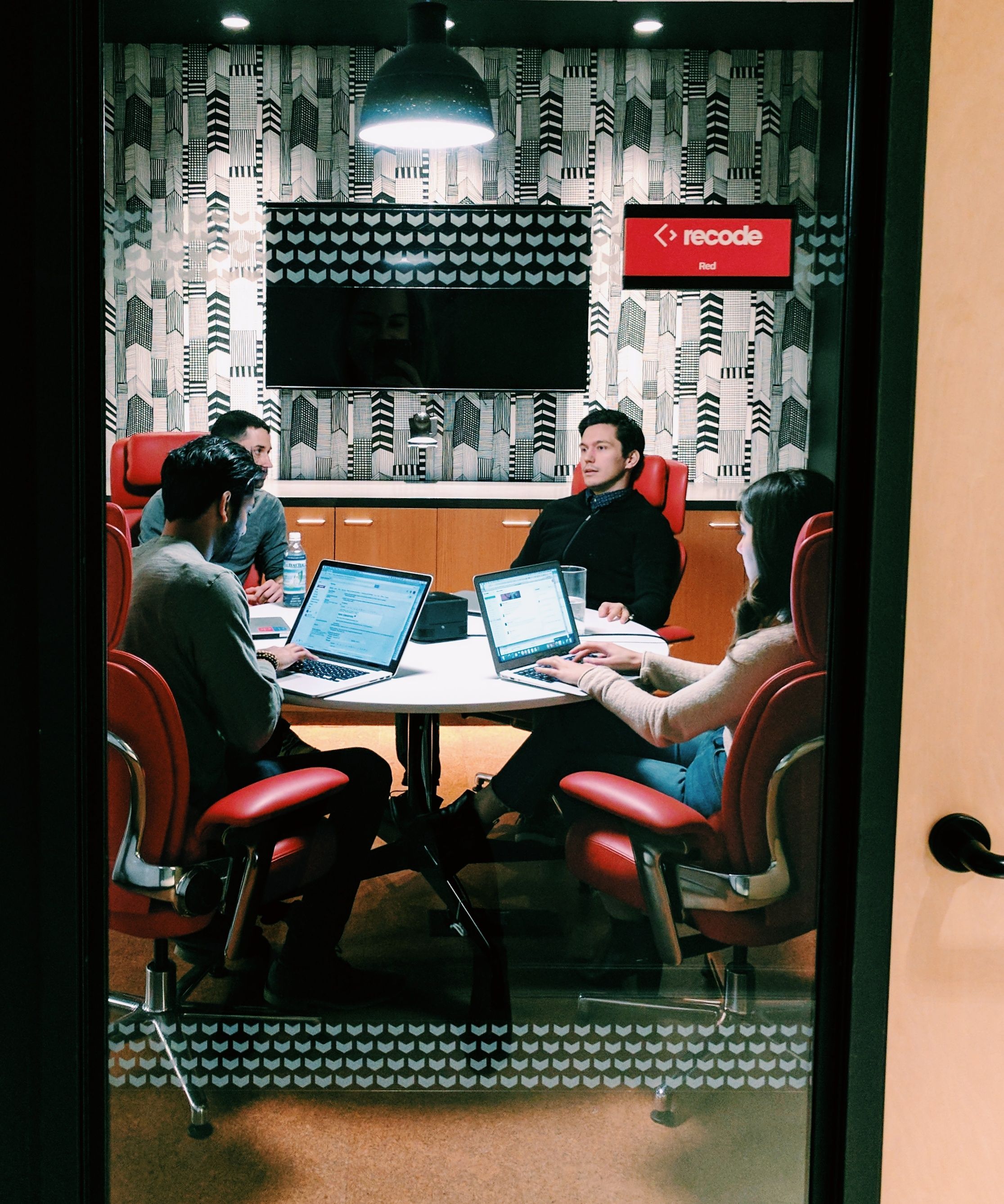
- I think I will be right if I say that your brand is your content and your examination. And all this is stored in your CMS Chorus, which, as far as I know, you are very proud of. Why is it important to you and what are you planning to do with it?
- Ha! Chorus is a really cool thing, and we made it from scratch, well, you just said why it is important to us. I worked in different companies in which some other people's developments were taken, then they dismantled them and adapted them for their needs. The main value of Chorus is for us that we did it exactly for ourselves - we knew what we needed. It is made for our users in our company. They have an idea of blogging in a subcortex. They only think about digital reality, no this extra paper past.
But you know what is funny - I come at the conference, and people from the newspapers say: "Listen, we like Chorus so much, can I buy a license?" And to be honest, I don’t think that if we give some Chorus newspaper, this will solve their problems. The value of Chorus for me in the company that made it. This is our way of work, this is what we manage to work quickly, this is about the inclusion of our editorial team in the product and design. This is about how we earn money and how we come up with new opportunities for advertisers. Chorus is the result of the culture that we built here. And as software in itself, it does not make such an impression. In general, what makes me be proud of this thing is its uniqueness. Maybe for Vox Media, maybe for all modern media companies.
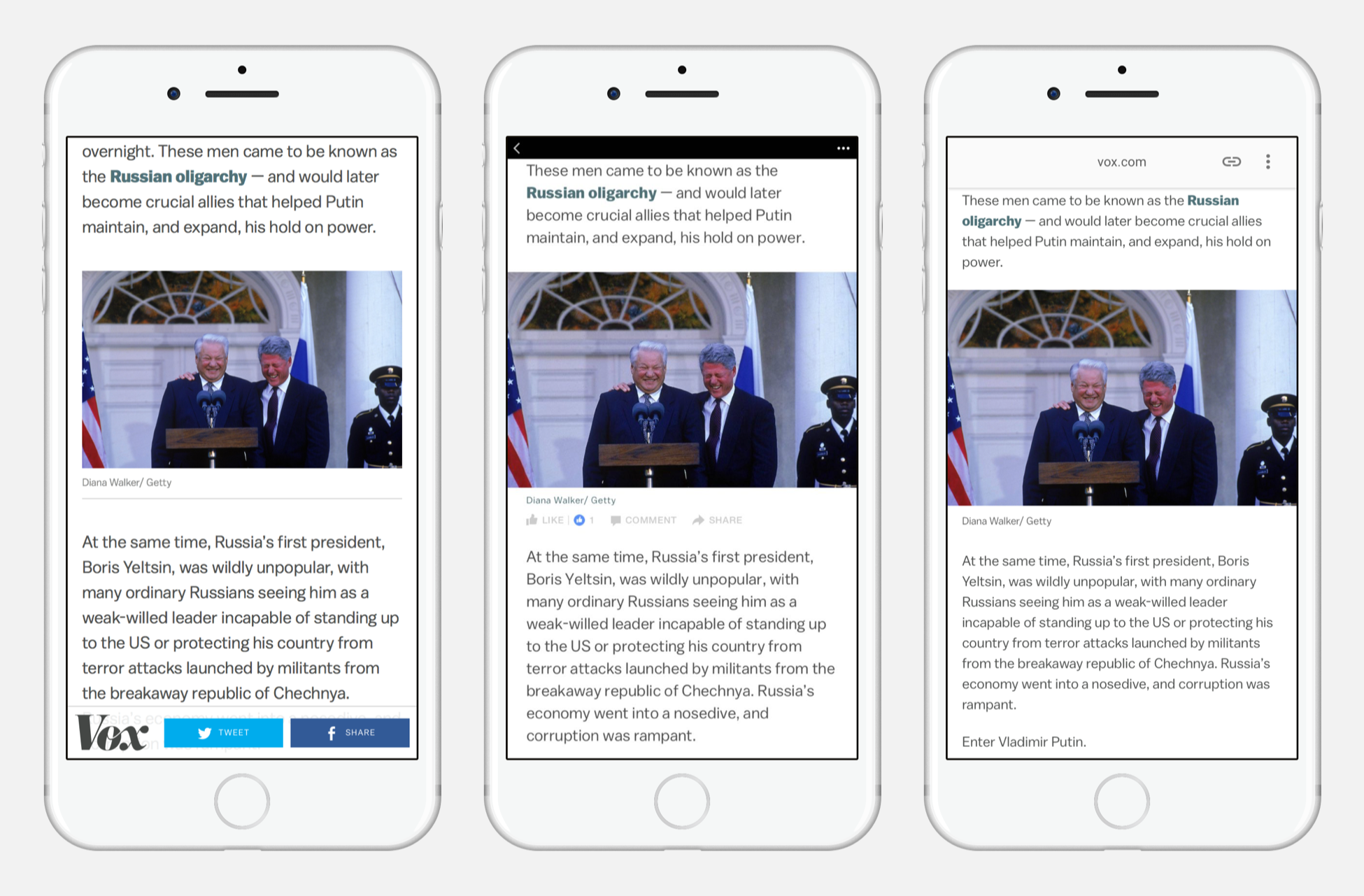
In addition, this thing allows us to be easy to scale. For example, AMP appeared. We cost almost nothing to connect them to our system. You do not need to log in to other CMS to send a tweet or to send Push to Apple. Or publish Instant Article . We think about Chorus as a place where all the texts are created. And then the system takes care that it all looks good on all platforms. We have a mobile device in default in default. And now we are adding the opportunity to watch how the article on any platforms looks. We make sure that our CMS gives us to develop quickly. We began with a conversation that there were too many platforms around and what to do about it. Well, the first thing you need is to not be so nervous is to make a system, because of which the editors will not have to constantly remind: “Do not forget about AMP! Do not forget about Instant Articles! Do not forget that such embens are not shown in AMP! ” No, we can simply integrate hints into the system. When inserting such an embe, the system will say: you inserted Embed into this article, which will not be shown in AMP, are you sure you want to leave everything as it is? That is, we can, in fact, make the process of training, training and in general the planting of our way to think about the media part of our CMS.
- Let's talk about vox.com. More precisely, about cards . The fact is that we also have cards, and many believe that they arose on the basis of yours. But now there are no cards on VOX. They seem to have died.
- Why do you think so?
- Because two years ago this was the main format in VOX. What made his reputation. And now I can’t even find them on your site. Maybe they did not die, but they are definitely not alive.
- I would not say. We still update them, and, you know, they go to good traffic, because people find them in the search. We are simply looking for a way to do the best to make non -sensitors.
- And you do not see a problem in this instability? You release texts over and over again, which should then be constantly updated. Are you not afraid to encounter the problems of Wikipedia, while not having such a number of people who are ready to update materials?
- Well, we never sought to be a “Wikipedia” with its reputation as the only source of constantly updated information. We try to be smarter. Our task is to find relevant and important topics at the moment when they are needed, give readers what they need, in the right place and at the right point in time. Well, that is, we do not plan to update the cards every time any fact has changed in them. But, frankly, I am not the best person with whom you need to talk about it, I do not do this.
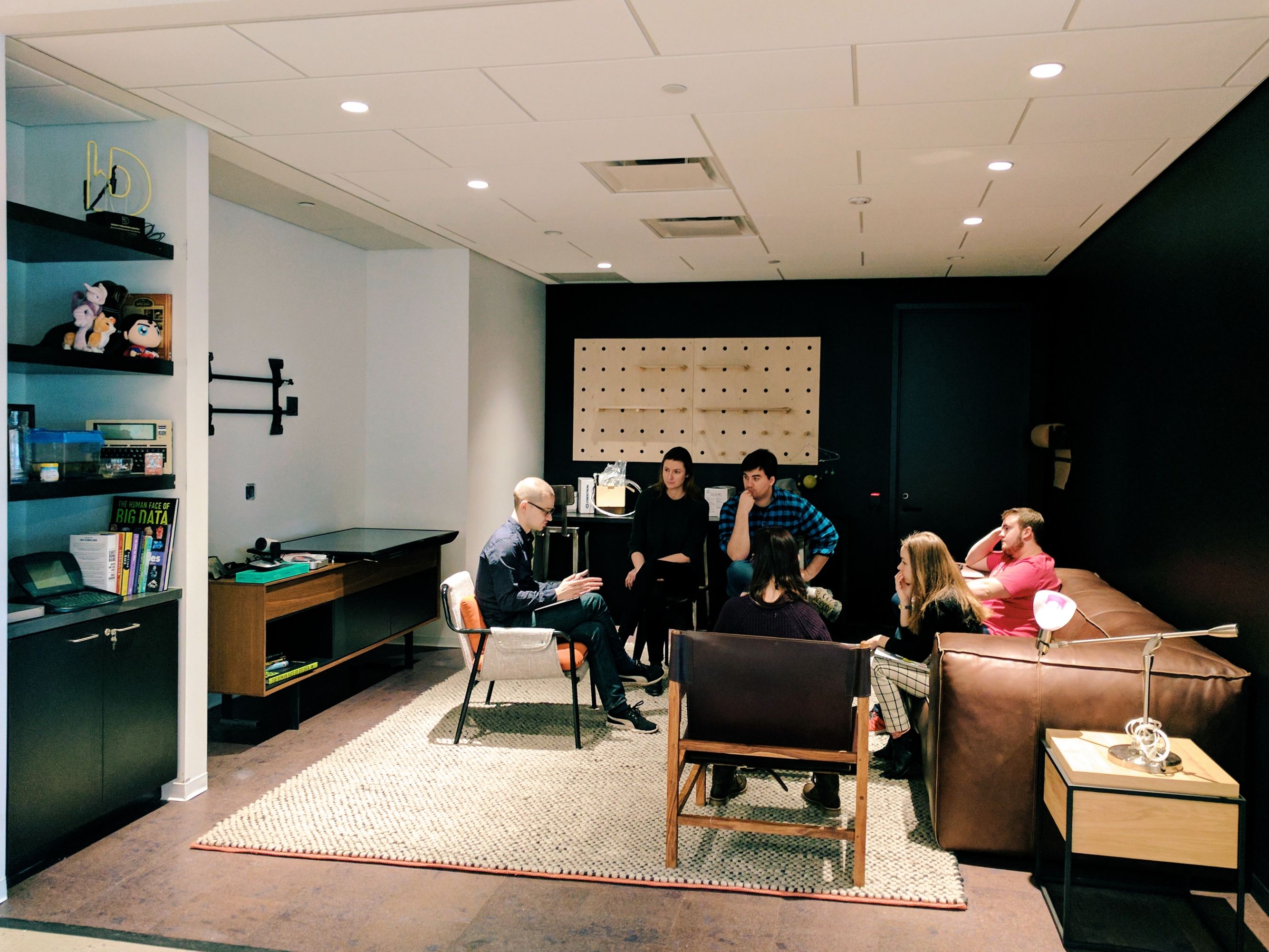
- Okay, then I will ask about the video on Facebook. This seems to be the main trend now, everyone is doing this, and you are one of the best. Tell us how you look at it all.
- As I said, when we are looking for where to invest, we look at the potential for the growth of the audience, the potential for reputation and the potential for money. And the video takes place in all respects. Video, mainly on Facebook, is the greatest opportunities for our growth. As for money, in the following years the video should grow more than contextual advertising, which actually has long been the main advertising format on the Internet. This is about advertising potential. Well, this is a format with which our audience interacts well. Facebook was created in order to cross everything, to convey further to friends and relatives. And we see a direct correlation between how many videos we make and how many people like our page like. In statistics, it is very clearly visible that the number of video views is directly related to the number of returning users and the number of likes of our page. That is, these readers clearly correspond to our brand. And now we are inventing how to make money on this. So everything is cool here. And we have an excellent and experienced video team, which each time makes more and more cool videos.
- What do you think about the video in YouTube? There is also a huge audience, but this platform is very different from Facebook. In Yetube, the videos are watched with sound, on Facebook - no. Vertical videos look great on Facebook, in Yetube - no. There is now, they make 60 videos on Facebook per day and so far cannot approach Utuub normally. And there is Kurzgesgt , which works in Yetube and fundamentally does not go to Facebook. How do you solve this problem?
- We are trying to work there and there, but Facebook is more important for us. Because it is built on Social Feed, which is important to us. In Yetube, people come by search or if they specially subscribe to the page, and then specially check what appeared on it. On Facebook, it is much easier to find things that can be relevant for your friends or your family and which you want to show them. For Facebook, we do a lot of Social-First Video, what we call seeds (Snackable Stuff), what can be watched without sound, this helps us to grow very well on Facebook.
But at the same time, we have a serious, long video, like this expleiner about Syria, which also leads to us many people. And it looks great in Yetube. So it’s not that we believe that for different platforms you need to make completely different things. Just for Facebook, we do much more and in a different style. And there are large hits that we put both there and there. Or we can slightly edit the video, make the first few seconds for Facebook more strict - or do it in a more documentary style for the YouTube. We just do not focus on YouTube.
- You said that one of the three most important factors for you is monetization. How do you make money on this?
- The main thing for us for the coming years is branded content and sponsorship ( VOX has its own Vox Creative agency , which is engaged in the production of native advertising - approx. Medusa ).
- How do you distinguish them among themselves?
- Branded content is when you create content on behalf of the brand. He participates in production, he is present in it. He is signed by him. Sponsorship is when the advertiser does not affect editorial content, he wants to be located next to him. Traditionally, this is marked as “Sponsored by”. The video is a little different, because you cannot put the sponsor next to the video, you somehow add it to the video itself. In general, this is the main thing for us now. Plus there is a new thing-a premium program of Concert .
- Can you name three of your main problems?
-Oh-oh-oh. Well, firstly, and this applies primarily to places like VOX and BUZZFEED. Honestly, we grow too fast. It is difficult to double the company and save our culture, remain nimble, remain a startup ... We all the time hire new people, hire managers, we create new teams-and moreover, we still need to move quickly, still quickly make decisions. We need to constantly teach people. This is a very difficult test.
Second ... We have already talked about data and numbers. But we add more and more new platforms, and it is more difficult to keep track of all this. And all services have their own API ! One Facebook team has made an API for advertising services. Another made an API for editorial services. At the same time, the final user on our side needs information from there and from there. In one place, three -second views of the video are being treasured, in the other - ten -second. And all this must be taken and combined - and at the same time not duplicated. And I'm just about Facebook, and we have many partners. Every time we connect the platform, we must connect another analytics. And we must understand how to make it make sense in our ecosystem. И каждый день это становится все запутанней, и это все сложнее распутать.
А третье… Ох, сложный вопрос… Наверное, вот этот переход из текстоцентричного мира в видео. Мы всегда были ориентированы прежде всего на тексты, а теперь надо все менять. Операционно это очень сложно. Это же всего касается! Ваши рекламные команды продавали баннеры, а теперь им надо продавать видеорекламу. Вам надо учиться по-другому отчитываться за эту рекламу. Вам вообще всему надо учиться заново. Потому что этот переход меняет многие вещи, которые раньше работали по умолчанию. Это даже слов касается. Я всегда аудиторию называла «читателями». Но это слово больше не подходит! Они теперь наши зрители! Это все мелкие-мелкие изменения, влияющие на то, как мы думаем о себе, — и мы должны все время следить за тем, чтобы оставшиеся 800–900 человек в нашей компании тоже это понимали.

— Вам никогда не хочется опять стать маленькой компанией, где работает 20 человек, которые все друг друга знают?
— Я много об этом думаю! И иногда, конечно, было бы проще, если бы вокруг было бы поменьше народу. Но у меня такая работа — я операционный директор, и я выстраиваю работу в наших самых главных продуктах: монетизация видео в фейсбуке, вовлечение пользователей, брендированный контент, вот это все. И часть моей работы — делать так, чтобы мы могли масштабироваться и расти. Поэтому я часто скучаю по дням, когда мы были маленькие. Но когда ты большой, все гораздо интересней.
27 мая Лорен Рабайно выступит по скайпу на конференции «Шторм» . Билеты на конференцию (в том числе видеотрансляция) в продаже, покупайте их вот тут . По промокоду LAUREN скидка 30%!
Ilya Dewarer