
Translated material
The general rehearsal was successful
Party Merkel won the elections to the Landtag of the North Rhine-Westphalia
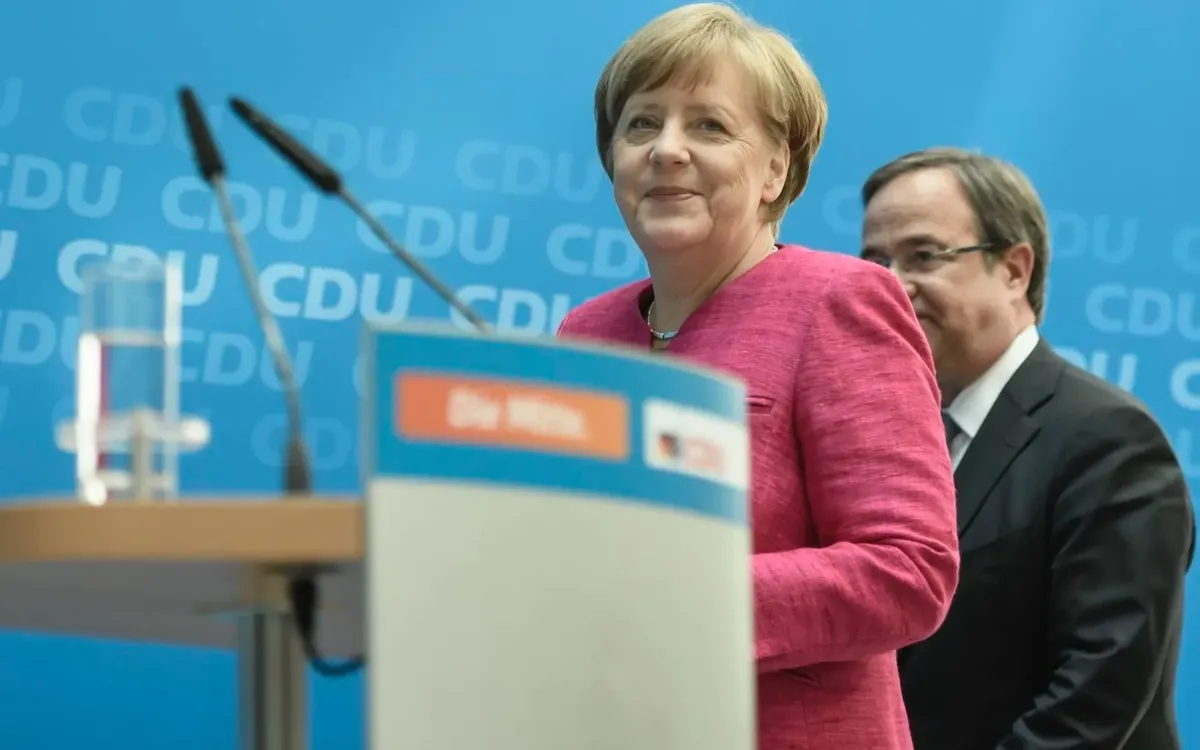
In Germany, there was a sensation-the Social Democrats lost the elections to the Landtag of the Earth North Rhine-Westphalia, which was called the "heart of the party" in the SDPG. A confident victory, having gained 33% of the vote (in the previous elections in 2012 it was 26.3%), the party Merkel won. Now Christian democrats receive a priority right to form a land government.
Elections in the Northern Rhine-Westphalia, according to many analysts, were supposed to become a general rehearsal of the upcoming Bundestag elections in September. The federal land with a population of 17.9 million people is the most densely populated and industrialized region of Germany - every fifth German voter lives here.
For CDS and SDPG, the struggle for their votes with an eye on federal elections was of fundamental importance.
Christian democrats, having lost a number of land elections in 2016, found themselves in a difficult situation. Due to the consequences of the migration crisis, the personal authority of the leader of the HDS Chancellor Angel Merkel was noticeably shaken. Even in the party rows, voices sounded louder that she had time to rest.
Social democrats were not in the best form. The party intensified the contradictions between the right and left wing. Against the background of a reduction in the number of members of the SDPG and the loss of trust of the basic voters, a crisis in the leadership arose.
Entering the election year, both leading political forces of Germany were still able to regroup. Merkel, openly recognizing the fallacy of the open -door policy for refugees, consolidated the party ranks around her. The CDU decided to once again bet on it, hoping that Merkel’s managerial experience in the conditions of external instability would be a strong weapon in the election campaign.
Social Democrats, having played the Va-Bank, replaced the party leader, choosing the ex-speaker of the European Parliament Martin Schulz as his chairman and contender for the post of chancellor. An unexpected move had an euphoric effect not only on single -party ones. During the weeks, the SDPG rating grew in a double -digit percentage and equal to the CDS rating, and Schulz caught up with Merkel’s authority.
In the press and political sidelines, they only talked about the political surprise of the SDPG. Two more were added to the nickname of Schultz “Mr. Europe” - “Super Martin” and “One hundred percent Martin” (100% of delegates voted at the party’s congress for the new chairman). Some observers have already prophesied the HDS defeat in the Bundestag elections and the possible position of the younger partner in the future ruling coalition.
Merkel herself, maintaining equanimity, did not comment on the appointment of Shulz with her main rival. And experienced experts in electoral technologies from the CDU, answering the questions of journalists about their assessment of the situation, skeptically noticed that the stormy start does not always end with a successful finish. Let's wait, they say.
The first real sample of forces took place at the end of this March in land elections in Saarland. Social Democrats, relying on the so-called “Schulz effect”, aimed in alliance with left-wing and “green” to oust Christian democrats from the government. The venture failed with a bang. The voters in the face of the "red-red-green" coalition for the most part voted for the CDS.
The leadership of the SDPG, trying to minimize the impressions of the defeat, referred to the fact that Saarland is a small region where conservative moods were strong. However, Fiasco repeated on May 7 in the elections in Schleswig-Holstein. Social Democrats lost more than three percent of the vote, despite the fact that a solid party team led by Schulz was landed in Kil from Berlin.
And now the Northern Rhine-Westphalia is the Earth, which the SDPG traditionally considered its estate. Before the elections, the Social Democrats themselves called them a "control" on the eve of the federal vote in the Bundestag.
The result of the “race” turned out to be disappointing - minus eight percent of the vote. The Schulz effect did not work again. The Prime Minister and leader of the Social Social Democrats Hannelore Kraft has already resigned from the party post.
As the results of the elections in the Northern Rhine-Westphalia showed, the voter is still in the first place, and not the general discussions about the future federal politics. The CDU understood this well, so the main emphasis in the election campaign was made on criticism of the practical activities of the land coalition government of the Social Democrats and the Green. Impressive, for example, was the fact that in 2016, car traffic jams in the North Rhine-Westphalia reached a common length equal to the distance from the Earth to the Moon.
But in addition to losing rivalry for the SDPG with the CDS, the results of the last German regional elections are notable for another moment. The Party of the Right Populists of the Alternative for Germany was able to hold its deputies in three more Landtag. Now it is presented in 13 of 16 land parliaments.